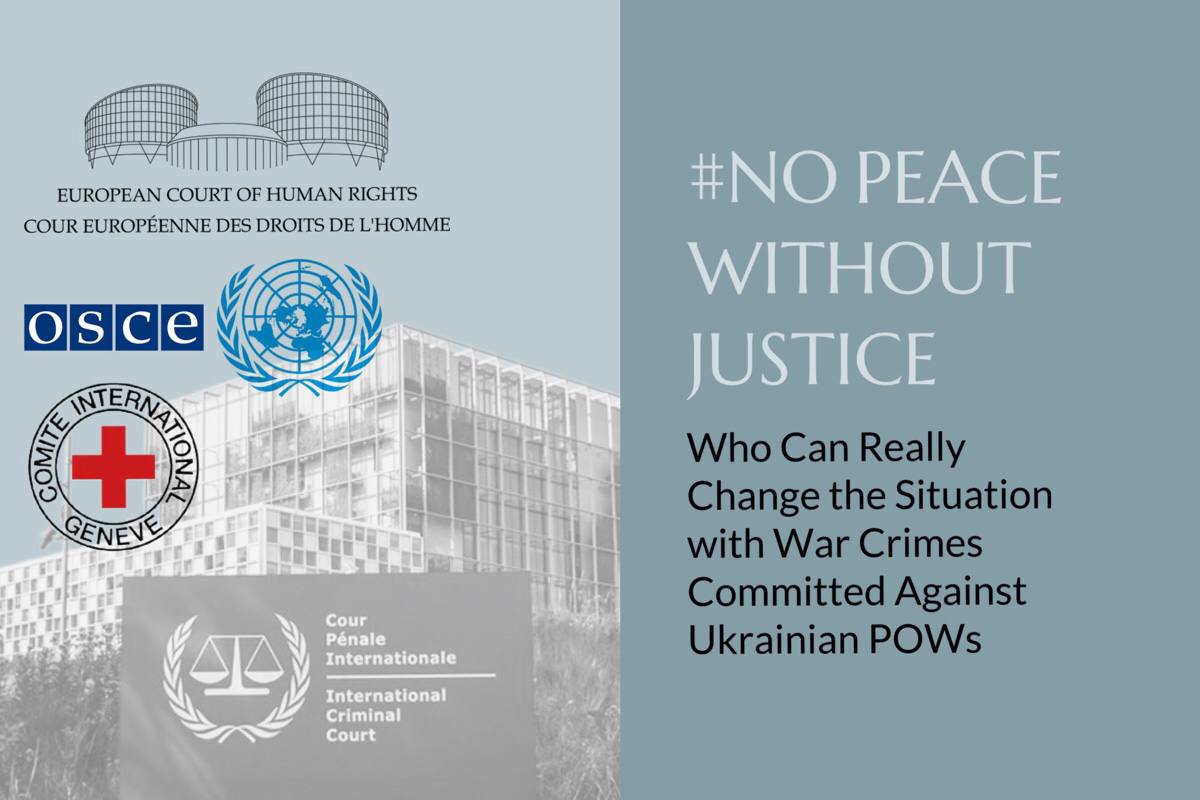


In our previous publication, prepared within the framework of the #No Peace Without Justice initiative, we presented documented examples of war crimes committed by Russia against Ukrainian prisoners of war in November-December 2025. This time, however, our focus shifts away from the crimes themselves to the next, fundamentally important stage: what happens to these documented facts afterward, and who truly has the capacity to change this situation.
This article serves as an introductory overview. We have deliberately structured the material to make it easy to explore:
– Who is involved in collecting testimonies;
– How the Ukrainian law enforcement and diplomatic system, together with international institutions, transforms evidence of torture and executions into legal cases followed by political decisions and international pressure;
– Who else possesses real instruments of influence capable of making the system work and translating the aggressor’s responsibility into tangible, practical consequences.
At the same time, we raise an uncomfortable yet unavoidable question: does international law genuinely remain an effective instrument in a war of this scale, or is the world gradually reverting to a logic in which force alone is decisive, while justice exists more as a declaration than as an operational mechanism.
Ukraine: Stages of Work with War Crimes
This section examines how the body of evidence is formed and how Ukraine’s national institutional mechanism operates in cases of war crimes against prisoners of war – from initial documentation and criminal-legal qualification of facts to interagency coordination, international legal communication, and the transfer of materials to the jurisdiction of international judicial bodies. This includes the entire chain of state procedures: documentation, pre-trial investigation, procedural support, negotiation and exchange mechanisms, as well as the regulatory framework for compliance with international humanitarian law.
Step 1. Documentation of Crimes
Evidence of war crimes may come from various sources. The primary ones are testimonies of released prisoners of war and materials published by the enemy in open sources – photos and videos from places of detention, interrogations, and abuse circulated via messengers and social media. Equally important are appeals from families of servicemen, information provided by volunteers and human rights organizations, journalistic investigations, and other sources.
It is from this body of evidence that the further process begins – from documentation and legal qualification of crimes to negotiation mechanisms and international pressure.
Step 2. Criminal-Legal Qualification
At this stage, war crimes against Ukrainian prisoners of war acquire formal procedural status. A key role is played by the Office of the Prosecutor General of Ukraine (OPG), which oversees the registration of criminal proceedings, organizes the collection of evidence, conducts interviews with witnesses and released prisoners, and documents cases of torture and executions.
It is at this point that testimonies are transformed into criminal cases examined by Ukrainian courts and form the evidentiary basis for proceedings before the International Criminal Court.
In parallel, the Ukrainian Parliament Commissioner for Human Rights (Ombudsman) and the Commissioner’s Office ensure the systematic documentation of individual cases and bring them to the international level – through participation in UN sessions, OSCE meetings, and working contacts with the International Committee of the Red Cross – keeping the issue of prisoners of war within the focus of international attention.
Step 3. Interagency Coordination and Negotiation Mechanisms
The third stage encompasses practical interagency work related to the search for, verification, and release of prisoners of war. The central body in this process is the Coordination Headquarters for the Treatment of Prisoners of War (CHTPW), which ensures the full cycle of actions – from accounting for missing persons to organizing exchanges and the subsequent rehabilitation of those released.
Strategic leadership of the Headquarters’ activities is carried out by the Defense Intelligence of Ukraine (DIU), which is responsible for establishing communication channels with the adversary, conducting complex negotiations, and organizing exchange processes.
The Security Service of Ukraine (SSU), through its specialized coordination center, conducts interviews with returned prisoners, verifies personal data, validates exchange lists, and documents crimes – steps that are critically important for both security and legal integrity.
One of the most significant factors in preventing ill-treatment of prisoners of war is the work of the Armed Forces of Ukraine (AFU) in cooperation with other components of the Defence Forces. Within this cooperation, an exchange fund is being formed, including the capture of enemy servicemen, among whom are officers. The more coordinated and efficient the exchange system is, the less time and opportunity remain for prolonged detention and abuse. Regular exchanges reduce incentives to use captivity as a tool of pressure.
Step 4. Registration, Regulatory Framework, and International Legal Cooperation
The technical and informational backbone of the entire system is the National Information Bureau (NIB), which maintains a unified register of missing, deported, and captured persons and serves as the official channel of interaction with the International Committee of the Red Cross for status confirmation via Geneva.
At the strategic level, this work is complemented by the Interdepartmental Commission on International Humanitarian Law (IHL), which develops the regulatory framework governing the treatment of prisoners of war in accordance with the Geneva Conventions. This level ensures the legal legitimacy of Ukraine’s actions, strengthens international support, and creates additional instruments of pressure on Russia to gain access to Ukrainian prisoners.
The International Legal Level: Shaping Accountability Beyond Ukraine
Criminal Prosecution for War Crimes
The Hague, Netherlands
The central element of international criminal justice is the International Criminal Court (ICC), which uses materials collected by Ukrainian law enforcement agencies as part of its evidentiary base. The Court has the authority to prosecute individuals suspected of war crimes, crimes against humanity, and genocide, including through the issuance of international arrest warrants.
At the same time, the ICC’s jurisdiction has fundamental limitations. The Court cannot fully prosecute the crime of aggression if the aggressor state is not a party to the Rome Statute.
The Russian Federation falls into this category, which significantly restricts the Court’s ability to hold its highest political and military leadership accountable under the existing mandate.
Filling the Jurisdictional Gap: The Crime of Aggression
To address this limitation, the international community has initiated the creation of a Special Tribunal for the Crime of Aggression against Ukraine – a separate judicial mechanism designed specifically to ensure accountability for the crime of aggression.
The Tribunal is expected to begin its work in 2026. Its establishment is of critical importance to the international justice system, as it would, for the first time, enable the targeted examination of the responsibility of the highest leadership of the aggressor state for the decision to launch the war itself, rather than only for individual episodes of war crimes.
Protection of Victims’ Rights Through Regional Judicial Mechanisms
Strasbourg, France
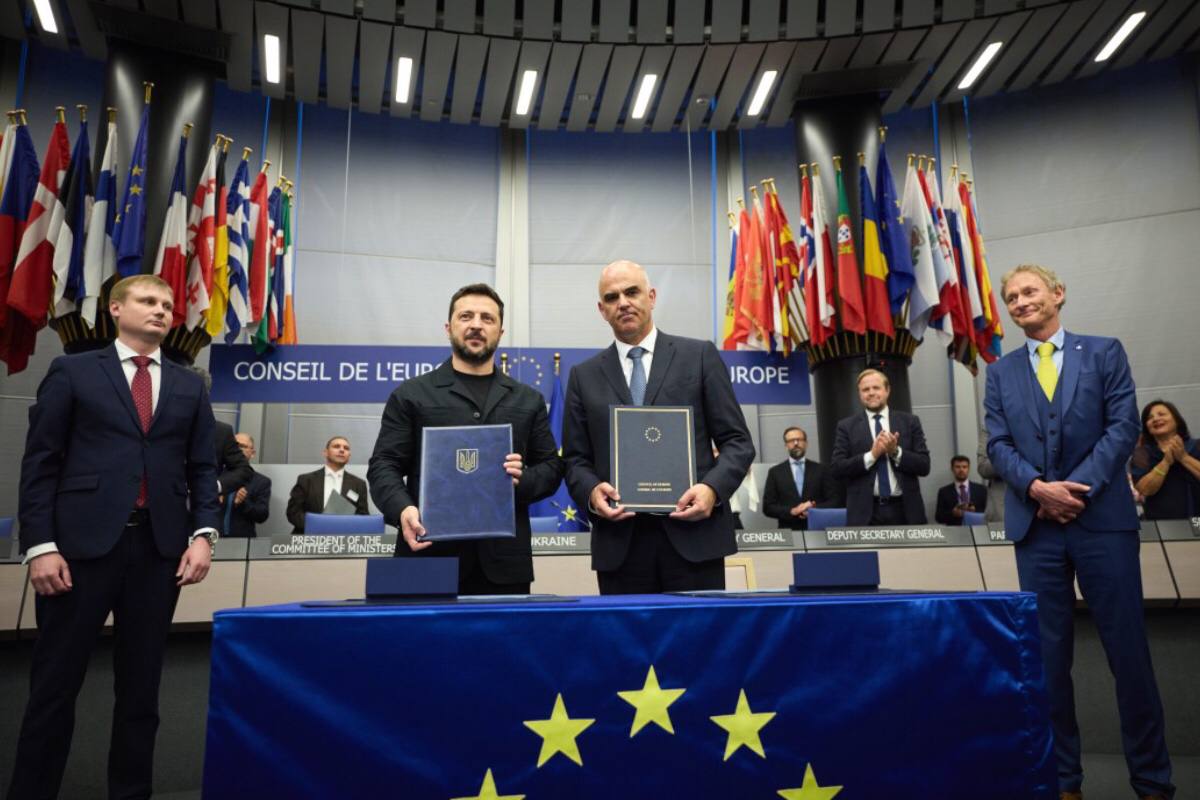
Alongside criminal prosecution, the European Court of Human Rights (ECHR) continues to function as an international judicial body examining inter-state and individual applications concerning violations of rights guaranteed by the European Convention on Human Rights.
The ECHR plays a particularly important role in cases involving unlawful detention, torture, and inhuman treatment of prisoners of war. Through this mechanism, families of victims gain a legal opportunity to document violations at the international level and to obtain decisions that carry both legal and political weight within the Council of Europe.
Key Conclusions of This Level
The international legal level is not a single or universal mechanism. Rather, it forms a complex architecture of accountability in which criminal, special, and human rights judicial instruments complement one another. This multi-layered model makes it possible to gradually transform Ukraine’s national cases into international legal consequences for the aggressor state.
International Humanitarian and Monitoring Level: Documentation, Oversight, and Public Pressure
Humanitarian Access and Prevention of Ill-Treatment
Geneva, Switzerland
The key humanitarian institution addressing the issue of prisoners of war is the International Committee of the Red Cross (ICRC) – a neutral organization whose mandate is defined by the 1949 Geneva Conventions and their Additional Protocols. The primary purpose of ICRC visits to places of detention is to prevent torture, inhuman treatment, and enforced disappearances.
ICRC delegates have the right to conduct confidential interviews with prisoners of war without the presence of guards, allowing them to obtain objective information about detention conditions, health status, and treatment. The organization operates in close coordination with the Ukrainian Red Cross; however, its effectiveness depends directly on the actual access granted by the aggressor state.
Documentation and fact-finding systems
Geneva, Switzerland
A central role in international human rights monitoring is played by the Office of the United Nations High Commissioner for Human Rights (OHCHR). This is the primary human rights body within the UN system, responsible for collecting data on human rights violations, preparing regular public reports, and shaping the international human rights agenda.
In Ukraine, the UN Human Rights Monitoring Mission (HRMMU) has been operating since 2014. Its representatives conduct daily documentation of the consequences of hostilities, cases of torture, unlawful detention, and treatment of prisoners of war. These data form the primary international evidentiary base later used by judicial and political mechanisms.
Following the full-scale invasion in 2022, the UN Human Rights Council also established the Independent International Commission of Inquiry on Ukraine (IICIHR) – an independent body focused on war crimes and crimes against humanity. The Commission collects, preserves, and systematizes evidence for future use by the International Criminal Court and prospective tribunals.
International non-governmental and intergovernmental mechanisms of pressure
Vienna, Austria
The Organization for Security and Co-operation in Europe (OSCE) plays an important role in documenting war crimes and shaping international pressure. Through its special mechanisms, the OSCE records violations of international humanitarian law and contributes to the creation of an international evidentiary base for political and legal responses.
International human rights organizations also exert significant influence. Human Rights Watch (HRW) documents violations with a particular focus on the consequences of Russian aggression, calling on international institutions to act and demanding that Russia grant access to the ICRC and monitoring missions. Amnesty International (AI) systematically publishes reports on violations of international humanitarian law, generating humanitarian and political pressure on the aggressor state and mobilizing international support for Ukraine.
Parliamentary assemblies as instruments of intergovernmental political pressure
The formation of a global position on the protection of Ukrainian prisoners of war also depends significantly on international parliamentary bodies, including the Parliamentary Assembly of the Council of Europe (PACE) and the NATO Parliamentary Assembly. While these institutions do not possess direct legal or negotiation instruments, they exert substantial political influence by adopting resolutions and statements that officially record violations of international humanitarian law, support international investigations, increase pressure on Russia, and help consolidate the position of democratic states. This strengthens international attention to the issue and expands opportunities for humanitarian protection and prisoner release.
Key Conclusion of This Level
In short, the overall effectiveness of the international humanitarian and monitoring level lies in the combination of complementary mandates: the ICRC ensures humanitarian access to prisoners of war and the prevention of ill-treatment. UN mechanisms carry out the legitimate documentation of violations and confer international visibility on them. The UN Commission of Inquiry develops an in-depth evidentiary base suitable for subsequent judicial proceedings. The OSCE applies regional political mechanisms of influence. International human rights organisations transform these data into public and reputational pressure on the aggressor state. While the Parliamentary Assembly of the Council of Europe and the NATO Parliamentary Assembly translate these efforts into intergovernmental political decisions and resolution-based pressure.
It is precisely this combination of mechanisms that creates a real foundation for the protection of Ukrainian prisoners of war.
Civil Society and Media Levels: External Pressure and Public Accountability
Although state and international institutions play a key role in addressing the issue of prisoners of war, a significant portion of systematic work is also carried out by organizations and communities operating outside formal governmental structures.
Civil and family associations make a substantial contribution to maintaining sustained international attention to the issue of Ukrainian prisoners of war. Through public appeals, actions, advocacy campaigns, and engagement with the media, they prevent the issue from disappearing from the international agenda and counteract the normalization of war in global perception.
Independent journalists and OSINT investigators document and publicly identify individuals involved in the detention, torture, and abuse of Ukrainian prisoners of war. Identifying commanders, guards, and jailers transforms them from anonymous perpetrators into personally accountable individuals, increasing the likelihood of future sanctions, visa bans, and criminal prosecution.
The issue of prisoners’ rights is actively raised by human rights organizations, humanitarian missions, diplomats, volunteer groups, civic initiatives, journalists, members of parliament, local authorities, international NGOs, religious communities, and individual concerned citizens. Their combined efforts support documentation, sustained communication, protection of prisoners’ rights, and the advancement of release processes.
Key Conclusion of This Level
Thus, alongside official state and international legal mechanisms, there exist communities and initiatives that play an important role in strengthening international pressure. Their combined efforts expand the range of influence and create conditions for the adoption of real political and practical decisions regarding prisoners of war.
Overall Conclusion
All of the above levels – state, international legal, humanitarian-monitoring, as well as civil and media – form a multi-layered response system in which each component performs its own function.
However, despite the existence of a comprehensive set of mechanisms, the overall system of accountability for war crimes remains fragmented. Ukrainian authorities and international missions effectively document war crimes, but the transition from documentation to real accountability remains slow and dependent on the political will of individual states. Some structures are limited by their mandates, others by complex decision-making procedures and temporal or jurisdictional constraints. As a result, a critical gap emerges between evidence and action – a space of impunity that the aggressor exploits. Today, this gap between proof and consequence is the weakest link in the entire system.
The most effective way to address this weakness is personalized accountability reinforced by unavoidable practical consequences. The European Union, the United States, the United Kingdom, and other partners can apply targeted sanctions – asset freezes, travel bans, and financial restrictions – against specific perpetrators and commanders. In addition, national courts in certain countries can invoke the principle of universal jurisdiction. The combination of these instruments creates a real deterrent effect, making violations of the Geneva Conventions no longer a cost-free choice.
At the same time, alongside legal and sanctions mechanisms, one of the most practical and effective tools for protecting Ukrainian prisoners of war remains negotiation and exchange processes. They provide immediate humanitarian outcomes where international judicial mechanisms operate on a longer timeline. The formation of exchange pools, interagency coordination, and the involvement of international mediators do not replace justice, but they save lives here and now.