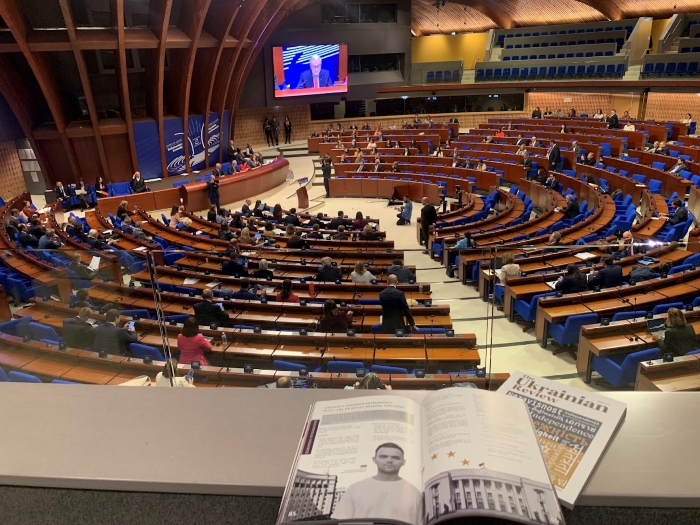


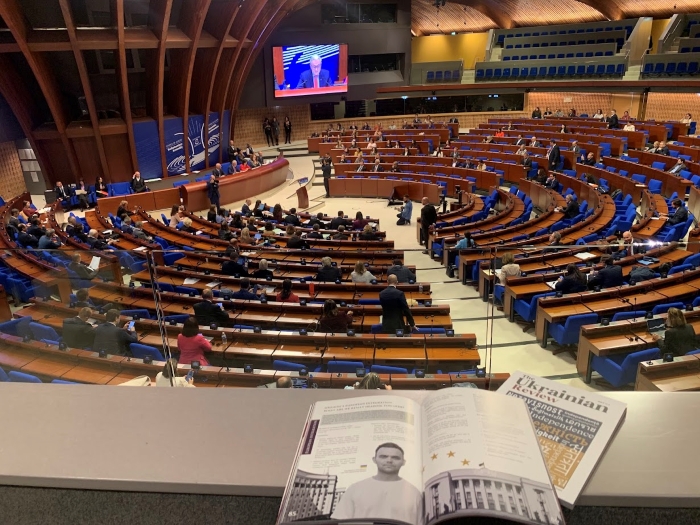
Freedom of speech and the safety of journalists in combat zones are fundamental values of modern democracy. They determine not only the objectivity of information, but also the lives of those who report it. These issues became the focus of the autumn session of the Parliamentary Assembly of the Council of Europe (PACE) in Strasbourg, which took place from 29 September to 3 October 2025.
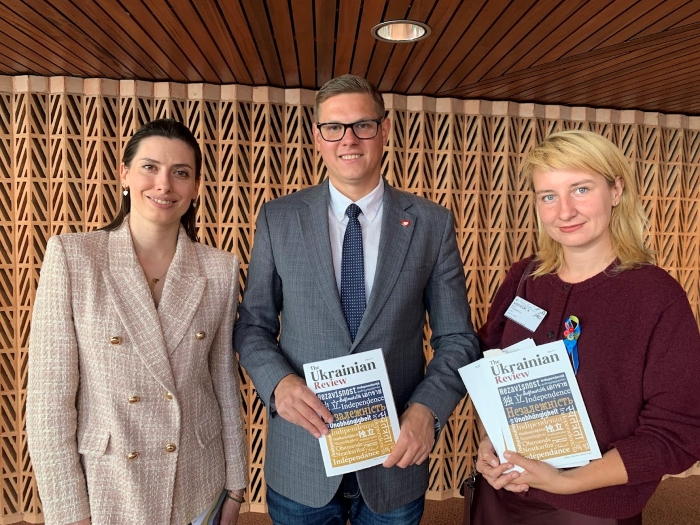
For the third time this year, The Ukrainian Review magazines were presented during PACE sessions.
The issue was prepared to mark the anniversary of Ukraine’s independence — a day that, in times of war, has become a symbol of a choice made by every citizen. Despite daily threats, the country continues to grow stronger and more united.
The fifth issue opens Ukraine to readers in all its layers: stories of military personnel, the work of state institutions, business and civil society, analysis of key decisions, and the views of international partners who share faith in victory.
The media outlet directly supports PACE priorities on media freedom and the safety of journalists, as approved by Resolution 2532 and CM/Rec (2016)4.
This particular issue was presented at the September PACE session with the support of the Ukrainian delegation and the head of the delegation, Maria Mezentseva.
“Journalists Matter”: PACE Adopts a Resolution in Support of Ukrainian Media Workers
On 1 October 2025, PACE deputies adopted the resolution “Journalists matter: the need to step up efforts to liberate Ukrainian journalists held in captivity by the Russian Federation.”
The initiator of the document was Yevheniia Kravchuk, a member of the Ukrainian delegation to PACE. Before the vote, she delivered a speech as the main rapporteur.
The voting result was 128 votes in favor out of 129.
According to the Institute of Mass Information, since 2022 more than 800 crimes against media workers have been documented; 108 journalists have been killed, and at least 26 remain in Russian captivity.
The resolution demands that Russia:
-
immediately release all illegally detained Ukrainian journalists;
-
provide information on the whereabouts and health condition of those held captive;
-
grant access to them for representatives of the International Committee of the Red Cross;
-
end the practice of torturing and persecuting journalists.
PACE emphasized that journalists working in conflict zones are civilians and must be protected under international humanitarian law.
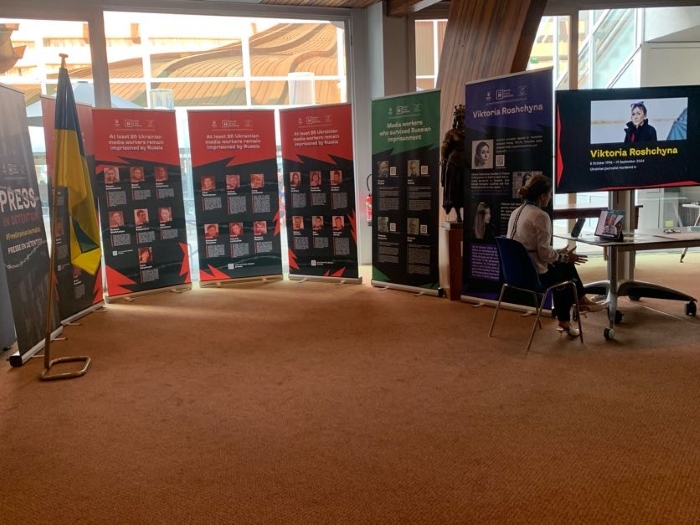
Exhibition “Press in Detention”: Testimonies of Ukrainian Journalists
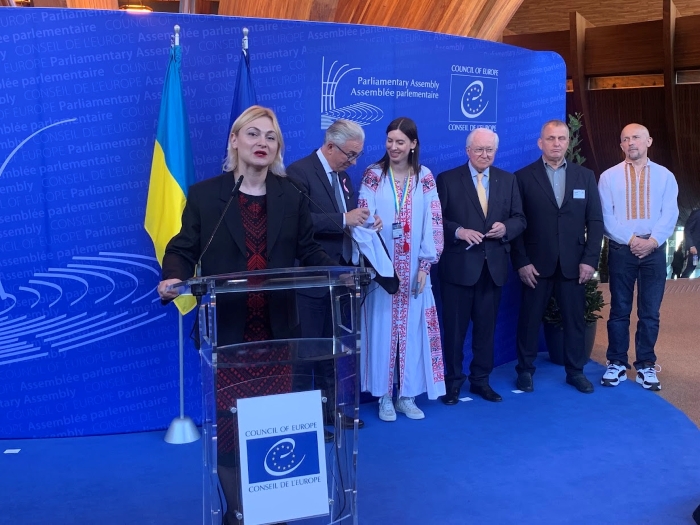
On 2 October, the exhibition “Press in Detention” opened at PACE, dedicated to Ukrainian journalists held by the Russian Federation.
The exhibition was curated by Yevheniia Kravchuk. Its goal is to draw attention to the fate of media workers who have become hostages of the war.
Among the participants at the opening were journalists Vladyslav Yesypenko and Dmytro Khilyuk, who survived captivity and torture and have since returned to Ukraine.
The exhibition presents the names and stories of Ukrainian journalists whose fates have differed:
-
some journalists are still in captivity;
-
some have been fortunate enough to be released;
-
others died in captivity.
A separate focus is the story of journalist Viktoriia Roshchyna, who died in Russian captivity as a result of torture, and whose body was returned mutilated and bearing numerous injuries.
International Context: Educational Initiatives and Cultural Exchange
During the PACE session, the Austrian initiative “Language education at the heart of Democracy” was also presented—a strategic education development program for 2024–2030.
The project is based on five key values: cooperation, compassion, inclusion, motivation, and digitalization.
The presentation emphasized the importance of multilingualism and the preservation of endangered languages.
“Cultural exchange enriches us, and language learning broadens horizons,” the participants noted.
Ukraine at the Center of the Council of Europe’s Attention
This year marks the 30th anniversary of Ukraine’s accession to the Council of Europe.
The most experienced representative of the Ukrainian delegation is the Ukrainian politician, statesman, and diplomat Borys Tarasyuk, who was also present at this session and has many years of experience representing Ukraine. From 1993 to 1995, he led the process of Ukraine’s accession to the Council of Europe.
Ukraine Is Not ‘One of the Topics,’ but a Central Priority — Borys Tarasyuk, Permanent Representative of Ukraine to the Council of Europe.
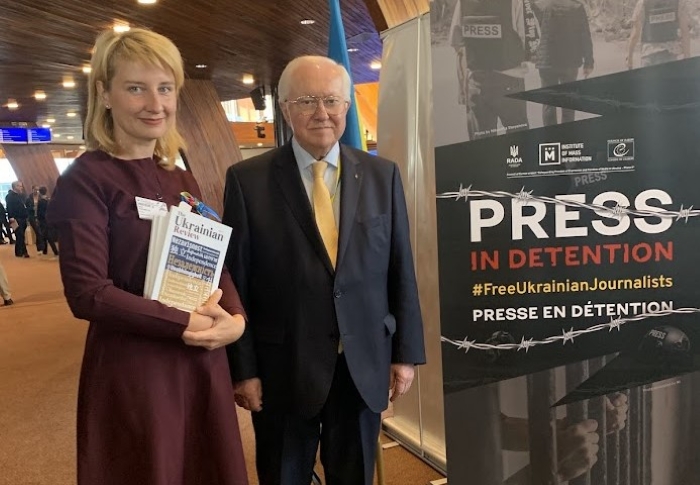
Details of the delegation’s work can be found in Borys Tarasyuk`s interview for our media outlet.
The Ukrainian Review continues to inform the international community about the struggle of Ukrainian journalists, the role of the media in the war, and the importance of truth in times of disinformation. Thanks to the work of independent media, the world receives an objective picture of events and can respond to human rights violations. Representatives of the publication emphasized that the team will continue to tell the stories of Ukrainian journalists’ struggle, the role of the media in the war, and the importance of truth in times of disinformation, firmly believing that words have the power to change the world and save lives.