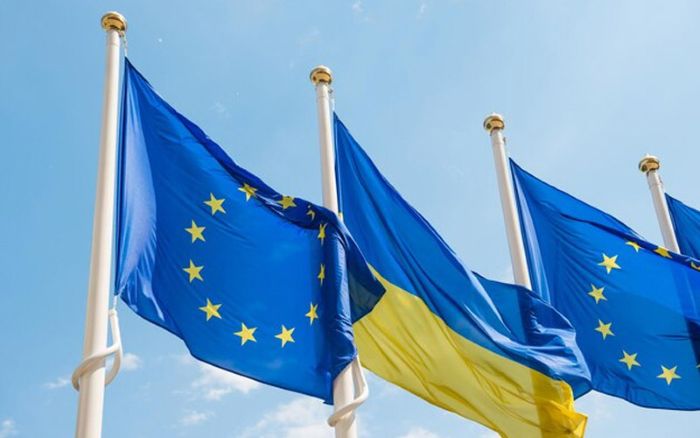


We constantly hear about European integration as Ukraine’s unquestionable, strategic course. It sounds confident, persuasive, even uplifting. But do we truly understand what lies behind this path? What are the real conditions set by the European Union, and is Ukraine ready to meet them? In this article, we will break down every stage of Ukraine’s accession to the EU, outline the key requirements, and analyze the pros and cons of the process — both for Ukraine
and for Europe. This is an attempt to take an honest look at reality and understand the true cost and value of EU membership.

Optimistic Scenario (2028–2030)
This assumes rapid progress on both sides — Ukraine and the EU.
Assumptions:
• Ukraine implements reforms quickly: Ukraine efficiently aligns its laws, institutions, and governance with EU standards (especially in rule of law, anti-corruption, judiciary, and economic policy).
• EU demonstrates political will: The EU is accelerating Ukraine’s accession for geopolitical reasons, especially due to the ongoing war with Russia and the desire to consolidate Ukraine in the Western bloc
• Minimal resistance from EU members: Member states don’t block or delay the process over concerns about enlargement fatigue, budget contributions, or internal reforms.
Why it’s still “optimistic”:
• Normally, EU accession takes 10+ years; even countries like Poland or Romania took roughly that long post-application. Ukraine applying in 2022 and joining by 2028–2030 would be exceptionally fast.
• The EU may need to reform internally (especially its budget and voting procedures) to absorb such a large country as Ukraine.
Realistic Scenario (2030–2032)
This is seen as more pragmatic and probable, assuming steady but slower progress.
Assumptions:
Ukraine makes substantial but gradual reforms.
• Some EU countries push for internal reforms first or are wary of further enlargement without addressing concerns like budget redistribution or decision-making structures.
• Ongoing conflict or instability may slow Ukraine’s reform path or EU integration focus.
Public opinion in the EU may fluctuate, causing political delays (a dangerous trend is emerging in Poland, where more than 40% of respondents
spoke out against Ukraine joining the EU and NATO).
Why it’s more likely:
• It gives both Ukraine and the EU more time to prepare structurally and politically.
• It fits better with historical precedents — for example, Western Balkan countries have been in talks for years, even decades.
Key requirements for Ukraine’s accession to the EU
The EU’s requirements go far beyond adopting formal laws — the real focus is on tangible impact in Ukrainian society. Brussels expects not only the
adoption of directives, but also their effective enforcement in areas such as the judiciary, anticorruption, human rights, environment, and the economy. These standards define not just legal compatibility but a shared value system between Ukraine and the European community.
Key requirements include:
• An independent and functioning judiciary
• Robust anti-corruption framework (Specialized Anti-corruption Prosecution (SAP), National Anti- Corruption Bureau of Ukraine (NABU), National Agency on Corruption Prevention (NACP).
• Protection of human and minority rights.
• Reform of public administration and institutional transparency.
• A competitive, market-based economy.
• Agricultural compliance with CAP standards.
• Alignment with environmental policy (The European Green Deal).
• Financial and macroeconomic stability.
Benefits for Ukraine from Joining the European Union:
• Access to the EU Single Market.Ukrainian companies will gain the ability to freely export goods and services across EU member states, reaching over 500 million consumers. This opens up new business opportunities, boosts GDP, and supports the development of modern industries.
• Financial support and development funds.EU membership provides access to structural funds, subsidies for modernizing infrastructure, agriculture, and education, as well as major investments in postwar reconstruction (certain programs are already in effect despite the war).
• Higher living standards.EU legislation ensures social rights, worker protections, and equal access to healthcare and education. This leads to tangible improvements in the daily lives of Ukrainian citizens.
• Enhanced security and stability.Membership strengthens Ukraine’s international standing, fosters political integration, enables participation in shaping common EU security policy, and reinforces the country’s Euro-Atlantic course.
Benefits for the European Union from Ukraine’s Accession:
Ukraine’s integration into the European Union offers several strategic benefits for the EU, particularly in agricultural and defence policy areas.
• Expansion of strategic space.Ukraine is the largest country in Europe by land area. Its accession would strengthen the EU’s geopolitical position on the eastern flank and create a buffer against authoritarian regimes.
• A strong agricultural and industrial partner.Ukraine is one of the world’s leading producers of agricultural goods and metals. This will enhance the EU’s food security and reduce dependency on imports from third countries. EU integration would secure a stable, internal source of grains, sunflower oil, and other agricultural commodities, reducing dependency on imports from volatile regions.
• Military and security expertise.Ukraine brings unique combat experience in countering hybrid threats. Its involvement in shaping
EU security policy would be a strategic asset for the entire Union. Ukraine has a historically strong defence manufacturing base (e.g., Antonov aircraft, tank and missile production); and closer integration would enable joint ventures and technology transfer between Ukrainian and EU defence industries.
• Moral revitalization of the EU.Ukraine represents a powerful symbol of the fight for freedom, democracy, and human dignity, reminding Europe of the core values it was built upon.
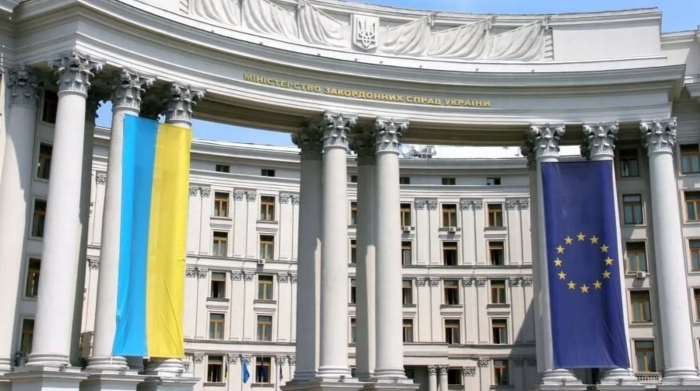
Ministry of Foreign Affairs of Ukraine
Challenges and Risks for Ukraine:
Ukraine’s path to EU membership is fraught with obstacles. Judicial and anti‑corruption institutions remain fragile.
According to the survey, a few years before the full-scale russian invasion, only 20% of court judgments were enforced, undermining the rule of law. Additionally, war has devastated agriculture—destroying infrastructure, blocking exports, and occupying farmland—while compliance with EU standards will impose extra costs on producers. Finally, reconstruction demands exceed $400 billion, straining Ukraine’s fiscal capacity to fund reforms and meet EU criteria.
Let’s list the main risks that Ukraine faces:
• Intensified competition in the domestic market (Ukrainian businesses will face strong competition from established EU brands, especially in agriculture, manufacturing, and services). High costs of aligning with EU standards (To meet EU requirements (technical, sanitary, environmental), both the state and private businesses will need to invest billions of euros in modernization).
• Increased migration outflow (Easier movement could accelerate emigration of young and skilled workers, worsening Ukraine’s labor shortage).
• Restrictions in the agricultural sector (Strict EU farming regulations, quotas, and subsidy rules may disadvantage Ukrainian farmers).
• Partial loss of decision-making sovereignty (In key areas such as economy, energy, and environment, Ukraine will have to coordinate domestic policies with EU institutions, limiting its independent policymaking).
Challenges for the European Union:
The EU will face a range of economic, security, political and institutional challenges during Ukraine’s integration process.
• Financial burden.Ukraine’s accession would require significant spending from the EU budget — for infrastructure, regional development, agriculture, and post-war reconstruction. According to some estimates, this could amount to tens of billions of euros annually.
• Agricultural market competition.Ukraine is one of Europe’s largest agricultural producers. Its entry poses risks for EU farmers — particularly in France, Poland, and Hungary — due to potential market oversaturation and competition for subsidies.
• Security and war at the EU’s borders.Integrating a country at war or bordering an aggressive Russia may increase security tensions and force the EU to rethink its common defense policy and longterm strategic priorities.
• Need for institutional reform in the EU.Admitting a country as large as Ukraine would require a revision of EU decision-making rules, especially reforms to the unanimity principle that currently governs many areas.
• Political polarization within the EU.Some member states — such as Hungary or Slovakia — have shown skepticism or caution toward rapid enlargement. This could deepen internal divisions within the Union (also posing a threat are various right-wing political parties that exploit the issue of migration and excessive contributions from EU member states to the EU).
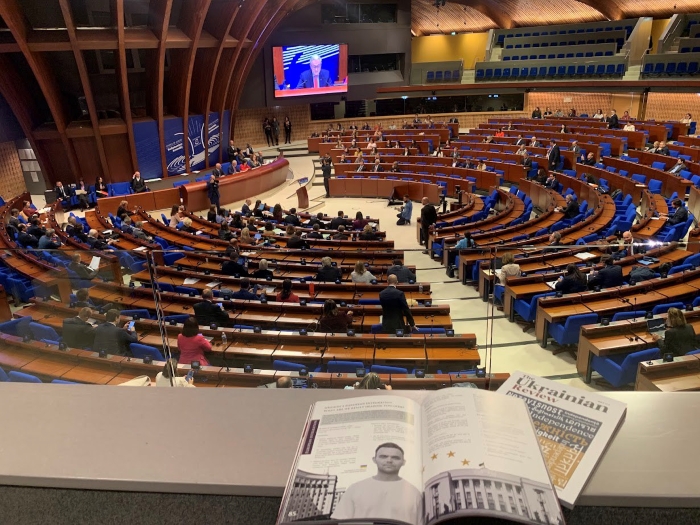
The 5th issue of The Ukrainian Review magazine on Parliamentary Assembly of the Council of EuropeDespite Ukraine’s declared European integration as a strategic course, the country today faces not only the demands of the European Union but also a question of internal honesty: do we truly want to become part of Europe — not in words, but in action? The decision to join is not just about foreign diplomacy but, above all, about domestic political and moral transformation. In Ukrainian society, the demand for European values is both real and profound. But is the political elite ready to fully commit to this path?
The absence of key reforms in the judicial, anti-corruption, and law enforcement sectors raises serious questions. It often seems that part of the elite is deliberately slowing the process, knowing that genuine European integration would put an end to the schemes that have enriched oligarchs and clans for decades, built on the weakness of the state and the suffering of its citizens. However, this is a separate topic — one I intend to cover in a dedicated, in-depth article.
Therefore, we must be honest with ourselves: Ukraine’s European future depends not only on the EU but also on the willingness of the Ukrainian state to dismantle corrupt systems, protect people’s rights, and play by the rules. The key question is not “Will Europe accept us?” but rather “Are we ourselves ready to become a truly European state?”
P.S. One more concern worth mentioning:
While EU membership offers undeniable opportunities, we must also acknowledge that accession in a post-war context could pose serious risks to Ukraine’s economic sovereignty. With a weakened economy, damaged infrastructure, and a struggling small business sector, Ukraine may become vulnerable to rapid absorption by powerful Western corporations. Under the banner of “European integration,” we could witness a wave of acquisitions — of land, industries, and key infrastructure — at deflated prices. In such circumstances, it is crucial not only to join the EU but also to safeguard national interests.
Ukraine must develop protective mechanisms to ensure it enters the Union not as a passive recipient of external influence, but as a modern, capable partner. Otherwise, if EU accession is treated by the political elite purely as a geopolitical symbol — and not a wellcalculated economic strategy — Ukraine risks losing part of its sovereignty. And that is a conversation we must start now, not later.