

European officials now discuss steps toward stronger response. Ideas include joint cyber operations against Russia, faster and coordinated attribution of hybrid attacks, and unexpected NATO-led military exercises. Two senior European government officials told Politico that these proposals reflect a clear shift in thinking. Politico called this steps as “Europe thinks the unthinkable”.
What’s inside the proposals
Among the prominent ideas is the intensification of cyberattacks. Officials urge NATO to react faster and name Moscow immediately once investigators confirm responsibility. They also promote new NATO military exercises to increase deterrence.
European governments additionally call for stronger tools to counter Russian disinformation.
Latvian Foreign Minister Baiba Braže advocating for allies to “be more proactive on the cyber offensive“, a sentiment echoed by German State Secretary for Defense Florian Hahn, who questioned whether Europe should “consider becoming more active ourselves in this area“. Concrete proposals for this “muscular response” include Italian Defense Minister Guido Crosetto’s plan to establish a European Center for Countering Hybrid Warfare and a 1,500-strong cyber force, while Polish Prime Minister Donald Tusk demonstrated resolve by deploying 10,000 troops to protect critical infrastructure following an incident he termed “state terrorism“.
Russian hybrid attacks: prominent examples
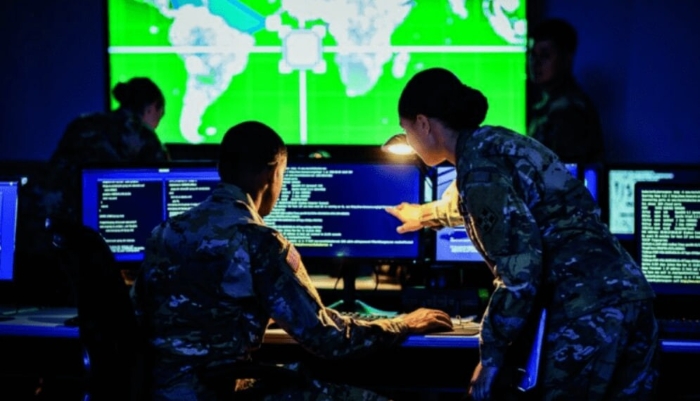
Microsoft analysis reported on October 17, 2025, that Russian-linked cyberattacks against NATO members increased by 25% in one year. Hackers mainly targeted government agencies, educational institutions, scientific organizations, and research centers. The attacks hit the United States, the United Kingdom, Germany, Belgium, Italy, Estonia, the Netherlands, and Poland.
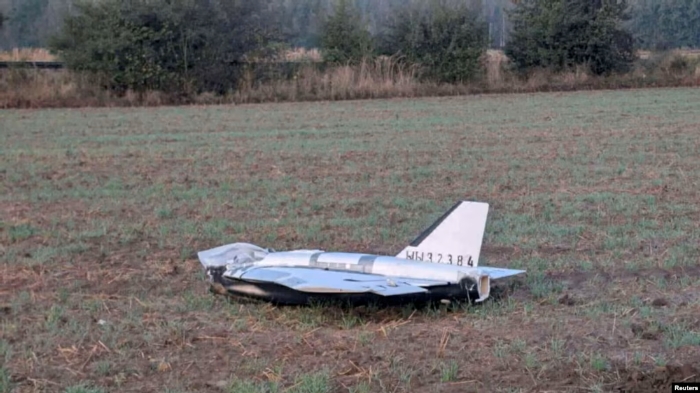
In August 2025, Lithuania announced that a drone from Belarus crossed its airspace. Officials believe Russia controlled the drone. Vilnius asked NATO to reinforce air defenses on the eastern flank.
The most serious drone incident happened on the night of September 9–10, 2025, when a large drone group entered Polish airspace.
Also, in November 2025, a similar incident occurred in Romania: two drones crossed its airspace — one returned, the other crashed on the country’s territory. This was the furthest daytime “incursion” since the start of the full-scale war.
Moreover, Unknown drones forced Copenhagen Airport to close for several hours. Around the same time, Norway shut down air traffic at Oslo Airport because several drones appeared above the runway. It is considered that this way Russia sent “signals” to the biggest supporters of Ukraine in terms of commitment.
The Netherlands faced the same pattern. On November 22, 2025, Eindhoven Airport suspended flights for several hours after drone sightings near the civilian and military zones.
Conclusion
European countries finally show a firmer tone toward Russia. At least with such articles, governments now try to respond to Moscow’s level of information pressure. Still, as Latvian Foreign Minister Baiba Braže reminded in an interview with Politico: “Actions, not words, send the real signal.” Europe must turn these ideas into real measures and avoid delays.
The proposals remain logical, yet they still lack concrete shape. Europe’s political culture relies on ethical international behavior and aims to improve conditions for its citizens and partners. Russia, by contrast, seeks strategic advantage by harming others. Making other lives worse is the ideology of its state at a core. This difference explains why European states hesitate to mirror Russia’s methods.
But the need for a strong and coordinated response has never been clearer. Russian provocations can either unite Europe or deepen its internal divisions.