

In recent years, Serbia has remained a unique case in Europe: the country is formally negotiating EU accession, but a significant part of the population and media support pro-Russian rhetoric.
In 2024, Serbian media often spread pro-Russian disinformation, emphasizing Ukraine’s inability to use Western weapons and spreading rumors about personnel changes in the Ukrainian Armed Forces command.
The Ukrainian Review decided to compare how much Serbian media rhetoric has changed in 2025.
In 2025, Serbian media demonstrate a noticeably mixed approach to covering the war – from a restrained-neutral tone to an open rebroadcast of Russian formulations. The general information background consists of operational news about military operations and strikes on Ukraine, statements by Russian officials, and echoes of Western policy – especially any statements or actions by US President Donald Trump.
Tanjug
Tanjug, the national news agency, often presents statements by Russian officials as key informational pretexts in its news.
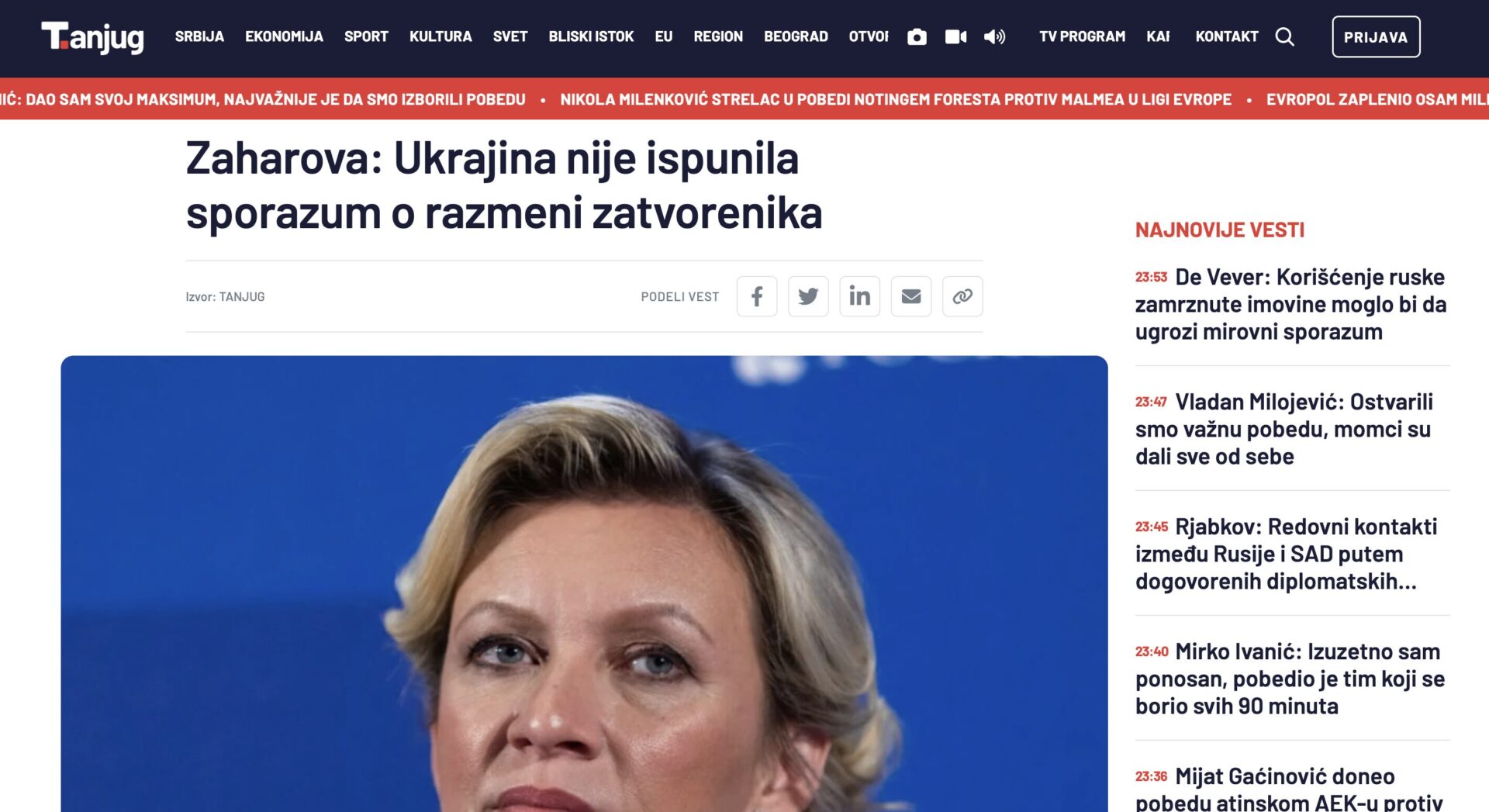
For example, the article “Zakharova: Ukraine did not fulfill the prisoner exchange agreement” emphasizes Russia’s claims, without further verification or Ukraine’s position. A similar approach is visible in the news article “Peskov: Ukraine continues its militaristic policy instead of dialogue”, which reproduces the standard Russian framework of responsibility.
The media publishes news about Russian missile and drone attacks on Ukraine, notes the damage caused by Russia and the number of drones and missiles shot down by Ukraine.
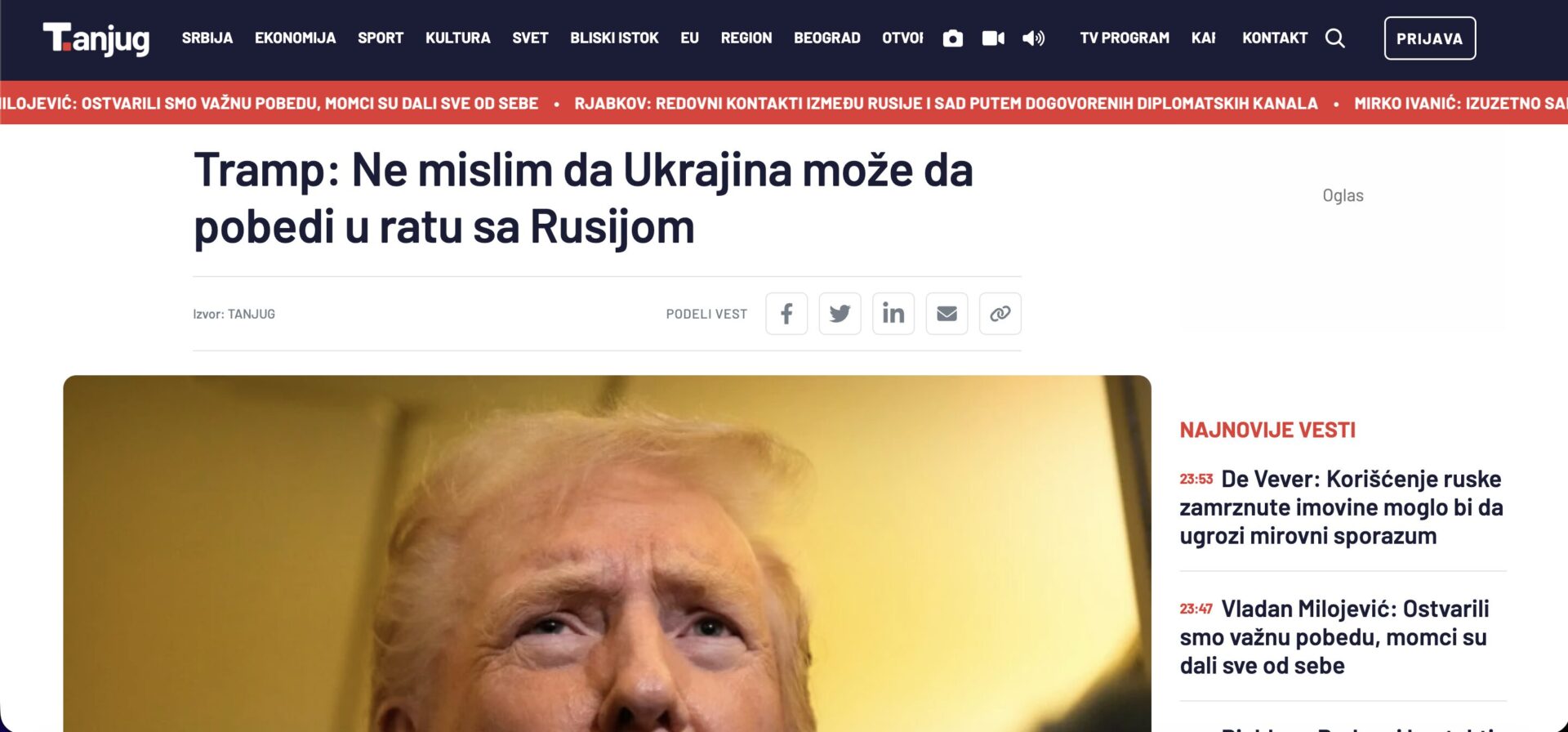
There is also a noticeable emphasis on geopolitical statements, including Trump’s: “I don’t think Ukraine can win a war with Russia” – which creates a sense of inevitability of Ukraine’s defeat or at least its weak position among the Serbian audience.
PTS
PTS, the state broadcaster with the largest audience, shows a slightly wider palette, but also tends to rebroadcast Russian statements.
For example, the news item “Peskov: About 5,000 Ukrainian soldiers ‘blocked’ on the banks of the Oskil River in Kharkiv” presents the Russian version of the situation without context or alternative assessment.
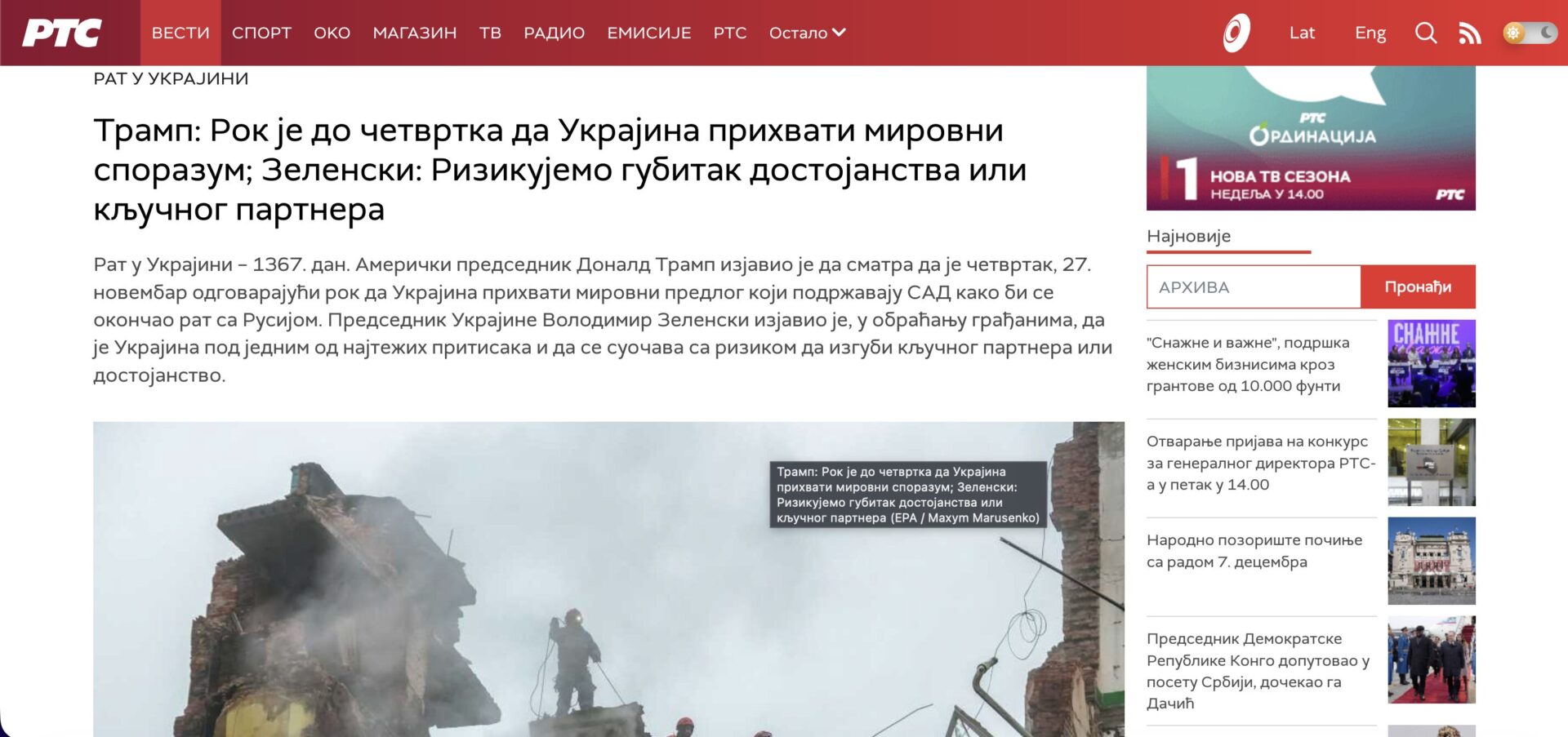
At the same time, Western political messages are also broadcast, but more often as elements of diplomatic pressure, rather than support: “Trump: Ukraine has until Thursday to accept a peace agreement”, which creates a sense of an ultimatum; or news about Budapest’s position – “Szijjártó calls on EU leaders not to hinder US efforts for peace in Ukraine”.
At the same time, PTC also publishes information about Russian missile and drone attacks, reports on the number of people injured or killed in them.
Politika
Politika, one of the oldest Serbian newspapers, appears to be the most openly pro-Russian in its rhetoric.
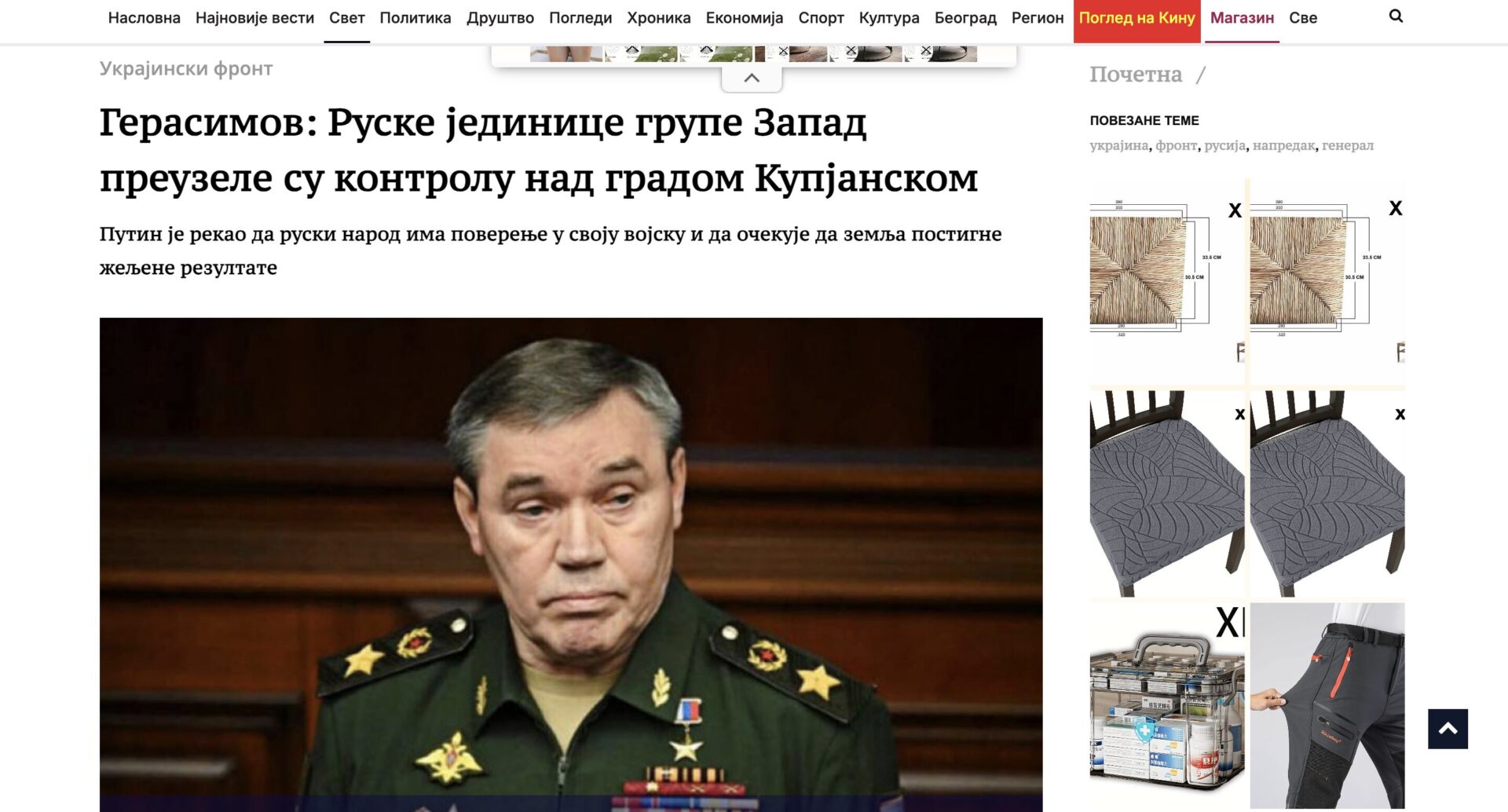
News about the fighting on the front is dominated by Russian formulations and terms that create the impression of the constant success of the Russian army: “Gerasimov: Russian units… have taken control of the city of Kupyansk” or “The fall of Kupyansk threatens the collapse of the Ukrainian front”. Politika systematically reinforces the narrative about Ukraine’s weakness and the inevitability of its strategic defeat.
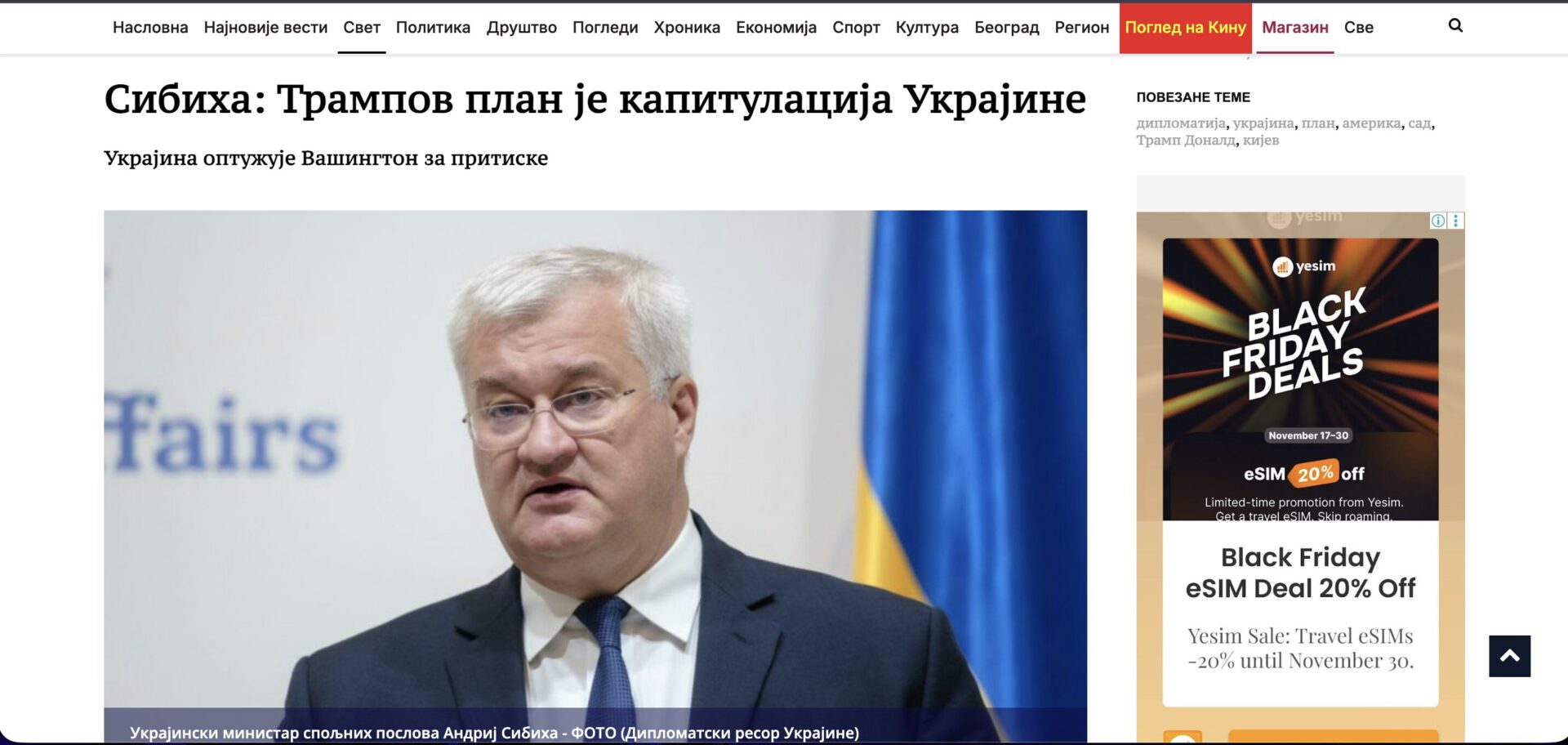
In the political sphere, the newspaper also willingly presents statements by Russian officials, leaving them uncritical. For example: “The Kiev authorities are an organized criminal group, Putin said…” At the same time, Western politicians or experts are presented through the prism of criticism of the West: “Italian Deputy Prime Minister calls for an end to the armament of Ukraine” or “Sibiha: Trump’s plan is Ukraine’s surrender”.
Despite this, the publication also covers events that clearly demonstrate the scale of the Russian attacks: “Russian shelling of Ternopil: the number of dead has increased to 31 people”.
***
In general, a similar information matrix is forming between the three media: the dominance of Russian statements, the regular use of Russian military narratives, increased attention to Trump as a “peacemaker”, the minimum number of Ukrainian comments or their presentation only as dry facts.
In 2024, the Serbian media actively broadcast Russian propaganda. Russian comments were presented as the main source, and the Ukrainian position was almost not heard.
In 2025, the rhetoric changed formally, but not in content. News about the shelling itself appears more often in the feeds of Tanjug, RTS and Politika. However, at the same time, the media quote the Russian side, such as Peskov or Putin, forming the necessary personal context.
Anna Romaniv