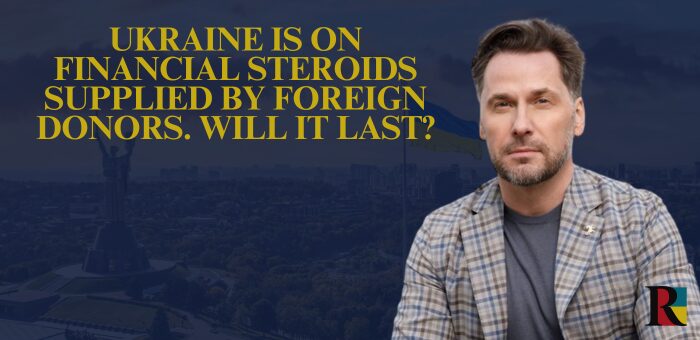


Dovydas Vitkauskas’ various consultant roles in Ukraine include a Team Leader of a number of EU-funded governance and rule of law reform projects since 2016. During that time, he has also been acting as advisor to two consecutive administrations of the President of Ukraine. He shared his thoughts with The Ukrainian Review about the situation with financial assistance for Ukraine and its problems.
Artem Kasparian: The Ukrainian GDP grew by 3.6% last year. Is the economy doing better than expected?
Dovydas Vitkauskas: The Ukrainian economy is still down 25% from the pre-2022 level, so some growth can and should be expected from the recent bottom. But almost all the economic growth now owes exclusively to loans and grants from the European Commission and the World Bank, together with bilateral financial guarantees by the US, UK, Canada, Japan, and other Western governments. Some USD 120 billion have been paid directly into the Ukrainian treasury by way of direct budget support from these donors since 2022. This is a very sizable amount, because the Ukrainian annual GDP is only about USD 160 billion. Foreign financial injections now contribute to some 25% of the economy, or 50% of the State budget, each year. As a result, Ukraine’s government debt has already ballooned to 100% of GDP. Servicing the debt will be difficult in a high-interest rate economy, which is in no position to print its own money as it pleases. The budget deficit for the last 3 years has been largely the same and will continue to be such in 2025. One can realistically expect the public debt to GDP to stand at 125% of GDP by the end of this year. In other words, the Ukrainian economy and the budget are on foreign donor steroids, provided upon the government wishlist. I am not sure this is good news, looking forward.

A.K.: Aren’t higher inflation and debt inevitable at the time of war?
D.V.: If one cares about sound policy, paying for wishlists with other people’s money tends to create moral hazards, rather than discipline and accountability needed for sustainable growth. Foreign partners need to give the Ukrainian government a trampoline, not a hammock. One can see already that any benefit from keeping the level of local currency (hryvna, UAH) relatively stable vis-a-vis USD and EUR has been offset by inflation. Both further inflation and the hryvna devaluation are unavoidable in the short term, despite the hard currencies (USD, EUR) being pumped into Ukraine’s budget by Western governments. But more important are the long-term effects of foreign assistance. The key question is – will the Western government’s help contribute to an eventual investment coming from Western businesses? More than 30 years of Ukraine’s modern history give a lot of reasons to be skeptical. Ukraine has so far been remarkably “resilient” to foreign investors, to its detriment.
A.K.: Maybe the investment will come from the US to explore Ukraine’s mineral resources?
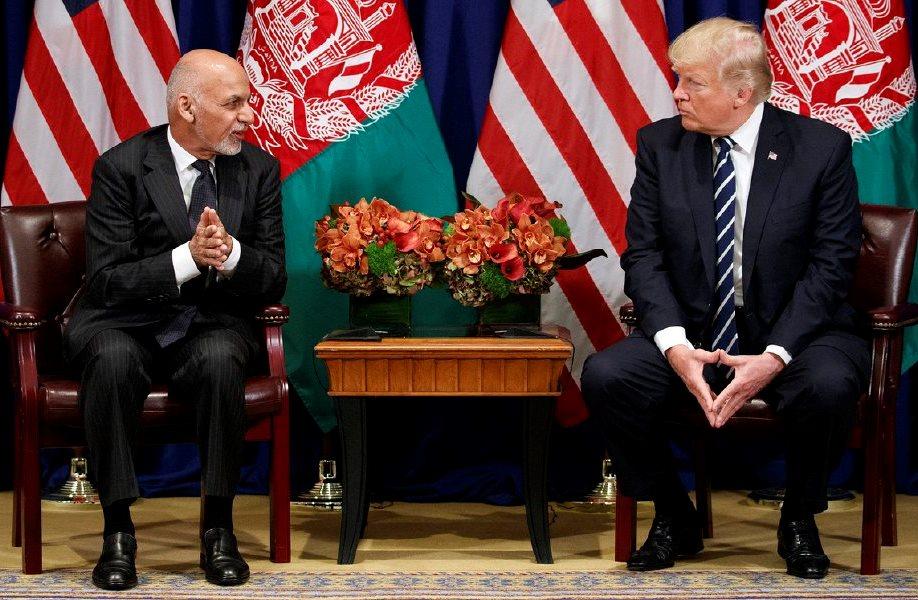
D.V.: We have already discussed in detail why the rare earth “deal” appears to serve mainly the purposes of political marketing, not economic reality. Good PR for the new US Administration, but it does not much of a chance of financial benefit to any party. Moreover, Ukraine has a history of dodgy criminal prosecutions of former political leaders for mishandling the country’s natural resources. The case of former Prime Minister Julia Tymoshenko springs to mind more than a decade ago. No wonder the current Ukrainian political leadership is dragging its feet on Trump’s proposed deal. What if the government changes following the elections? It now seems to be forgotten that the first Trump Administration signed a similar agreement for rare earths with Afghanistan in 2017. Since then, there has been no real implementation of that deal on either side, nor is there much of a country left …
A.K.: There has been a heated discussion on who gave more aid to Ukraine: US or EU?
D.V.: Disputes arise because one mixes apples, oranges, mangoes and tennis balls (laughing). The whole Ukraine assistance pie since 2022 is made up of 4 distinct slices, which are frequently confused with one another. The first component is the military aid in kind, which is non-refundable but cannot be subjected to standardised evaluation in monetary terms. It all goes down to how each donor country’s authorities are keeping accounts of inventory write-offs. A scandal broke out in Brussels almost two years ago when the Estonian government was caught inflating the amount of its military aid to Ukraine: old equipment was valued almost as new on paper. Hence, we cannot know the exact monetary worth of military aid given to Ukraine, but it is probably lingering between USD 150 and 500 billion, according to various informed observers. The sizes of US and EU shares in this component are comparable, making up to 45% each. The second key aid component is budget support by way of direct injections into the Ukrainian treasury, discussed above. This pot amounts to USD 120 billion already disbursed since 2022. There is a catch, however, as this form of assistance is given mostly in the form of loans, not grants. In this respect, EU has so far given USD 40 billion and US 30 billion in budget support. The third component is the so-called “project assistance”, managed by USAID and the like. The overall size is hard to measure because international aid projects are programmed by way of multi-annual envelopes, not early budgets. In addition, the ultimate financial benefactors of “project support” are frequently American and European consultancies and suppliers, not the Ukrainian people or businesses. It can be said, however that up to USD 25 billion has been spent on “soft” and “hard” assistance projects since 2022, out of which EU-funded programs made up at least 40% and US up to 30%. Last but not least is the private humanitarian assistance component, which is not susceptible to precise evaluation, but which can be assessed at least at some USD 20 billion since 2022. All in all, it appears that the size of the US and EU help to Ukraine so far is largely comparable.
A.K.: Maybe sanctioned Russian money will also help Ukraine?
D.V.: No. I made a prediction more than a year ago that the West would not confiscate sanctioned Russian sovereign assets for the benefit of Ukraine. That prediction still holds true. A billion dollars a year or so given to Ukraine from the Russian Central Bank’s profits abroad is a teardrop in the ocean of Ukraine’s financial needs.
A.K.: But the Western support made a good impact on Ukrainian salaries, which rose by more than 20% in 2024 …
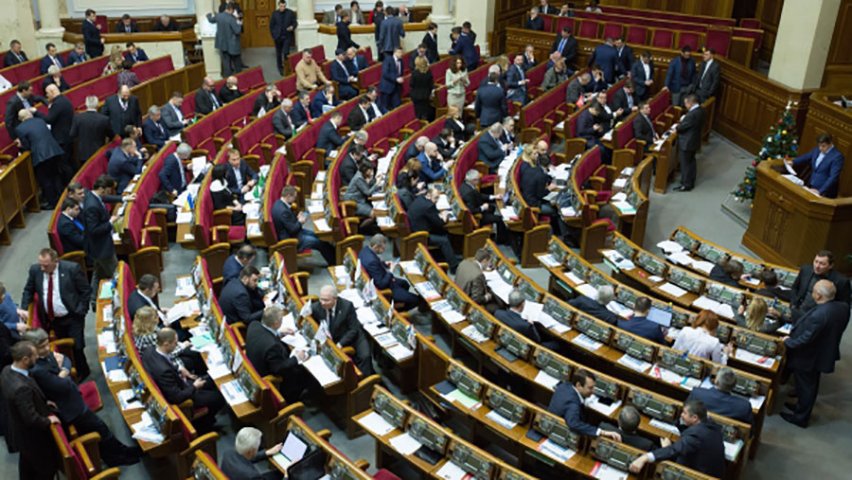
D.V.: You probably mean the average public sector salaries of the central government, which rose to more than USD 1,900 per month (pre-tax) in early 2025. However, the average salary in the country is still lingering below USD 470 per month. This means that the Kyiv bureaucrats are getting paid 4 times more than the country’s other workers. And those in the pubic sector are now paid better than in the private sector. It is hard to see any economic logic here – a certain political logic, perhaps … Since 2022, owing to the donor injections, the role of government spending in Ukraine almost doubled to more than 50% of the country’s annual GDP. But Ukraine is no Scandinavian country – it has no history or culture to absorb such an economic role enjoyed by the government. Time and time again, news continues to break about improper public procurement contracts delivered at exorbitant prices to “friendly” sub-contractors in the Ukrainian defence, energy and other sectors. The level of kickbacks and bribes to public sector officials does not appear to be decreasing, despite the abundance of criminal investigations. 42 Members of Parliament (from the current election phase, including from the President’s party) are under criminal investigation right now, alongside thousands of other public officials. It is too easy to point the finger at the corruption in the higher or lower echelons of power in Ukraine, especially at the time of havoc caused by war. But perhaps it is now time to increase awareness that foreign donors are directly complicit in enabling this continuing corruption and embezzlement in Ukraine – simply by continuing to feed the public sector beast at such volumes.
A.K.: So the recent economic growth is more or less illusory?
D.V.: We have already discussed in detail why Ukraine has suffered from chronic domestic and foreign under-investment since the early 1990s . Now, Ukraine is suffering additional structural dysfunctions. Already in 2023, the Ukrainian GDP already rose by 5%, while electricity production (-9%) and consumption (-6%) fell. This trend continued in 2024 onward. It might be a surprise for Nicola Tesla, who underlined the link between electricity production and civilisation more than a hundred years ago. Furthermore, Ukraine now has 26 million of inhabitants, down from some 44 million more than a decade ago. The working population is now only 9 million. Ukraine bleeds people, not just money. Human capital will not be brought back by donor-funded “awareness raising” and training. Real financial incentives have to be created for every Ukrainian, not just those close to the central or local government. As matters stand, the donor policy is not bringing back these people, nor is it contributing to the labor market or productivity growth.
A.K.: Apart from the Ukrainian public sector, who else benefitted from the Western support?
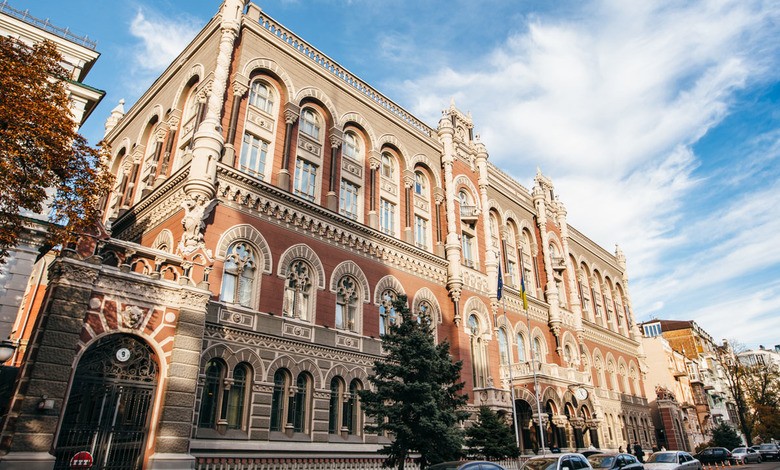
D.V.: Let’s start with losers: prospective Western investors, who have been squeezed out by local oligarchs and other established players with good political networks – having those connections means participating in the redistribution of donor resources. Most importantly, the victims are small and medium Ukrainian businesses. The big winners from the donor support over the last 3 years are Ukrainian commercial banks, which are getting low-interest financial resources in the form of hard currency (USD and EUR) from the National Bank of Ukraine (NBU), for the first time ever. This takes the pressure off NBU to print local money. It came as no surprise that the recent years recorded the biggest historical profits for commercial banks. It must be noted that State-owned commercial banks control more than 80% of the Ukrainian deposit market, so it is a clear bonanza primarily for them. These State-run commercial banks are yet another pocket in the suit of the State budget. Credit for end-customers, the people and business remains hardly accessible or cheap. Real interest rates for most – bar some State-subsidised programs like “5-7-9” – remain hovering at more than 25% per annum. At the same time, the poor conditions of the credit market do not seem to affect the State-owned enterprises (SOEs) and large industrial or agricultural groups with good political connections, which continue to enjoy various statutory privileges – such as the ability to forego debts to their suppliers.
A.K.: What is expected from Western partners then?
D.V.: Ukraine dramatically needs investment rather than “gifts”, such as cheap loans and unaccountable money, only to be swallowed by the public budget. Investment means a long-term commitment to the country and local Ukrainian partners and a taking of responsibility for their financial and management decisions. Unfortunately, any significant investment from Western partners is nowhere to be seen. In the meantime, investment in the Ukrainian energy sector, in particular, appears to be coming from the so-called Global South and the BRICS countries. Turkish investors, for instance, are snapping up hundreds of thousands of hectares of long-term (30-50 years) leases of land, with a view to building solar and wind farms in the South of Ukraine. No Western investor is even remotely near that scale of commitment to Ukraine. Do not be surprised that, come the end of the war, Ukraine will also start leaning geopolitically towards those who invested rather than those who gave expensive “gifts” …
A.K.: But the US now appears to have stopped its assistance?
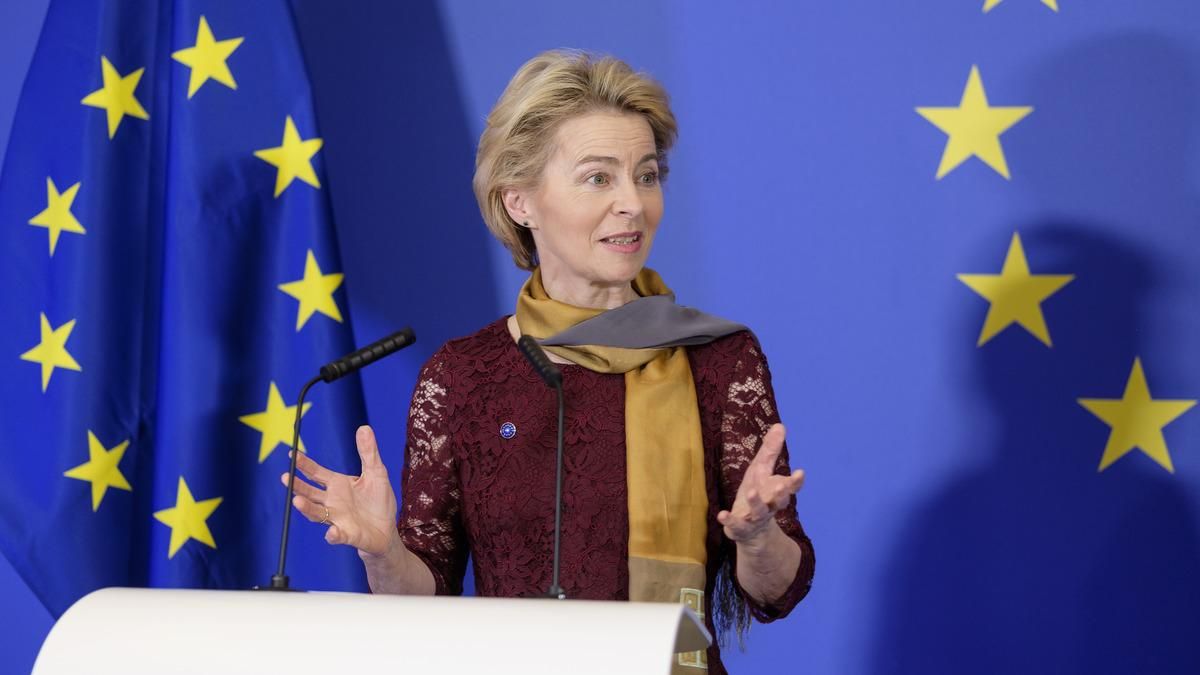
D.V.: Yes, but the EU and some other Western countries continue to promise to cover the exorbitant Ukrainian budget deficits. Not only it is counter-productive as a (lack of) incentive for sound reform policy, it is also hypocritical as “aid” because most of the EU budget support comes in the form of loans. The future generation of Ukrainians will have to pay it back. But all this does not appear to worry “financial alchemists” in Brussels and elsewhere. They continue pumping money into the State budget, worsening the country’s structural problems.
A.K.: Maybe some unforeseen “Black Swan Event” can kick-start Ukraine’s post-war economy?
D.V.: Let’s just hope it does not come from China (laughing).
Artem Kasparian