

The Russian army has been advancing on Pokrovsk since last summer. The city has become a symbol of a brutal war of aggression. Those who do not flee face death. Brave men like Oleg come to the rescue.
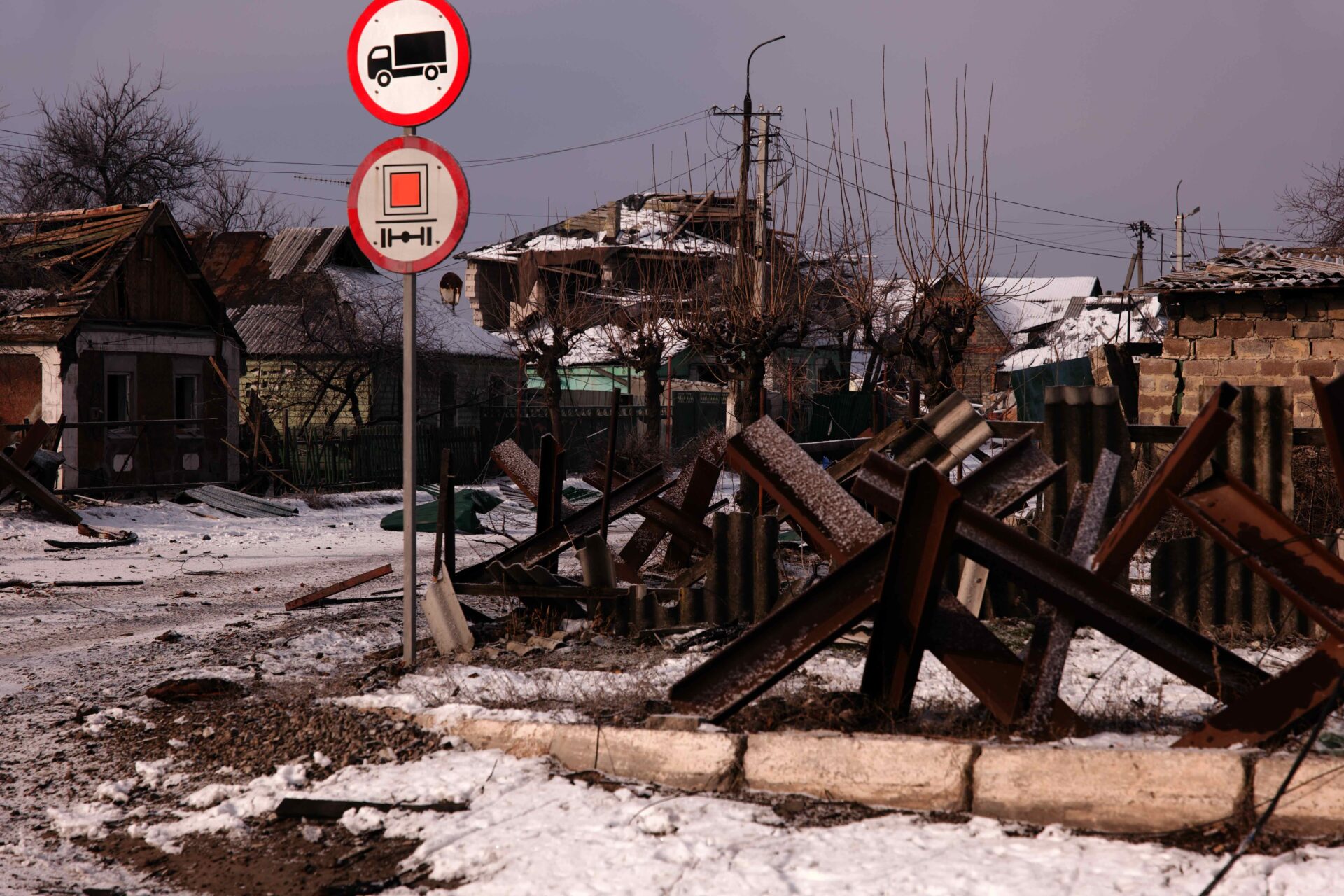
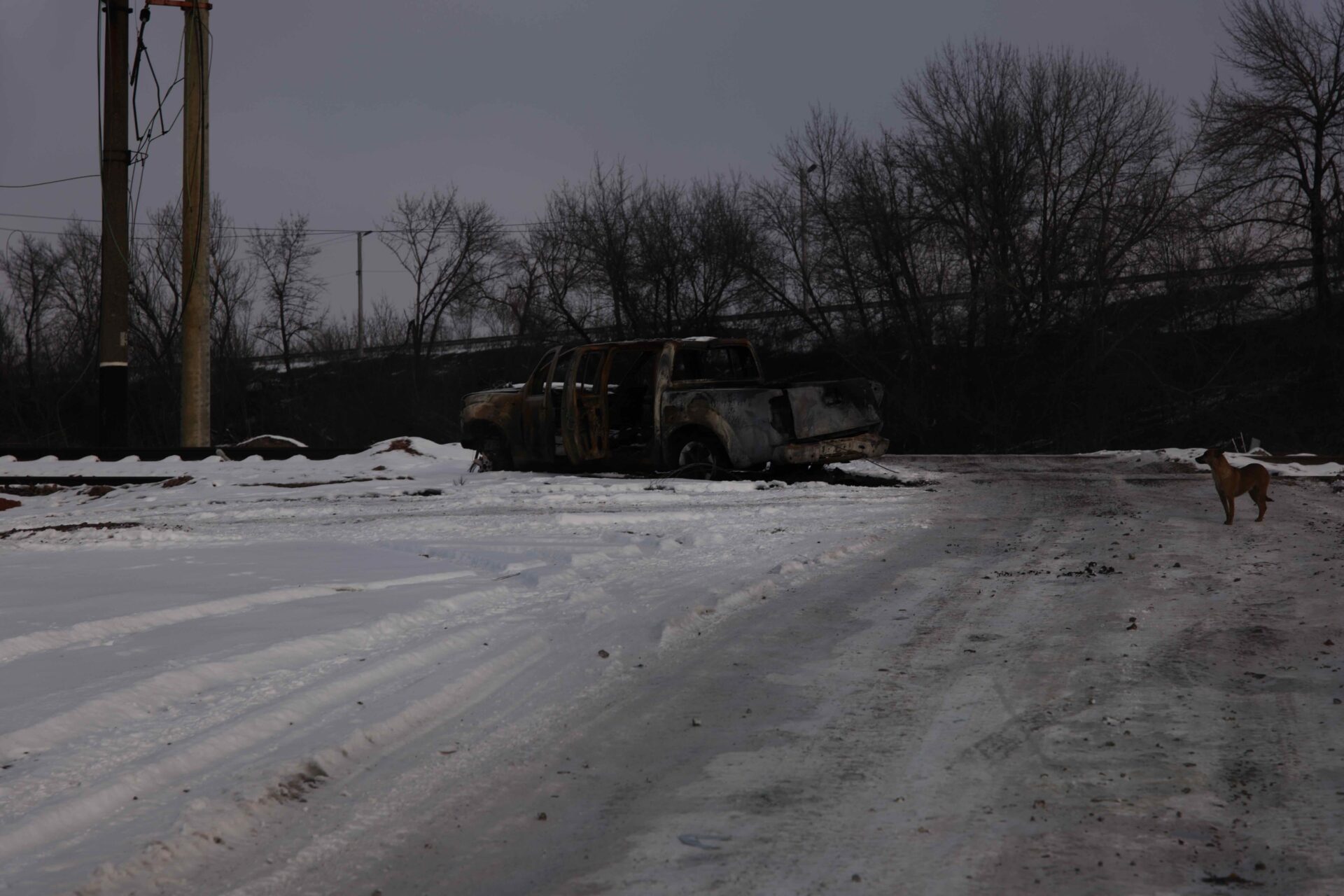
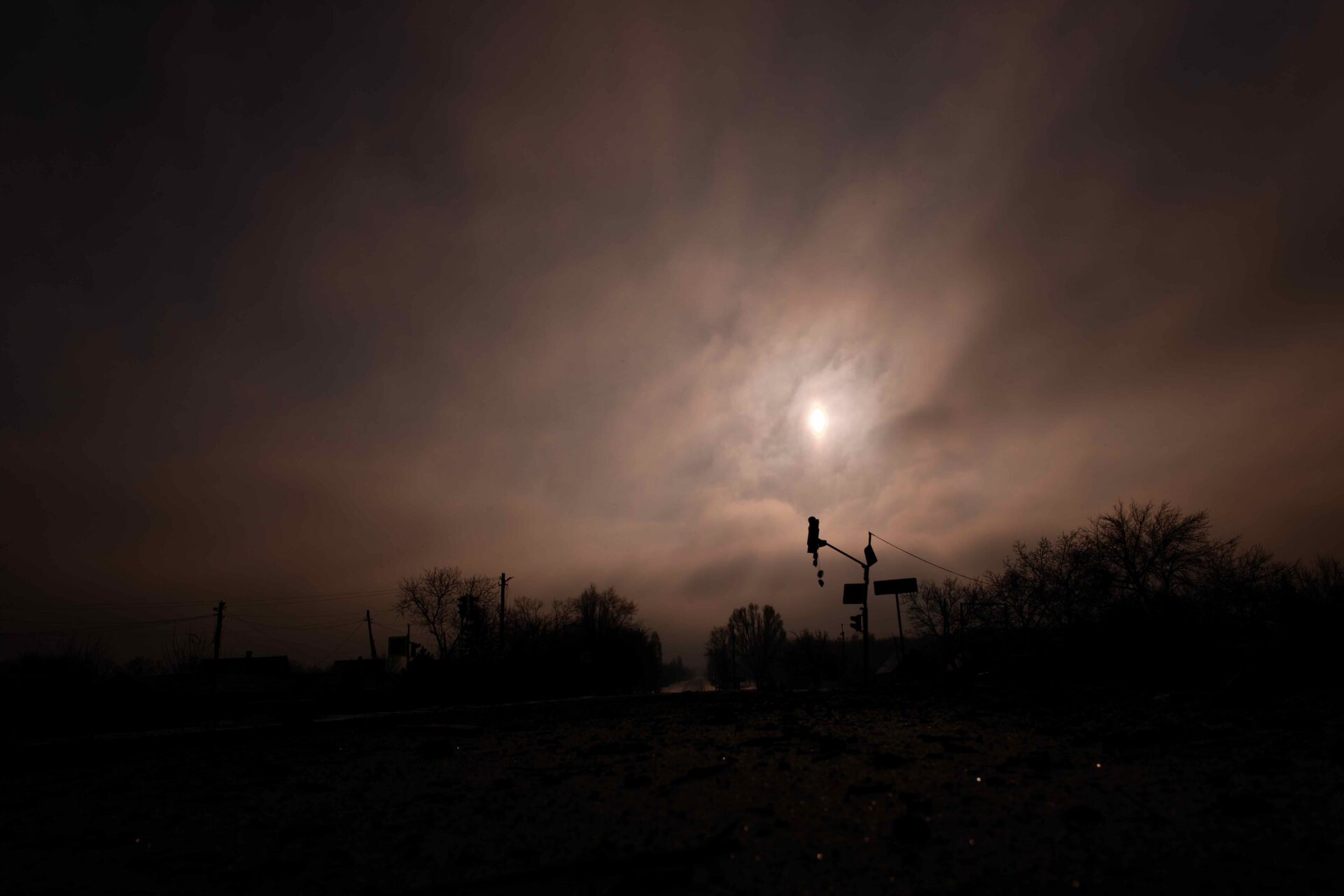
Pokrovsk is an image of hopelessness. A burnt-out wheeled armored vehicle stands at the crossroads. A long-extinguished traffic light hangs from a cable harness on a steel pole like a gallows. Shrapnel and earth have fallen on the white snow-covered roadway from the rocket’s impact. Silence reigns over everything, broken at regular intervals by the roar and muffled artillery.
And the hum of a diesel engine. Oleh drives quickly to the intersection in his old blue Renault minibus. To the left and right, mostly one-story houses stretch along the road. The charred roof trusses of some of them rise into the sky. Or, what once were human dwellings are now just bare walls. Most people have fled the increasingly close fighting and shelling.
Drones are a problem here, – says Oleh, pointing to the wreckage of an armored vehicle.
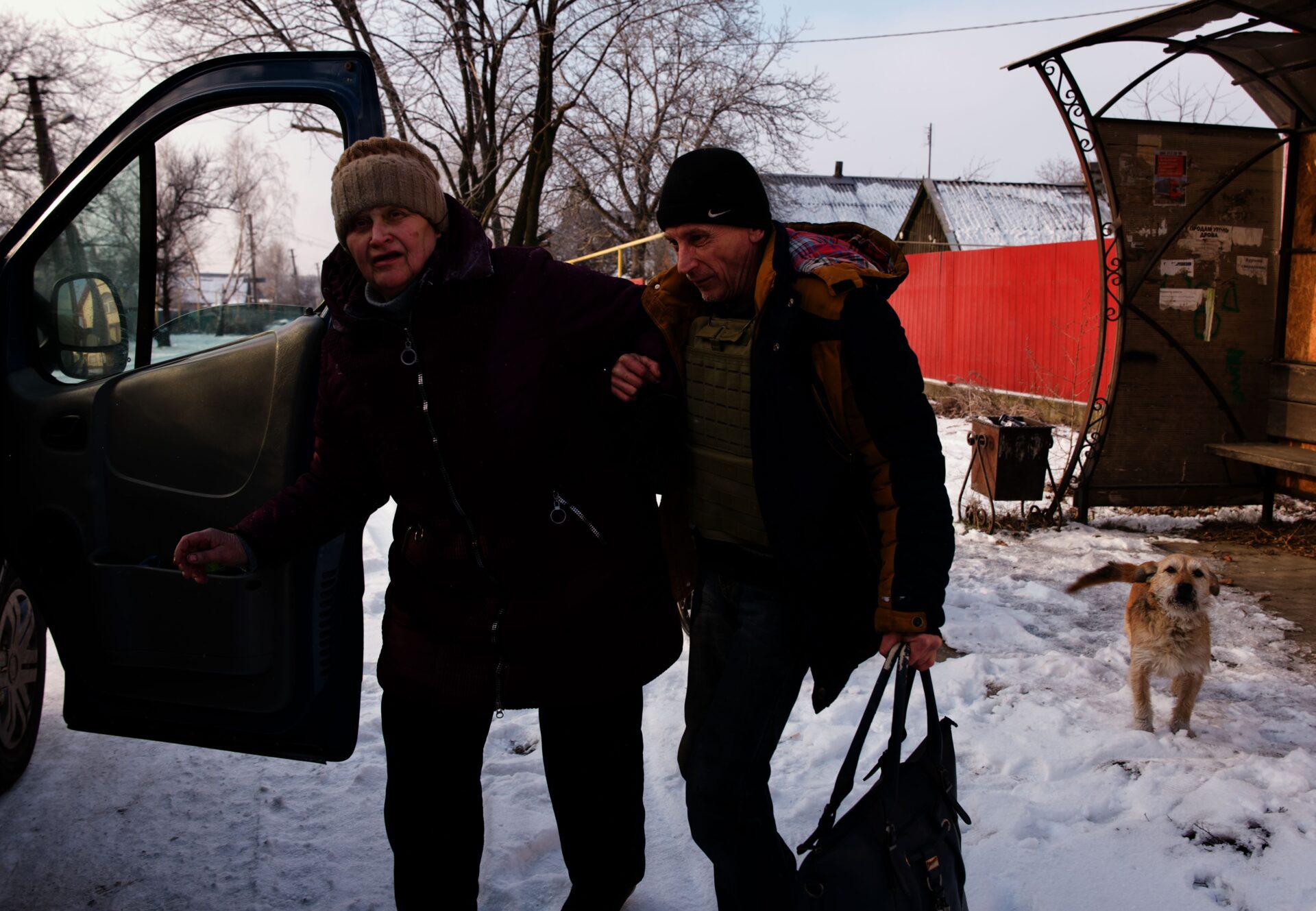
Not far away is a car that also burned down after being hit. Oleh, 39, is about to turn toward the city center when he sees three elderly people waving their hands excitedly. They are standing in front of a bus stop near an intersection. But no bus has stopped there for several months. Oleh stops right in front of the trio.
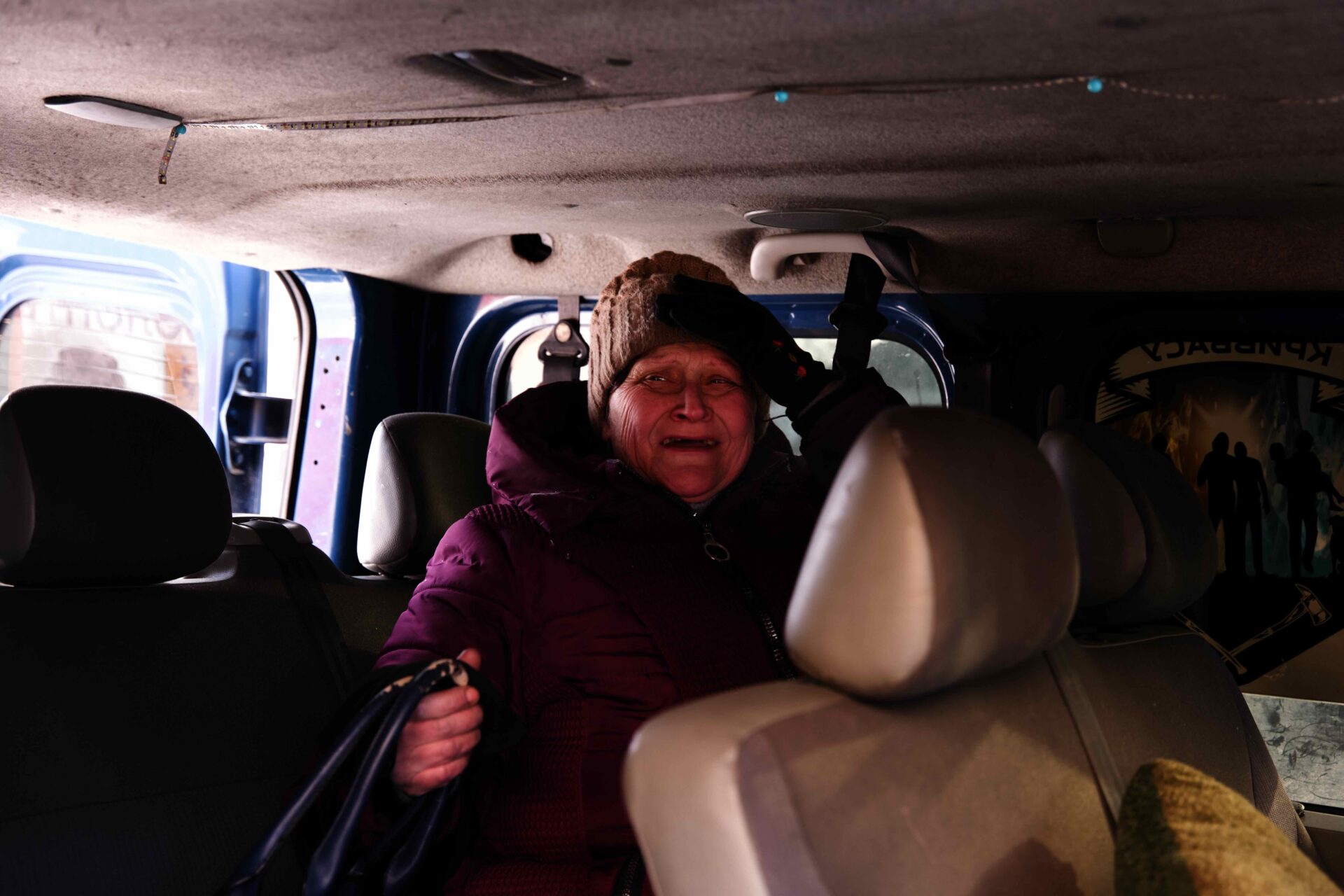
Thank you, thank you, – Nina (68) exclaims in a trembling voice.
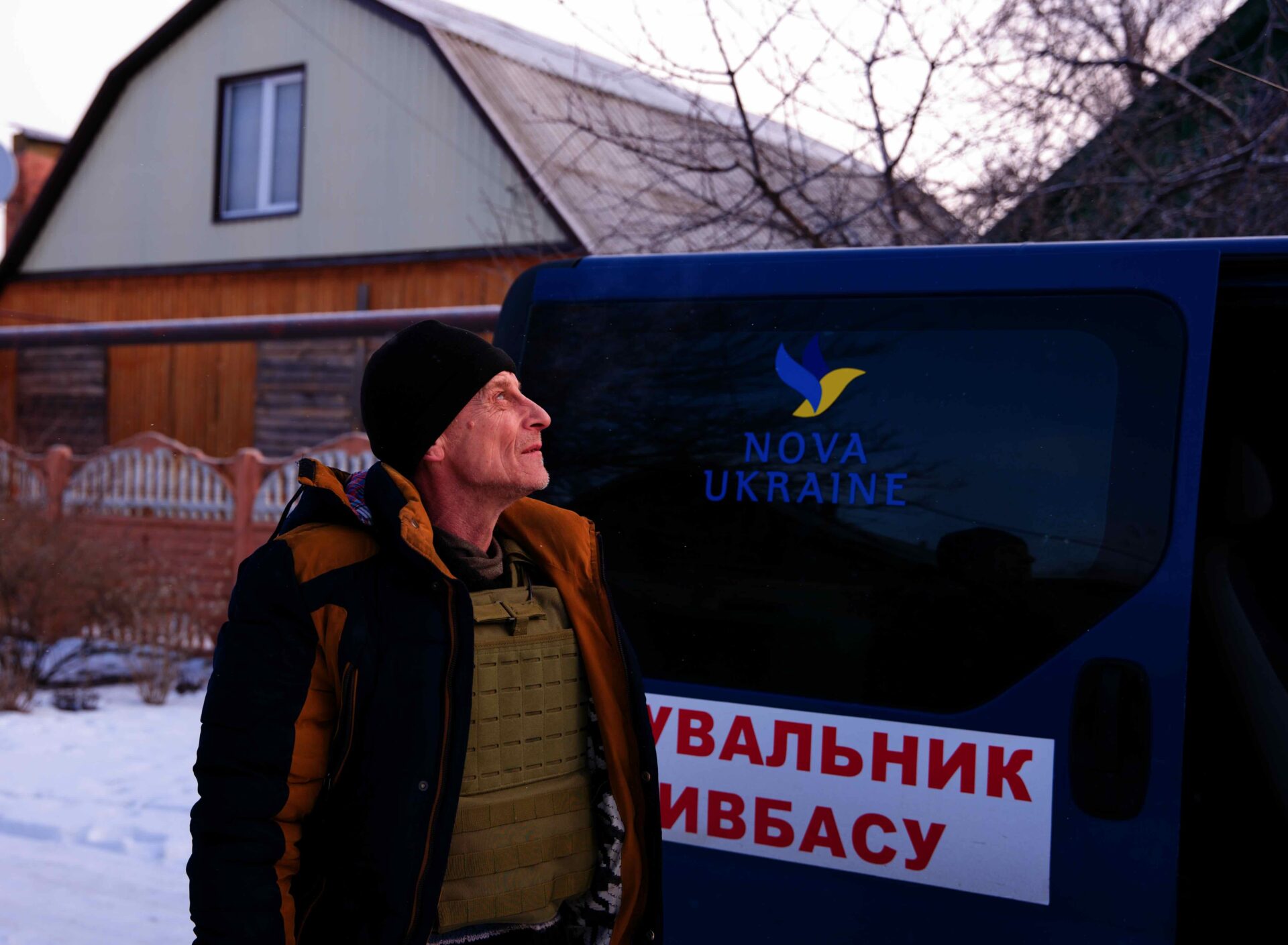
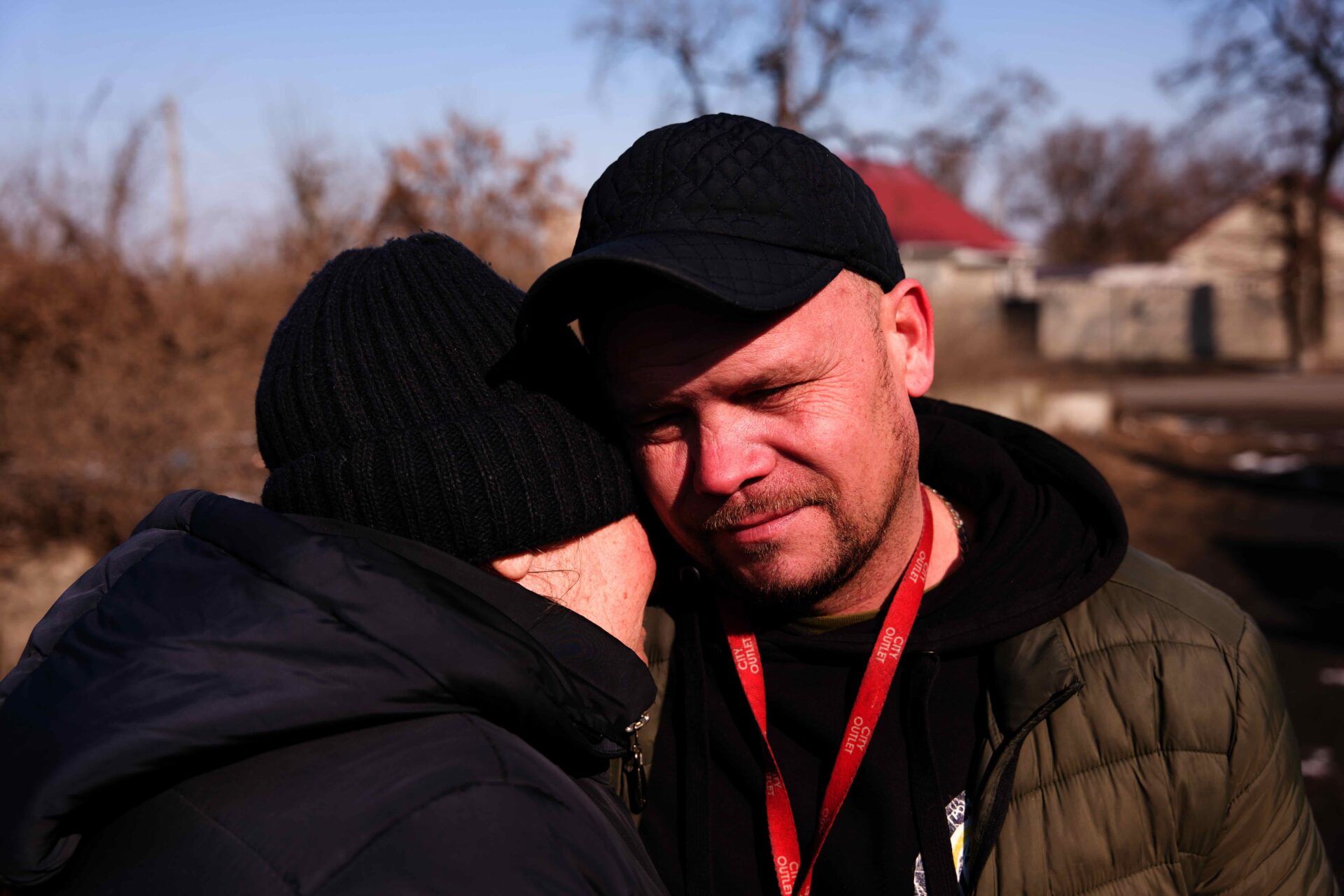
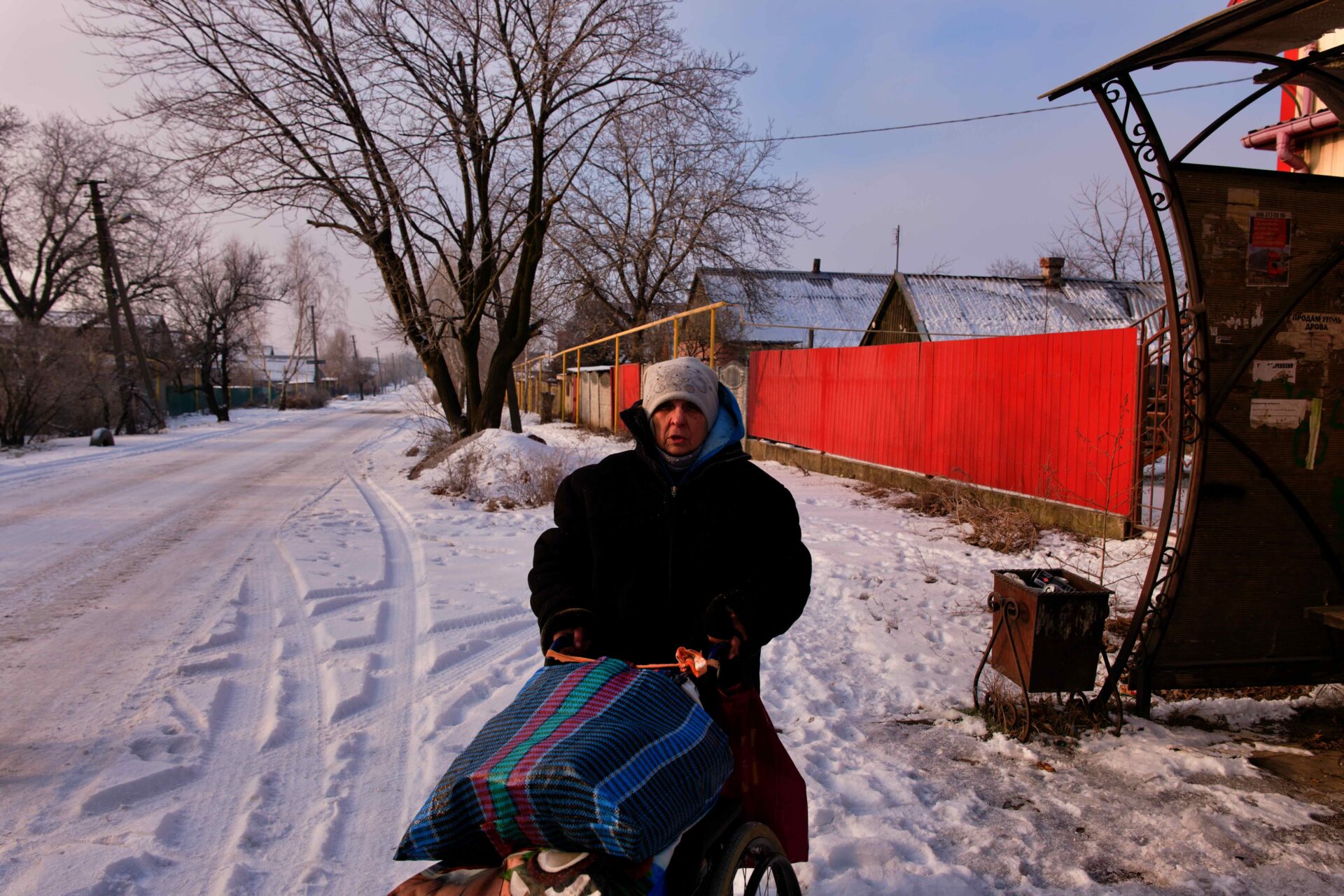
The 68-year-old woman has tears in her eyes. “Please, take us with you”, – Svetlana (61) begs. Oleg calms her down and points to the logo of the New Ukraine charity organization on the side windows: “We came for evacuation, there is room in the car.” The elderly people try to smile. All three are on the verge of survival. The three of them put two large bags and a small suitcase on a wheelchair and pushed the car through the snow for more than two hours. Natalia is unable to move. Two hours of walking in the bitter cold must have been a huge challenge for her.
We could not stay longer. Russian soldiers are very close. They are constantly shelling our neighborhood. Our houses are also damaged, the windows are broken, the roofs are damaged, – Natalia explains.
Her daughter is married to Svitlana’s son. He is fighting at the front near Pokrovsk, and the daughter and her children fled to Finland.
When we were heating the stove, we were afraid that the smoke would give us away. Russian drones are watching the smoke. If they see something, they will attack, – says Nina.
The Ukrainian army sent a drone part of the way ahead of the trio so that they could find a reasonably safe route.
Then we could only hope that someone would give us a ride. We were lucky, – she says. But two elderly neighbors had to leave the women behind. – They were too weak to make the journey, – Svitlana explains. One of them is bedridden.
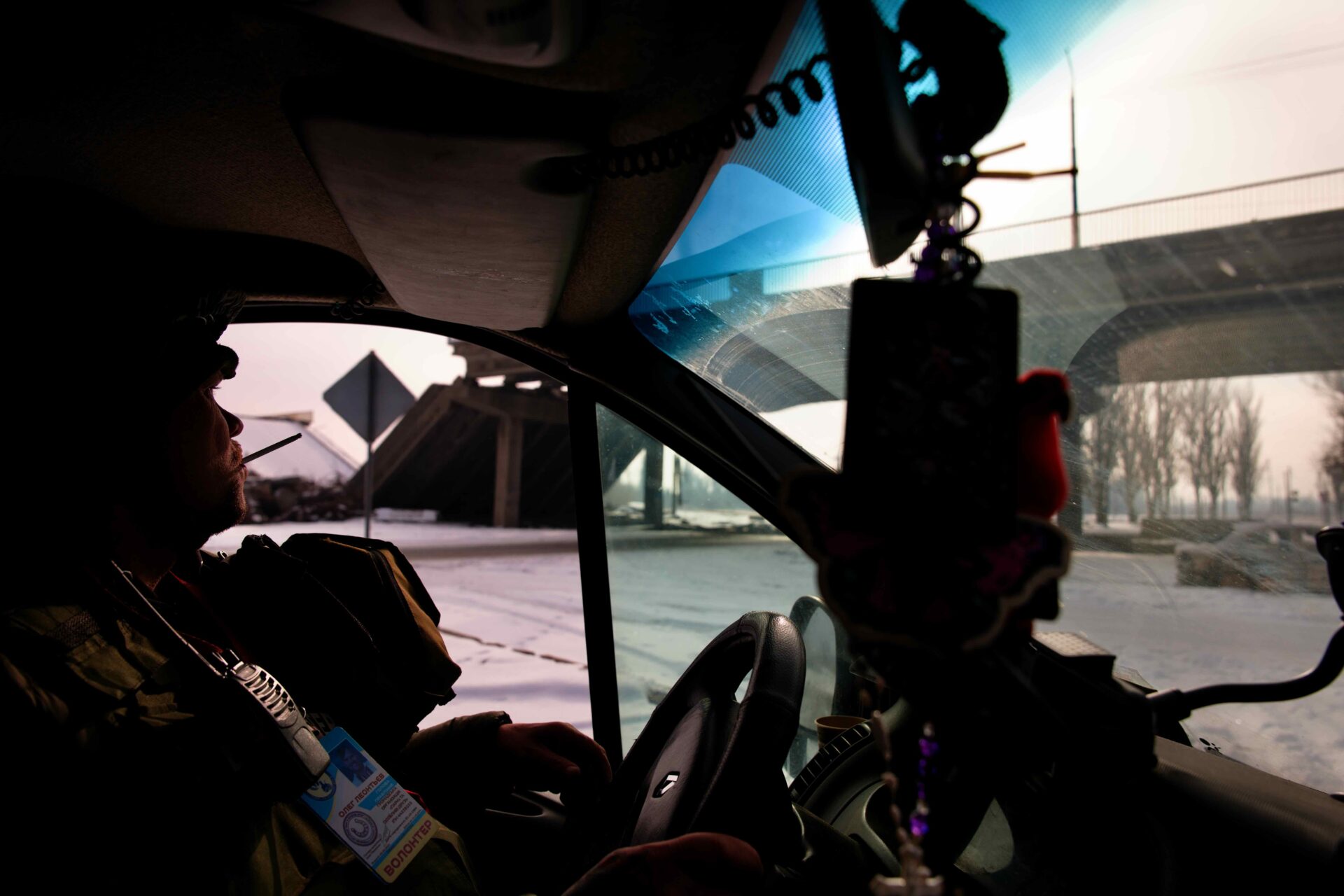
Oleh listens to them. He has a protective helmet on his head, which he has slipped over a knitted hat. It is bitterly cold today, minus 12 degrees Celsius. The cold forms thin clouds from his breath. His body, like the body of his co-driver Anatoliy, is protected by a bulletproof vest. Oleh knows where the three pensioners live.
An armored vehicle is indispensable here. We need a stretcher for a man lying down. I will inform the army so that they can organize an armored vehicle transportation, – the 39-year-old man announces.
The three women get into the minibus. Svitlana pets her dog for the last time.
He has come this far with us, – she says, tears in her eyes. She has to leave the animal behind.
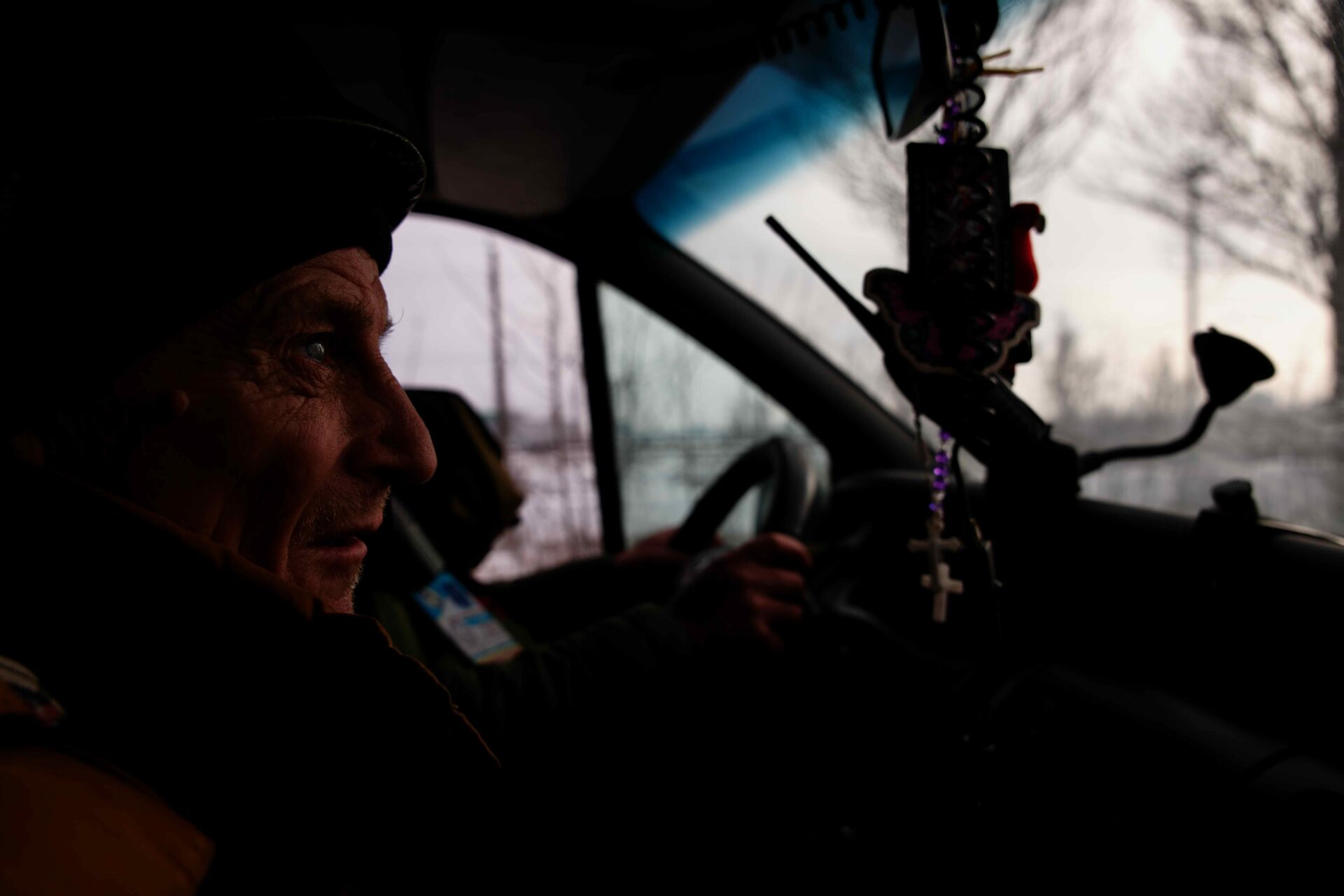
Oleh steps on the gas. Less than 500 meters away, an elderly woman walks down the road. She is pushing an old bicycle. Oleg lowers the windshield. “We can evacuate you,” — he calls out to her. The old woman nods without hesitation. Her house is less than two minutes away. “We have to hurry,” – Oleh calls to her. Inside the house, the pensioner gathers her belongings in a bag. Oleh, a skilled welder, watches her silently. He has seen so many times during his missions how people pack their belongings to escape. He has been evacuating people since the beginning of the invasion. Orphans from the war zone, children with cancer. Once he saw a child get blown up by a grenade. Oleg says he just doesn’t want to leave anyone behind.
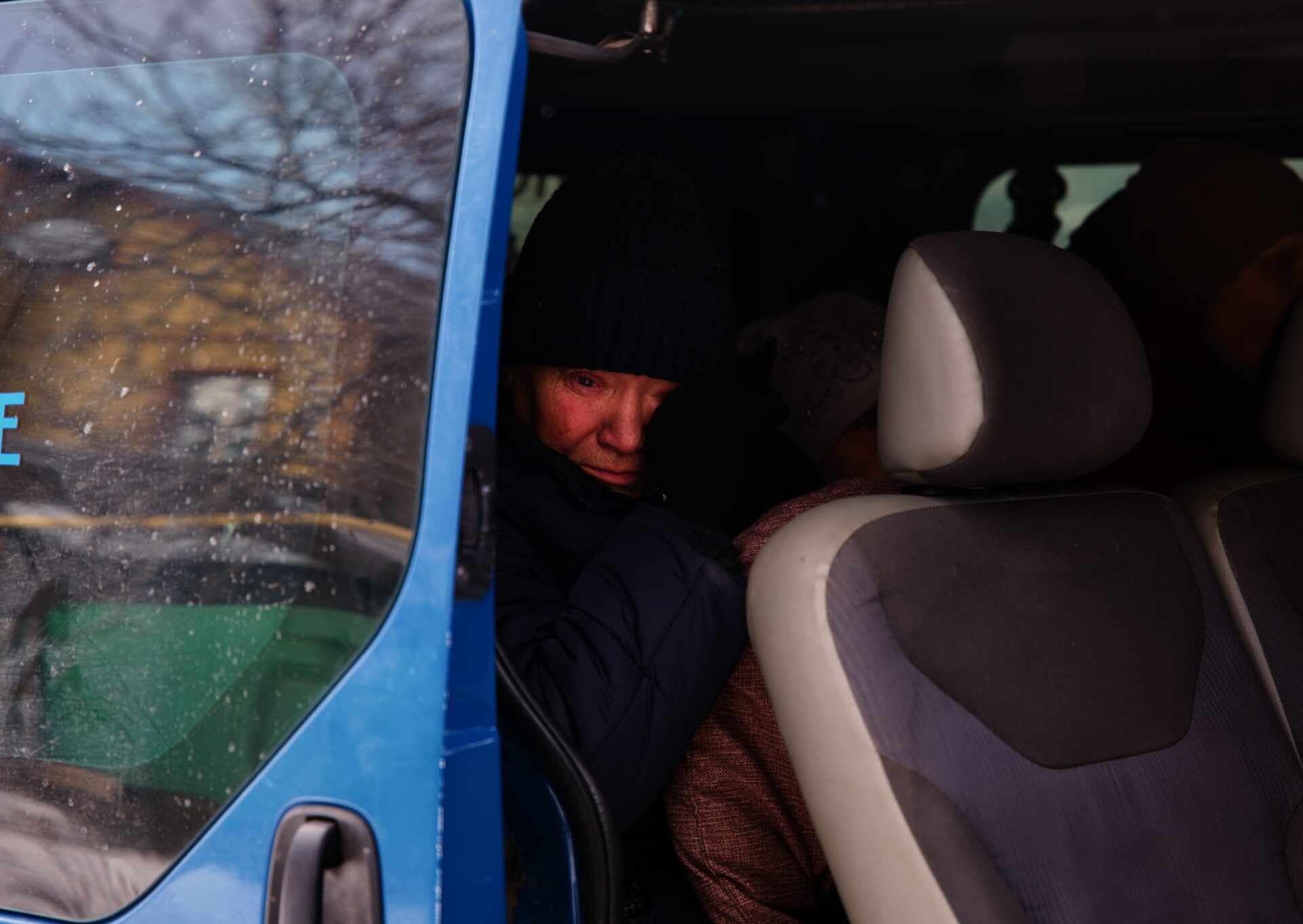
The van continues on its way. The newcomer in the van stares out the window, unmoving. She realizes that she may never see her home again. Because the city will come under Russian occupation or be destroyed.
The route of the blue van now runs through the entire city, which was once home to almost 55,000 people. More than 90% of the people have fled. The humanitarian organization’s hotline gave him an address. He has to pick up an elderly man.
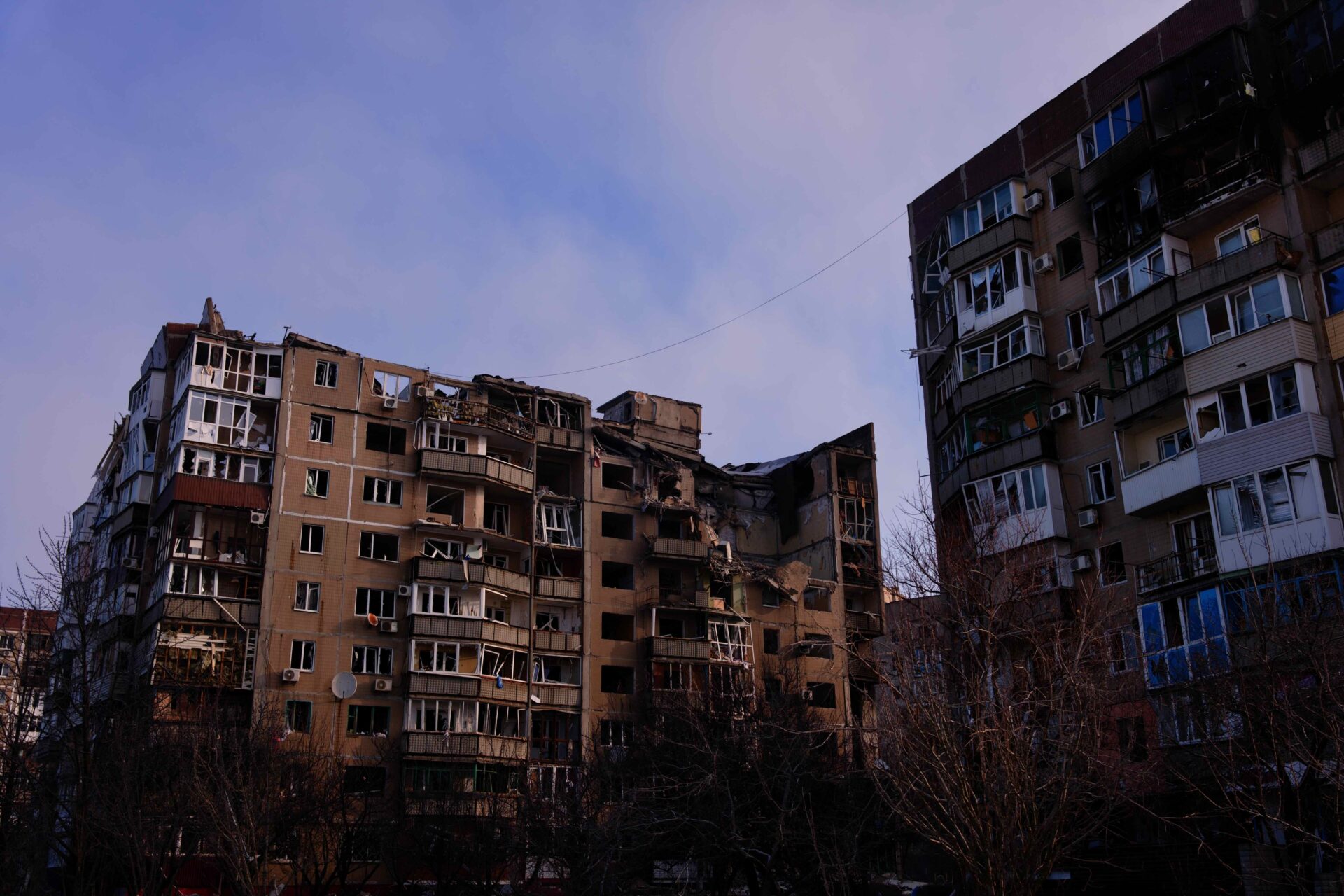
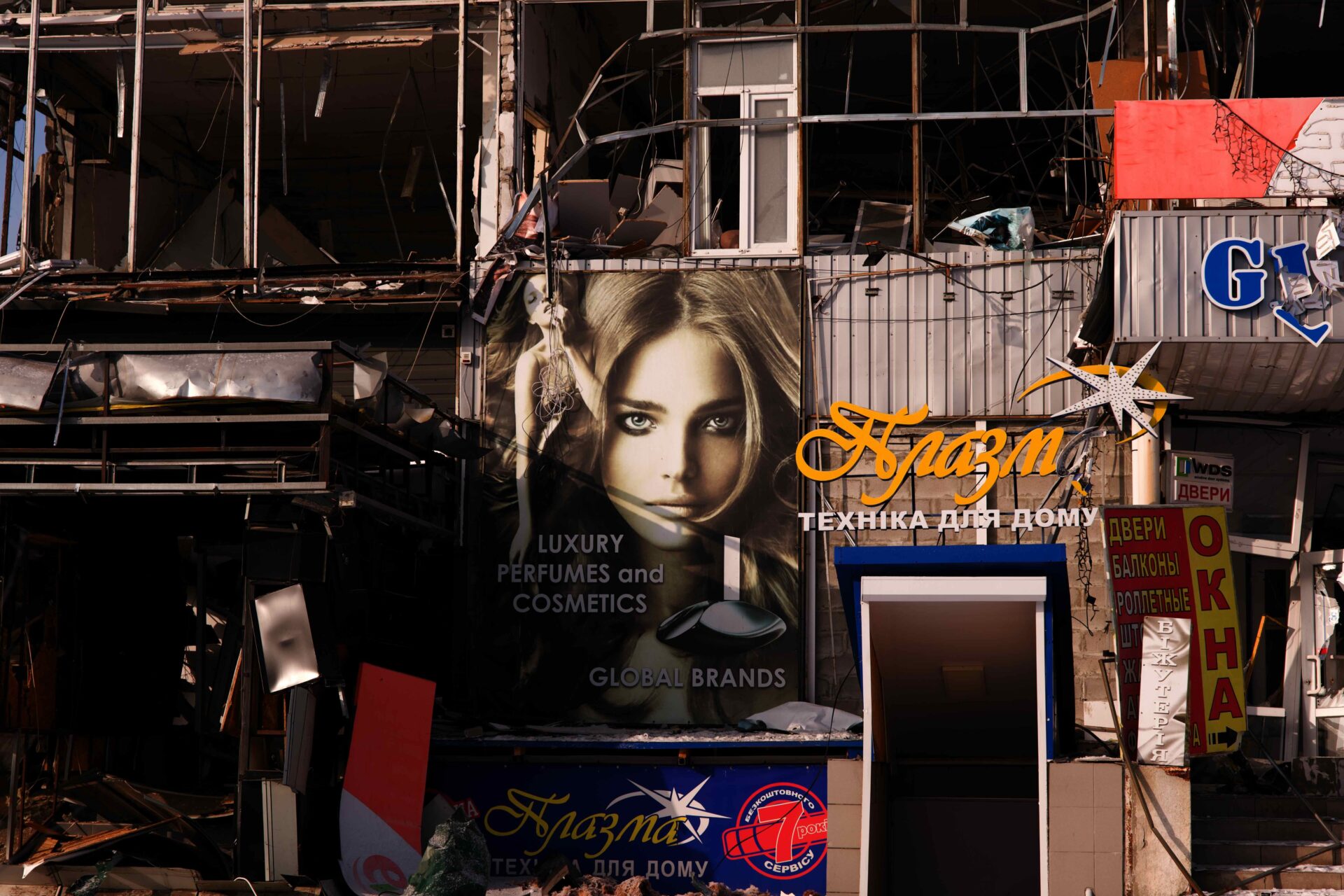
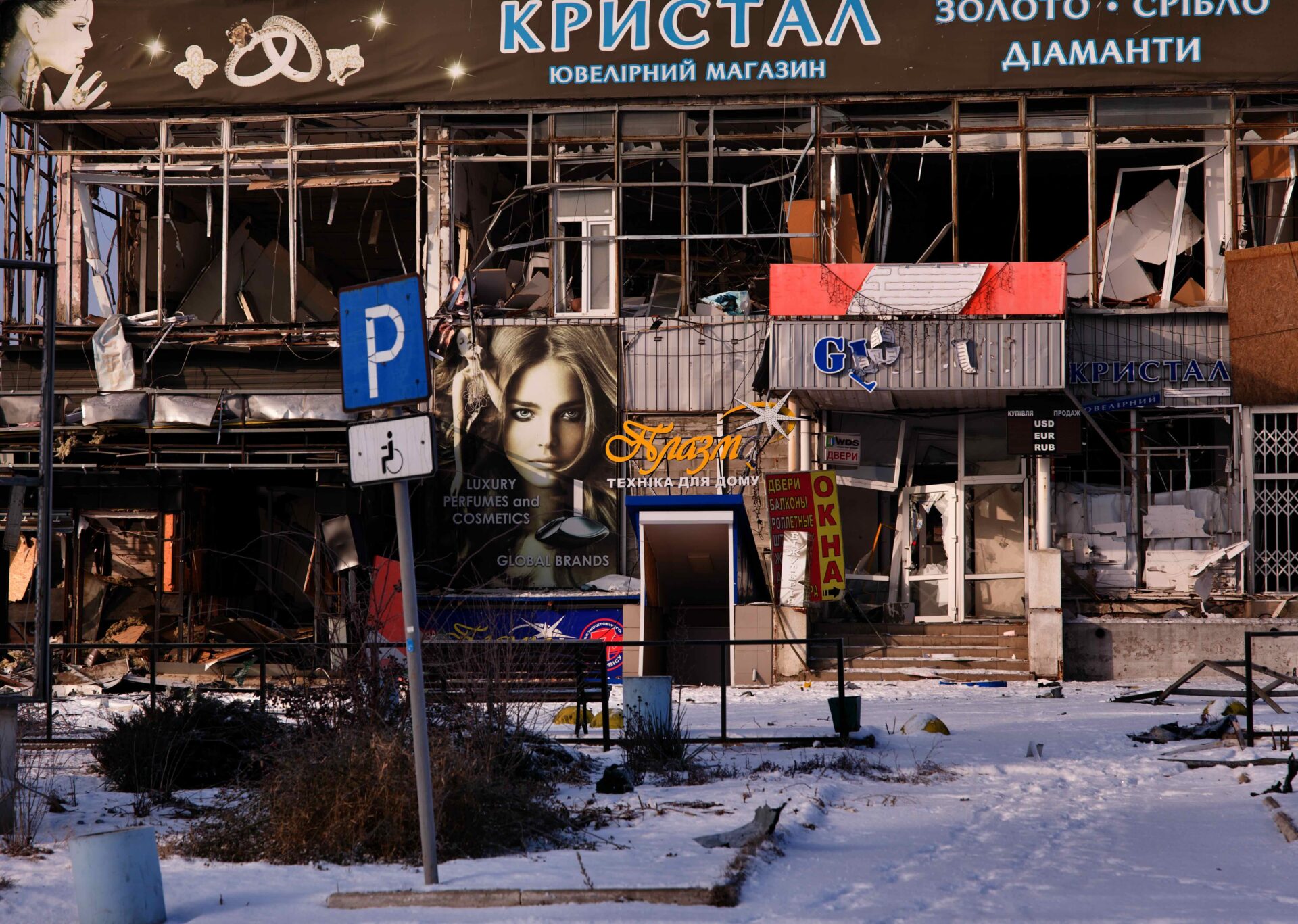
The car is in a depressing silence. Svitlana sobs from time to time. Outside the windows, landscapes of ruins pass by. Burnt houses, high-rise buildings that were hit by rockets. Parts have collapsed, floors have collapsed in on themselves. Broken glass hangs in the empty window cavities. In a completely destroyed row of shops, a powerful portrait of a model still hangs in the middle of the ruins.
Entire avenues of trees have been cut down to give the defenders a clear line of fire. Tangled barbed wire and so-called “dragon’s teeth” — pointed concrete barriers – indicate that the Ukrainian army is preparing for a street battle. Observers suggest that Pokrovsk could fall in a few weeks. Since the summer of 2024, Russian troops have been advancing with brute force, launching glider bombs, artillery shells, and kamikaze drones into the city. Step by step, the attackers are getting closer. They have already reached the first suburbs. Step by step, they are turning the city into a field of ruins.
Pokrovsk symbolizes the cruelty of the Russian aggressive war. A war in which the aggressor does not even care about the lives of its own soldiers. In more and more waves of attacks, Russian officers are driving their soldiers under fierce fire from the defenders. Tens of thousands may have lost their lives in the process.
Driving through the city, which is being fiercely fought over, one can feel the scale of the war across Ukraine: Since the full-scale invasion, hundreds of thousands of soldiers on both sides have been killed or seriously wounded. 14,000 civilians, including nearly 600 children, have been killed in the attacks, and another 27,000 have been wounded. 162,000 houses and apartments are in ruins. 1,900 medical facilities have been damaged or are in ruins. About two million landmines contaminate 174 square kilometers of land. Russia has already attacked 8,850 energy and water infrastructure facilities. For example, four elderly women on a bus have been without running water, electricity, and heating for months. The hospital and university in Pokrovsk have also been severely damaged.
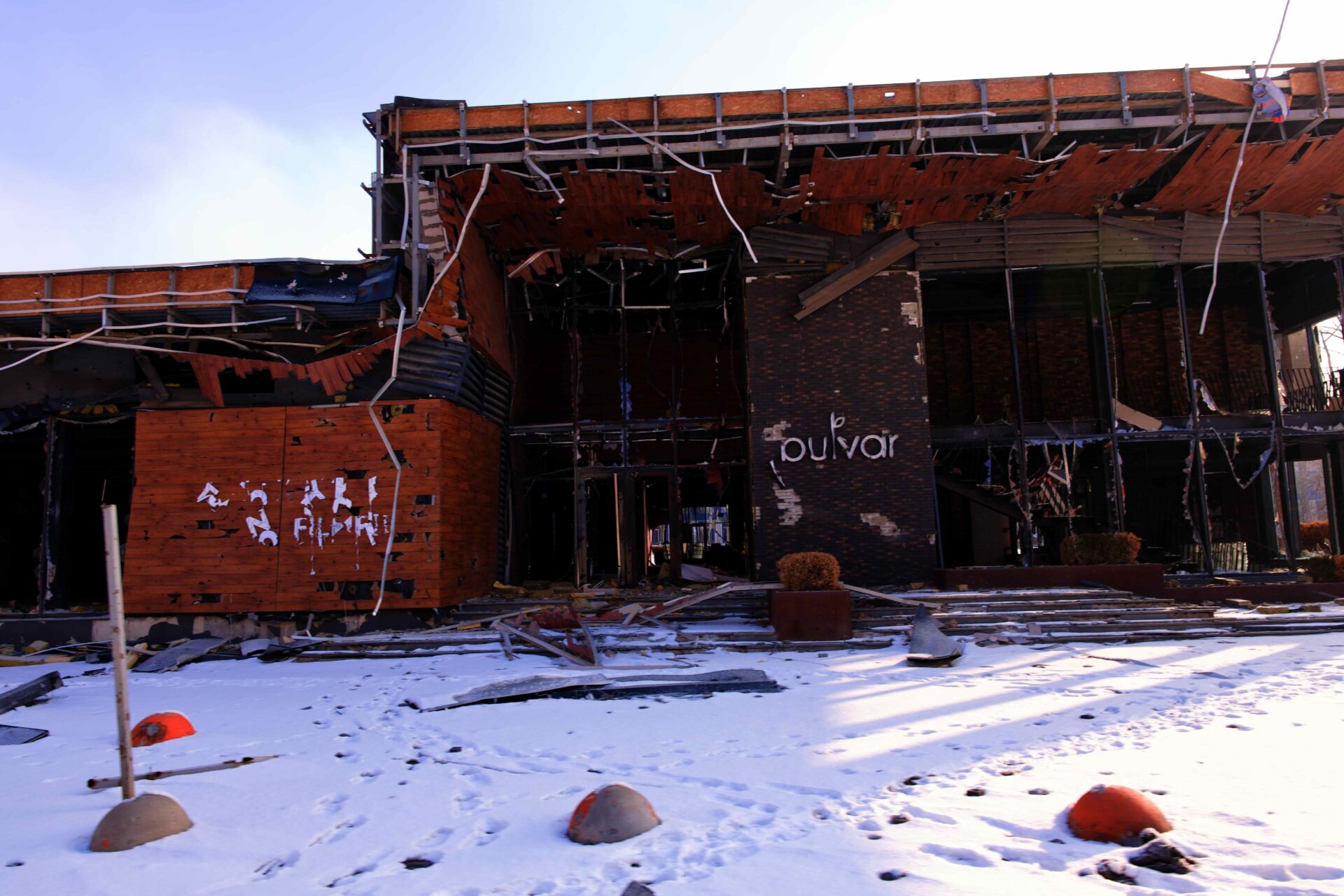
The boulevard has also suffered, – Svitlana says, shaking her head.
The new shopping center was the pride of Pokrovsk. Behind the smashed windows and collapsed walls, a few months ago, there was a chic supermarket and a trendy restaurant. A bit of metropolitan flavor in a rather ordinary mining town. Because of its coal mines and as a transportation hub, Pokrovsk is a target for the Russian army.
Meanwhile, Oleg is having trouble finding his destination. His GPS is malfunctioning. And there is no one on the road. An old white Zhiguli comes along. Oleg, 39, stops it and asks the driver for directions. When they arrive at the house, the elderly man they are looking for opens the door only after loud shouting and heavy knocking.
We came to evacuate you, your relatives gave us your address, – Oleh explains. The older man shakes his head. He wants to stay.
There is no time for discussion. Everything has to happen quickly. The blue minibus pulls up, crunching the snow. Five minutes later, a drone appears in the sky. Less than 50 meters from the small evacuation bus. It is probably a Russian reconnaissance drone. But it can quickly spell trouble. Oleh whistles through his teeth and steps on the gas.
After about an hour and a half, the evacuation team takes the elderly to the registration point in safe Kryvyi Rih. Humanitarian organizations record the data. Natalia wants to join her daughter in Finland, and Svetlana has to go with her. Nina hopes to stay with relatives. The pensioners are among the 3.7 million internally displaced people. Soon, Natalia and Svitlana may be among the 6.3 million who have gone abroad.
The pensioners have not heard any news for some time. The turn of the Americans as partners. Trump’s bad play with Ukraine will touch the four women to the core. Their hometown of Pokrovsk is likely to be the subject of negotiations between Russia and the United States. When asked by a journalist whether they would return to Pokrovsk, which is under Russian occupation, they answer in unison: No.
Till Mayer (photo and text)
Journalist Till Mayer has been documenting the war in eastern Ukraine since 2017. Since the beginning of the full-scale invasion in February 2022, he has been regularly covering the consequences of Russia’s aggressive war against Ukraine for our editorial board. He has won several awards for his photography and reporting. His collection of reports “European Front – War in Ukraine” was recently published by ibidem. It is also available in Ukrainian in Ukraine.