Ukraine and corruption: major breakthroughs and concerns
22.04.2025
Share:
No country is entirely free from corruption. However, the implementation of mechanisms to overcome and prevent the phenomenon is important for the country’s international reputation. According to Transparency international, since 2012, Ukraine has risen from 26 points out of 100 to 35, reaching the best result of 36 points in 2023. However, corruption remains one of the leading concerns for both Ukrainians and foreign partners. How has the state fighting with this problem, and on which stage Ukraine now is?
Corruption since Independence: Beginnings, Culmination, and Present
After the collapse of the Soviet Union, Ukraine inherited a corruption apparatus that had been built up over the years. In the circumstances where some basic things could only be obtained through acquaintances, corruption could had been the only tool to achieve the goal, but even after democratization and privatization processes, the way of functioning remained.
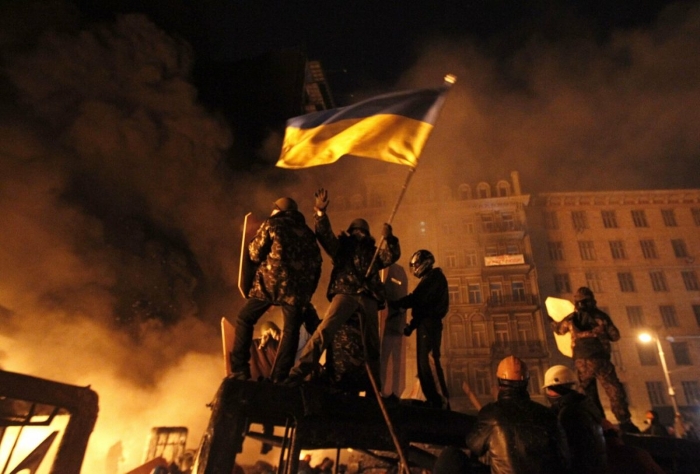
A significant change occurred in 2014 after the Revolution of Dignity. Back then, a number of initiatives emerged in response to the public demand for transparency: The National Agency on Corruption Prevention, responsible for formulating anti-corruption policy; the National Anti-Corruption Bureau of Ukraine, which detects and investigates corruption crimes; the Specialized Anti-Corruption Prosecutor’s Office; and the High Anti-Corruption Court, which began operations a little later in 2019. These changes destroyed the label of the “corrupt mentality” of Ukrainians. At the same time, the foundation was laid – the Law of Ukraine “On Prevention of Corruption”, which had to meet international standards, although the first law “On Combating Corruption”, which had no significant actual impact, was adopted in 1995. Cooperation with partners from other countries is an advantage of the new system.
Revolution of Dignity 2014/photo from open sources
The new anti-corruption structure is aimed at fighting crimes committed by top officials. According to the National Anti-Corruption Bureau of Ukraine’s jurisdiction, which is listed on its website, the amount of misuse of over UAH 1,514,000 is currently under investigation, and it may change, as it must correspond to 500 subsistence minimums. On January 1, 2020, a law abolishing the immunity of MPs, including their detention or arrest without the consent of the Verkhovna Rada, came into force, which also facilitated the process of bringing them to justice.
Currently, the most resonant case is the exposure of the Chief Justice of the Supreme Court of Ukraine (the highest court in the Ukrainian judicial system). A positive development is the prosecution of incumbent public officials, such as the bribery of the Deputy Minister of Energy.
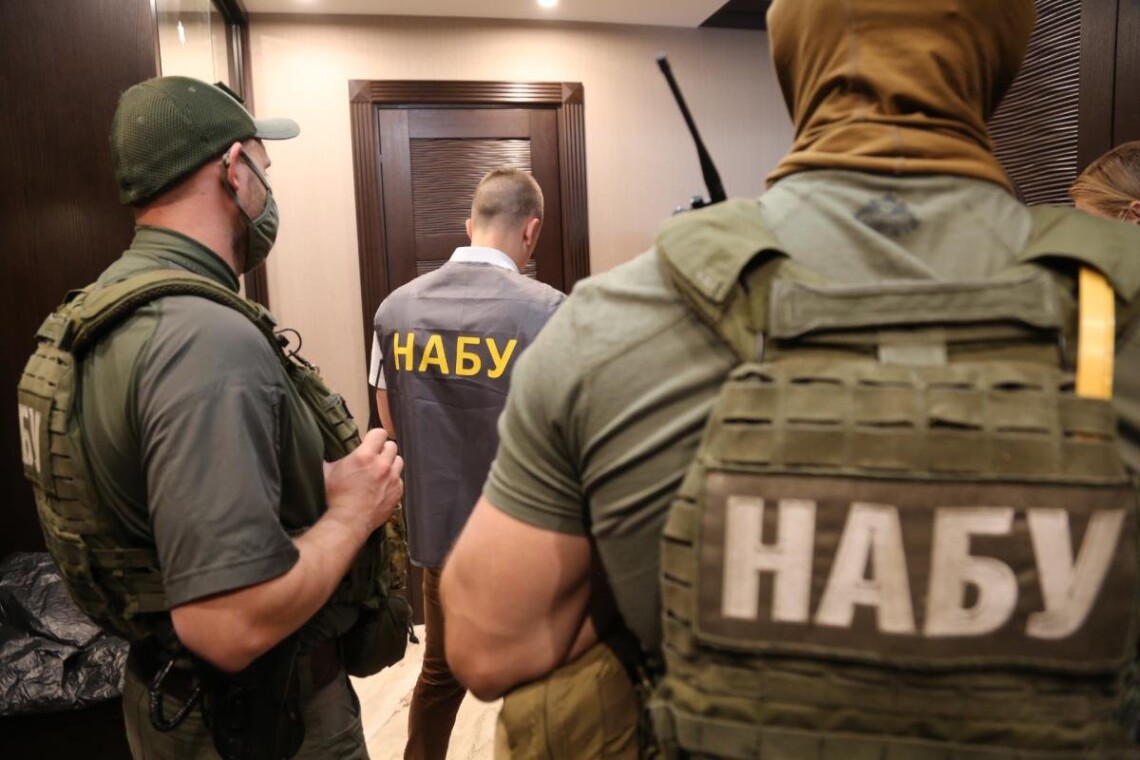
NABU’s exposing activities, illustrative photo/ NABU press service
The State Bureau of Investigation takes on both high-level and mid-level cases. The National Police of Ukraine can deal with everyday corruption. The Bureau of Economic Security was created to fight economic crimes.
Roman Verbovskyi, lawyer at the Anti-Corruption Action Center, spoke to The Ukrainian Review about the transformation of corruption in Ukraine:
Before 2015, corruption in Ukraine was more widespread and systemic. It was embedded in the governance system itself, the economy, the judiciary, and even education and medicine. Thus, in those days — before the revolutionary Prozorro system appeared — the state could lose the most through public procurement. For example, a significant part of procurement was carried out outside the scope of state control under a non-competitive procedure (from one “necessary” supplier), and information about the tender was not made public.
As a result of the lack of competition and artificial restriction of access to the market for bona fide suppliers, prices for goods and services sometimes increased threefold or more. The difference was a “kickback” to officials. And even if such deals were detected, law enforcement agencies did not react in any way.
Roman Verbovskyi, lawyer at the Anti-Corruption Action Centre / AntAC.
Diplomatic losses and information attacks
The narrative of corruption is actively used by Russia to destabilize the situation in Ukraine and to undermine the trust of foreign partners, which leads to the loss of potential investments. In an interview with Denik.cz, Tomáš Kopeční, the Czech government’s commissioner for Ukraine’s recovery, said that corruption may be more of a concern for entrepreneurs than the risks of war.
The Center for Strategic Communications and Information Security has published a sociological study “Corruption in Ukraine 2024: Understanding, Perception, Prevalence” conducted by Info Sapiens, which touches upon the spread of Russian disinformation. According to the study, Ukrainians have begun to report more cases of corruption, but the majority (89%) consider it the biggest threat after Russian aggression. However, the identification of corruption as a cause for concern is also typical for residents of other countries. According to the European Commission’s 2024 Citizens’ Attitudes to Corruption Survey, the majority of EU citizens believe that corruption is widespread in their country, with the EU average at 68%. As for the Corruption Perceptions Index, where Ukraine currently scores 35 points, Denmark has the best score of 90 points, and South Sudan has the worst score of 8 points. Russia itself, which is scaling up the problem of Ukrainian corruption in the information space, has 22 points.
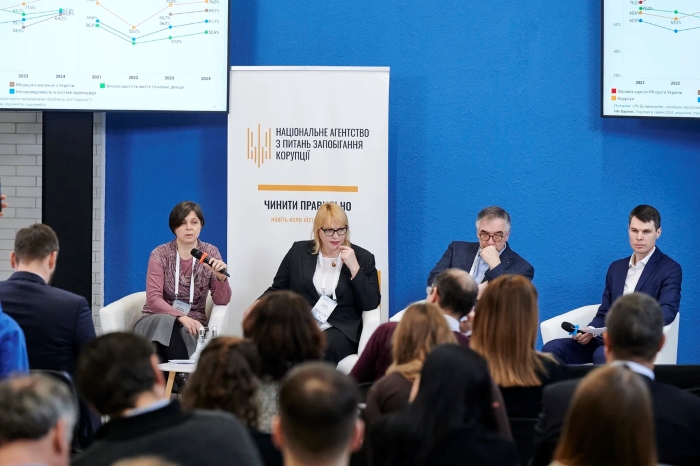
Presentation of the study “Corruption in Ukraine 2024: understanding, perception, prevalence” / NACP website.
Mostly hostile narratives relate to the topics of arms supplies and Ukraine’s recovery. The second component of the European Anti-Corruption Initiative, which is funded by the EU and co-funded and implemented by the Ministry of Foreign Affairs of Denmark, is to support reconstruction.
Oleksandr Kalitenko, legal advisor at Transparency International Ukraine, commented on Ukraine’s dynamics in the ranking for The Ukrainian Review:
Indeed, we have lost one point. But, in fact, we can say that it is within the margin of error according to the research methodology. However, this should be a signal to Ukraine’s government agencies that formal changes and reporting on the fight against corruption are not systemic, but rather spotty. The drivers of change remain reforms aimed at European integration and fulfillment of international obligations.
As for our longer-term dynamics, they are more positive. Over the past eleven years, we have increased by 10 points in the index. This is a good indicator, because we have actually increased by the largest number of points among all the EU candidate countries during this time. And, of course, we have had some setbacks and jumps, but in fact, we still have the fact that Ukraine has shown quite significant statistically significant progress since 2014, and this is, of course, a positive example for the world, because, unfortunately, there are not many such examples in the world, on the contrary, there is stagnation, because the average score in the world has not changed for more than 10 years. The CPI is based on data from 13 different studies by international institutions, organizations, expert analysts, business leaders, etc.
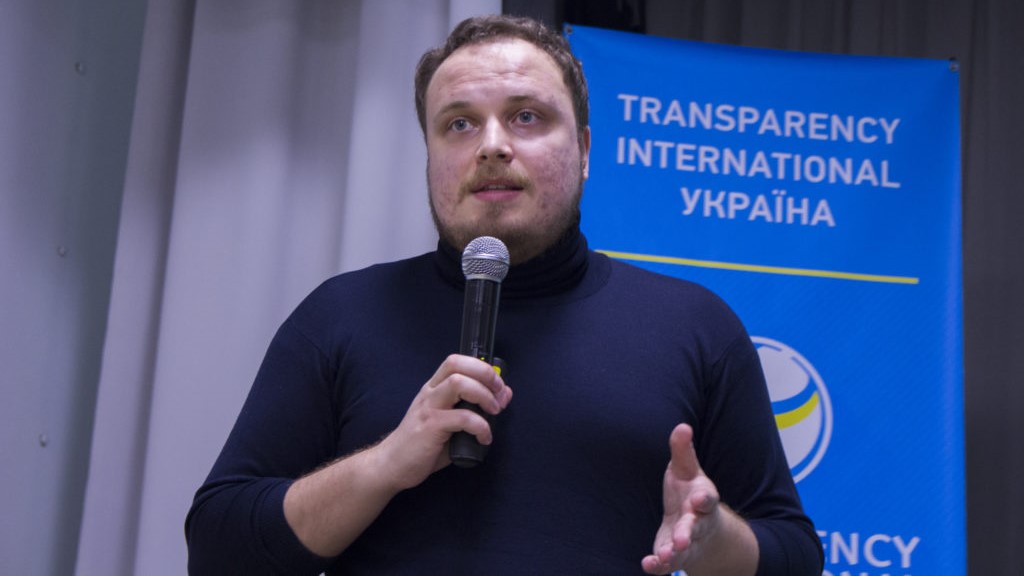
Oleksandr Kalitenko, Legal Advisor in Transparency International Ukraine/Transparency International Ukraine website.
Reporting and whistleblowing
As for the transparency of Ukraine’s data, according to The Open Data Maturity 2024 study, which focuses on European countries, Ukraine scored 97 percent and is classified as a trendsetter. Ukraine has a publicly accessible procurement system, Prozzoro, which holds open tenders, electronic declarations, information on budget allocation, court decisions, and final beneficiaries. However, the exemplary level of openness does not equal the highest level of anti-corruption performance, as this data must be further processed by potential whistleblowers. Oleksandr Kalitenko spoke about the peculiarities of transparency:
Before transparent systems, procurement was closed. Declarations were submitted to the HR department of the organizations where the declarant worked in paper form, filled in by hand, in an incomprehensible handwriting, with limited content, and there was no responsibility for their failure to submit or lying.
When the electronic system of filing declarations was finally launched, where they were all in one register, available around the clock and accountable, I remember the covers of magazines with golden mountains of some officials. And this, in principle, echoes every year. Sometimes it is very difficult to catch red-handed when taking bribes, but if a person leads a lifestyle that does not correlate with his or her official income, then we can talk about illicit enrichment, confiscation of such assets, and imprisonment. And, of course, this transparency is largely responsible for this, because investigative journalists and civic activists analyze procurement, declarations, and come up with stories that get a lot of publicity.
Perception is a subjective thing. Our index is called “perception of corruption”; we didn’t call it simply “corruption index” because corruption is a criminal phenomenon, it is deliberately hidden. And if we talk only about, for example, the number of convictions, we will be talking more about the work of law enforcement and judicial bodies. If we talk about the number of scandals, we will say more about the level of freedom of speech and associations in NGOs. Given that Ukraine is fighting for its own existence, we assess all corruption scandals as indicative of the work of anti-corruption bodies even in a full-scale war. It would be much worse if we didn’t hear any revelations and didn’t continue to see declarations, for example, or procurement.
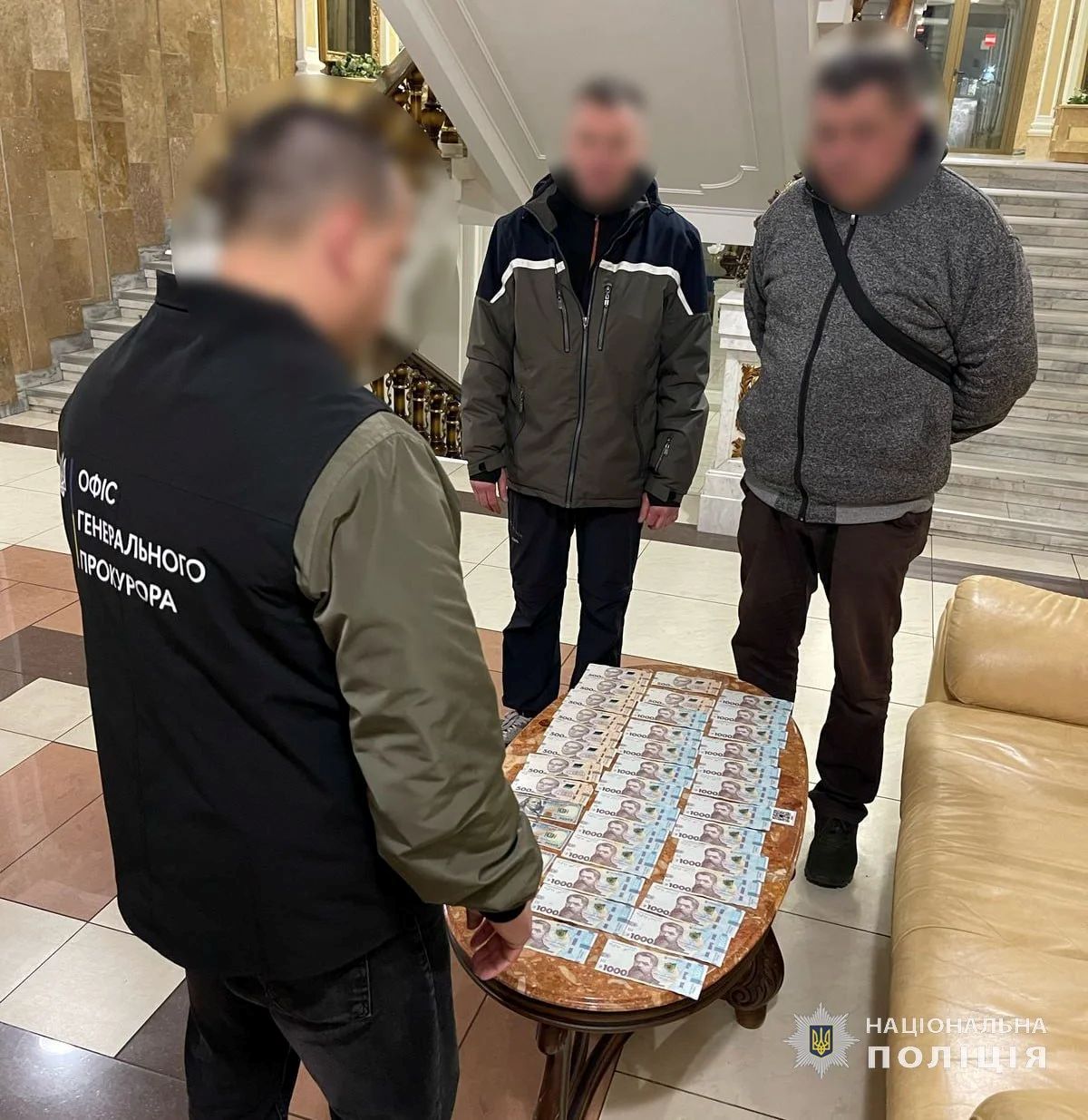
National Police. Detention of an Ukrtranssafety inspector in Cherkasy region, illustrative photo/website of the National Police
In the context of increased data privacy due to the war, Ukraine still adheres to the principles of openness. Roman Verbovskiy explains the changes that were implemented with the full-scale invasion to reduce risks:
After the full-scale invasion began, for obvious reasons, Ukraine was forced to make certain changes regarding access to information on the wealth of officials and public procurement. However, almost all previously implemented transparency tools have now been restored.
In particular, on February 24, 2024, the National Agency on Corruption Prevention (NACP) closed the register of officials’ declarations and stopped verifying them. However, already in 2023, thanks to a request from Ukrainian citizens in the form of a petition to the President of Ukraine, access to declarations and their verification by the NACP was restored.
Some public procurement rules were also changed. In particular, it was allowed to conduct procurement without open bidding for critical infrastructure facilities, or with the participation of only one bidder (previously, at least two were required). In addition, it became possible to change procurement rules in the so-called “annual mode”. This means that the rules can now be regulated by a resolution of the Cabinet of Ministers rather than by law.
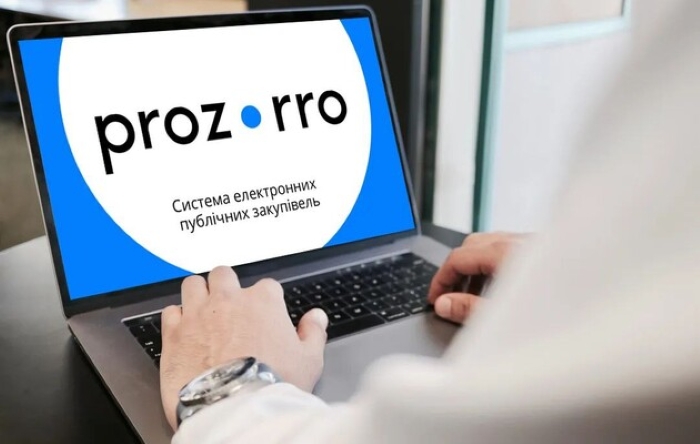
Illustrative photo of the Prozorro public procurement system / Dzerkalo Tyzhnia.
Transparency helps the public to analyze the processes. Roman adds about its role and the Anti-corruption action Centre`s achievements in particular:
The public plays an important role in fighting corruption, because monitoring and identifying corruption risks is a reliable preventive measure. Over the almost 13 years of its existence, the AntAC alone has advocated for more than 50 anti-corruption-related laws. In particular, we coordinated campaigns to establish the National Anti-Corruption Bureau of Ukraine (NABU) , the Specialized Anti-Corruption Prosecutor’s Office (SAPO), the High Anti-Corruption Court of Ukraine (HACC), to introduce electronic declarations, to criminalize illicit enrichment and construction estimates, etc. We also participated in the creation of customs, defense procurement, the Economic Security Bureau and judicial reforms.
In addition, we are constantly working to prevent the rollback of positive changes and to repel harmful initiatives. In November last year, the AntAC shot down draft law No. 10242, which would have opened up new opportunities for the authorities to prosecute and punish journalists and their sources. Earlier, in October, due to the AntAC’s and media’s publicity, MPs abandoned the idea of passing draft law No. 11340, which would have allowed corrupt officials to pay off severe punishment.
The High Anti-Corruption Court, illustrative photo/Transparency International Ukraine website
The most corrupt sectors
According to the NABU’s 2024 report, most proceedings (101 out of 658) were opened against law enforcement and supervisory bodies, and 95 were opened in the defense sector. However, this is only one report, so the focus changes depending on the perspective from which the problem is viewed. International trade is hampered by corruption at customs, and in 2023, the Verkhovna Rada passed a bill aimed at rebooting the system with elements of improved control. Roman Verbovskiy notes:
According to a survey by the Kyiv International Institute of Sociology (KIIS), Ukrainians name customs among the most corrupt institutions. That is why in 2024 we at the AntAC focused on advocating for the reform of the State Customs Service (SCS). By the end of this year, Ukraine is to appoint a new head of the State Customs Service in a transparent competition with the participation of international experts. So the first step in resolving this issue has been made.
It is important to understand that since the beginning of the invasion, most of Ukraine’s budget has been directed to defense needs. Therefore, it is very important to ensure constant monitoring of defense procurement. This was proved, in particular, by the well-known scandal of “eggs for 17 UAH” that occurred in early 2023 after an article by journalist Yuriy Nikolov about the inflated prices of food fed to the military. Since then, Ukraine has made tremendous changes to address this issue. For example, special enterprises have been created in accordance with NATO standards: The State Logistics Operator, which purchases supplies for the army (e.g., clothing, food, bulletproof vests, etc.), and the Defense Procurement Agency, which purchases weapons.
Ukrainian Customs, illustrative photo/Facebook by Serhiy Tupalsky
Eradicating corruption: levers and obstacles
The main problem on the way to overcoming corruption is the mismatch between the principles of change and their practical implementation, as well as the lack of economic benefits of compliance. A year ago, Dovydas Vitkauskas, director of the NGO SOS Ukraine, who for many years was the coordinator of the EU project “Support to Justice Sector Reforms in Ukraine” and other EU-funded projects, who has also been acting as advisor to two consecutive administrations of the President of Ukraine, shared his thoughts for The Ukrainian Review. He outlined the key problems:
— The NABU’s inability to conduct surveillance of its targets without the assistance of the Security Service of Ukraine (SBU).
— Disputes over who owns a particular case, as there are a number of criminal investigation agencies in Ukraine
— Poor prosecutorial work in proving cases in court
— Lack of a standardized concept of admissibility of evidence or its qualification in more complex crimes.
— Law enforcement and justice agencies that are supposed to fight corruption seem to be procedurally “independent” from each other.
Dovydas Vitkauskas, director of the NGO SOS Ukraine, for a number of years served as the Coordinator of the EU project “Support to Justice Reforms in Ukraine” and other EU-funded projects.
Oleksandr Kalitenko notes that progress can be achieved if the existing regulations are properly implemented. He emphasizes that European integration requirements are driving the changes:
There would be much less corruption if the existing procedures were followed. And if government agencies, for example, were built as institutions, as a system of institutions, independent of who heads them.
There are recommendations of the Ukraine facility Plan, there are IMF programs under the Extended Fund Facility, etc. Therefore, there is an opportunity to receive financial assistance, especially in times of war, and to fill the gap in the state budget. And, of course, this is a significant argument to encourage the authorities to do things that they may not have much political will to do. For example, the Verkhovna Rada does not always adopt the necessary things. Sometimes, like with the restoration of the declaration system, when the Verkhovna Rada passed the law on the closure of the registry, the President vetoed it, and then the Verkhovna Rada had to re-adopt the law, but it still did so with certain gaps in the declaration system, which were pointed out by European partners, among others. So, yes, unfortunately, we have some problems, and I hope that Ukraine will really manage to demonstrate an effective fight against corruption so that we become an EU member by the end of ’29, as the EU Commissioner for Enlargement predicted.
The Verkhovna Rada of Ukraine, illustrative photo/ Website of the Verkhovna Rada of Ukraine
Roman Verbovskiy identifies the following problems that hinder the fight against corruption:
As the anti-corruption agencies, the NABU and the SAPO, have repeatedly emphasized, there are still a number of harmful provisions in the legislation that make it much more difficult to bring some of the perpetrators to justice. These norms are known under the common name of the Lozovyi amendments. The Verkhovna Rada should have repealed them, but so far it has not done so, limiting itself to partial repeal of the provisions.
The Lozovyi amendments, in particular, prohibit the investigation from continuing the investigation for more than 3 months without the permission of the investigating judge. This leads to the fact that the investigating judge may harm the investigation and the fair trial. This is because the investigating judge is not as deeply involved in the investigation as the investigators, and therefore is not always able to assess what actions are necessary for an effective investigation and how much time is required. If the judge does not allow the investigation to continue, the prosecutor will have to go to court with an incomplete package of materials, which may not be enough to prove guilt.
This procedure has repeatedly allowed the authorities to influence the investigation of grand corruption cases and close cases when it was impossible to establish manual control over investigators and prosecutors. It was this scheme that was used to close the case of Oleh Tatarov, deputy head of the Presidential Office, who was suspected of aiding and abetting a bribe.
However, it is important to understand that the process does not end with exposing corruption. To establish justice, it is important that the person be held accountable for their actions. And already in courts, the investigation faces legal restrictions. Some loopholes in the Criminal Procedure Code allow the defense to drag out cases for years, which subsequently leads to the closure of cases due to the statute of limitations. Systemic changes are needed to address these problems.
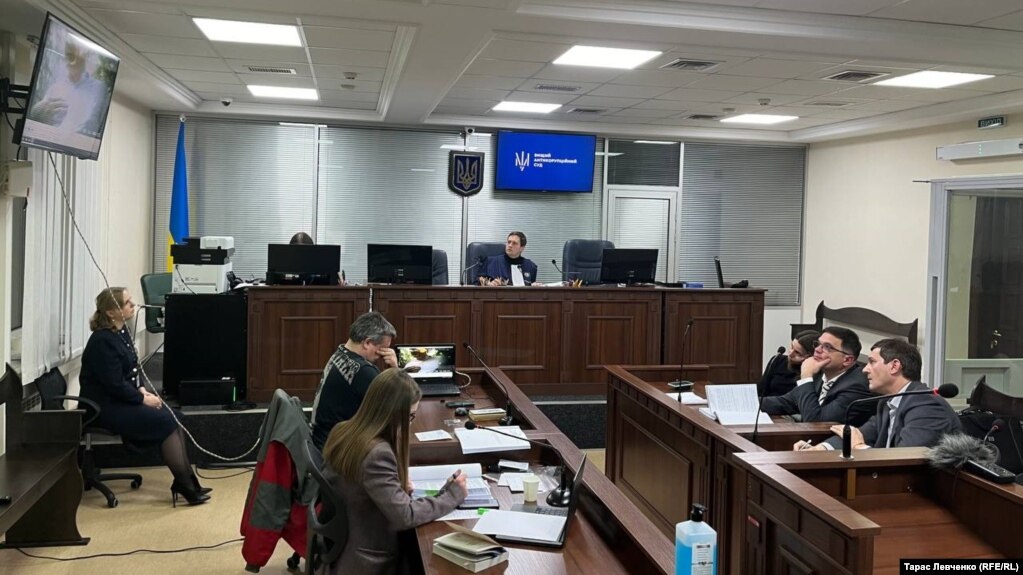
The High Anti-Corruption Court at work, illustrative photo by Taras Levchenko RFE/RL
If to compare the level of corruption in the overall ranking of countries, it is still high in Ukraine. But if we consider Ukraine’s individual path, the result over the past decade is objectively significant. Ukraine’s European integration is driving a number of reforms, and it was the desire to defend European values during the 2014 Revolution of Dignity that started significant positive changes in the system. Despite the full-scale invasion, Ukraine has maintained a high level of data transparency and publicity of corruption cases, and international partners have helped to monitor the situation and reform the system.