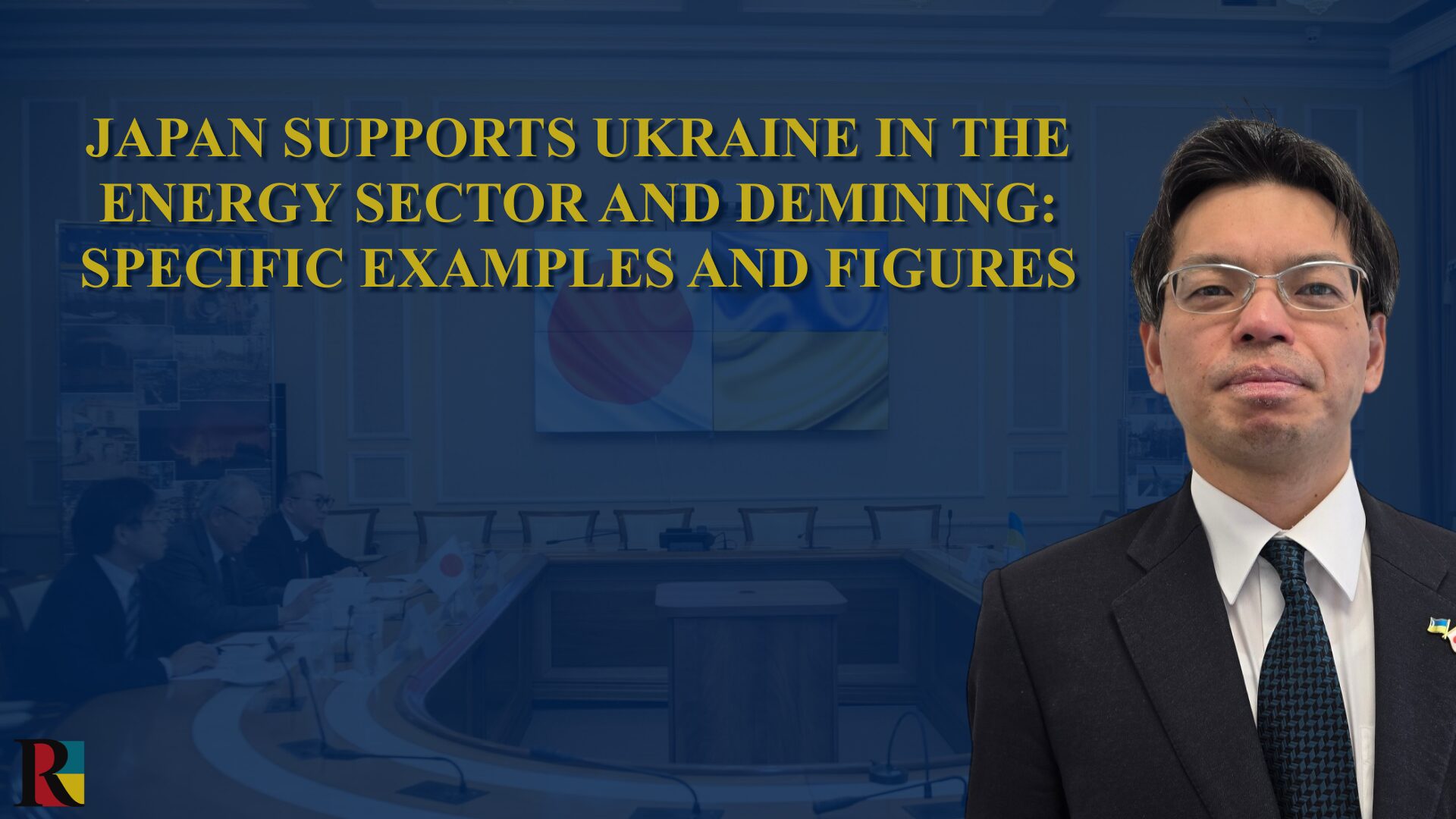


Interview with Deputy Head of Mission, Counsellor-Envoy Yuji Tokita. A representative of the Japanese embassy in Kyiv spoke about specific steps aimed at helping Ukraine in the energy sector and told how the Japanese are participating in the process of clearing the surface of Ukraine from explosives.
Stanislav Kinka: I am glad to welcome you, dear sir, Deputy Head of Mission, Counsellor-Envoy Yuji Tokita. Under the government of Prime Minister Fumio Kishida, Japan was one of the leading countries, providing over €10 billion from 2022 to 2024 in assistance to Ukraine. Some of these funds were specifically allocated to support Ukraine’s energy system. Does the new Japanese government, led by Prime Minister Shigeru Ishiba, plan to continue supporting Ukraine in this way? Are there plans to increase funding for energy programs?
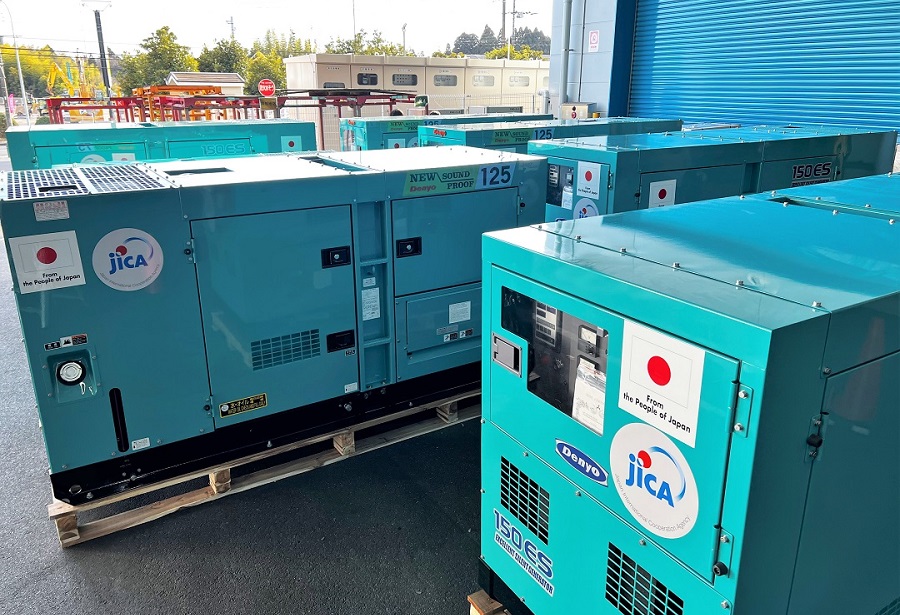
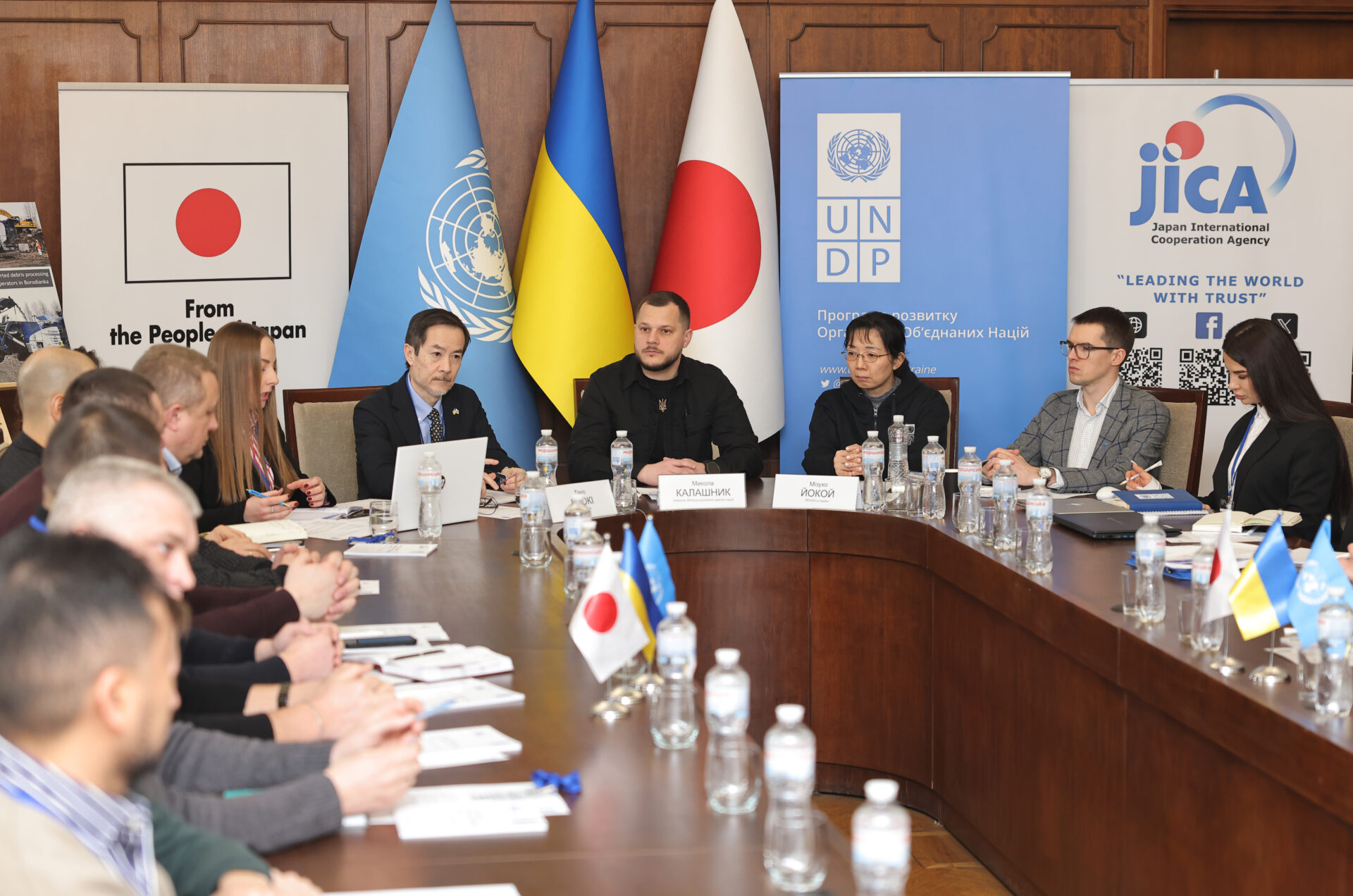
Yuji Tokita: Japan supports Ukraine. The Government of Japan, including our Prime Minister, is fully committed to a lasting peace in Ukraine as soon as possible. And in this context, Japan continues to support and provide assistance to Ukraine. That remains unchanged. As you mentioned, Japan has been helping Ukraine. You mentioned 10 billion euros, but the [total] equivalent of $12 billion in aid was provided after the full-scale invasion of Ukraine began. As for the energy system, Japan provides assistance to Ukraine through JICA [Japan International Cooperation Agency], as well as UNDP [United Nations Development Program] and other international organizations that help the energy sector. And thanks to this, for example, we have supplied almost 1,000 generators, two gas turbines, and a heat pump. In total, we supplied 2,361 generators, which is equivalent to 25.6 megawatts. And also three gas turbines, which is equivalent to 54 megawatts of rated power per unit. And some variable frequency drives, gas turbines.
Stanislav Kinka: What are the principal issues that energy specialists in Japan observe in Ukraine’s energy sector?
Yuji Tokita: I would rather talk about the challenges facing the energy system of Ukraine. Ukraine is receiving attacks on energy infrastructure and of course, seeking a kind of ceasefire upon energy infrastructure. But so far, Ukraine has been attacked. It’s a challenge, especially in the winter heating season. Ukraine faces a shortage of power. We understand that Ukraine lost 9 GW 2024. Also, that’s why Japan is approaching these challenges. And that’s why we have further cooperation.
Stanislav Kinka: Could you kindly provide information on the ways and directions in which Japan has extended assistance to Ukraine’s energy system? Are there any new energy programs planned in this area? For example, this year?
Yuji Tokita: We provided additional generators. More than 300 generators. And Japanese business companies are also interested in having business regarding the energy program. I think so far we don’t have any specific announcement about the additional assistance regarding the energy system, except, these generators. According to the RDNA 4 [Rapid Damage and Needs Assessment] for Ukraine for the reconstruction, Japanese government, but also Japanese business sector would like to contribute to further enhancing relations between not only further enhancing relations between Japan and Ukraine, but also in the context of reconstruction of the $67.8 Billion. It will be the cost of the energy sector reconstruction only. In that sense the demand for reconstruction and regarding the energy sector will be increased. That’s why Japan would like to respond to such demand. And also, the Japanese government and Japanese companies are working on that.
Stanislav Kinka: Let me turn to another question. Assistance to Ukraine in the energy sector should not only focus on financing the purchase of equipment but also on sharing its own experience. What aspects of Japan’s experience could be useful for Ukraine in various sectors of energy, including renewable energy sources, as well as the operation of nuclear, thermal, and other power plants?
Yuji Tokita: Japan is interested in new renewable energy sources. Of course the Ukrainian side also. And as for the environment. I understand that you have heard of CDM. A mechanism in the business sector regarding the carbon dioxide and to reduce the carbon dioxide. We have a kind of a framework of the environment. We have a kind of a CDM mechanism between Japan and Ukraine. Of course, some companies might be interested in renewable energy.
Stanislav Kinka: Let me turn to another question. During the visit of Japan’s new Foreign Minister, Iwai Takeshi, to Kyiv on November 16, 2024, it was announced that a significant package of assistance would be provided to support Ukraine’s energy sector. This includes the delivery of 15 variable frequency drives and a gas turbine for Kharkiv, as well as two gas piston cogeneration units for Odessa. Could you kindly provide more information for better understanding how this equipment will contribute to strengthening Ukraine’s energy system and give more details regarding the expected timeline for its delivery?
Yuji Tokita: I’m very happy to mention your point. Last November foreign minister of Japan visited Europe and had lots of meetings with the European leaders. And at that time Foreign minister attended the ceremony to provide 15 variable frequency drives to units of gas piston generation units. And one unit of 16-megawatt gas turbine. And the 50 units of variable frequency drives will go to the water utility. Utility company in Kharkiv city. And as of today, Kharkiv is home to 1.3 million residents, including 200,000 internally displaced persons. And currently the electric supply of the city is 30% of pre-war consumption. And the damage includes 700 substation and transformer stations, and that 4 000 overhead power lines of voltage classes. Water utility faces significant challenges in maintaining a reliable water supply for the city, and these variable frequency drives are vital for water pumping stations as they significantly improve energy efficiency by adjusting motor speed to align with real-time demand. This results in substantial cost savings and precise controllable flow pressure. These are the drives that minimize mechanical stress through soft start and stop functions, reduce maintenance expenses, and prevent water hammering by ensuring smooth changes in flow rates. That kind of blackout takes more than 6 to 8 hours, and after the blackout, it takes even more hours to return to full work status. So, to respond to these blackouts or utilities’ ability, these 15 drive units of variable frequency drives are very useful. And two gas turbines, two gas piston generation units. This goes to the commercial enterprise heat supply of the city. Odesa has endured continuous infrastructure attacks. And these two units’ gas piston will recover approximately one-fourth, 25% of Odessa’s energy needs for water, heating and sewage services. And this marks an initial phase of a project to establish a distributed power generation in Odesa, then, that will ensure residents have access to heat, electricity and water supply. And in November 2024, two units were already delivered to Odesa. And the last one is the gas turbine. And this gas turbine will go to the heat utility company in Kharkiv city as well. And you know has also severely impacted the city’s centralized heating and hot water supply and affected roughly 506,000 residents, nearly half of the population. This gas turbine is a vital component of a heat supply station, and it will enhance its capacity to generate energy efficiency and reliability, particularly during blackouts and emergencies in Ukraine and this system. These three cases contribute to a kind of secure, stable situation regarding providing energy to people, especially those affected by attacks on infrastructure.
Stanislav Kinka: Japan, as a member of the G7, has been actively participating in the development of new assistance packages for Ukraine. One of the latest forms of support includes macroeconomic assistance derived from the frozen assets of the Russian Federation. Are there any conditions for Ukraine to use it? Will this assistance be spent on the restoration of damaged energy facilities in Ukraine? Additionally, will this funding specifically be allocated toward the restoration of Ukraine’s damaged energy infrastructure?
Yuji Tokita: First of all, Japan is, as you pointed out, a member of the G7 and actively participating in the new development assistance packages for Ukraine. And these frozen assets of the Russian Federation accurately describe it as an extraordinary asset loan. The G7 finance ministers’ meeting was held last October. And each of the G7 countries will have a contribution to a kind of fund to help Ukraine. My understanding is that, just 50 billion USD. 50 billion USD among the G7 countries. And this is not divided equally, but Japan takes part in it. I think this contribution will contribute to the development of Ukraine. And actually, this is a mechanism which is established in Ukraine and with the World Bank and other related entities. There is a special mechanism in which Japan participates as a G7 state. And this mechanism, or rather the distribution of funds, is best clarified in the Ministry of Economy of Ukraine.
Stanislav Kinka: And one of the last questions about the relations between Japan and Ukraine. The Japanese-Ukrainian Conference for the Promotion of Economic Growth and Reconstruction took place in Tokyo on February 19-20, 2024. During the conference, 56 documents were signed, and more than a dozen agreements were reached with prominent Japanese organizations to support Ukraine’s reconstruction efforts. Could you kindly provide a summary of the key aspects of this cooperation and whether it takes into account the energy sector?
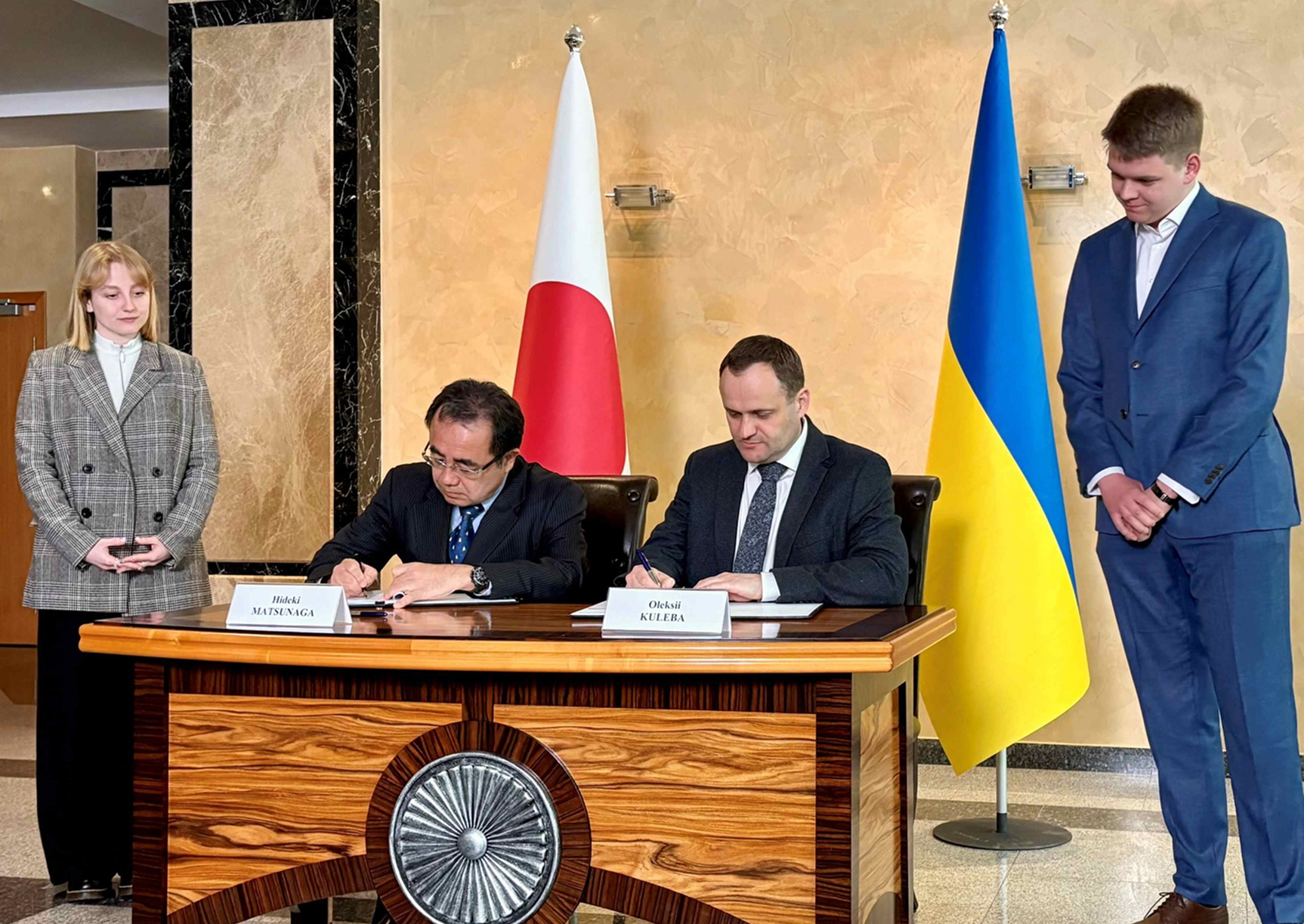
Yuji Tokita: As you pointed out, collectively, the Japan-Ukraine conference for the Promotion of Economic Growth and Reconstruction took place last February [2024]. Prime Minister Kishida held the Japan-Ukraine Conference for Promotion of Economic Growth and Reconstruction in Tokyo and delivered a keynote speech. We have 56 documents signed. Including the business sector. And after that followed by the business signing at the on the occasion of you see Ukraine reconstruction conference in Bahrain last year last June. And we have 20 additional documents. That proves that the concept of the Japan-Ukraine conference for reconstruction is a kind of private and public partnership. That means more and more businesses, Japanese companies, involved in the reconstruction of Ukraine. And after that conference, we have a kind of new initiative by the Japanese business government as well as the business sector. One is that we opened a JETRO office in Kyiv last October [2024]. And beyond that more and more Japanese business delegations visit Kyiv in Ukraine and are led by JETRO or other ministries. Now it’s beyond not only the energy sector, but also so many more. We hope that many more Japanese companies visit Ukraine and also think of having a business with a Ukrainian company. So, in that process I hope that I just feel that momentum or Japanese companies’ interest in coming to Ukraine. In the energy sector as well, I hope that that kind of interaction will happen in the energy sector as well.
Stanislav Kinka: I understand that the Japanese government is attracting more and more private companies to come to Ukraine and invest in Ukraine after the war. I thank you very much for this information. And I’m very impressed that this office was opened in Kyiv in 2024. The last question: tell us about how Japan takes part in demining Ukrainian territories?
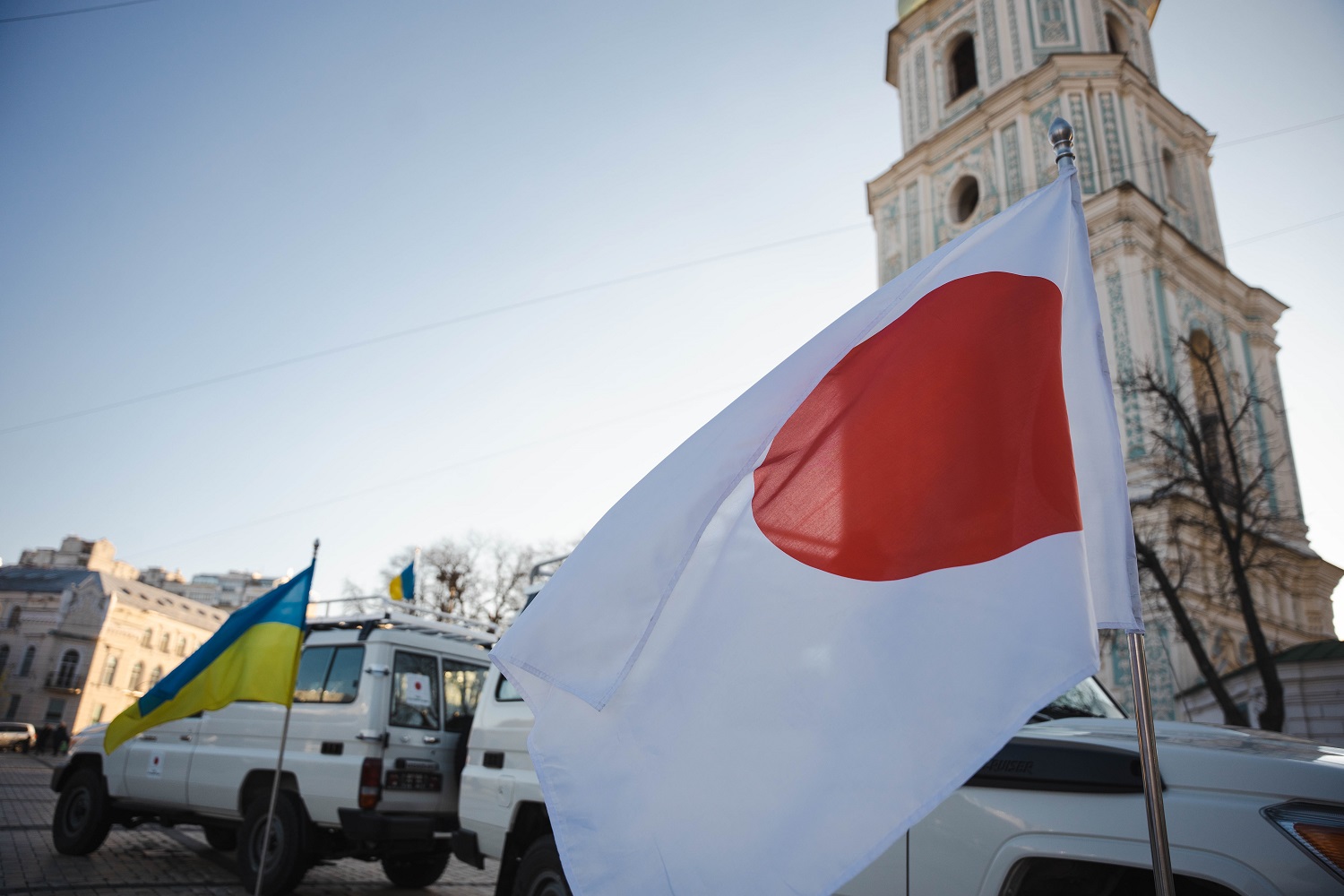
Yuji Tokita: As you pointed out, Ukraine has suffered from the mines. There are a lot of mines in Ukraine now, I think more than 300,000. Japan thinks it’s very important to remove these mines, and demining is quite important as a factor for economic growth and reconstruction. So, one of the key pillars of Japan’s assistance is demining. And Japan provided equipment, not only equipment, but also shared knowledge. And we, of course, continue providing equipment to relevant agencies. But also, we are providing human resources development.
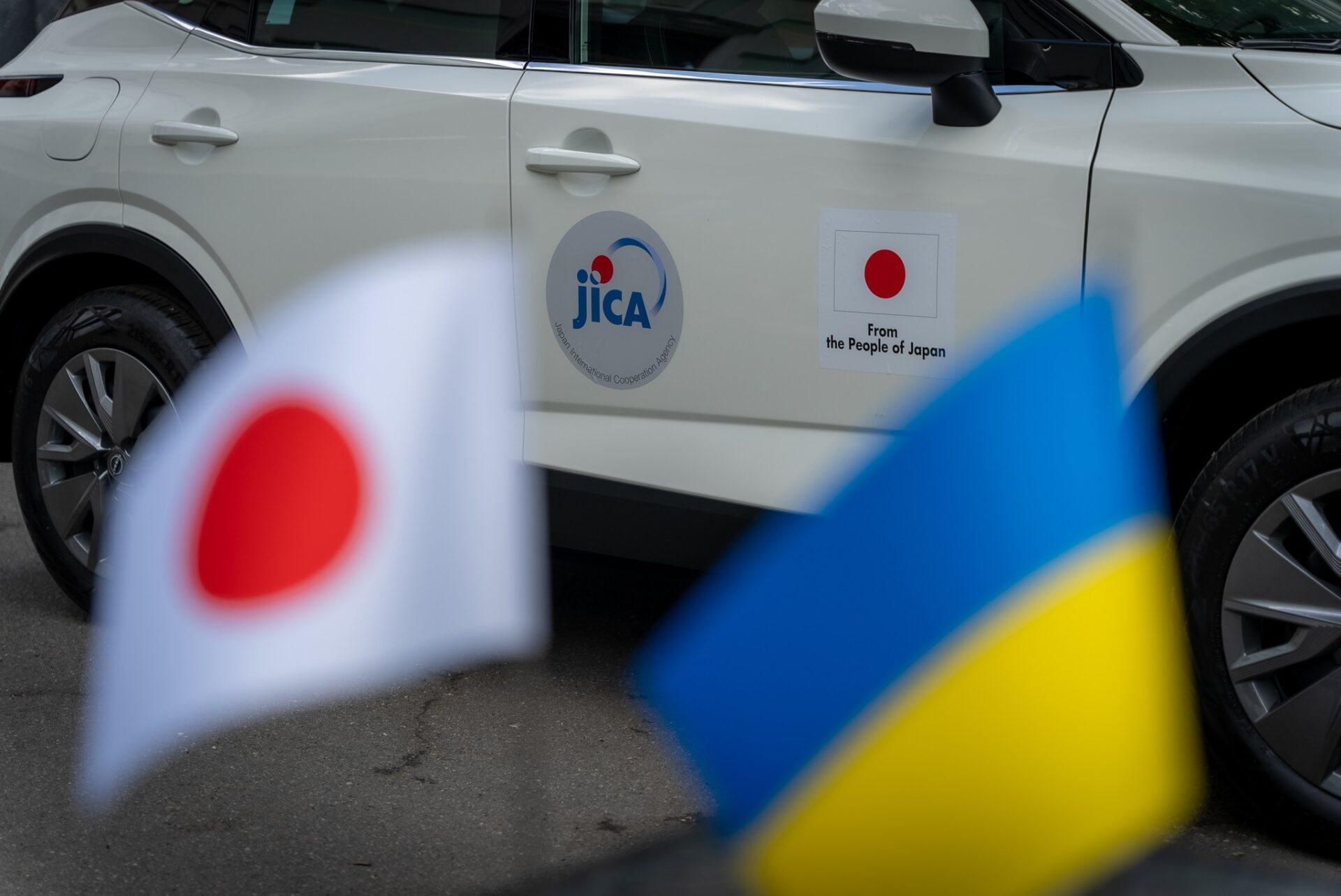
Japan is a leader of demining in Ukraine. And actually, we’re in close cooperation with the UN and also as well with the Ministry of Economy of Ukraine. We hosted a working group for the demining here in Japan. And also, one very important event will be held in Japan this autumn, which is called the Ukrainian Mine Action Conference 2025. And last year it was held in Lausanne, Switzerland. Japan hosts the conference this year. It’s Japan’s initiative to hold the Ukraine Mine Action Conference in Tokyo this year. We are focusing on supporting Ukraine.
One of the key factors is that Japan has experience in demining Cambodia. 30 years ago, Cambodia suffered from the civil war, and Cambodia has suffered from landmines in their own country. Japan assisted Cambodia in removing mines for a long time. And this time, we have a kind of cooperation between Japan, Cambodia, and Ukraine. Ukrainian experts, like those who are involved, went to Cambodia and learned how to remove the mines and then came back and shared their experience. And Japan as a whole supports that kind of framework. Not only bringing and providing equipment, but also we’re sharing an experience of human resources development with other countries, like third countries. Japan is now gathering, beefing up the international society, including countries or international organizations or other NGOs. We like to have a kind of a circle of the stakeholders and so that addressing removing mining in Ukraine. That’s where we are regarding demining. And Japan definitely involved fully within this in the demining in Ukraine.
Interview conducted by Stanislav Kinka