

During the war, Ukrainian society has become accustomed to Turkish President Recep Erdogan acting as a kind of peacemaker who is interested in Ukraine’s victory in the war. Is everything really as transparent as it seems? We will try to figure it out in our article.
How does Turkiye actually support Ukraine?
There are a number of decisions that seem to indicate that Turkiye is indeed a friend of our country:
- Military aid and technology.
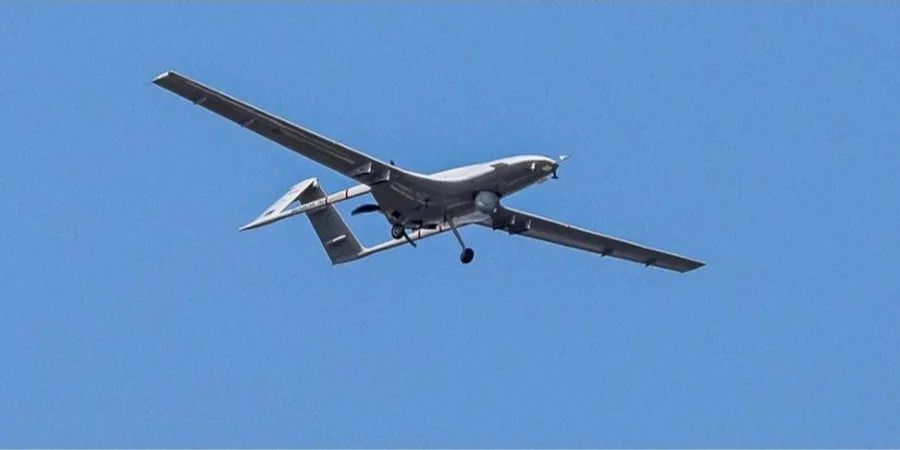
– Bayraktar TB2 UAVs. Turkish strike drones became one of the symbols of the first months of the war. They helped Ukraine destroy columns of equipment, air defense systems, and command posts, as well as improve the quality of reconnaissance.
– Cooperation in the production of drones. The Ukrainian-Turkish Bayraktar production plant (Kızılelma, Akinci project) creates long-term opportunities for joint defense developments.
- Maritime security and role in the Black Sea.
– Montreux Convention. Turkiye closed the straits to military ships of countries involved in the war. This limited Russia’s ability to bring new ships into the Black Sea.
- Diplomacy and the grain agreement. Ankara played a unique role in creating a grain initiative that temporarily unblocked Ukrainian agricultural exports and stabilized global markets. Turkiye’s participation in negotiations on the exchange of prisoners of war and the return of deported Ukrainians was no less important.
- Strengthening of some, but not all, sanctions pressure. Turkiye significantly reduced exports of dual-use goods to Russia and restricted schemes for circumventing restrictions. This dealt a blow to the Russian economy and the logistics of military production.
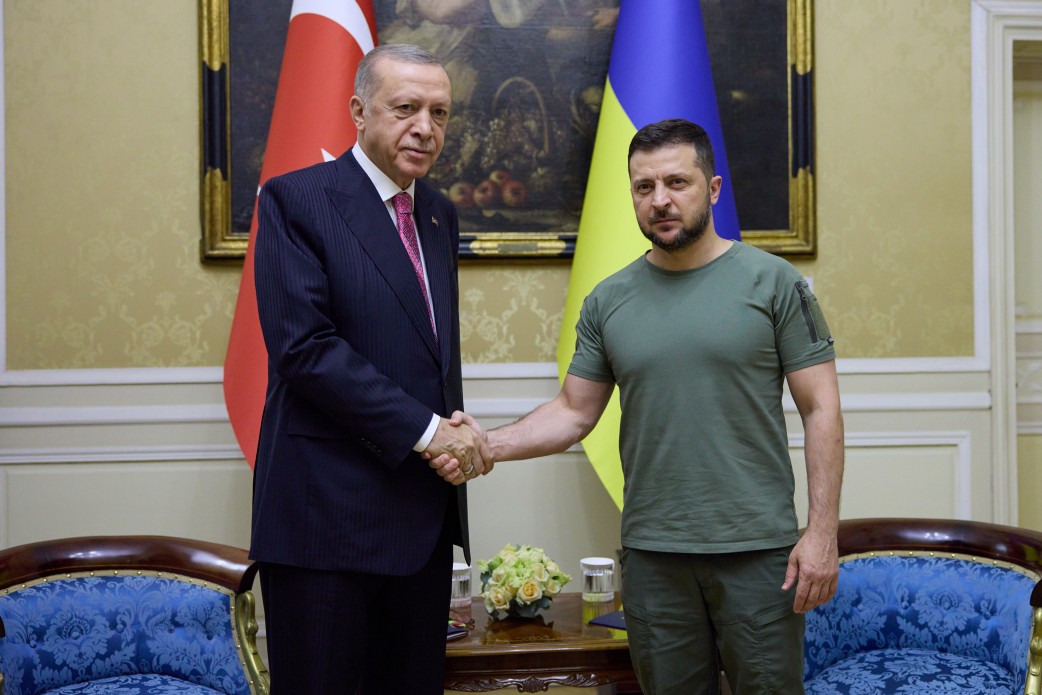
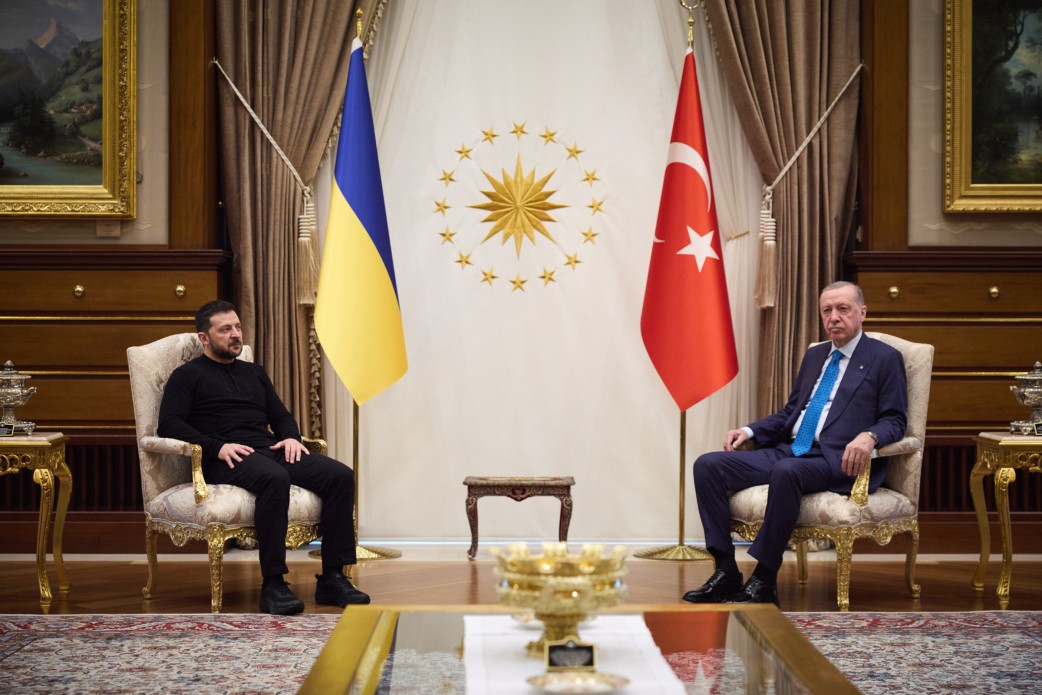
Ukrainian President Volodymyr Zelenskyy also emphasized the importance of Turkiye’s assistance. In particular, at a meeting with Erdogan in Ankara in February 2025, he said:
“Ukraine greatly appreciates our relationship and the fact that in this extraordinary time of war, we have the necessary mutual understanding and receive support. Turkiye has always been principled on issues of sovereignty and territorial integrity of our state, and we believe that this is of global importance.”
Erdogan has repeatedly stated that he supports Ukraine’s territorial integrity. For example, on May 15, 2025, at another meeting with Zelenskyy in Ankara, he noted that he always supports Ukraine and considers Crimea to be Ukrainian.
The Turkish president has also often expressed his willingness to facilitate peace talks:
“We are ready to make any contribution, including providing a platform for negotiations, to ensure a just, lasting, and dignified peace in Ukraine.”
However, despite such eloquent words, if you look at this issue a little closer, it becomes clear that everything is not so simple and Turkiye usually seeks its own benefits, balancing between Moscow and Kyiv.
For example, Ankara continues to maintain contacts with Russia through energy and trade; it has not joined all Western sanctions and has not introduced its own.
Why doesn’t Turkiye sever ties with Moscow?
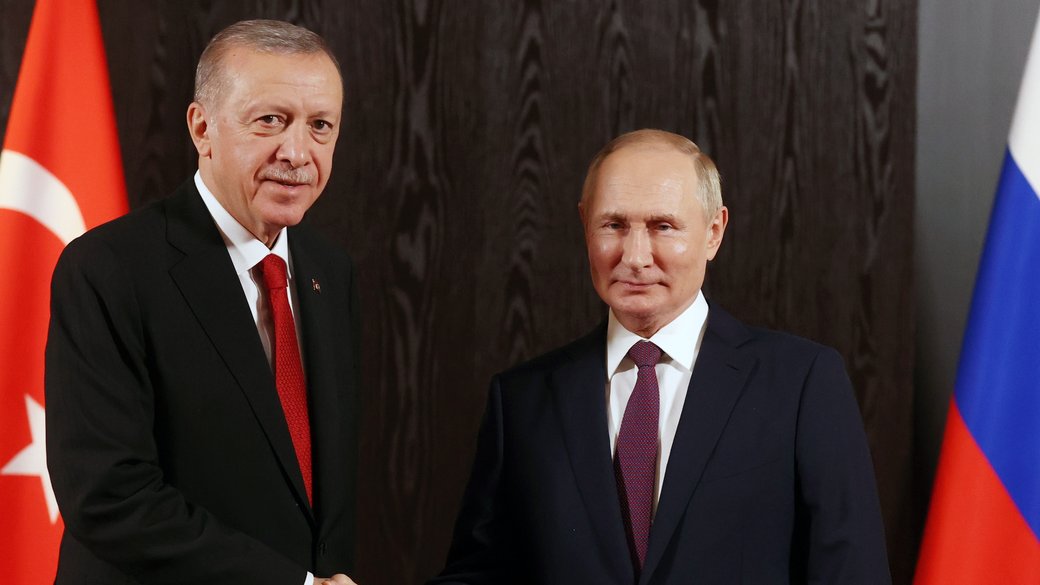
As we have already said, Turkiye consistently maintains relations with Russia, despite the war in Ukraine, and does so not out of sympathy, but because of cold geopolitical and economic calculations. Ankara has developed a unique model: by helping Ukraine with technology and diplomacy, it receives benefits from Moscow that are difficult to replace with other partners.
First, Russia is beneficial to Turkiye, of course, in the energy sector. Turkiye is almost 45% dependent on Russian gas. In addition, it receives Russian oil and fuel for the Akkuyu nuclear power plant, which is being built by Rosatom. For Erdogan, this means stable energy supplies at relatively low prices, the ability to avoid energy shocks, and an important lever in domestic politics, as cheaper gas means stability for voters.
Secondly, there is tourism. Millions of Russians bring in billions of dollars, as Russia is one of Turkiye’s largest tourist markets. Before the war, up to 6 million Russians visited Turkiye every year, and this flow remained significant in 2022–2025. This allows Ankara to keep afloat a sector that accounts for up to 10% of GDP.
Thirdly, there is trade and logistics. After the introduction of Western sanctions, Turkiye became a “window” to the world for Russia — but also benefited itself. Turkish exports to Russia (household appliances, clothing, electronics) have risen sharply. In addition, Turkiye has become a key transit hub between Russia and other countries. Finally, the revenues of ports, transport companies, and banks have increased.
One cannot ignore the purely political preferences that Ankara receives, because for Turkiye, Russia is a tool for expanding its own role in the world, thanks to which Erdogan positions himself as a mediator capable of maintaining contact with both sides of the war.
Thus, despite formal support for Ukraine in the international arena, the reality is that Erdogan is not as straightforward as he appears to be.
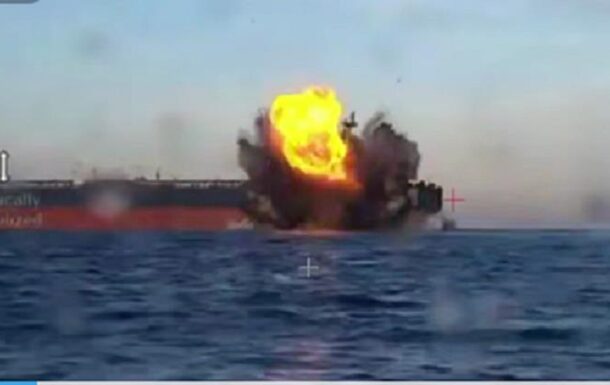
Another striking piece of evidence that the Turkish president is playing both sides is the recent incident involving the sinking of two Russian shadow fleet tankers in the Black Sea.
Turkiye’s response to the Sea Baby drone attack on the Russian shadow fleet
In response to the strikes on two Russian shadow fleet tankers, Kairos and Virat, on November 28, the Turkish government expressed serious concern.
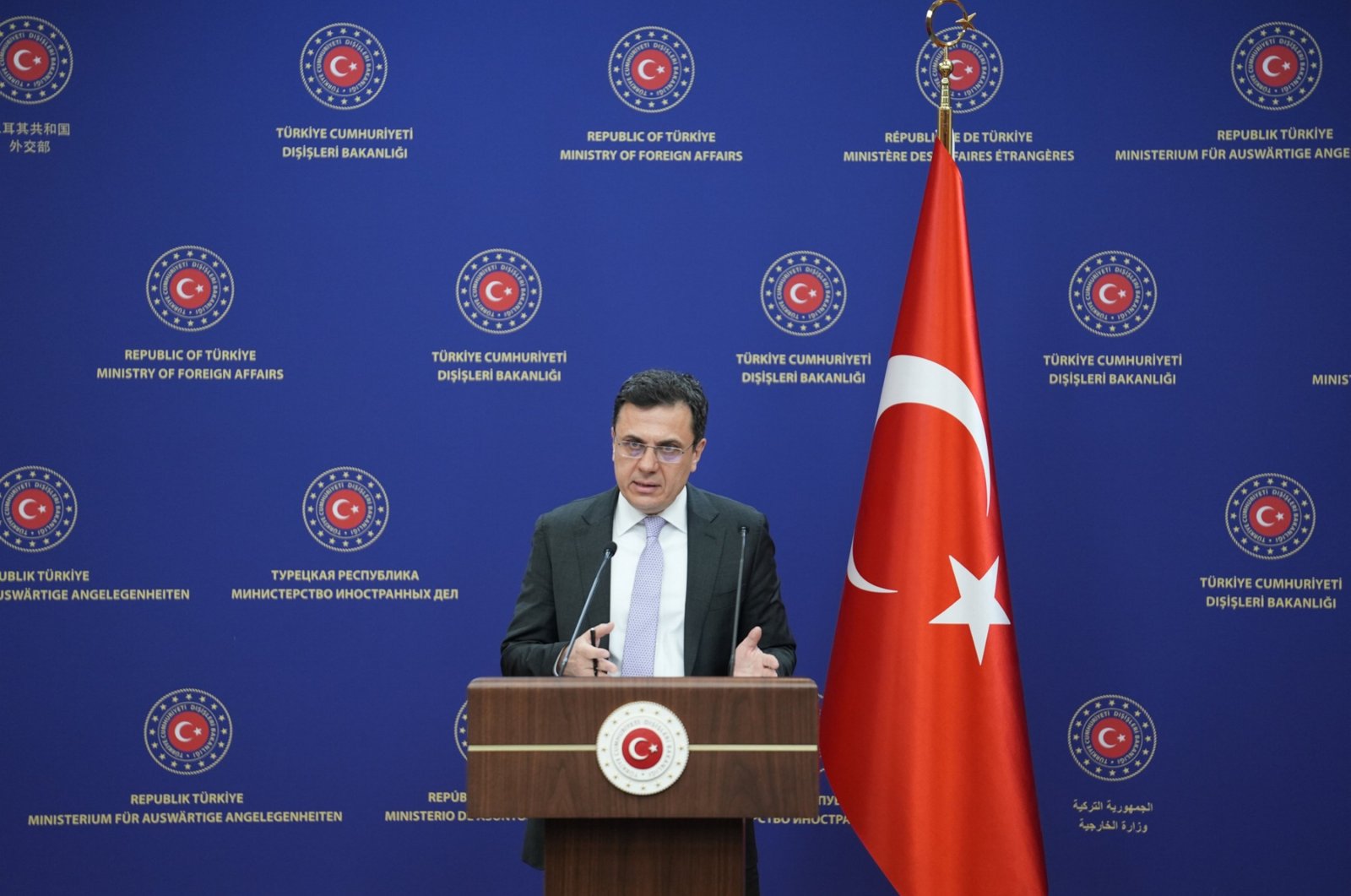
Turkish Foreign Ministry spokesman Oncu Keceeli said:
“These incidents, which occurred in our exclusive economic zone in the Black Sea, have created serious risks to the safety of navigation, life, property, and the environment in the region.”
He noted that Turkiye “continues to be in contact with the relevant parties in order to prevent the spread of war in the Black Sea and its further escalation.”
“And also to ensure that our country’s economic interests and activities in the region are not affected”.
Conclusion
All of the above only confirms the fact that, despite attempts to present itself as a peaceful mediator, Turkiye is primarily defending its own interests. And this position has become commonplace in the world, where politics is considered more important than justice.
No one will “lay down their life” for Ukraine just because it is right. Inadequate sanctions from the West and insufficient weapons supplies are part of the global picture that Erdogan has demonstrated locally through Turkiye’s example.
This means only one thing: those who are drowning must save themselves, and this war is purely our war, in which only we ourselves can fight for the right to our own lives.