

The European Central Bank refused to support the payment of €140 billion to Ukraine against frozen Russian assets. It argued that the proposal violates the European Commission’s mandate. The European Commission began work on alternative proposals, as the Financial Times reported. The ECB protects the banking system. Yet, Russia keeps undermining the entire world order and violates EU borders on a regular basis. This situation demands stronger and more innovative responses, as traditional rules no longer work. However, the latest refusal may also have deeper roots.
Peace deal concerns
The loan might be blocked because officials intend to return it to Russia, as Politico reports. When EU sanctions envoy David O’Sullivan traveled to Washington during the summer, U.S. officials told him clearly that their plan was to return the assets to Russia after the signing of any peace plan. The initial peace plan presented by the U.S. in mid-November included a provision to use $100 billion of Russian assets to rebuild Ukraine, while and the rest was to be transferred to a separate US-Russian mechanism.
Despite U.S. objections, European Commission President Ursula von der Leyen kept working on a plan to use frozen assets to support Ukraine. During a speech on September 10, she said that the EU intends to use these funds to finance Ukraine through a reparations-loan mechanism. Now defenders of European sovereignty must search for new ways.
Also, Belgian Prime Minister Bart De Wever warned that using frozen Russian assets to finance Ukraine could, according to him, cause serious economic and geopolitical consequences.
Economic situation
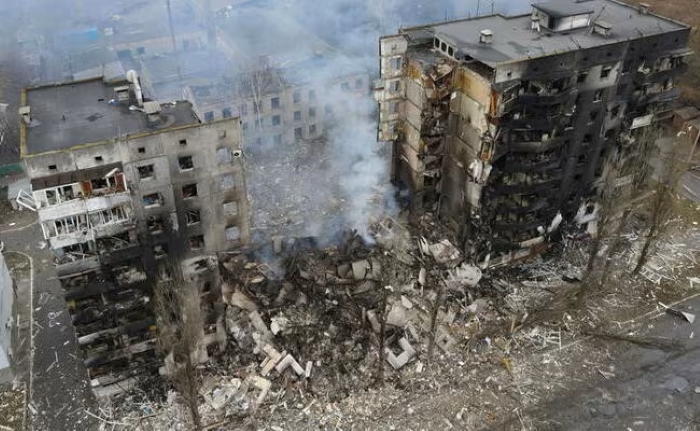
The U.S. now provides weapons on a commercial basis. This loan becomes even more necessary, and the U.S. should also take interest in the EU’s and Ukraine’s ability to pay for supplies. According to recent estimates, the cost of rebuilding the country during the full-scale Russian aggression only reaches $524 billion over the next ten years. These calculations were made at the beginning of the year, so the number is now higher. Direct losses at that time stood at around $176 billion. These include destroyed housing, transport, energy, education, and other critical infrastructure. Estimates show that 13% of the country’s entire housing stock suffered damage. In 2025, public and state-guaranteed debt will exceed 100% of GDP. That number as a psychological and economic risk threshold. Under current conditions that help Russia, the Kremlin will continue to refuse to pay any reparations.
Conclusion
The current attitude toward frozen Russian assets destroys the original plan formed at the start of the full-scale invasion. The assets were supposed to serve as funding for Ukraine’s recovery or as leverage to force Russia to pay. If the EU returns them, Russia gains another advantage. Ukraine loses resources needed to rebuild infrastructure destroyed by the war. Future recovery then even becomes inadequate, as Russia will rearm and attack Ukraine with new intensity soon.