

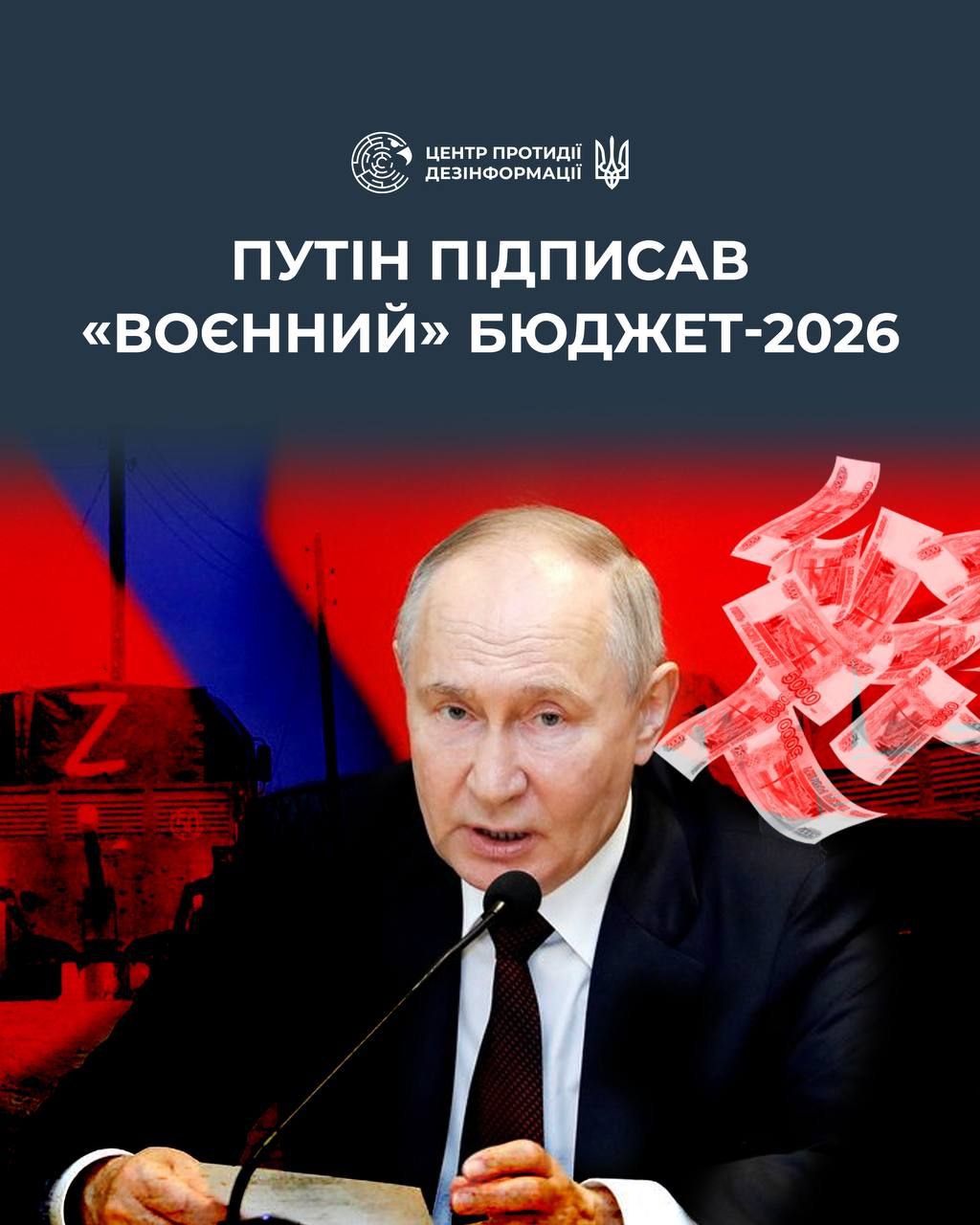
Russian President Vladimir Putin has signed the 2026 federal budget, allocating nearly 40% of expenditures to the army and security forces, reports the Center for Countering Disinformation (CCD) under the National Security and Defense Council of Ukraine.
Military Priority
According to the CCD, social programs will receive only a quarter of the budget. This is the lowest level in two decades.
“This budget sends a clear signal that peace is not part of the Kremlin’s plans for the coming year,” the Center notes.
Experts point out that these allocations show Russia’s intention to continue the war, even at the cost of economic decline and reduced public welfare.
Deficit and Tax Pressure
The budget projects a 1.6% of GDP deficit due to falling oil and gas revenues. The Kremlin plans to cover the gap by cutting social spending and introducing new taxes, including raising VAT to 22%.
“Effectively, the Russian population will have to pay for the war through tax pressure and cuts to social services,” the CCD adds.
These measures may strain small businesses and lead to higher prices for goods and services.

Economic Consequences
Russia’s economy is already showing signs of crisis, with rising defaults and challenges in key sectors. Increased military spending alongside cuts to social programs indicates that the country is shifting to a “wartime mode.”
The CCD adds that the 2026 budget confirms the priority of the security sector for Russia, while the social needs of the population are relegated to the background.
Conclusion
The budget demonstrates Russia’s readiness to prioritize military operations over social needs. Ukrainian experts advise closely monitoring the economic and social impact of the Kremlin’s policies.