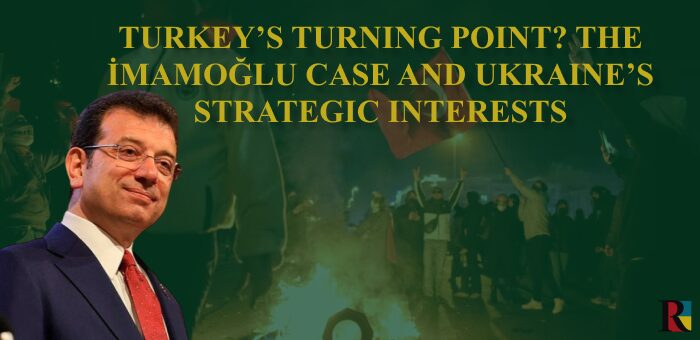


The Arrest of İmamoğlu: Political Background and Timing
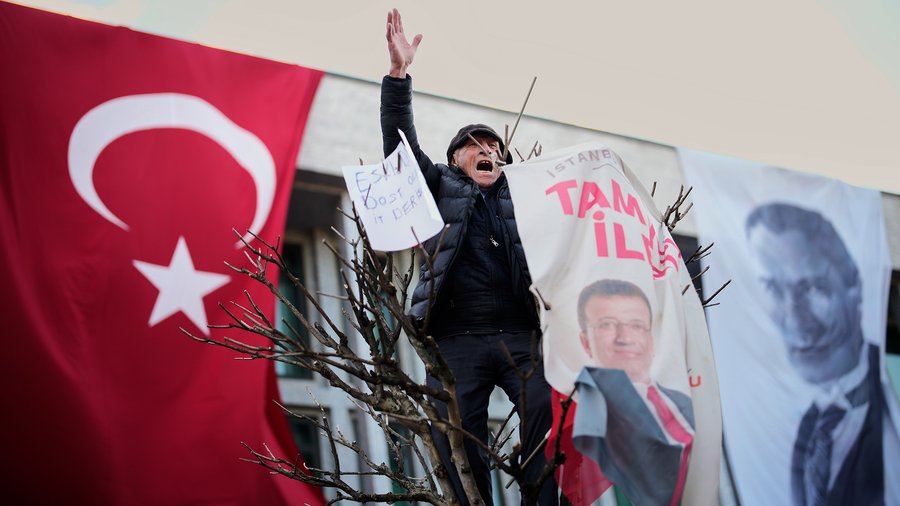
On March 19, 2025, Turkish authorities arrested Istanbul Mayor Ekrem İmamoğlu – one of the most prominent opposition figures and a potential challenger to President Recep Tayyip Erdoğan in the 2028 presidential election. Officially, he faces charges of corruption, abuse of power, and alleged ties to banned organizations. İmamoğlu and his party – the Republican People’s Party (CHP) — strongly reject these accusations, calling the case politically motivated.
The arrest came amid growing domestic instability. In 2024, Turkey’s inflation rate surpassed 75% – the highest level in two decades. Economic hardship, plummeting support for Erdoğan’s ruling Justice and Development Party (AKP), and İmamoğlu’s re-election as mayor of Istanbul dealt heavy blows to the incumbent regime’s authority.
Domestic and International Response
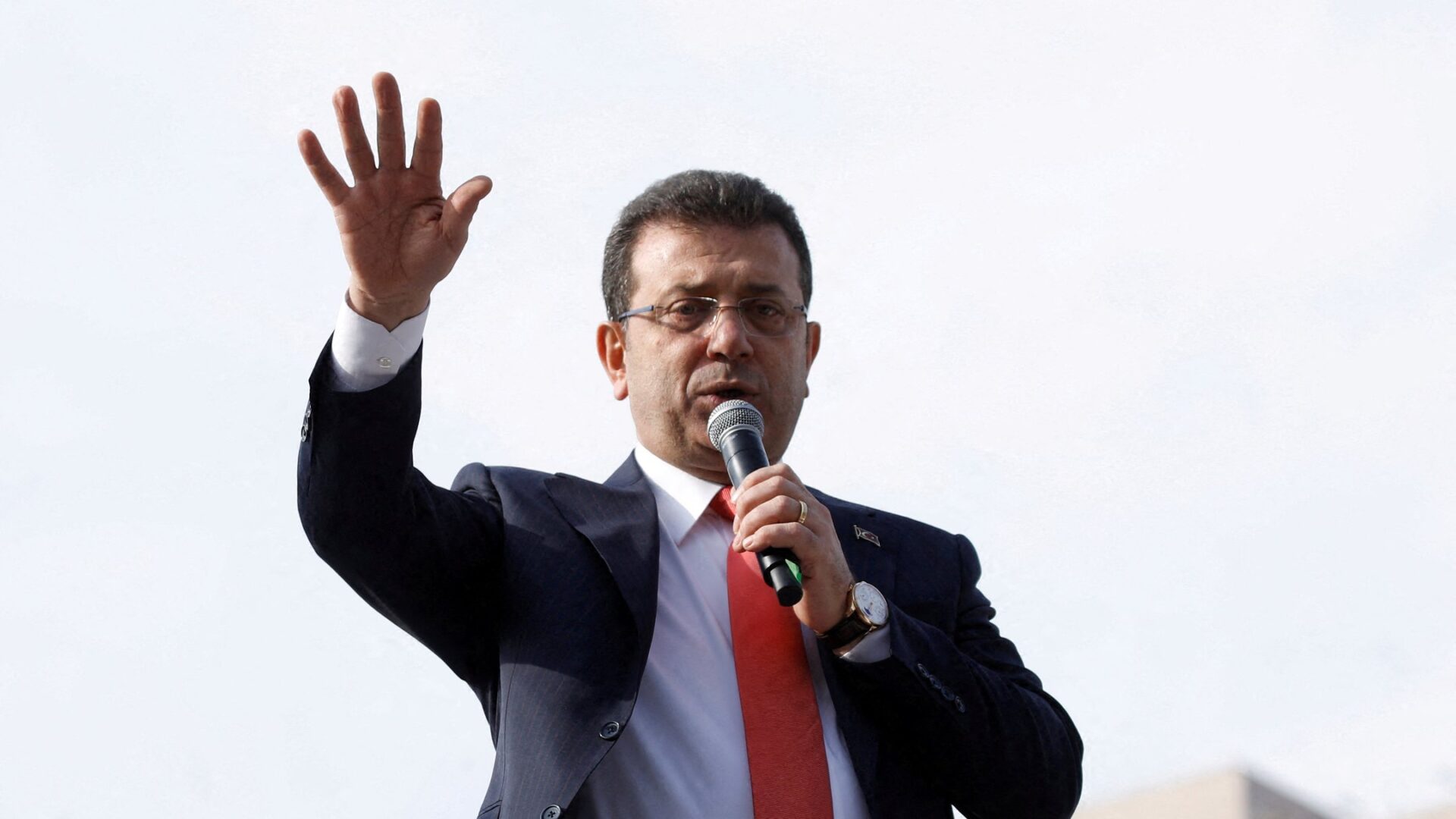
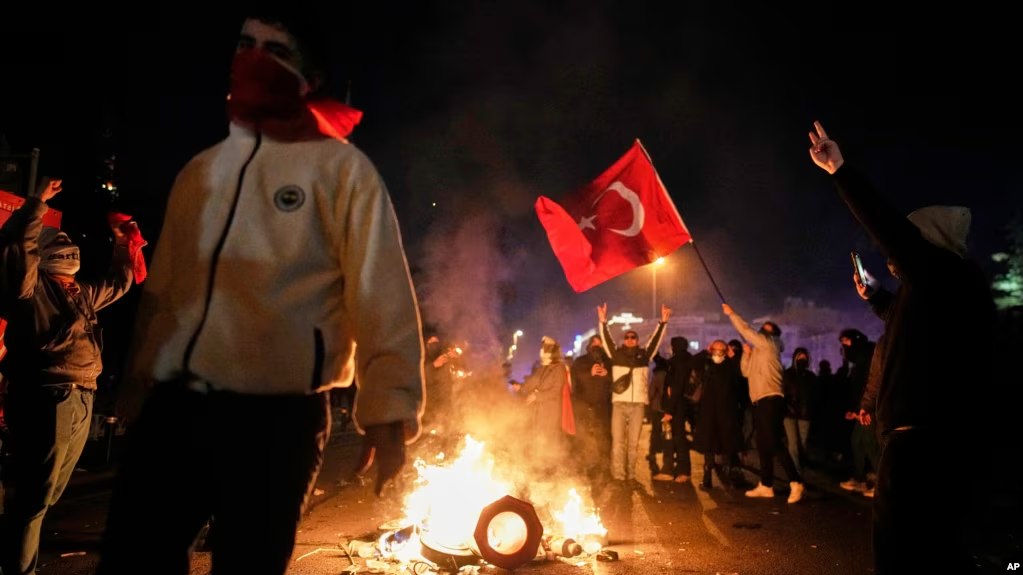
İmamoğlu’s arrest triggered mass protests in Turkey’s largest cities, including Istanbul, İzmir, and Ankara. Over 1,800 people were detained during demonstrations, signaling mounting public discontent. Police crackdowns were severe, and access to social media platforms was periodically restricted.
The European Union condemned the arrest, urging Ankara to respect the rule of law and democratic freedoms. Still, Brussels’ real leverage remains limited due to Turkey’s strategic importance in controlling migration and maintaining regional energy security.
What Might Change if İmamoğlu Comes to Power
Should İmamoğlu make a political comeback and win the 2028 election, his approach is likely to be moderately pro-Western. Although not known for anti-Russian rhetoric, he aligns with the Kemalist tradition of secularism and multivector foreign policy. However, the lack of a clearly defined foreign policy platform makes it premature to expect immediate or radical shifts in Turkey’s international positioning.
Strategic Opportunities for Europe and Ukraine
İmamoğlu’s leadership could signal a return to a more predictable Turkish political trajectory, emphasizing the rule of law, institutional stability, and open governance. For the European Union, this presents an opportunity to relaunch dialogue on human rights, judicial reform, and freedom of expression – areas frozen in recent years. A more democratic Turkey under İmamoğlu could also ease migration pressures, deepen energy cooperation, and reduce tensions in the Eastern Mediterranean.
On the geopolitical level, Turkey might move away from tactical balancing between the West and Russia. For Ukraine, this opens the door to deeper defense industry collaboration – particularly in unmanned systems, where joint projects already exist. Turkey could also reduce parallel imports to Russia and shut down financial and logistical loopholes used to evade sanctions, thereby strengthening the pressure on Moscow without direct NATO involvement.
Still, Kyiv should avoid overestimating the potential for alignment. İmamoğlu has not articulated a coherent foreign policy doctrine and remains primarily focused on domestic reform. Therefore, Ukraine should begin fostering communication channels with the Turkish opposition now, including through think tanks, media, and diplomatic dialogue.
Likewise, the EU must demonstrate greater strategic flexibility – expanding support for democratic initiatives inside Turkey while clearly outlining the steps required to rebuild trust between Ankara and Brussels. Public support from Ukraine for democratic reforms in Turkey could further enhance Kyiv’s image as a reliable and values-driven partner in the region, sensitive to the complexity of post-authoritarian transitions.
Strategic Outlook
The arrest of İmamoğlu reflects the continued erosion of democratic institutions in Turkey. It is a development with implications not only for the Turkish opposition but for the regional balance of power. Both Ukraine and the EU must respond strategically – guided not only by principles but by practical interests in what may become a reconfigured Turkish foreign policy.
Still, there are limits to what can be expected. Even if victorious, İmamoğlu would govern within a fragmented political landscape still shaped by Erdoğan-era institutions and loyalists. His Western orientation remains tentative, and so far he has concentrated more on domestic governance than foreign initiatives.
In this light, İmamoğlu represents a possible window of opportunity, not a guarantee of strategic alignment. His rise could catalyze change, but its substance will depend on internal stability, external pressure, and the new leadership’s ability to chart a clear course. Ukraine’s posture must remain cautious, deliberate, and grounded in long-term regional interests.
By Dmytro Fedoruk – entrepreneur and The Ukrainian Review ambassador in Istanbul.