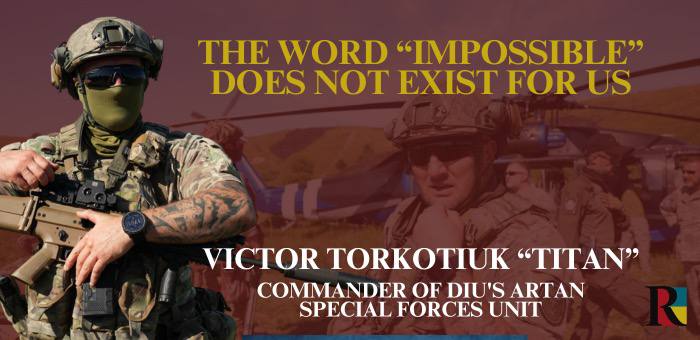


The war with Russia has been going on in Ukraine for almost 10 years. During this time, hundreds of thousands of soldiers have been defending our independence, including the fighters of the DIU’s Artan special forces unit. The commander of this special unit, Viktor Torkotiuk, nicknamed “Titan,” shared his team’s experience with The Ukrainian Review and told how the fighters have been modernised since the beginning of the full-scale invasion.
How many soldiers does the DIU’s “Artan” special unit currently have and what are the specifics of your activities on the battlefield?
Of course, we cannot disclose the number of personnel. This is classified information. And it is because of the specifics of our activities. The only thing I can say is that all the fighters are highly qualified specialists in their fields. Because a unit is not only attack aircraft, artillery, or UAV operators, but also drivers, logisticians, and so on. And each of them performs an important function for the overall success.
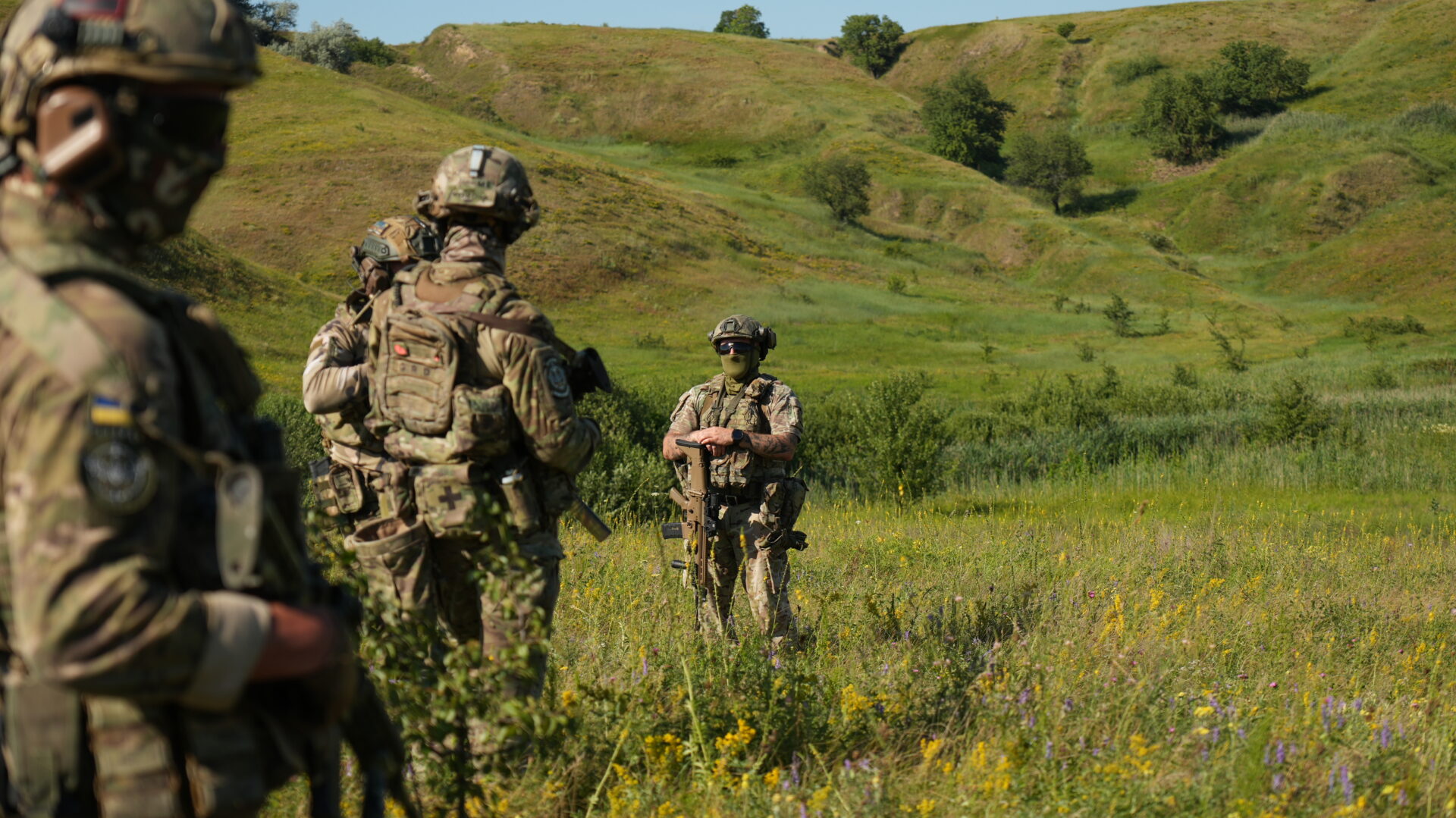
The specifics of our activities are quite broad. Firstly, it is assault operations, clearing operations, because “Artan” is an active operations unit of the Defence Intelligence of Ukraine. We also carry out special operations, each of which is unique and is developed according to separate algorithms. Of course, these include reconnaissance, sabotage, and work behind enemy lines. We also take part in battles on the front line, performing tasks more typical for infantry units. If the situation at the front requires it, we support other units of the Ukrainian Defense Forces.
We operate both on land and at sea. We are ready for any task that requires a high level of coordination and rapid response. The word “impossible” does not exist for us.
What is the meaning of the chevron of your special unit?
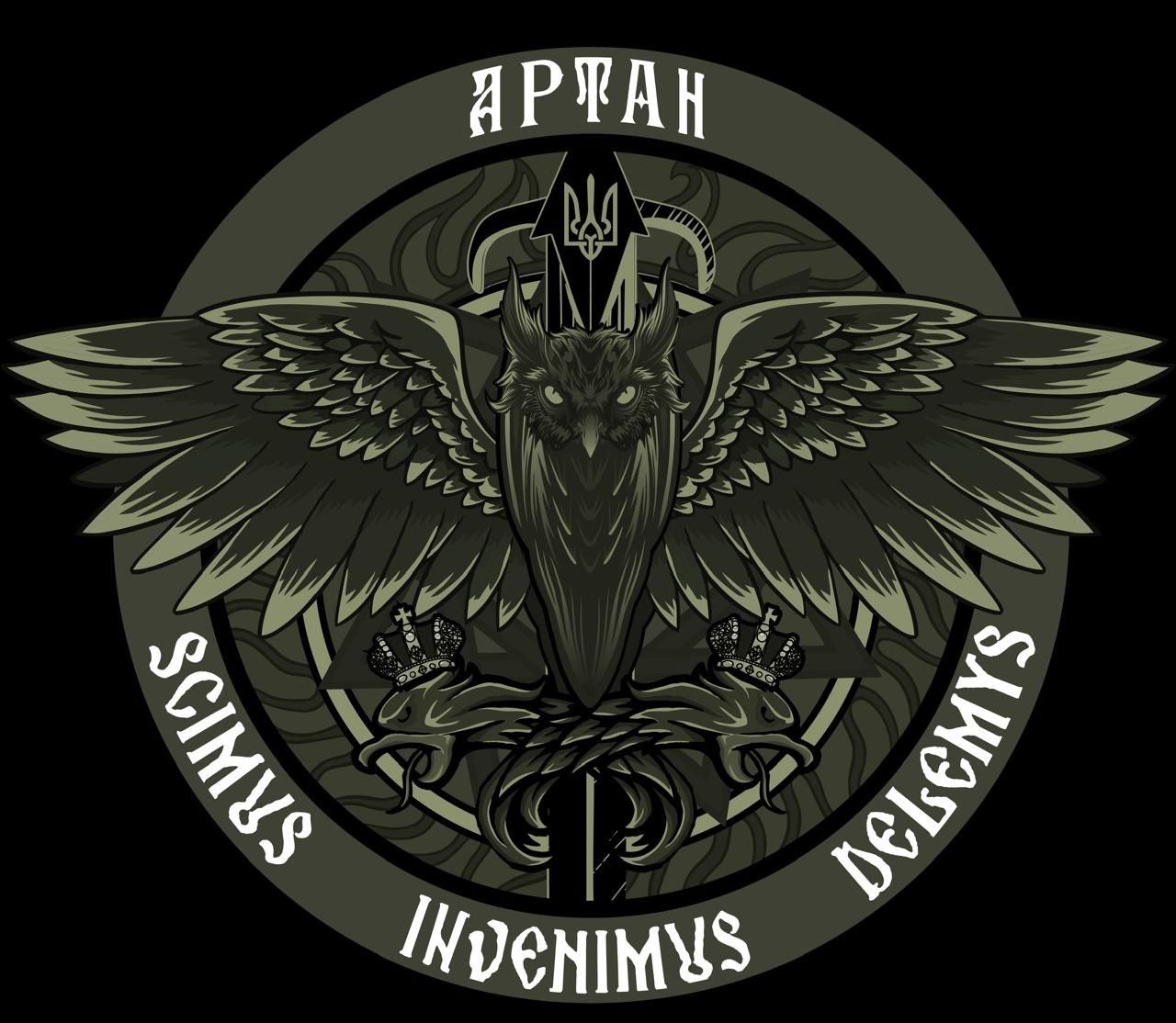
Our unit’s chevron symbolises strength, courage and loyalty. It reminds us of our values: brotherhood, professionalism and readiness to fight for our country’s freedom.
The symbol of “Artan” is the owl depicted on the unit’s chevron. The bird symbolises wisdom, knowledge and death. The owl is placed against the background of the Star of Inhlia, an ancient Slavic amulet. In its talons it holds a creature depicted on the enemy’s coat of arms.
The name “Artan” comes from Arthania, a state formation of a group of tribes that, according to some medieval historians, lived on the territory of modern Ukraine and were ruthless and invincible warriors.
What are the criteria for selecting fighters for your unit? Are there any special requirements for physical or psychological training?
The selection of soldiers is very strict, because it is an honour and a privilege to serve in “Artan”. Of course, we are looking for people with military experience, excellent physical fitness and high psychological qualities as a priority. However, civilians without experience who want to defend their homeland can join us – we can teach everything, we have excellent instructors, all the necessary equipment, training and development opportunities.
Of course, all candidates undergo thorough psycho-emotional tests, interviews, and physical fitness tests. Only then a decision is made on each individual.
What do you think needs to be changed or improved in the system of training and support for Ukrainian special forces?
It is important to focus on modernising training, introducing new technologies and providing proper equipment. It may also be worthwhile to further strengthen international cooperation to share experiences. Here, I would like to note that international partners will also benefit from such cooperation, because during the fighting we have gained a wealth of knowledge and experience that will be useful to any unit from other countries.
In general, the training of units in the system of the Defence Intelligence of Ukraine is at an extraordinary level. Experienced instructors who have been through more than one combat campaign work there, there is proper support and the right attitude towards the fighters.
Tell us about the most successful operations in which the “Artan” unit took part and which you are proud of?
In fact, I’m proud of every operation my guys, the “Artan” Special Forces, have performed. After all, there are no simple operations, especially given our specifics. But for obvious reasons, I cannot tell you about all of them. We will postpone this for later when we talk after the victory.
Nevertheless, there are several unique operations of “Artan” that are already known to the general public. These include the return of the so-called Boyko towers, gas production platforms in the Black Sea, and operations in the temporarily occupied Crimea, on the Tendra Spit. These are all parts of a comprehensive plan to liberate Ukrainian land. Their main result at the moment is that we have changed the balance of power in the Black Sea, helped unblock the grain corridor and stabilise its safe operation. Now, it supplies as much food to countries that desperately need it as it did before the full-scale invasion.
There were many ground operations. The biggest ones were in Bakhmut, in the Kupiansk sector. This year, it was Chasovyi Yar’s defence and the Kharkiv region’s liberation. Together with other active units of the Defence Intelligence of Ukraine, we liberated 400 hectares of forest where the enemy was literally “buried”. We were opposed by professional and experienced troops, but we accomplished the task set by our commander, Kyrylo Budanov. As always, because our credo is that the task must be completed.
Recently, your unit, together with “Kraken”, the “International Legion”, and the “Freedom of Russia” Legion, conducted a successful operation to liberate a forest in the Kharkiv region. What can you tell us about the cooperation with “Freedom of Russia”? Have you ever worked side by side with any other foreign legions?
Of course, in many operations, we work together with other units of the Defense and Security Forces of Ukraine, especially with the Defence Intelligence of Ukraine, in particularly, with the “International Legion”. This is a highly professional unit, so working together is a pleasure, an honour, and most importantly, it brings results.
We are grateful to all the citizens of other countries who help us fight for the freedom of Ukraine. And the rest of the democratic world… After all, evil cannot be given concessions, flirted with, or negotiated with – if you give a finger, they will bite your arm off to the elbow.
Which enemy unit was the most professional and difficult opponent?
The enemy has professional units with a high level of training and high-quality equipment. And when they find out that we are working in a certain area, they try to send such units to confront us. However, we are not afraid of the enemy. We’re not throw your hat over the windmill. We always plan our actions taking into account all factors, including who is opposing us in a particular place at a particular moment.
How has your unit’s tactics changed since the beginning of the war? Did you have to adapt your working methods due to new challenges?
The tactics are changing all the time. This war is very fast-moving. That is, everything is evolving literally before our eyes. For comparison, while in 2022, we were engaged in mostly small arms battles in Bakhmut and saw only a few enemy drones, in 2024, Chasovyi Yar was literally teeming with these drones. Although, of course, the enemy continues to actively work on our positions with artillery, multiple launch rocket system (MLRS), aviation, and drops UAVs…
We are adapting to the new environment by focusing on flexibility and speed of response. The integration of modern technologies, such as drones, has, of course, become an integral part of our strategy.
In your opinion, will the course of hostilities change significantly after the North Korean troops join the Russian side? What will be the right reaction of Ukraine and the world in this case?
Any changes mean new challenges. But, as they say in Ukraine, “we have to do our own thing.” Our state and our army will continue to strengthen our defense capabilities and become stronger. In this context, we will also continue to seek the support of the international community to counter any threats jointly.
The Russians are promoting the narrative that the Ukrainian army is very exhausted. Is this true, and what are the real problems?
All troops go through difficult trials, and people can get tired, but our fighting spirit remains unbreakable. Any problems can be solved if you work hard. And we are working and, as you can see, we are showing results. So, let the enemy speak. Our actions will speak for us.
What was the most difficult thing for you in this war?
The hardest thing for me is losing my comrades. We are a successful unit, but we still suffer losses. It always leaves a deep mark on your heart. It is important to remember each of our Heroes by continuing the fight, supporting their families, and keeping their memory alive.
Which operations are the most difficult for your guys? (water\land, maybe some directions or a specific type of task)
Each operation has its own specifics and challenges. Working on the water, when it’s night and the nearest shore is 200 kilometres away, waves are rising, enemy planes are in the sky, and you need to refuel, is interesting in its own way. Behind enemy lines, where logistics and evacuation are complicated, is also interesting, but in a different way. Sitting in the trenches, in the rain or in the cold, with tanks and other heavy equipment constantly coming at you like crazy, is even different. Every soldier has a hard job. And everyone contributes to the overall victory.
What will be the first thing you do after the war is over?
I’ll turn off the phone (laughs). Seriously, we will work to restore the country, strengthen the army, and support veterans so that they are not left alone with the consequences of the war. I am also convinced that our experience will be useful to our international partners. So we will share it.
By Tetiana Stelmakh