

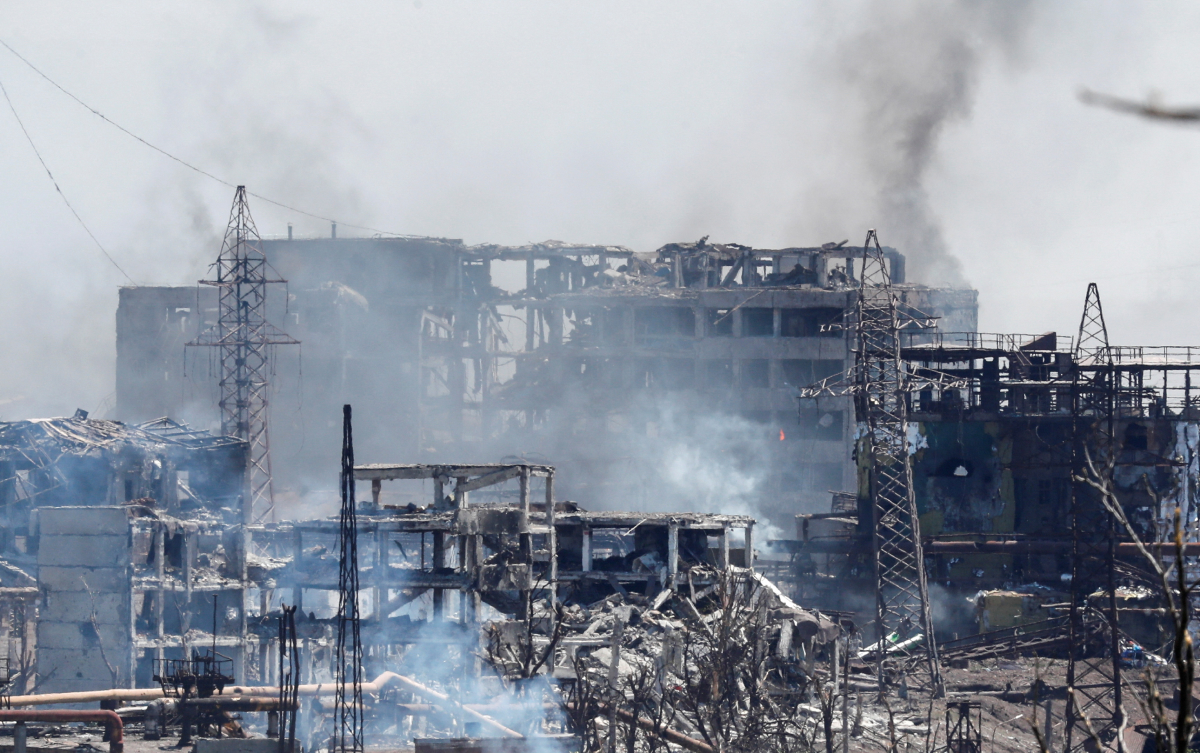
After the start of the full-scale invasion, many southern and eastern industrial facilities came under fire and were damaged in one way or another, if not physically, then economically. Some of them ceased to exist, while others moved to Western Ukraine or abroad.
Such relocation can play a key role in the future and cause a number of changes in the de-occupied territory. We decided to research this topic and find out what the current state of the Ukrainian industry is and what lies ahead for it.
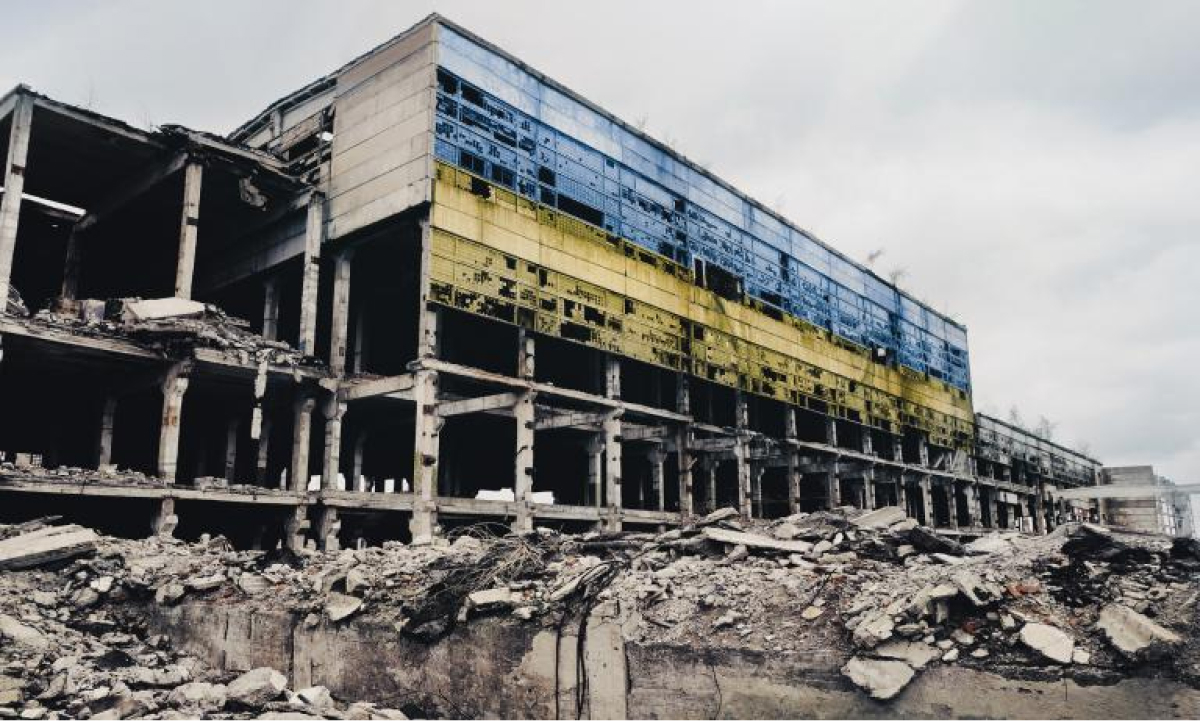
We also spoke with a representative of the market, whose enterprises suffered losses as a result of the war, but continue to work and volunteer for the benefit of the state.
What do the statistics for 2022 say?
According to the estimates of the “Kyiv School of Economics”, industry was the third sector after infrastructure and housing and communal services in terms of the total cost of damages and lost assets caused by the Russian invasion of Ukraine – 8.4% of the total amount.
According to the World Bank’s PDNA methodology, as of July 1, 2022, the total cost of industrial losses was estimated at $8.1 billion, representing almost 4.1% of the country’s GDP in 2021, 6.3% of total assets, and 24.9% of total of equity capital in all industrial subsectors of Ukraine as of the 3rd quarter of 2021. The largest losses were caused to the private sector – 5.35 billion dollars (66.3% of the total amount); the rest – to the state sector.
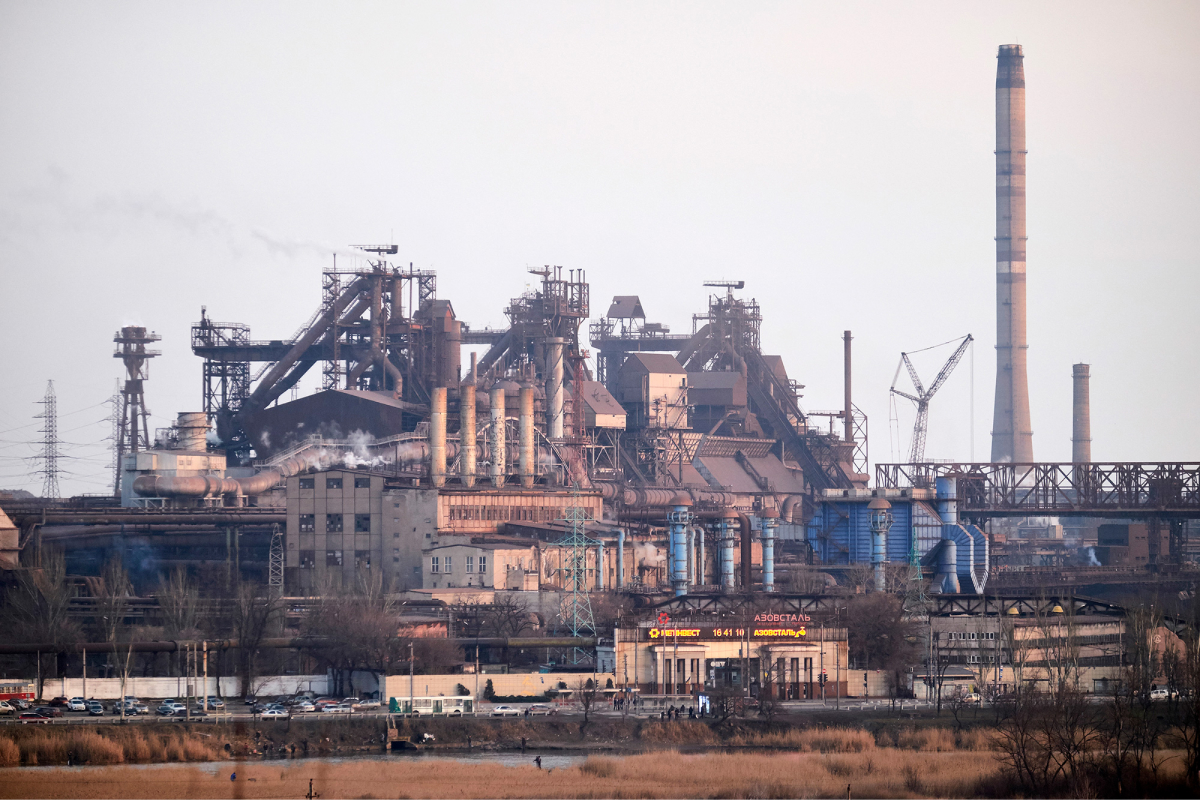
The majority of enterprises (64.9%) were completely destroyed and needed to be rebuilt from scratch – this is approximately $5.3 billion. Most affected:
- Donetsk – 4.2 billion dollars (51.7%);
- Kharkiv – 0.9 billion dollars (11.2%);
- Kyiv – 0.6 billion dollars (6.9%).
The main question was the relocation of enterprises since the beginning of the war. According to the National Institute of Strategic Studies, as of the end of November 2022, 772 enterprises have moved to relatively safe regions, of which 605 have resumed their work in a new location. Another 261 companies were looking for an acceptable location and method of transportation.
Also, according to the survey, Great Britain, the EU, Canada, the USA and Australia took the most active part in helping Ukrainian industry. They canceled tariffs for Ukrainian products for a year, each in different spheres. Also, Britain expanded bilateral cooperation in the energy sphere to support Ukrainian production.
A special investment platform Advantage Ukraine was launched, which presents the investment opportunities of Ukraine (data valid as of the end of 2022), in particular in industry – in the fields of metallurgy and metalworking (more than 20 projects with an investment potential of 26 billion dollars), pharmaceuticals (more than 30 projects, 19 billion dollars), mechanical engineering (over 20 projects, 16 billion dollars), woodworking and furniture manufacturing (over 40 projects, 5 billion dollars). Currently, it is necessary to resolve the issue of war risk insurance, guarantees of investment security in the war and post-war periods.
The Ukrainian Union of Industrialists and Entrepreneurs provided statistics on various branches of industry for the period from the beginning of the war to the end of July 2022. Then the situation looked as follows:
- Mining and metallurgy – a drop in demand in the domestic market due to military actions by 90%, an increase in prices for freight rail transportation by 70%, downtime of wagons at the border for up to 60-90 days due to the blockade of sea ports. Crude steel production in Ukraine amounted to 300,000 tons, which is 25% less than in May 2022.
- The agro-industrial complex – the final cost of transporting one ton of grain by rail has doubled or tripled to $120, and farmers also complain about the lack of empty grain trucks, queues at the border, and the drop in world prices for grain and oilseeds. At that time, there were extremely low indicators of export by land – up to 2.5 million tons per month.
- Mining – more than 90% of mineral and gas deposits in the east and south of Ukraine are under the threat of an aggressor’s strikes. Ukraine produced more than 9.3 billion cubic meters of natural gas in the first half of 2022, which is 4.5% less than in the same period of 2021.
- Oil refining, chemistry – production of nitrogen fertilizers has decreased 5 times since the beginning of the full-scale invasion against the background of the shutdown of key enterprises and the destruction of individual capacities.
- Food – in the front-line areas, enterprises are forced to suspend production. Sunflower oil production is 30-40% of the pre-war level due to export problems.
“We expect the greatest prospects in the export of innovative technologies and software in the IT sector. Currently, this industry already brings in 2 billion dollars more than the agro-industrial complex. And this number will grow”, – added to the organization.
For the last year, the situation with the Ukrainian industry was difficult due to constant shelling by the Russians. However, even then, Ukrainian business adapted and began its path to recovery.
After the war, the industrial map of Ukraine will be completely different
We asked Mykhailo Nepran, the first vice-president of the Chamber of Commerce and Industry, a member of the Ukrainian Business Council, about the pace of industrial recovery after the war. In his opinion, it is still too early to talk about this, because it is not known what state the enterprises will be in due to constant shelling and hostilities.
According to his data, about a third of industrial enterprises that existed before the war stopped working. Among them are such giants as Azovstal, Illich Steel and Iron Works, which accounted for up to 40% of the export of these products. About $13 billion is just direct damage from lost industry.
“We can discuss what industry should be like after the war, given the realities that will await us. This is, on the one hand, the presence of an aggressive northeastern neighbor, due to which industrial enterprises are unlikely to develop in a 100-kilometer zone from the border, at least. Firstly, it will be the development of the military-industrial complex. Because ensuring defense capability in the hope of constant help from our Western partners is not strategically correct”, – explained Nepran.
He added that this war destroyed the remains of the old industrial facilities of the Ukrainian SSR and forced the modernization of production with new technologies. An important factor will be the possibility and necessity to harmoniously join the international economy, given that we count on the financial assistance of our Western partners.
“In this regard, it is necessary to understand which fields will be interesting not only for us, but also for them, that is, those where we will develop harmoniously together with them, and not compete. Because no one needs a competitor. We understand that we cannot stand this competition. Because Ukraine already had a bitter experience when, for example, Russia took an active part in privatization in the 90s and 2000s. Why did you take it? Not only geopolitically, to come here, but in most cases, because we had a single national economic complex of the USSR. And some of the enterprises that were bought by Russia were identical, they simply closed, cut for scrap and removed the competitor, especially in foreign markets”, – said Nepran.
The expert classified primarily the military-industrial complex as promising industries:
“The first is the military-industrial complex. There is already a lot of development here, it is necessary for us and here we can be interesting because, unfortunately, Ukraine has become a great testing ground for the military-industrial complex of all democratic countries. And we already have a lot of experience in testing and repairing. Also, those developments that are available in Ukraine can be competitive and interesting”.
He considers agrarian industry to be the second important industry, because we provide food for about a billion inhabitants of the Earth. In particular, agricultural engineering will develop:
“You can bring these products from the USA or from Germany, or you can produce them here in Ukraine in cooperation with their large structures. This is all the more so since the post-war demand for agricultural machinery will be enormous. Also, we are interested in exporting not grain, but, as I like to say, pasta or compound feed. That is, it is possible to form added value, due to the processing of other food products. Therefore, the development of food processing industries is promising”.
Mykhailo Nepran also singled out such areas as light industry, IT, pharmaceuticals and gardening. The development of new minerals – titanium, lithium – will be relevant, which is now very relevant in the conditions of globalization and development of the semiconductor business. There are questions about the development of the chemical and metallurgical industries, which were once leading, but are now difficult to maintain because of the war.
In June 2023, a survey of the “12 Хвиля” (“12th Wave”) platform among businessmen regarding the state of their enterprises in 2023 was published. The research was conducted within the framework of the Initiative for the recovery of the economy of Ukraine, in which many government structures participate.
Business expectations for performance in 2023 are deteriorating. This is influenced by the unpredictability of the development of the situation and actions of the state, increased pressure from security forces and control bodies, and the actual lack of access to financial resources to replenish working capital and implement development projects.
According to the results of the first five months of work in 2023, 21.1% of enterprises completely or almost completely stopped work. The lack of financial resources in the country hinders business recovery the most, namely customer insolvency (46.9%), unavailability of credit funds and equity, etc.
Mykhailo Nepran added that it is currently not possible to provide accurate statistics on the recovery of Ukrainian business. This happened due to the fact that its representatives try not to disclose their achievements.
“No one keeps such statistics now, because if you give such information now, they will fly there again tomorrow. If someone resumes his work, then, as a rule, they try not to talk about it publicly. We have a little bit of other information that I would like to focus on – this is relocation, where we have some understanding of how it goes”, – he explained.
According to the following data, about 800 enterprises were relocated to the west of Ukraine from the eastern, southern and northeastern regions of the country, where there are hostilities or the threat of them. There is information that about 600 of them have already resumed work.
He gave the example of a top manager he knew, who relocated a fire-fighting equipment factory from the Chernihiv region, near which hostilities took place. According to the representative of the company, “the most difficult thing was to make a decision”.
“It is not so easy when you have been working in one place for 20 years. People, staff, equipment that must be transported and placed is a very large amount of work. But they still dared to relocate, part of the business was left here, part of the business was transferred to the territory of Western Ukraine. I understand that they will leave it there, because now they produce agricultural machinery that they can export to Eastern Europe in the future”, – said Nepran.
Using this example, he explained that those enterprises that have changed their location and feel good in the new territories can stay there, which will give an impetus to the development of new market players in the de-occupied areas after the war. Due to this, the industrial map of Ukraine may change.
We asked exactly how this map might change and got this answer:
“And here the question is open. I spoke with experts from the Institute of Economics of the National Academy of Sciences, and we had a meeting precisely with those who are engaged in metallurgy. I asked: “Will Azovstal be restored?”. They said that most likely not. There will be no necessity in the form in which Azovstal was. These were still Soviet technologies, and although they were modernized, they were still a little outdated. Now you can build a steel plant anywhere in Ukraine. And it is not necessarily the same as before – here is coal, here is ore. That is, this principle of geographical reference can be revised”.
He also emphasized that it will be necessary to proceed from the fact that we will remain in those territories after the war. However, now Western partners are interested in the development of steelmaking in our territory, so this can become a certain vector of movement.
The “12th Wave” poll showed that 46.9% point to the unpredictability of the development of events, and 42.8% to the unpredictability of state actions that can worsen the situation for business. Risks and problems related to the tax and customs systems have increased significantly. There are also problems with interaction with the authorities. 44.1% of enterprises faced the problem of blocking tax invoices. 65.4% of SMEs faced obstacles from state authorities.
As in the previous wave, 72% of businessmen consider the elimination of corruption to be the most priority task for the authorities, and 54.4% consider the need for judicial reform. Also, a significant share of entrepreneurs indicated the need to improve access to credit resources, reduce the cost of resources (47.1%).
At the same time, more than a third (38.4%) of businesses expect an increase in turnover this year. 24.3% of enterprises do not see prospects (indicated that the business will not work or will work at the level of up to 50% of the turnover of the previous year).
8.4% of enterprises indicated an increase in the volume of work compared to the plan. 25.4% of enterprises operate within the planned indicators for 2023. In general, in the first five months of work in 2023, SMEs fulfill the work volume plan by 71.6%.
Nepran cited several examples of successful interaction between authorities and relocated businesses:
“It is very interesting in the Lviv region, there is a lot of support at the local level. Enterprises are given 100,000 hryvnias as grants for those registered in the region. And an additional 100,000 to those who create more than 20 jobs. That is, they make such an economic stimulus. It was also possible to create an IT cluster for Transcarpathia, where about 300 specialists now work on preferential terms”.
Regarding corruption, he added that such a problem really exists: “We know very well that it exists, and both the president and our law enforcement officers are talking about it.” And regarding the tax system, he explained that the problem is that taxes should be predictable and understandable and easily administered. The question is not in their size, but in the fact that someone receives illegal preferences and in this connection has a profit.
“On the other hand, let’s also be realistic – 60% of our budget goes to the war. And if we do not win, if we do not provide, then there will be no reason to talk about any business development. Because no one will develop, we will be physically destroyed. Therefore, during the war, from my point of view, what the state can do and what it does in principle is precisely relief, it is deregulation. This is not to interfere with business and, if possible, to create normal conditions. The state has allocated 62.3 billion hryvnias for lending, support is coming, but it must be understood that today the state is not able to provide it normally”.
Aurum Group shared their experience
We asked industry representatives how they functioned during the war. Alona Lebedeva, the owner of Aurum Group, agreed to share her experience with us, so here’s everything from her words.

Aurum Group – a leading Ukrainian multidisciplinary industrial and investment group.
The key areas of activity are mechanical engineering, transportation, industrial pump construction, engineering services in the foundry field, chemical industry, real estate development, and the agricultural sector. Currently, there are three enterprises in central Ukraine in the territory controlled by Ukraine and fully functioning.

“As a result of the full-scale invasion, Aurum Group lost more than 40% of its business. A number of the Group’s enterprises in the Luhansk, Kharkiv and Zaporizhzhia regions were under occupation and destroyed as a result of hostilities. Despite this, the Group of Companies continues to pay all taxes to the state budget and salaries to employees without delay. According to the results of work in the military year 2022, the Ukrainian multidisciplinary industrial and investment group Aurum paid about 90 million hryvnias to the state budget, provided jobs for 925 employees and continues to conduct operational activities in the territory controlled by Ukraine”.
One of the Group’s enterprises, Svesky Pumping Plant, is located in Sumy Region, 15 kilometers from the Russian border. After the war, there were certain changes in his work.
“From the first days of the full-scale invasion, the Sveskyi Pumping Plant began providing large-scale assistance to the Armed Forces of Ukraine and the local community. All residents of the urban-type border village of Sves were provided with safe conditions of temporary stay in the bomb shelter of the plant, food, drinking water and medicines. An uninterrupted battery, stoves were installed, and the necessary household conditions were provided. This set of measures helped the community of Svesa to survive during the siege, and also allowed the population to stay in a safe place, if necessary, even today”.
The management of the plant, by order of Alona Lebedeva, established a permanent connection with the units of the border guards, namely with the Svesky Garrison of the DPSU, provided active assistance in the construction of fortification defense structures on the border with the aggressor country, established the production of anti-tank hedgehogs from its own materials, produced and transferred materials for the equipment of the positions, provided the soldiers with bulrushes.
“The plant is a city-forming enterprise, the work of which affects the entire life of the village and local citizens. The factory has the only warning siren in the village, so our employees are on duty 24 hours a day and warn the public about danger. Svesa Pumping Plant is the only provider in Svesa of water drainage and supply of drinking water to the population, as well as sewage disposal, which maintains the critical infrastructure of the village of Svesa, Shostkinsky District, Sumy Oblast. The company provides courier assistance to the DPSU border garrison, and provides residents of Sves with a bomb shelter for shelter in case of air raids”.
The other five industrial enterprises of the company in Rubizhny, Luhansk region, have been significantly destroyed and are under occupation. Two agricultural sector enterprises in the Zaporizhzhia and Kharkiv regions are also occupied. The Group has no reliable information about losses. Many employees have left, and contact with those who decided to stay in the occupation has been lost.
Director Oksana Shilo spoke eloquently about the state of enterprises in the Kharkiv region, PSP “Tavilzhanske” and “Kupyansk Agroinvest”, who in February of this year managed to evacuate to the controlled territory together with many residents of the community:
“Businesses have suffered significant losses and are currently in the line of fire, under constant shelling. Now it turns out that half of the district has already been liberated, and Tavilzhanka, Vilshany and Dvorichne are closer to the frontline. There are a lot of shillings. The grain is mixed together with slate, cement and rain. We have about 400,000 tons of wheat grain and about 1,000 tons of barley left for processing. The fields remained unharvested, corn, sunflower on 1,300 hectares. In addition, all the equipment was stolen. And combine harvesters, which, due to their primitive nature, the occupiers could not start, were shot at close range.
The issue of land demining is very complex and painful. They have mined everything in three layers. Today, mines are even hung on trees, not to mention the ground. Our boys cannot pass… But the most important thing is that the occupiers are expelled”, – said Oksana Shilo.
We asked Alona Lebedeva how her businesses were doing at the start of the full-scale invasion. She answered that, first of all, they helped with the production of the necessary equipment for the Armed Forces.
She also added that in Ukraine there is currently a blocking of tax invoices, pressure on business from law enforcement agencies, bureaucratic difficulties, numerous searches of various companies, etc. All these things definitely do not improve the general state of affairs of Ukrainian entrepreneurs.
“If we talk about economic aspects, we face the problem of exiting and searching for new sales markets. Not only a part of the enterprises of the Aurum group, but also in Ukraine as a whole, many productions were oriented to the Russian markets, they had to quickly reorient themselves. Logistics issues remain difficult, because now the logistics corridor, for example, when exporting to the countries of Central Asia, bypasses Russia, which leads to an increase in the price of products, as well as an extension of cargo delivery terms”.
Another difficult issue turned out to be the issue of replacing Russian and Belarusian analogues with our domestic products.
“With incredibly active work and our initiative in this matter, in particular with regard to the production in Ukraine of railway components that were previously produced in the Russian Federation, sometimes one may get the impression that the people who certify and are responsible for the process are simply not interested in strengthening the country’s economy, as far as everything is delayed by bureaucratic procedures. There are also signs of an increase in the price of energy carriers, which is reflected in the cost of production”.
She further emphasized that corruption has gained momentum in Ukraine and cited the examples of Vsevolod Knyazev and Yevhen Borisov. In her opinion, this definitely affects the work of the business.
“There is an engaged pressure of law enforcement agencies on entrepreneurs, which the Federation of Employers of Ukraine has now decided to counteract by issuing the “Manifesto of Ukrainian Business in Defense of Article 42 of the Constitution“, as well as planning to create an open registry of raiders, entering into it the specific names of customers and executors of such proceedings. Against the background of the War for Independence and the enormous difficulties faced by business, such pressure from power structures, in the opinion of most entrepreneurs, is unacceptable and significantly worsens the economic and investment climate in the country”.
We also became interested in finding out whether the company’s logistics have changed, because in 2021 Russia was among the top 5 countries in terms of the volume of supplies of Ukrainian products, and the total trade turnover between the countries, according to open sources, was about 12.3 billion dollars. Considering the specifics of the exported goods (building materials, machines and equipment, certain agricultural products), these goods were produced mainly for the CIS market, where Russia is the largest consumer.
“Before the war, some of the enterprises of our group exported their products to the northern neighbors – Belarus and Russia. Obviously, such exports have completely stopped. The reorientation of these industries is a rather complex process, and entry into Western markets also requires the modernization of production facilities. Therefore, Central Asia, the countries of the South Caucasus, the Middle East and some countries of Eastern Europe can be singled out among the main directions of reorientation of the export of such products of ours”.
According to the owner of Aurum Group, Ukrainian industry suffered the greatest losses as a result of the war. In particular, this happened due to the location of enterprises, which are mostly located in the eastern and southern parts of Ukraine, where shelling by the Russians also plays a big role
“Crisis times are a great chance not to restore old and outdated production, but to create new, automated production enterprises for the production of competitive export products with high added value. But for this, it is necessary to create appropriate conditions, mainly at the state level, to attract foreign investors. Opening and running a business in Ukraine should be quick, transparent and easy”.
She believes that processing for agricultural products, animal husbandry, and various areas of mechanical engineering are the most promising industries. But all this requires multi-billion dollar investments to create modern enterprises. It is also worth paying attention to the IT sphere and the sphere of the defense industry – Ukraine can become a new start-up center for military tech or AI startups.
To sum up, we can say that now the main goal of Ukraine is the victory over the enemy, which will create prerequisites for the safe and sustainable development of industry. The volume of financial aid from foreign partners will be a particularly important factor for the pace of recovery. The war put the last point in the history of the industry of the Ukrainian SSR, forced to modernize the economy in order to survive in new conditions. Therefore, a new map of the new industrial Ukraine is emerging today, in battles, discussions, and firm confidence of victory both on the military and economic fronts.
Tetiana Stelmakh