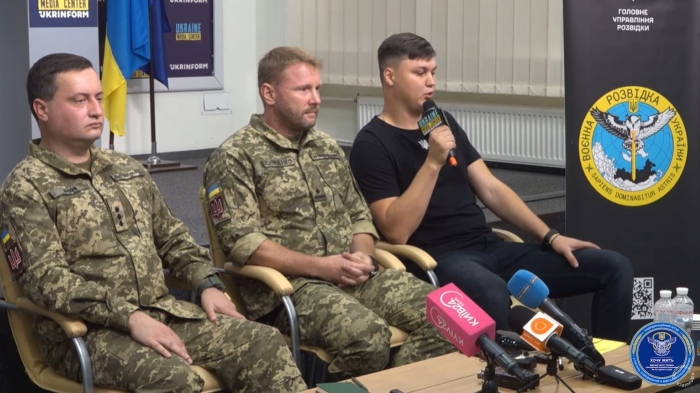


Investigators in Spain closed the case of the murdered Russian pilot Maksim Kuzminov, the man who in 2023 flew a Mi-8 military helicopter to Ukraine, because they lacked admissible evidence. ABC reports that the inquiry, carried out under strict secrecy, did not identify any individual or group responsible for planning or executing the killing. As a result, the court in Villajoyosa (Alicante) ordered the temporary suspension of the proceedings.
European platforms continue to promote voices from the so-called Russian opposition, which mimics the alternative point of views, while serving an authoritarian state. At the same time, the European investigation failed to deliver justice for a Russian who actually contributed to Ukraine’s security.
Background of the Pilot
Ukrainian intelligence carried out an operation on August 23, 2023, that brought a Russian Mi-8 military helicopter to a Ukrainian airfield. Pilot Maksim Kuzminov made the decision voluntarily. Ukrainian authorities offered his family shelter, and he later moved to Spain. The head of the Main Intelligence Directorate, Kyryllo Budanov, stated that the pilot neglected his safety, and this lead to the tragic outcome.
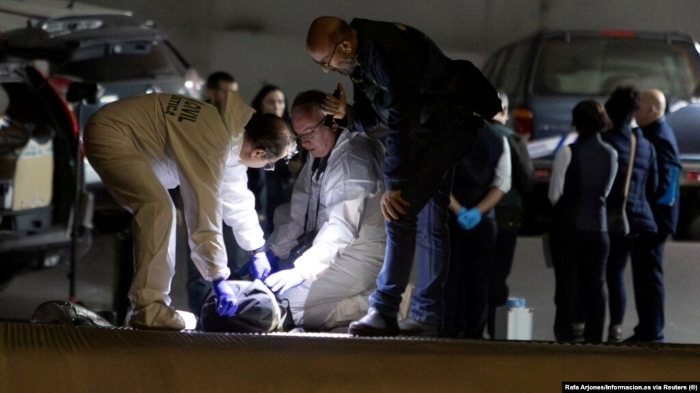
Authorities discovered Kuzminov’s body on February 13, 2024, in a garage in Villajoyosa, Alicante province. Investigators determined that someone shot him six times with a Makarov pistol and then ran over his body with a car in an attempt to hide the crime.
Russia’s Espionage Presence in Europe
The is definitely a Russian act of revenge.
Before the full-scale invasion, Moscow operated an extensive intelligence network in Europe. In 2022, European states finally reacted. That year, MI5 Director Ken McCallum announced that European governments coordinated the expulsion of “over 400 spies” working under diplomatic or semi-official cover. Other reports estimated that the total number of expelled Russian diplomatic personnel reached nearly 600 across 2022–2023.
Those actions reduced the network but did not neutralize it. Moscow quickly adjusted its methods. After the expulsions, Russian services relied more heavily on three tactics:
-
They used criminal groups and mercenaries to conduct physical attacks and sabotage.
-
They recruited short-term civilian operatives on social media.
-
They expanded influence operations through proxy organizations and aligned media.
These tactics made the network more flexible, harder to track, and increasingly resilient, even after it lost many formal positions in diplomatic missions.
Conclusion
Kuzminov’s case illustrates the exception, how a Russian indeed choose to reject participation in the war and take personal risks. The absence of accountability for his murder will discourage other hesitant Russian servicemen from cooperating with Ukrainian security services, if such still exist, as such decision is something extremely rare for the nation, which in majority support atrocities against Ukrainians.
At the same time, Europe still has illusions about the credibility of the so-called Russian opposition. This distorts the public debate and complicates the identification of genuine foreign agents, ultimately weakening the continent’s broader security posture.