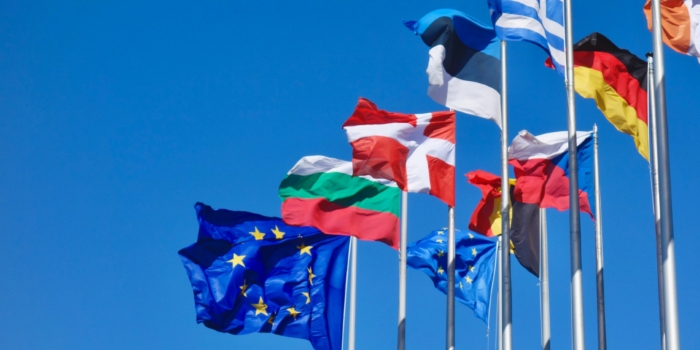


The first-ever European Union defense industry program, worth €1.5 billion, was approved by the European Parliament at its session in Strasbourg on Tuesday, November 25. Importantly, there is also a place for Ukraine in this plan. 300 million euros from the EDIP budget will be allocated to the Ukraine Support Instrument.
What the New Program Does
The initiative expands production capacity, speeds up joint procurement, and streamlines supply chains for weapons and ammunition. It is incorporated into the broader EU Defense Industry Transformation Roadmap. The EU adopted this financial package as it, among other things, also aims to reduce market fragmentation and offer predictable supplies to Ukraine, its key defense partner.
Reports from parliamentary committees showed how Russia’s full-scale invasion exposed European weaknesses. Shortages of ammunition, dependence on imports, and split production lines forced the EU to rethink its approach.
Also, the Parliament backed the buy European rule. Under it, defense products qualify for EU funding only if components from non-EU, non-candidate states make up no more than 35 percent of their value.
The U.S. Adjusts Its Military Presence
At the same time, Washington reassesses its footprint in Europe. In 2025, the U.S. administration began reducing several deployments in the east of the continent. One of the most visible changes affects the Mihail Kogălniceanu base in Romania. According to the Romanian Ministry of Defense, the United States ended the rotation of the brigade stationed there, which had elements deployed in neighboring countries as well. Instead of 1,700–1,800 troops, the base will now host about 1,000 U.S. soldiers.
How the EU Plan Helps Ukraine
Ukraine gains three strategic advantages from the new program.
First, collective procurement reduces the delays that typically arise from multiple bilateral agreements. Centralized ordering and financing allow partners to respond faster to frontline needs.
Second, investments in European production create predictable flows of materials and components. Stable industrial lines reduce gaps in ammunition and equipment deliveries.
Third, Ukraine integrates more deeply into long-term European defense planning.
Risks, Timelines, and Strategic Uncertainty
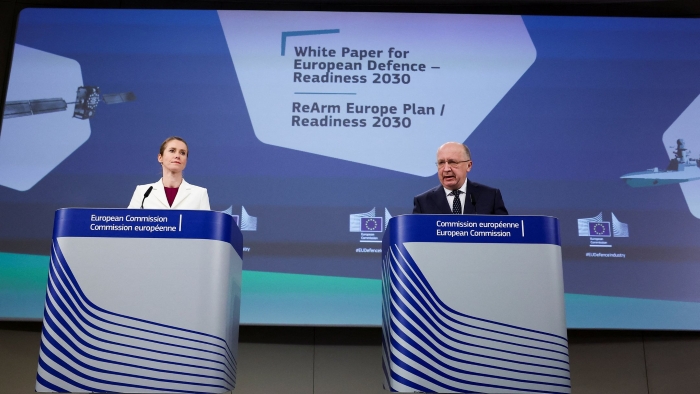
European governments plan to complete the transformation of defense industries by 2030.
Intelligence assessments offer a stark comparison. According to Western agencies, Russia could regenerate enough forces to threaten another European state as early as 2027, with some projections extending into the early 2030s. This window overlaps with the EU’s own rearmament schedule and raises concerns about whether Europe will be fully prepared in time.
For now, Russia commits nearly all available resources to the war against Ukraine, apart from regular border provocations. That focus reduces immediate risks for EU member states but does not eliminate future threats.
Conclusion
Europe now understands that its security depends on unity, stronger defense capabilities, and long-term support for Ukraine. The EU designed its new defense program to close gaps revealed by Russia’s invasion and to ensure more reliable military assistance for Kyiv. The decision to dedicate roughly one-fifth of the program’s budget to Ukraine demonstrates this commitment. Whether Europe reaches full readiness before Russia restores its offensive potential remains uncertain. Yet the shift toward coordinated production, transparent rules, and collective procurement marks a decisive step toward strengthening the continent’s defense.