

When I return to Lithuania from another mission (more and more often with an arsenal of extreme adventures), I start to wonder whether I have become dull in my assessment of the images I have seen and the stories I have heard. There may be another opposite: in my stories, I may hyperbolize the emotional environment surrounding my interlocutors in Ukraine, which is experiencing difficulties. And in this case, an objective approach from the outside helps a lot, especially when I interview a former classmate whom I have known since 1976 who has embarked on a dangerous journey for the first time. It’s like climbing icy mountain slopes or rafting down a raging river. You have to trust your teammate because you don’t know what kind of danger you might be in.
During this trip we traveled about 2400 km from Vilnius to the farthest point of the route. I have already written about what we experienced in Kramatorsk. I would like to add a short break. Kramatorsk is a large industrial and administrative city in the Donetsk region, which is still under Ukrainian control. The city used to be known for its engineering industry, especially for its metallurgical and energy production facilities. Now, if the battle for Chasovyi Yar were to be fought hard and lost to the Ukrainians, the Russians would have the opportunity to control the Sloviansk-Kramatorsk agglomeration. I have already written about the continuous shelling of Kramatorsk and showed footage, and the nightmare continues.
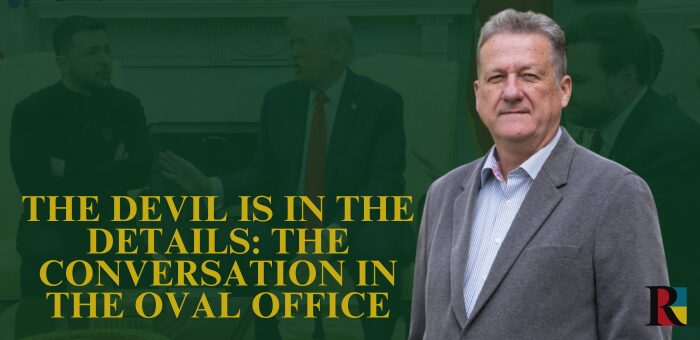
In this context, when lives are lost every day, homes are destroyed, and people’s lives are broken, I am convinced that it is also necessary to assess the essence and significance of the events that took place in the Oval Office on February 28.
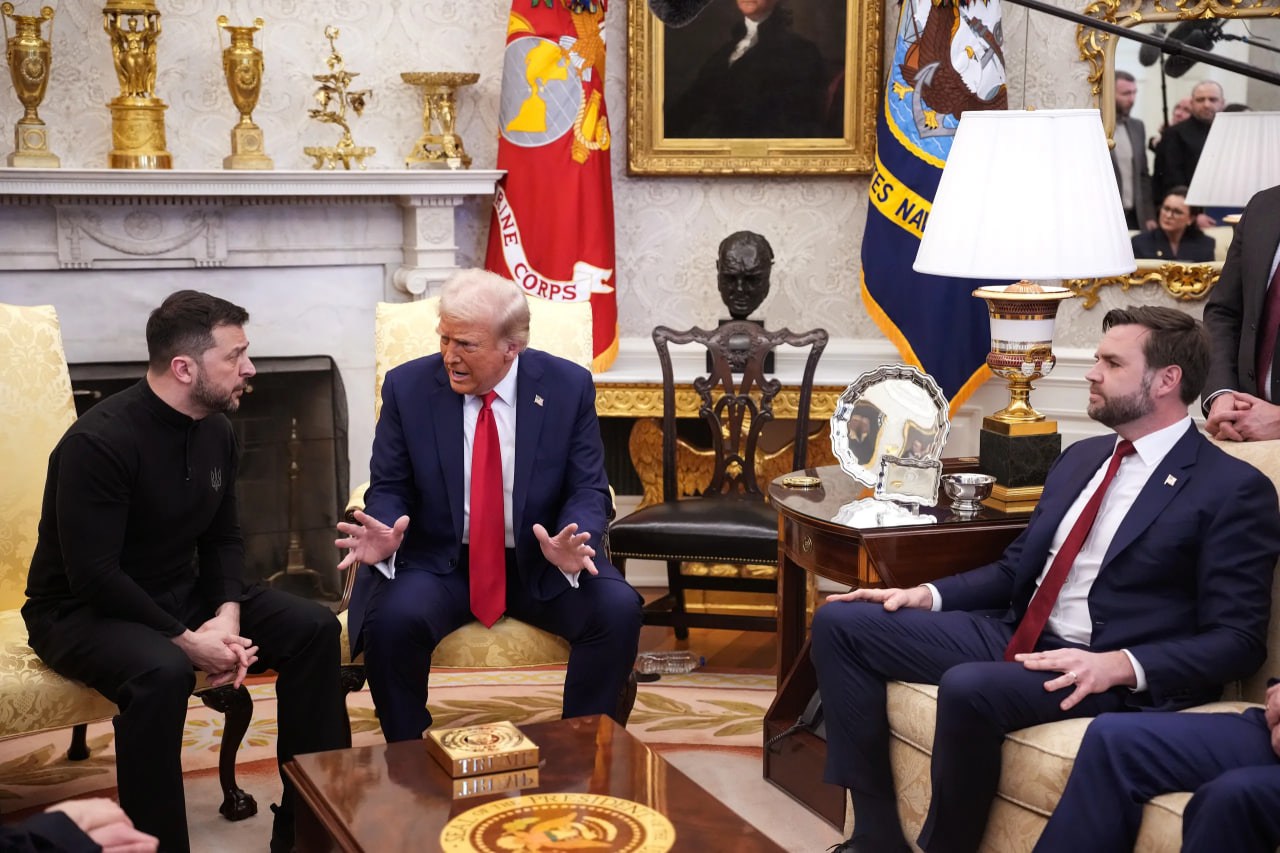
There is no need to re-discuss the content of the conversations (categorizing certain interlocutors as “favorite” or “unloved”). In my opinion, it is more important to consider what circumstances could have influenced the final outcome of such a meeting. There is a well-known saying: “The devil is in the details”. I would like to talk about reviewing these details. For a better understanding of the event, the opinions and comments of the leaders of individual states (their alliances) should be grouped into several conventional groups. According to their stated positions, I would divide them into the following: The United States (President Trump and his current administration), Europe (the European Union with its bureaucracy, the United Kingdom), and Ukraine (President Zelenskyy).
Let me start with the new “world policy reformer” of our time. At the end of January this year, Politico described the methodology of the newly sworn-in (January 20, 2025) 47th US President Trump, who promised his country a “golden age.” According to the newspaper, he prioritizes direct bilateral relations with individual European states rather than with EU structures. Trump’s statement that the EU was created to deceive the United States was even more categorical. As if continuing this political line towards the Old Continent, at the Munich Security Conference 2025 held on February 14-16, US Vice President Wentz in his speech called on Europeans to be more open and play a more active role in the international arena. This call was perceived by many as a criticism of the actions or positions of European countries. By the way, this high-ranking official said that when he spoke with the leader of Ukraine, he politely and firmly said that the war should end as soon as possible. According to Wentz, Zelenskyy clearly did not understand this. The tension reached a point where, on February 26, US Secretary of State M. Rubio canceled a planned meeting with EU Foreign Policy Commissioner C. Kallas “due to lack of time,” although she had already traveled from Brussels to Washington specifically for this meeting.
Earlier, Kall called US President Trump’s plans to end the war in Ukraine a “dirty deal.” It is also worth mentioning here the statement of Ursula von der Leyen, President of the European Commission, that Ukraine “needs peace through strength” (Zelenskyy’s favorite story).
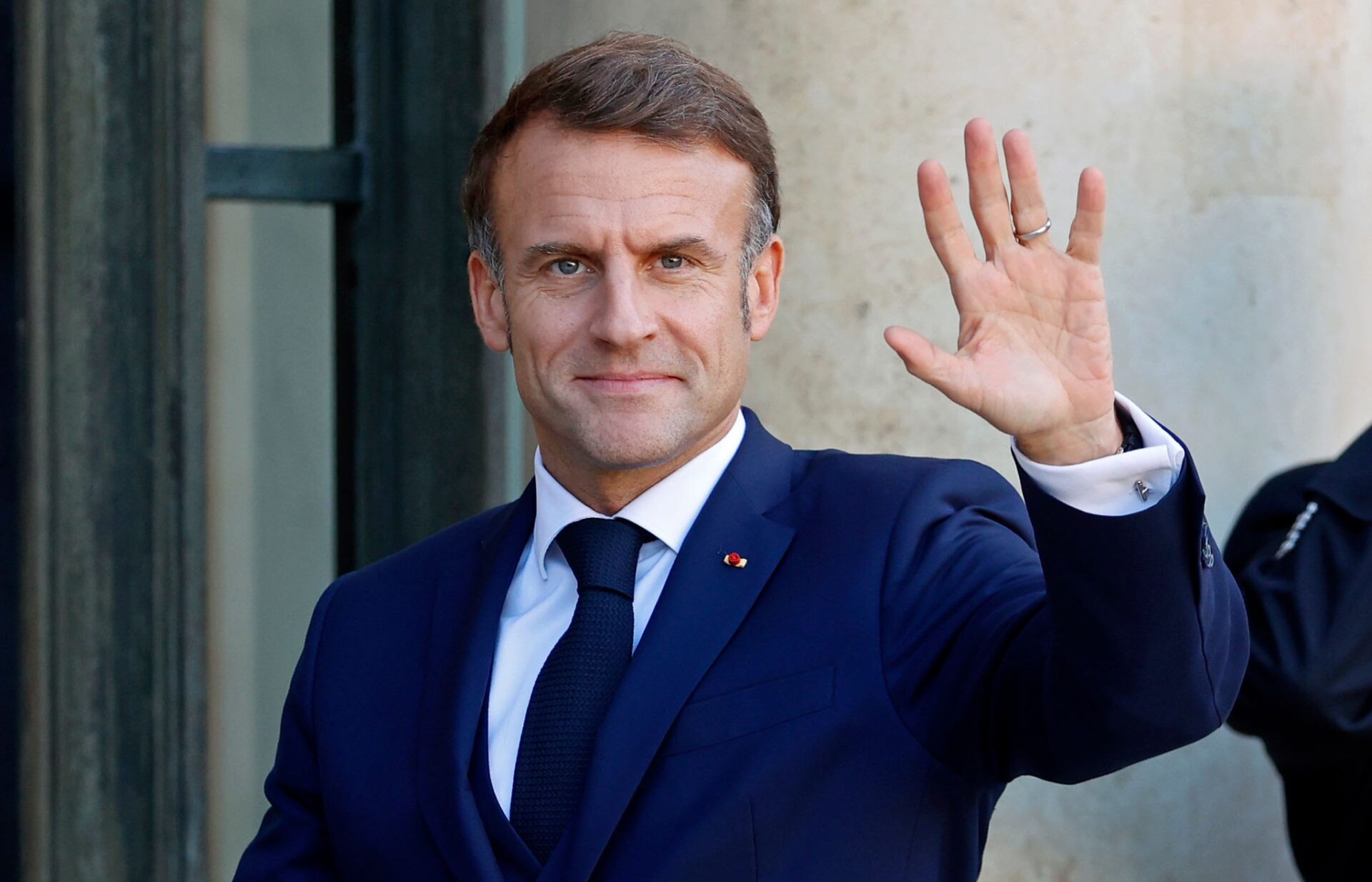
The second group, in addition to the representatives of the EU bureaucracy already discussed, is, in my opinion, “carried on his shoulders” by French President Macron. There are several reasons for this. The year 2024 was not very successful for him. In the European Parliament elections, his party received only 14.7% of the vote, while the far-right National Rally party received as much as 31.5% of the vote. Because of this situation, Macron decided to dissolve the country’s parliament and call new elections, which took place on June 30 and July 7. Internationally, while Germany is in a political transition period (the chancellor is replaced after the election), he is using this to achieve a leadership position in Europe. According to analysts, Le Pen will be considered a favorite in the next presidential election in France in 2027, and Macron will not be able to run for a new term. Therefore, it is necessary to act here and now.
The headlines he published were loud: if the US intends to leave the Old Continent, France could offer Europe a “nuclear umbrella” – planes based in Germany with nuclear warheads. Suggests the UK should do the same (February 26) The next day, BFMTV reported that when Mr. Trump was preparing to cancel Zelenskyy’s visit to the United States, Mr. Macron “stood up” for the latter, vouching for him. Two days later, during a visit to Portugal, the French president said that Europe should unite and “refuse to be vassal to the United States.” This was reported by the same BFMTV channel. Again, from Mr. Macron’s lips we heard the news that hundreds of billions of euros could be allocated to finance Ukraine on March 6, during the EU summit. Already on March 2, the great “European troubadour”, together with British Prime Minister Starmer, called on Zelenskyy to “improve relations with Trump” again. However, before that, the head of the “foggy Albion” government said that no long-term peace agreement would be strong without US guarantees.
Let’s pause for a moment and leave the next chapter to examine the most important element of the political kaleidoscope – Ukrainian President Zelenskyy and his entourage. After such difficult reflections and no less difficult upcoming events, there is only one thing left to do: relax by watching my interview with my fellow traveler Kestutis.
Kestutis Vagneris
*These opinions are solely those of the author. The Ukrainian magazine does not take any position and is not responsible for the author’s words.
Kestutis Vagneris is a Lithuanian volunteer who devotes almost all his time to helping the Ukrainian people. Moreover, he records what he sees in Ukraine and then shares his notes, photos, and videos on his social media to immerse his Lithuanian friends and followers in the episodes of the Russian-Ukrainian war.
Tetiana Stelmakh adapted this text for The Ukrainian Review.