

This is a very sensitive, taboo, and difficult conversation. It is about us, people from the occupied territories, and about things that do not immediately come to mind.
Recently, the occupiers began to “clean up” the graves of World War II heroes in Mariupol. Real and fictional, but we are not talking about them now. Now we are talking about how wildly decorated single graves look now, with fresh flowers and order around them compared to all the others in the cemetery.
Total disorder and devastation. Few people think about it, even fewer say it. But. For the fourth spring we have not been able to get to the graves of our loved ones and pay our respects. To put them in order. To take care of them and put fresh flowers. And the graves of hundreds of thousands are in a state that is unimaginable.
No one takes care of them. Even if the occupiers were people, it is simply impossible. In Mariupol, even in the main, new cemetery, more than a million people are buried. It is not for nothing that the Russians used to spread the fake that Mariupol has the largest cemetery in Europe in order to undermine trust in the Ukrainian government. This is not true, but the real size made people believe this lie.
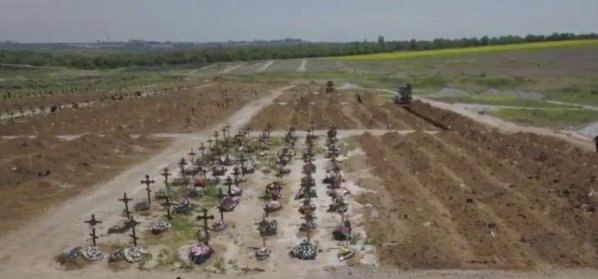
It is not only about the graves of our relatives who died before the war. Since February 24, 2022, Mariupol has buried at least 50,000 of its citizens. The tragic sector 23 at the Mariupol cemetery is a solid ditch, a mass grave with number plates instead of crosses or mourning signs. There are no surnames. No first names. Only numbers according to the register of the occupiers. Mostly, the register of unidentified corpses. People who were collected from the streets. Parts of whose bodies were exhumed in burned high-rise buildings. A sector that is disappearing step by step simply because there is no one to take care of it either. And the occupation authorities are deliberately doing everything to make this terrible memory of Russia’s crimes disappear as soon as possible.
And today, all of this, our personal memory and our last physical memories of people important to us, are falling into ruin. My grandparents are the main people of my childhood and adolescence there. My cousin has his father and mother. My childhood friend has a father. And all of us are here. We have neither the opportunity nor the hope to go not just home. But to worship our ancestors.
It hurts and adds to the hatred. What will happen next? The very thought that one day these non-humans will simply raze all our memories to the ground is unbearable. And knowing that it will definitely happen, we run out of words.
Why now? Perhaps it’s just time to say it out loud. Especially now, when the phantom peace is beginning to take shape. When the President says that not everyone will be able to return home. When the reality of the prospect of a long occupation is more than likely.
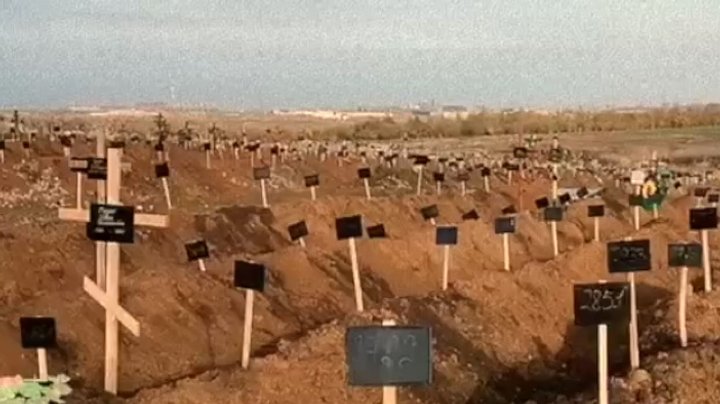
If new houses, neighborhoods, and even cities with the same name can be rebuilt, we will never get the graves of our ancestors back. Feeling like immigrants in our own country
So maybe it’s time to start talking out loud not only to us. Not only to us. To give our partners examples. And to ask what should be done for the millions of people who are forced to forget about the graves of their parents and relatives? How was the occupier supposed to provide care or even controlled, limited access, but access.
Perhaps so. And maybe our pain and our loss will help us to get a truly just peace. But in any case, it will be another too high a price to pay for our peace. A payment with a piece of our soul. No exaggeration or distortion.
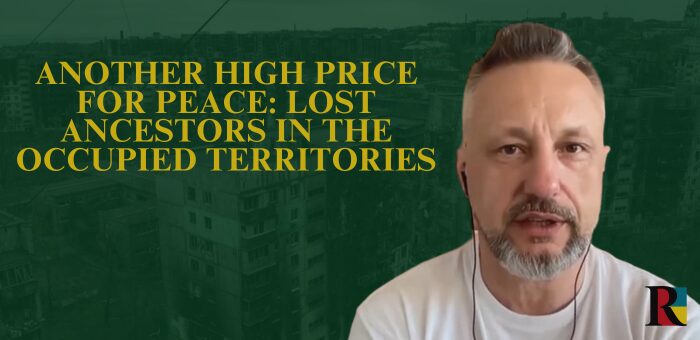
By Petro Andryushchenko
*These opinions are solely those of the author. The Ukrainian Review takes no position and is not responsible for the author’s words.
Petro Andryushchenko was an adviser to the mayor of Mariupol. After the Russian Federation started war in Ukraine in February 2022, he became the de facto “voice” of Mariupol.
On his Telegram channel, “Andryushchenko Time“, he tells the truth about the horrors of the occupation, the deportation of people by the Russian occupants and the “filtration” camps in Donbas.