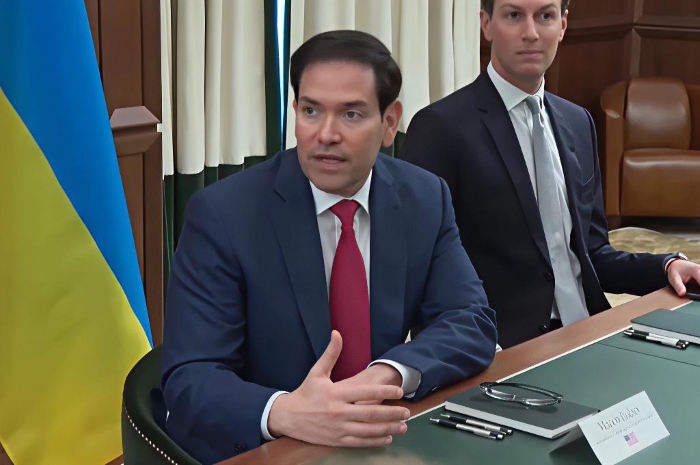


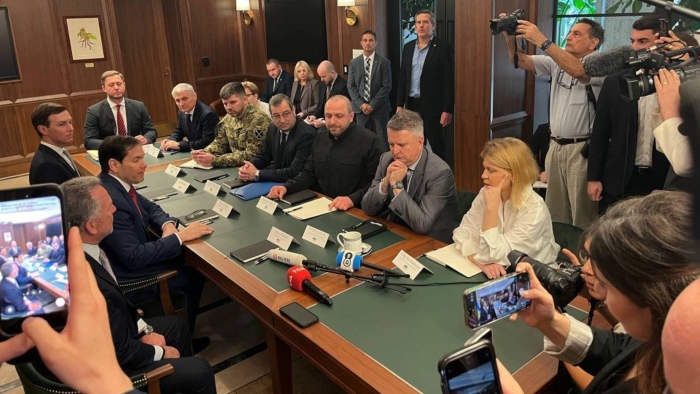
Negotiations between Ukrainian and U.S. delegations on the settlement of the Russian-Ukrainian war have begun in Florida. The U.S. side is led by Marco Rubio, while Ukraine is represented by Rustem Umerov.
The closed stage of the talks has already started. The open session struck a surprisingly optimistic tone.
Rubio stated:
So it’s not just about ending the war. It’s about ending the war in a way that creates a mechanism that allows Ukraine to be independent, sovereign, without new wars, and with prosperity for its people. Not just rebuilding the country, but entering an era of extraordinary economic progress. Ukraine has enormous economic potential. Ukraine has enormous opportunities for true prosperity.
The key question remains whether these inspiring goals can be achieved under the conditions outlined in the proposed peace plan.
The “Buts” Behind Ukraine’s Economic Potential
Ukraine indeed possesses vast economic potential. It includes human capital, industry, agriculture, and rich natural resources. Yet, investors would remain reluctant to place long-term capital in Ukraine if Russia stays militarized and unpunished. The threat of renewed aggression or an attempt to complete the occupation will continue to exist and shape decisions.
Historical data shows the scale of vulnerability.
In 2014, after the occupation of Crimea and the outbreak of hostilities in Donetsk and Lugansk Regions, capital investment fell sharply. According to the State Statistics Service of Ukraine, investments decreased by 23% in January–September 2014 compared to the same period in 2013.
The full-scale invasion in 2022 caused higher loses. . By the end of 2022, capital investment had contracted by 39.2%, falling to UAH 409.7 billion.
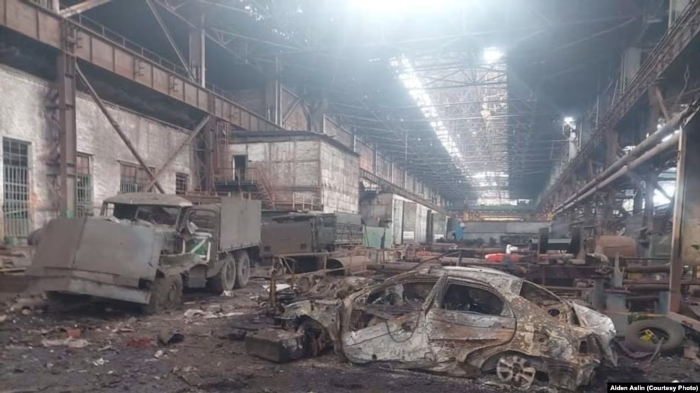
Territorial losses continue to undermine long-term prospects. After the occupation of Crimea, Ukraine lost control of key assets. This includes major energy enterprises that had supplied an important share of the national energy balance, as well as touristic potential.
Eastern and southern regions, now occupied or affected by constant hostilities, lost metallurgical plants, mines, and heavy-industrial facilities. These areas also included major mining enterprises. By September 2022 the affected territories, once responsible for 29.3% of Ukraine’s GDP, were either occupied or located in the immediate danger zone.
In the 19th and 20th centuries, the east of Ukraine served as a main destination for Western investment. Its coal deposits, metals, rail hubs, and industrial clusters shaped much of Europe’s demand for Ukrainian resources.
Leaving such territories under occupation would mean leaving behind critical economic advantages and strategic energy potential.
Is Peace Close?
Turkey’s Foreign Minister Hakan Fidan recently stated that “Ukraine and Russia are now much closer to peace.”
However, the dynamics of the negotiations show a different reality. Ukraine publicly reiterates its readiness for a just peace. Russia, meanwhile, issues vague statements on official level and rejects U.S. proposals on its propagandist media channels.
Putin again listed the recognition of Russian sovereignty over Crimea and Donbas as a core precondition. This demand was removed from the latest draft, yet the Kremlin still describes it as non-negotiable.
Conclusion
Marco Rubio has shifted toward cautious rhetoric after he came to power in the new administration. Yet he remains one of the U.S. politicians who listen to the Ukrainian position. His remarks in Miami sounded hopeful and consistent.
Still, such prospects cannot become reality without a just and enforceable peace. Russia must be constrained from rearmament to ensure that it no longer threatens Ukraine or other European countries.
Leaving Ukrainian territories under occupation would also mean abandoning enormous economic and energy potential. It would contradict the goals of the Ukraine–U.S. Mineral Resources Agreement and weaken Ukraine’s long-term prospects.
As President Volodymyr Zelenskyy noted, many things may change this week.