

Major changes in migration policy in European countries
Migration processes and attempts to systematise them are a challenge for European countries. This requires joint efforts by pan-European institutions and national governments. Dialogue and interaction at this level cannot be straightforward. Therefore, developing a new common migration strategy is extremely difficult. The existing economic inequality among European countries also has a significant impact on the ability to implement a scaled migration policy. Political competition between different ideological poles fuels instability and unpredictability in the overall situation. For example, the clash between the ‘right’ and the ‘left’ clearly demonstrates how attitudes towards refugees depend on who comes to power.
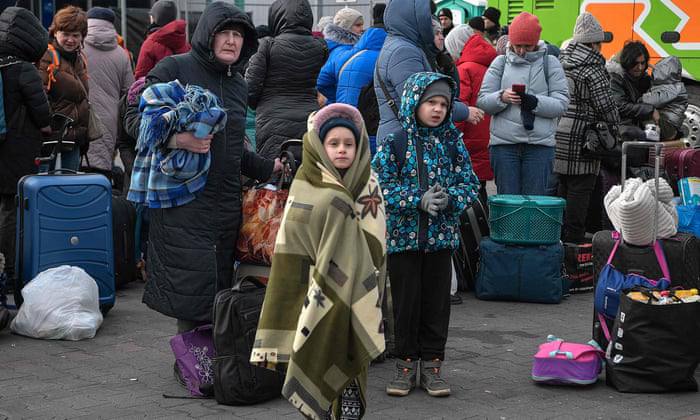
With the start of the full-scale invasion, European countries provided shelter to millions of Ukrainians. February–March 2022 became a period of ‘stress testing’ for European states. The provision of social, financial and employment assistance to refugees also became essential. The conditions for granting asylum initially varied depending on the host country. From the start of the full-scale invasion, Ukrainians quickly integrated into European communities and rules, obtained education and found official employment.
The ultra-conservative rhetoric of Eurosceptic populists in a number of European Union countries, including Poland, Germany, Romania, France and the Netherlands, poses a threat to the provision of assistance to Ukrainian refugees. This is a purely political challenge, which is reflected in the media and the information space in general. Pro-Russian slogans and general rejection of the situation of Ukrainians are often heard and seen. Such positions are voiced by the Confederation political party in Poland.
Restrictions on Ukrainian refugees are the result of a number of factors. However, the combination of socio-economic and political challenges creates fertile ground for new trends to emerge. The goal facing experts today is to understand these trends and eradicate the main ones.
The positions of national governments of European states on migration are generally ambiguous. This is due to problems of irregular and illegal migration, rising crime, an ineffective system of migrant distribution, and inter-state conflicts over the ‘open door’ policy. For example, the Hungarian government actively opposes it. Attitudes towards migration processes are not determined spontaneously, but social trends and changes in public opinion can fluctuate sharply depending on circumstances. Europe periodically experiences migration crises associated with waves of refugees from Africa and the Middle East. This, in turn, forces national governments to significantly change their attitude towards migrants in general. Restrictions on refugees are often a direct indicator that the state is unable to cope with migration waves. The war in Ukraine has, to a certain extent, created a unique situation in countries such as Germany and Poland. On the one hand, accepting refugees places a heavy burden on the economy and social sphere, while on the other hand, it improves the demographic situation (Germany) and increases the inflow of capital and labour into the country (Poland).
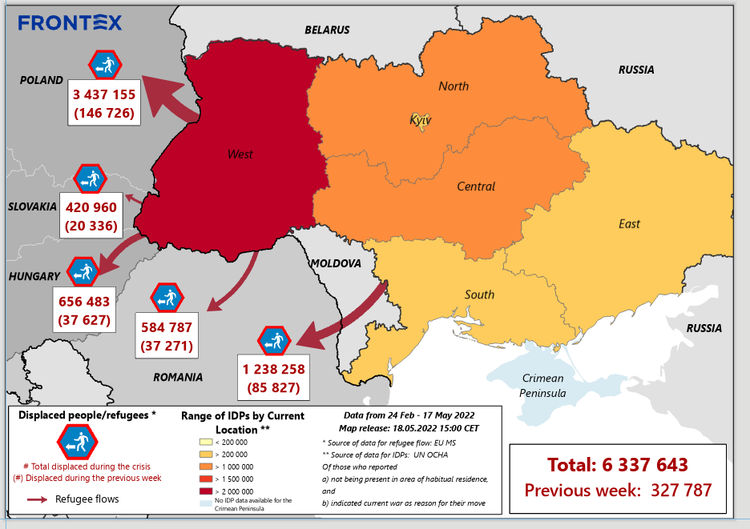
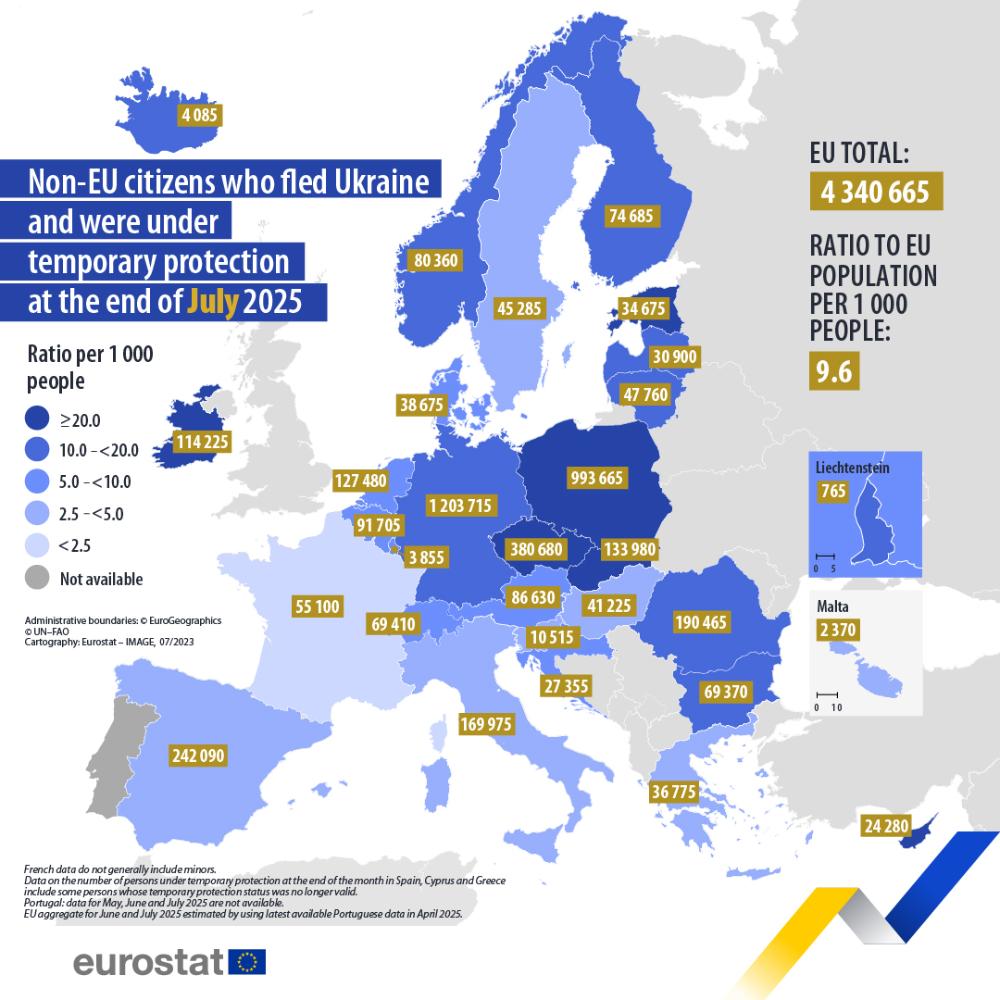
According to Eurostat data, in 2025, three European countries are the undisputed leaders in terms of the number of people from Ukraine who have received temporary protection. These are Germany (1,203,715 people; 27.7% of the total number in the EU), Poland (993,665; 22.9%) and the Czech Republic (380,680; 8.8%). These positions are evidence of the stable economic situation in these countries and conditions that facilitate rapid adaptation. There is also significant real interest on the part of the governments of these states. In addition, the well-known principle of ‘word of mouth’ is at work: Ukrainians living in these countries actually pass on the necessary information to their homeland, helping their relatives, friends and acquaintances to make a choice. In other words, diasporas and their capabilities and extensive communication play a significant role.
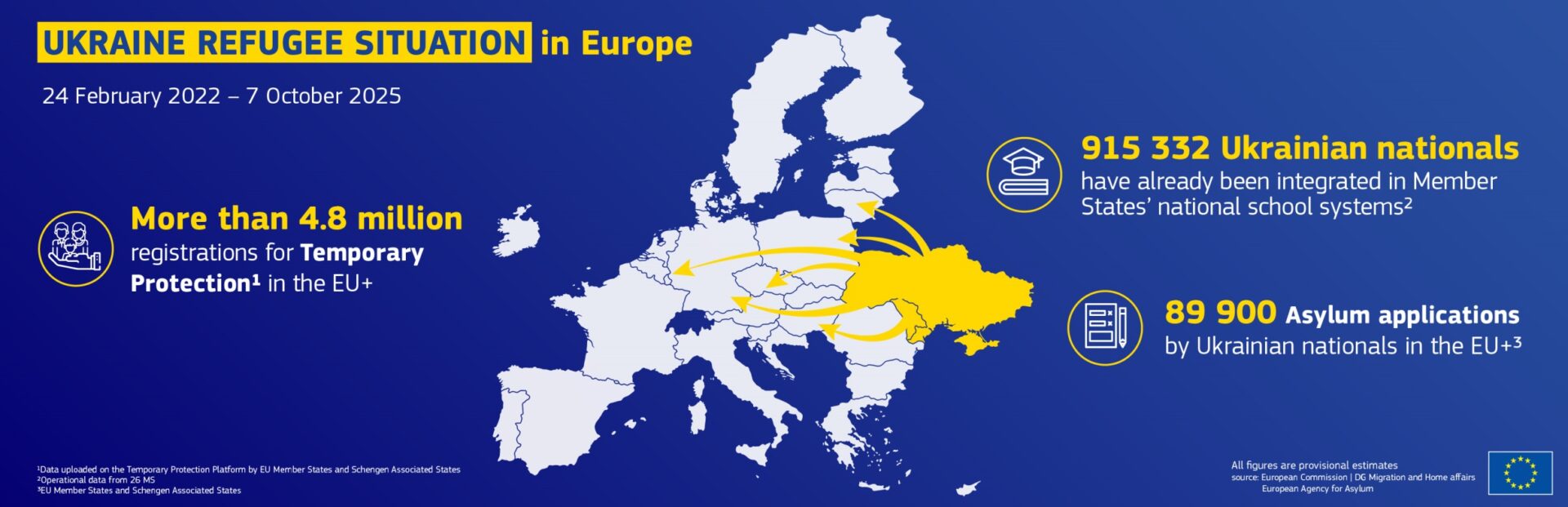
Understanding the quantitative indicators of migration from Ukraine after the start of Russia’s full-scale invasion is a dynamic process that is constantly fluctuating. The trend towards an increase in the flow of migrants remains relatively stable. In this sense, we can estimate the total demographic indicators to be more than 7 million refugees who have left Ukraine and currently have different statuses in the countries that have taken them in. The data for the period from February to October 2025 provided by the European Commission is striking.
The expectations of Ukrainian refugees and the realities in the countries that accept them
The conditions for Ukrainian refugees in European countries are not the same. They vary significantly depending on economic development, the characteristics of social policy in the country, and the availability of additional political levers of influence that contribute to limiting the number of migrants. At the same time, it is possible to clearly distinguish between countries that have the best conditions for refugees and those that cannot provide them to the necessary extent. The number of Ukrainian refugees in European countries directly correlates with the internal conditions in the country, the available benefits and their accessibility. The geographical location of the country is of significant importance. A shared border with Ukraine and geographical proximity are always factors in the choice. However, such European countries are often only the beginning of the journey, and the further relocation of refugee families becomes inevitable. Germany remains the leading country in terms of the number of Ukrainian migrants and, accordingly, the level of assistance and social guarantees in general. Here, improvements are being made strategically and systematically, but at the same time, there are strict conditions for refugees. These conditions concern the most important issues: housing, employment and education.
Today, there are objective restrictions related to Ukrainian refugees from regions where there is no active fighting. For example, Switzerland refuses to grant asylum to people from western Ukraine. Norway also carefully monitors the region from which a person has come. Applications are considered on a case-by-case basis.
The reality for Ukrainians is often limited opportunities to find work in their field. Proof of qualifications and, especially, language skills are required. Unskilled labour without special skills is a short-term solution for migrants. The need to adapt to new cultural conditions is essential. There is also a dependence on social assistance, which varies from country to country. The existing language barrier complicates the integration of many Ukrainians into society and, accordingly, their search for work. This problem exists for both older people and young people.
In 2025, Ukrainian refugees primarily expect the extension of temporary protection in EU countries. Today, they are faced with the reality of reduced social assistance and stricter conditions for adaptation. In Germany, such demands are being made at the federal level and at the state level (Bavaria and the demand to abolish the Bürgergeld programme). Requirements for refugees are generally becoming more stringent (Germany, Italy, Belgium, etc.). Traditionally, such changes are advocated by the far right, in Germany in particular by the AfD.
At the present stage, Ukrainians living in EU countries will be able to exercise their right of residence until March 2026. They will also have access to education and medical care. Refugees will be provided with financial assistance, but the amount may be reduced. There is also talk of the state not compensating for housing costs, and some countries are planning to abolish the provision of free temporary housing for refugees. The lack of financial assistance or its limited nature directly affects residence in a particular European country. Of course, in most cases, changes to the rules of residence in countries are gradual, but today we can already say for sure that they are inevitable.
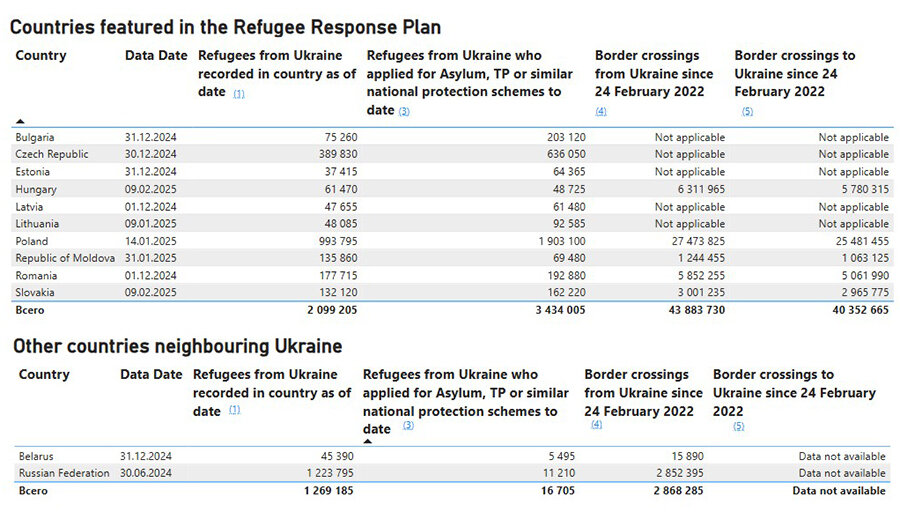
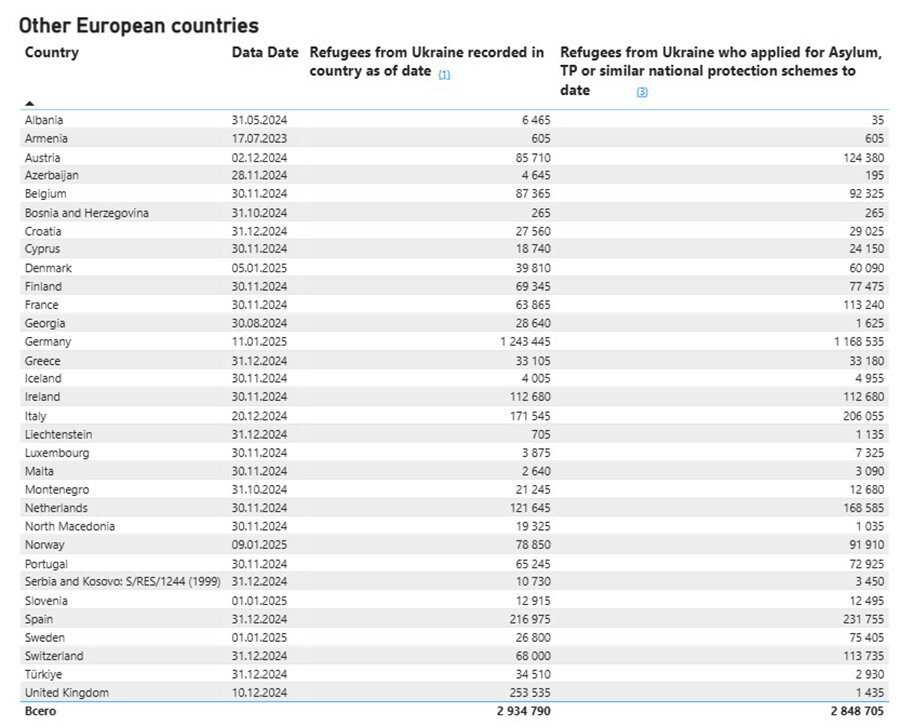
The existence of a shared border only partially determines the priorities for Ukrainians relocating. The geography of countries accepting Ukrainian refugees has expanded significantly over the long period of full-scale war.
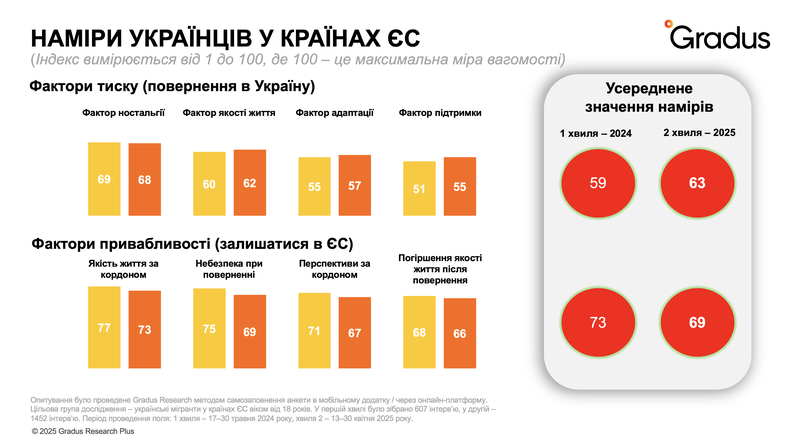
Ukrainians’ main expectations are related to the possibility of obtaining housing and social guarantees. The future outlook is clear, i.e. gradual integration with the acquisition of citizenship. However, the protracted war increases the percentage of those who would like to return home if possible and conditions are favourable. According to the research company Gradus, ‘in 2025, the proportion of those who want to return to Ukraine has increased to 64%, compared to 55% last year. However, this figure is still lower than in 2023 (75%).’
Expert opinion and mechanisms influencing migration policy
Experts’ opinions on migration policy in European countries vary. Undoubtedly, the situation with changes in the migration policy of European countries fully embodies the goals of the ‘problem area’. This includes, for example, the illegal migration of Ukrainians, including those evading compulsory mobilisation and attempting to ‘hide’ in Europe or even travel further in search of a better life.
We turned to Oleksandr Dubowy for his expert opinion on the situation with migration policy regarding Ukrainians. He specialises in researching politics in Eastern Europe.
- How would you assess the overall migration situation in European countries? What challenges currently exist?
«Across Europe, the migration situation in 2025 is defined by structural overload. Asylum systems in many countries remain permanently strained: procedures are slow, administrative capacity is insufficient and return mechanisms function poorly despite repeated bilateral efforts with key origin countries. Irregular migration along the Mediterranean and Balkan routes persists because political instability in countries of origin, entrenched smuggling networks and limited EU border-management capacity reinforce one another. What makes the situation politically explosive is not only the administrative pressure, but the degree of polarisation that now accompanies every migration-related decision. Migration has become both a symbol and a proxy for broader societal conflicts, which means governments respond with short-term fixes while avoiding long-term structural reform. The result is a landscape in which Europe manages recurring emergencies rather than exercising coherent migration governance».
- What are the key obstacles to the integration of Ukrainian refugees into European society at the present stage?
«The integration of Ukrainian refugees has been relatively successful by European standards, yet it has reached discernible structural limits. Many Ukrainians possess medium to high qualifications, but their professional integration is slowed by demanding credential-recognition procedures, language barriers that confine them to lower-skilled employment and labour-market segments. A second major constraint is the uncertainty surrounding return prospects. Because many refugees view their displacement as temporary, they hesitate to commit to long-term integration steps such as advanced language acquisition, vocational retraining or stable housing arrangements. The housing crisis in several European countries exacerbates these constraints, often forcing Ukrainian families into precarious or overcrowded living conditions that undermine stability in work and education. Schools in receiving countries also face considerable strain, with teacher shortages and limited specialised support programmes affecting children who already live between two educational realities. Added to this are substantial psycho-social pressures, especially for women who manage employment, childcare and bureaucracy alone while maintaining ties to relatives or partners involved in Ukraine’s defence effort. These combined factors create a ceiling that limits integration, even under otherwise favourable social and cultural conditions».
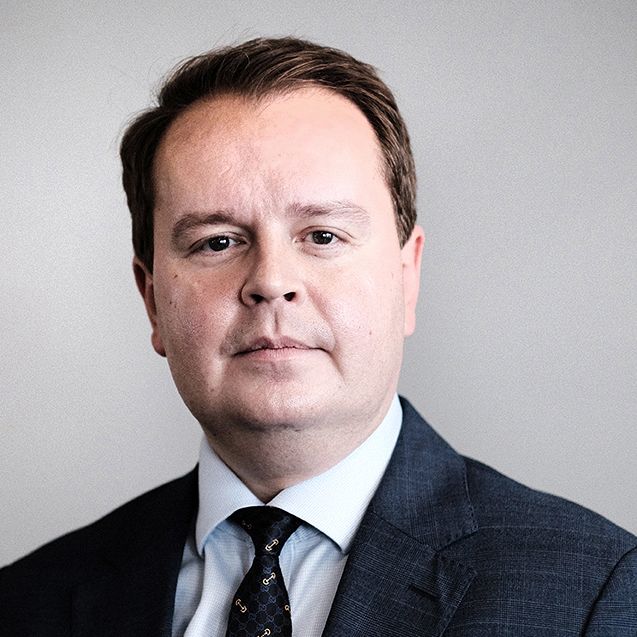
17.10.2024, Berlin – Germany: Alexander Dubowy, Russlandexperte und Kolumnist der Berliner Zeitung. (Foto: Paulus Ponizak/Berliner Zeitung)
Simon Schlegel, an analyst at the International Crisis Group, shared his thoughts on migration policy in EU countries and the situation of Ukrainians at the present stage.
- What is your assessment of the challenges for migration policy for Ukrainians in the EU at the present stage? Can we potentially expect stricter requirements for Ukrainian refugees to reside in EU countries?
«Across Europe, Ukrainian refugees have experienced a cooling of the welcome since Russia’s full-scale invasion. Both civil society support and government support are still around but not to the degree as they used to be in early 2022. In Germany, for example, where the biggest group of Ukrainian refugees live, there is a draft law pending that would give newly arriving Ukrainian refugees less social benefits than those that are already here. The Chancelor also has criticized Ukraine for allowing young men between 18-22 years to leave, which recently resulted in a large wave of new arrivals from that cohort.
In Poland, the first destination for many Ukrainian refugees, New President Karol Nawrocki has announced to cut aid to Ukrainian refuges and to make it mor conditional on whether refugees work in Poland. Another example is Switzerland, where Ukrainian refugees from November 2025 onwards will be rejected if they come from one of seven western Ukrainian Oblasts, Switzerland deems a safe enough to live. Overall, Ukrainians still have better conditions than most other refugees and can count on solidarity in Europe, but the welcome mat is thinning»
Сonclusion
Overall, migration processes in European countries remain under control. This applies in particular to refugees from Ukraine following the outbreak of full-scale war. European countries are ready to provide shelter to Ukrainians, but the conditions vary significantly and increasingly reflect consistently strict restrictions. National governments of European states are tightening control and monitoring. The lives of migrants are under the watchful eye of local authorities, social services, etc. They want to see a responsible attitude on the part of Ukrainians towards the requirements imposed on them. The duration of the war is revealing a certain social demand that is turning into political pressure in EU countries for strict accountability from Ukrainians. This applies to housing, education and employment. There is also widespread rhetoric about the return of men of conscription age to Ukraine.
Ukrainians generally integrate quite quickly into European societies and acquire new skills. Germany, Poland, Sweden, the Netherlands, the Czech Republic and Denmark are currently the most attractive countries for emigration. The actual ‘transfer’ of their businesses to European countries and the withdrawal of capital, primarily to Poland, complicates their potential return. In the future, this phenomenon will exacerbate the economic crisis in Ukraine. The recovery process in Ukraine may be delayed precisely because of the irreversible economic losses in the small and medium-sized business sector caused by its relocation abroad. Education is the main barometer of expectations and a requirement for integration within European countries. Schoolchildren and students are getting their education in Germany, France, Poland, and the Czech Republic, thereby establishing themselves there, and their potential return after completing their studies is not entirely likely. In general, this issue is extremely relevant today for the younger generation of Ukrainians. In fact, another key point in Ukraine’s demographic and economic losses is gradually becoming apparent.
Therefore, the peculiarities of migration processes raise a number of questions for the Ukrainian government today. The most pressing issue is the return of citizens to their homeland and preventing the loss of the younger generation and the working-age population as a whole. Given the challenges, this is currently an extremely difficult task. With each year of war, the departure of Ukrainians abroad is becoming more widespread. At the same time, a significant number of them are ready to return.