

We continue a series of materials on the combined practices of the Russian Federation’s war with the aim of enslaving states and peoples. Following Nagorno-Karabakh, we will consider the situation in the Republic of Moldova, part of which Russia took under de facto control by creating the unrecognized Transnistrian Moldavian Republic.
History of the conflict
Transnistria is a Moldovan region along the Dniester River on the border with Ukraine. It has a long and rich history, which, however, is not the focus of this material. I will only note that in 1940 the territory was transferred from the jurisdiction of the Ukrainian Soviet Socialist Republic to the Moldavian Soviet Socialist Republic and became its legal territory (I emphasize that Ukraine has never questioned the affiliation of Transnistria to Moldova).
The policy of Perestroika, introduced by the General Secretary of the CPSU Central Committee Mikhail Gorbachev in the second half of the 1980s, allowed the republican elites to become more independent and nationally oriented. The political leadership of the Moldovan Socialist Republic was no exception, paying considerable attention to the national and linguistic identity of the Moldovans, as well as to the historical ties between Moldova (in the Soviet linguistic interpretation, the republic was called Moldova for short) and Romania. First of all, it was about overcoming the consequences of the policy of Russification of the Moldovans, which had been carried out in the USSR for many decades.
However, in Transnistria, a different mood prevailed. This was primarily due to the national composition of the region. Here, the ethnic majority was made up of Russians and Russified Ukrainians. In the first free parliamentary elections in the Moldovan Socialist Republic, the national democrats from the People’s Movement of Moldova won. At the same time, representatives of the separatist movement of the United Council of Labor Collectives, created in the capital of the current unrecognized PMR Tiraspol in 1989, entered the local councils in large numbers in Transnistria. By that time, they had already managed to hold a series of strikes at the factories of Transnistria, as well as illegal referenda on autonomy in Rybnitsa and the same Tiraspol.
However, not everyone in Transnistria wanted to become autonomous. The authorities of Bender, the second largest city in Transnistria, publicly opposed it. In rural areas, many also did not share the separatist ideas.
Only after the elections, through active propaganda, fanning the language theme, ORTK managed to set other regions against Chisinau. On September 2, 1990, the congress of local deputies proclaimed the formation of the Transnistrian Moldavian Soviet Socialist Republic (PMRSR).
Further escalation and the first bloody clashes
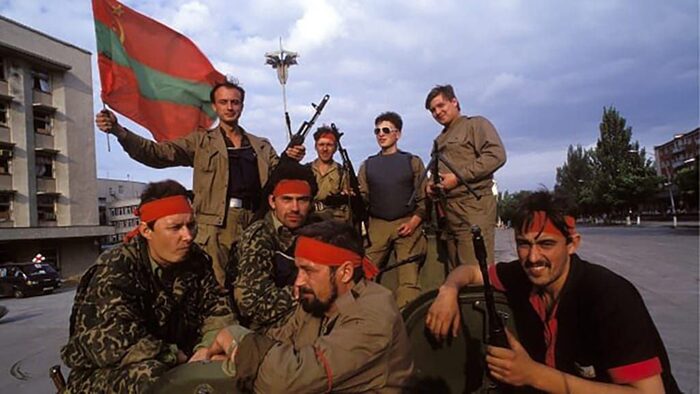
The inaction of official Soviet bodies and the amorphousness of local law enforcement officers pushed the parties to escalate. And this was against the background of increasing separatist sentiments in another ethnically diverse region of the MRSD, Gagauzia, now an autonomy within Moldova. Supporters of the republic’s territorial integrity began to create their own security forces. At the same time, the PMRSD also announced an unofficial call-up to the separatist armed formations.
Clashes began in November 1990. The first blood was shed in Dubossary. Only after that, in December of the same year, Leonid Gorbachev issued a decree declaring the proclamation of the PMRSD illegal. However, no real action followed, so the separatists, having no legal status, established control over the region.
On the side of the PMRSR, in addition to local armed units, there were volunteers from Russia, in particular representatives of non-Okazakh movements, and later the 14th Guards Soviet (later Russian) Army, which sided with them, although its command formally declared neutrality. On the side of Moldova, there were representatives of the police, who remained loyal to the official authorities.
It is worth noting that all of the above events took place against the backdrop of the final collapse of the Soviet Empire. On August 27, 1991, the Republic of Moldova declared independence. Of course, within the generally recognized borders. In response, the Transnistrian separatists adopted their own declaration of independence.
The peak of the confrontation
The next 7 months are commonly called the “creeping putsch”. Thanks to the aforementioned 14th Army of the Russian Federation, which was at that time the most powerful armed force in the region, the separatists managed to gain a foothold on the left bank of the Dniester. On March 28, 1992, the official authorities of Moldova declared a state of emergency in the country. The situation entered a phase of open military confrontation.
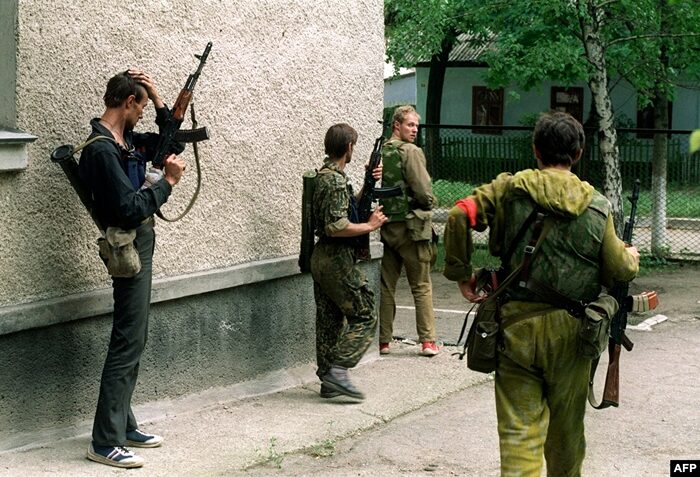
The Moldovan Armed Forces were forced to resort to force, but the intervention of the 14th Army stopped the offensive. Thanks to the Russian military, the Transnistrian separatists had the support of heavy weapons, which the Moldovan army did not have.
Anatol Șalaru, former Minister of Defense of the Republic of Moldova (2015-2016), former Minister of Transport and Road Infrastructure of the Republic of Moldova (2009-2013)
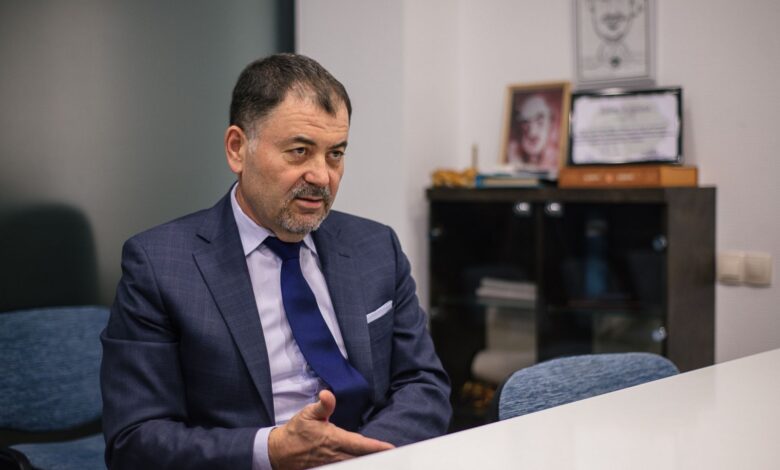
“The hybrid war that Russia is waging against Moldova has been going on for many years, starting precisely in 1991, when Russia attacked Moldova, the Russian-Moldovan war on the Dniester took place. Then, in fact, the whole world supported Russia, because Russia had the opportunity to conduct high-quality propaganda. Only in a decade will Moldova learn to resist Russian information influence.”
A participant in those events, retired colonel Anatolii Munteanu, in an interview with the Moldovan Internet portal Point, recalls:
“…it was a war between Russia and the Republic of Moldova, a war in which Russia acts as an aggressor and an invader. The war on the Dniester was not an internal conflict between one part of the Republic of Moldova and another part. It was conceived in the Kremlin and supported by Moscow from a political, military and material point of view. Its specific goal was to prevent the unification of the Republic of Moldova with Romania.”
A series of bloody battles took place between the Moldovan defense forces and the separatists, the most brutal of which was the battle for Bendery. Data on the number of dead vary, but we are talking about hundreds of people (open sources give a figure of over 600 dead). More than 80 thousand people became refugees.
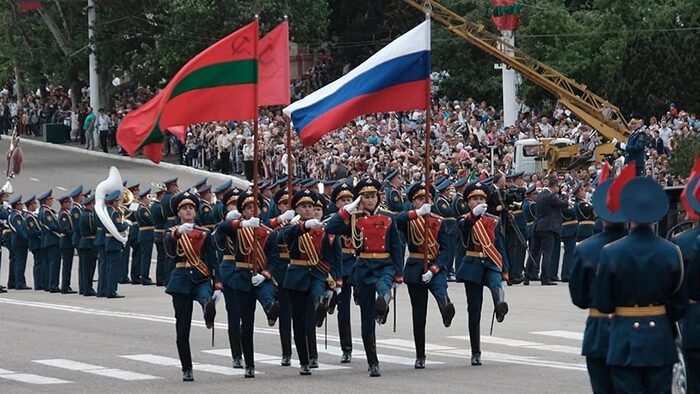
Given the overwhelming strength of the enemy, the Moldovan Armed Forces failed to drive the separatists out of the territories under their control. The front line stabilized and the situation reached a stalemate. Official Chisinau was forced to agree to a peace agreement. On July 21, 1992, the corresponding document was signed in Moscow by Moldovan President Mircea Snegur, Russian President Boris Yeltsin, and separatist leader Igor Smirnov. A Russian “peacekeeping” contingent was stationed in Transnistria to “guarantee security,” and it is still there. It currently has about 1,000-1,500 personnel.
Frozen conflict and sad prospects for the “PMR” without Moldova
For decades, the self-proclaimed republic has become a hotbed of smuggling and corruption, led by local criminal-oligarchic elites. Russia, using its enormous political and economic influence on the so-called “PMR” (as well as on the Gagauz autonomy), regularly tries to interfere in the internal affairs of Moldova.
For decades, the presidential seat in Moldova has been occupied by politicians loyal to Russia (although they sometimes declared European aspirations in words). The first truly pro-European president of the republic was Maia Sandu in December 2020. She began the fight against Russia’s hybrid influence on Moldova in the political, energy, linguistic, cultural and information spheres. And although some steps were perceived ambiguously by society, in general Moldovans supported the pro-European course, as evidenced by the presidential elections of 2024 and parliamentary elections of 2025, in which Sandu and her party won, respectively, and also took the majority of votes in parliament.
We talked about the situation in Transnistria and the fight against Russian influence in Moldova in general with Moldovan political scientist and journalist, editor-in-chief of the AVA-TV channel Andriy Andrievsky
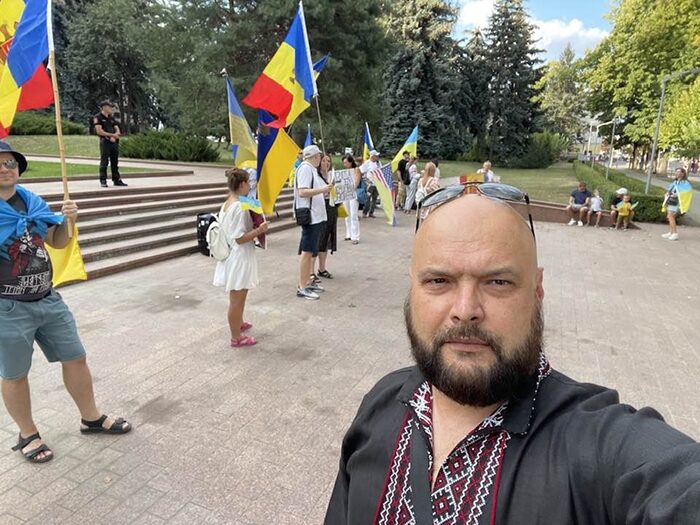
K.G.: Andriy, what does the so-called “PMR” represent today from the point of view of the political system?
A.A.: Transnistria today represents a system of dual power. On the one hand, it is an oligarchy, local business, dozens of companies controlled by one person — Gushan. On the other hand, it is the Kremlin’s puppets, who are directly controlled from Moscow. And here they have the so-called “Minister of Foreign Affairs” Ignatiev in plain sight. There is constant tension between these two subsystems in the management structure of the “PMR”. This is not a war, they are afraid to start an open confrontation with each other. Gushan controls more, he is stronger, but he is not ready for a direct confrontation with Russia. That is why this constant pressure occurs, including elections. In general, elections there are a question of which of the subsystems will control the president more.
Understanding this system, we understand everything else that is happening there. For example, why they do not engage in war with Ukraine, despite the fact that there were attempts by Russia to organize certain provocations. Oligarch Gushan is closely connected with Ukraine. He has [in Ukraine — ed.] business, real estate, he has Ukrainian citizenship. He does not want to enter into conflict with Kiev in any way. At the same time, the Moscow part of the political establishment is putting pressure on him, so he is forced to stick to pro-Russian rhetoric, but without concrete actions on the side of Moscow.
K.G.: How powerful is the influence of the Russian Federation on Transnistria, Gagauzia, Moldova in general?
A.A.: The influence is great, but within the limits to which the local oligarchate, headed by the aforementioned Gushan, agrees. If Russia completely controlled Transnistria, then, of course, there would be open provocations against Ukraine, they would behave more harshly towards Moldova, etc. That is, the significant influence of the Russian Federation is limited by the influence of local business elites.
The influence on Gagauzia, one might say, is the same as on Transnistria. In the sense that there is a limiter in the form of Chisinau. The influence on the local political class is quite large. An extremely small percentage is pro-European, this is more of an exception to the rule. The population of Gagauzia is also mostly pro-Russian, but such sentiments are restrained by administrative methods from Chisinau, because local services — the police, the prosecutor’s office, the information and security service — are still subordinate to the central government, although they consist of local people.
The influence on Moldova as a whole — primarily informational — is quite strong. Russia works very closely with the Internet, social networks. And it is in the information-hybrid war against Moldova that Russia is clearly the leader, winning. TikTok, Telegram, YouTube, and partly Facebook — they dominate there.
The second component with which they influence Moldovan politics is corruption. They have corrupted a lot of Moldovan politicians (especially representatives of small parties), many political commentators, analysts, and accordingly create the agenda they need. But this often looks unnatural in the eyes of the people, so they are forced to disguise themselves. That is, today no one openly says that they are for Russia. At the same time, certain individuals and political forces are promoting messages that are beneficial to Russia.
They are easy to recognize by their emphasized Euroscepticism, criticism of Europe, and until recently the United States. Now they are a bit frozen: they do not know whether to criticize Trump or love him.
K.G.: What do you see as the ways of reintegration of Transnistria?
A.A.: This is a very difficult question. Given the current situation, I don’t see any options at all for how it can integrate. But speaking hypothetically, it could be through some agreements between international elites. For example, if Trump puts pressure on Russia to agree to cede Transnistria in exchange for something. Plus guarantees to local oligarchs — the main oligarch and his team, then integration is theoretically possible. But it is very difficult, because Russia is not considering the option of giving up Transnistria. Putin recently stated that wherever a Russian soldier sets foot, it is Russian land forever.
There is a second option, riskier, but so to speak guaranteed, which is a forceful solution to the issue. Kyiv has already hinted many times that it is ready to resolve this issue in this way — if Chisinau agrees or if anti-Ukrainian forces come to power in Chisinau. This option is guaranteed, but with unpredictable consequences, including from the point of view of Moscow’s reaction: a hypothetical strike on Chisinau with some means of long-range destruction or something in that spirit. To resolve the Transnistrian issue, some extraordinary approaches are clearly needed.
Everything that has been done for 30 years does not work and cannot work. This is a policy of small steps, this is trampling on the spot without the slightest effect. Perhaps at a certain stage there will be an option to come up with such a move that no one expects. That is, this is some bargaining with Moscow, this is some guarantees to local oligarchs, or it will drag on like this for a very, very long time.
Conclusions
Moldova’s struggle for energy independence from Russia, the closed border with Ukraine after the start of a full-scale war, and the reluctance of local elites to move away from the oligarchic-planned economy have finally transformed modern Transnistria into a depressive criminal-socialist hybrid. Considering that Moldova has been successfully moving into the EU in recent years (in 2022 it received candidate status), the choice for the residents of the unrecognized republic is quite simple: either get rid of Russian influence and become an autonomy within a potentially successful European country, or remain a semi-isolated territory with an uncertain status and a bleak future.