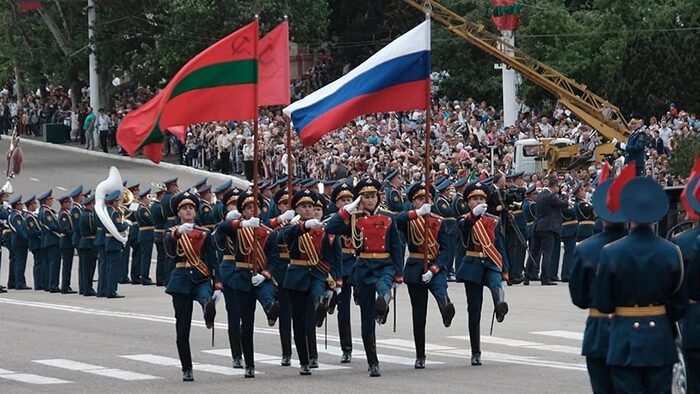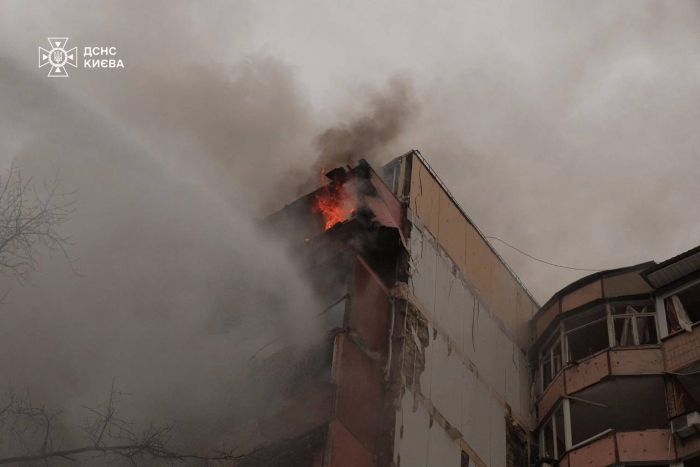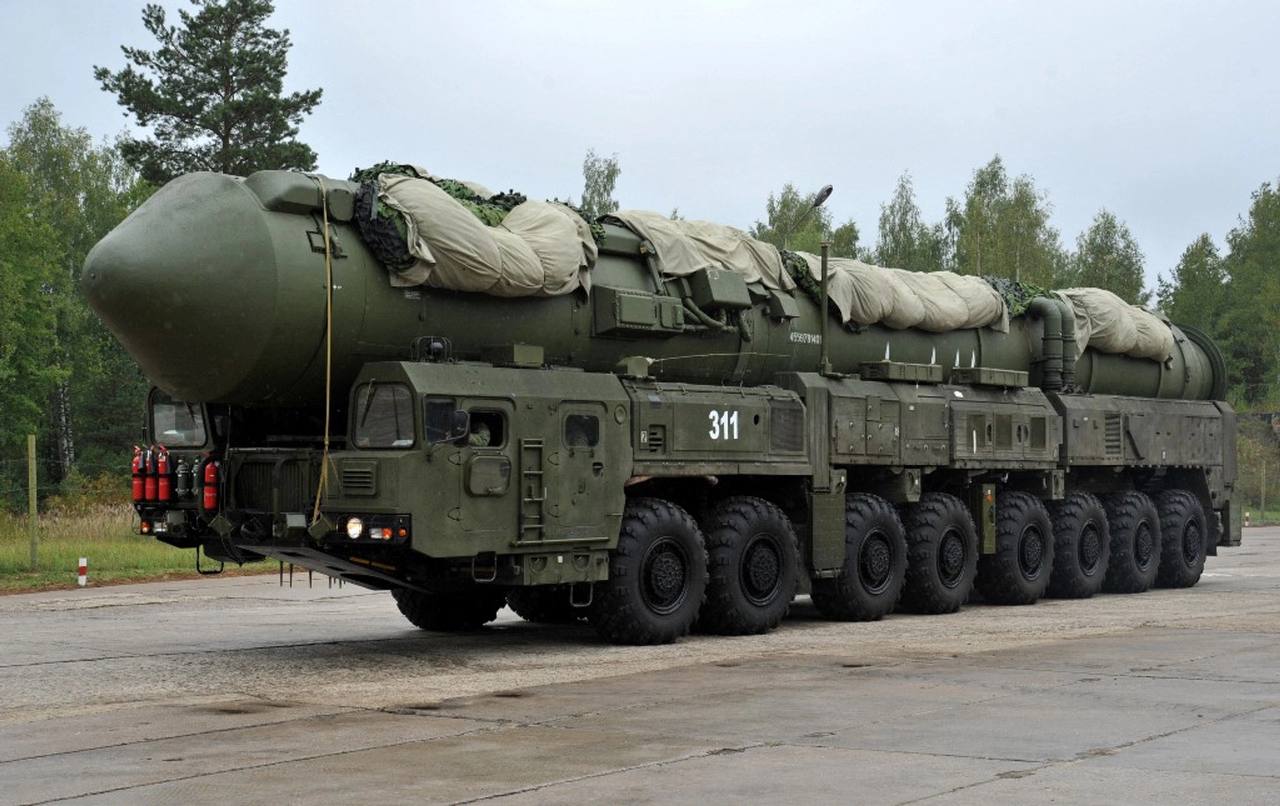


The deployment of Russian missile systems on Belarusian territory is increasingly emerging as a cornerstone of the Kremlin’s long-term military strategy. Western researchers and media outlets are documenting signs of infrastructure preparation for new weapon types, including missiles capable of carrying nuclear warheads. This involves more than just a symbolic presence of a Russian ally; it represents the practical transformation of Belarusian territory into a military staging ground. This shift expands the geography of potential threats to Ukraine and NATO member states. In tandem with the missile developments, reports are surfacing regarding Belarus’s involvement in facilitating drone attacks. Ukrainian President Volodymyr Zelenskyy has explicitly pointed to infrastructure objects that may be used for guiding unmanned aerial vehicles (UAVs). Collectively, these signals form a troubling picture of the region’s further militarization.
The Kremlin’s Missile Staging Ground
According to Reuters, American researchers have identified a likely site in Belarus linked to the deployment of a new Russian nuclear-capable missile. The system in question is the “Oreshnik”, which Russia markets as a cutting-edge development with enhanced capabilities. The research, based on an analysis of satellite imagery and open-source data, points to the preparation of relevant infrastructure at a Belarusian military facility.
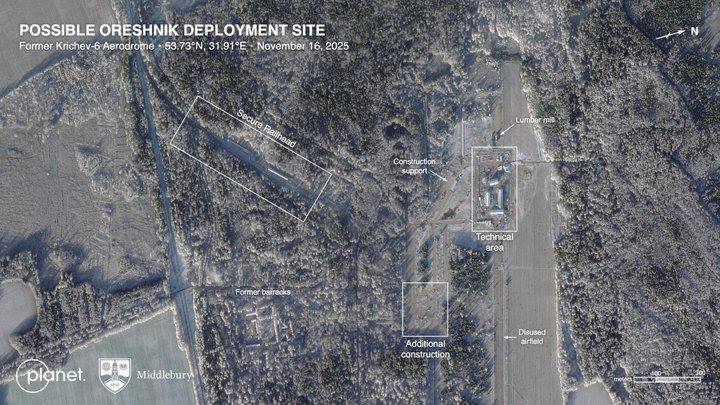
American researchers Jeffrey Lewis of the Middlebury Institute of International Studies and Decker Eveleth of the analytical organization CNA in Virginia note that their findings are based on the analysis of images provided by the commercial satellite company Planet Labs. According to them, these data allowed for the identification of a probable site for the deployment of the new Russian missile system.
Lewis and Eveleth estimate with approximately 90% certainty that mobile launchers for the “Oreshnik” missiles could be deployed at a former airbase near the town of Krichev. This facility is located approximately 307 kilometers east of Minsk and 478 kilometers southwest of Moscow, making it strategically advantageous for the positioning of mobile missile systems.
The deployment of such missiles in Belarus carries clear strategic significance. First, it reduces the distance to potential targets, particularly within Ukraine and on NATO’s eastern flank. Second, the Kremlin is demonstrating its readiness to integrate Belarusian military space into its own deterrence system. The mere presence of a nuclear-capable missile outside of Russia escalates regional tension and complicates security calculations for the West.
Drone Infrastructure
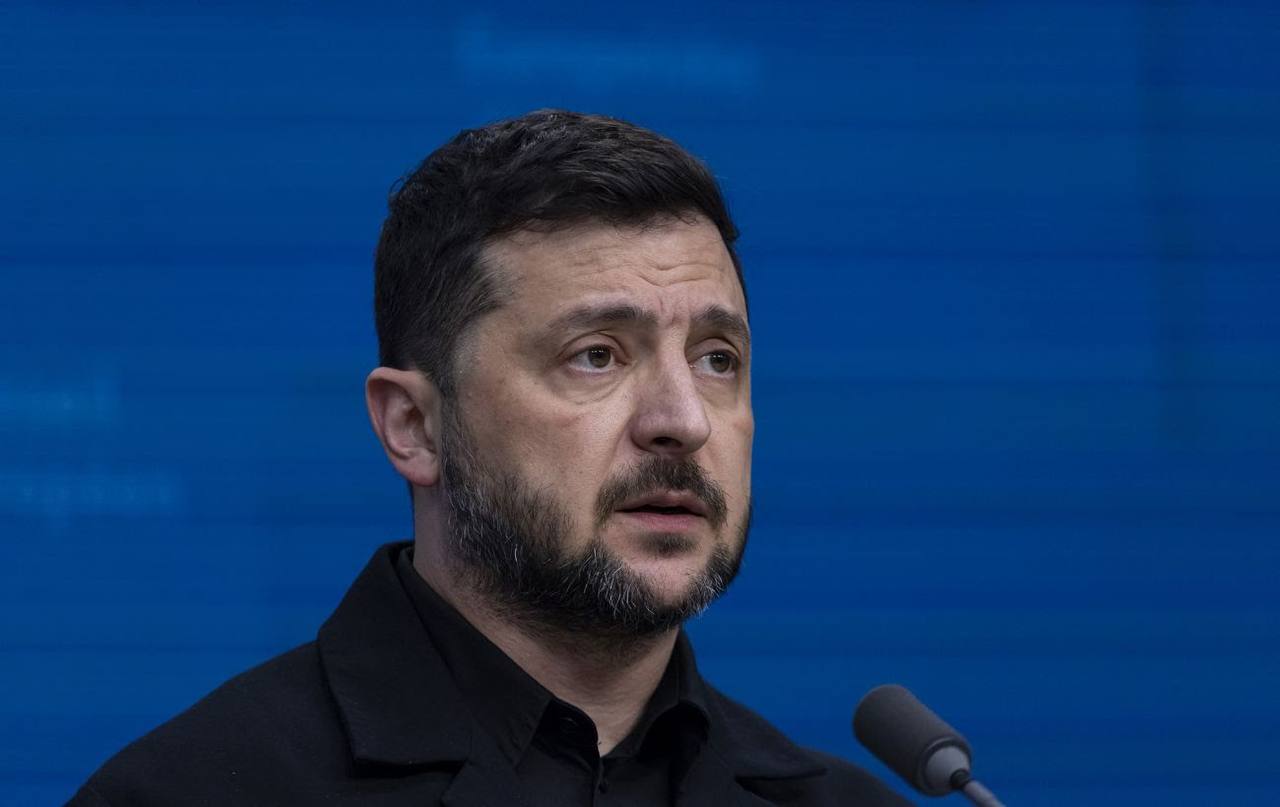
Parallel to the missile issue, signals are emerging regarding another form of Belarusian involvement in the war against Ukraine. President Volodymyr Zelenskyy has stated that special antennas have been installed on residential buildings in Belarus, which may be used to guide Shahed-type drones. According to him, these structures create additional capabilities for controlling UAVs during attacks.
“According to our intelligence, equipment used for strikes against Ukraine is located in Belarusian settlements near the border, specifically on residential buildings. In fact, antennas and other equipment that help guide Shaheds toward targets in our western regions are placed on the roofs of ordinary five-story buildings,” Zelenskyy noted.
The President emphasized that this is not an abstract threat, but rather specific infrastructure elements already appearing on Belarusian soil. These antennas, in his estimation, may assist Russia in more accurately directing drones during strikes on Ukraine. Thus, Belarus again appears not only as a political ally of the Kremlin but as a space utilized for the technical facilitation of attacks.
The Ukrainian President’s statement completes the broader picture. While missile systems represent a strategic level of threat, the drone infrastructure points to a tactical dimension of cooperation between Moscow and Minsk. Both elements indicate a deepening of military integration, the consequences of which are directly felt by Ukraine.
Conclusion
Open-source information indicates the systematic use of Belarus by Russia for military purposes. The probable deployment of the “Oreshnik” and other missile systems raises the level of strategic tension in the region. Simultaneously, Volodymyr Zelenskyy’s statements regarding drone-guidance antennas demonstrate that Belarusian territory is being leveraged for daily attacks against Ukraine. Collectively, these facts point to an expansion of the war’s geography without Belarus’s formal entry into hostilities. For Ukraine, this signifies an increase in the number of potential threat vectors. For the West, it underscores the necessity of more closely monitoring the militarization of Belarus and its role in the Kremlin’s strategy.