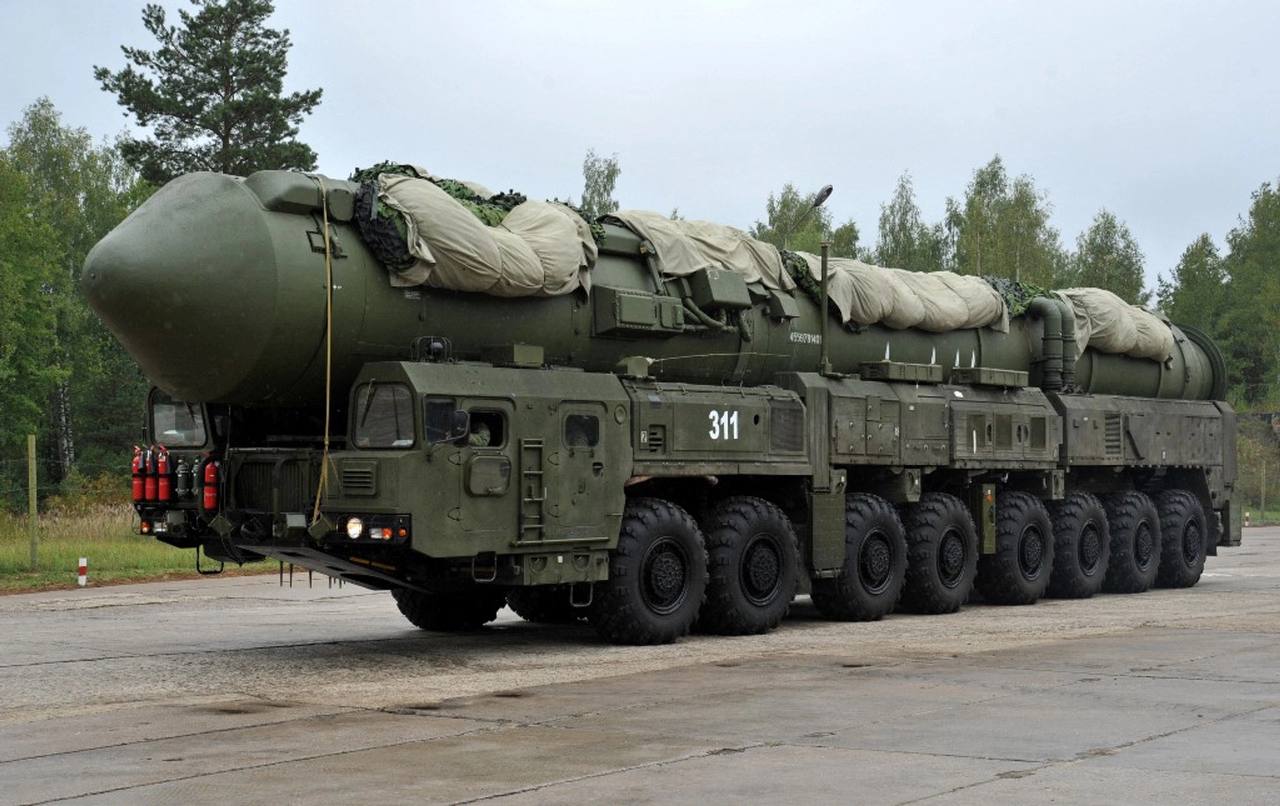


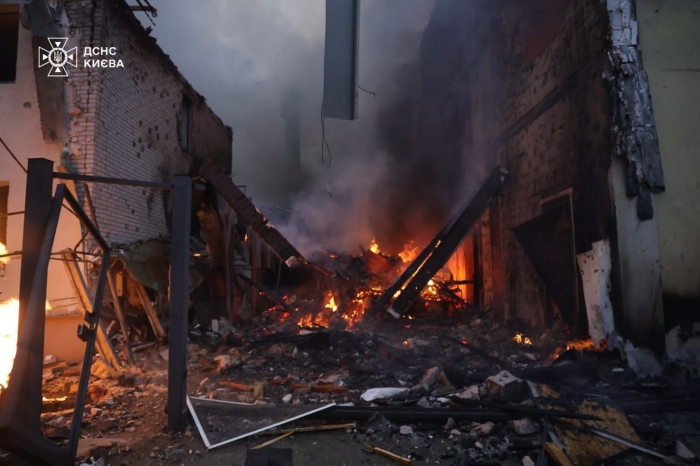
Almost 500 drones, including a significant number of “Shahed” UAVs, as well as around 40 missiles, including Kinzhal hypersonic missiles, were launched by Russia during a massive attack on Ukraine. The primary target was Kyiv.
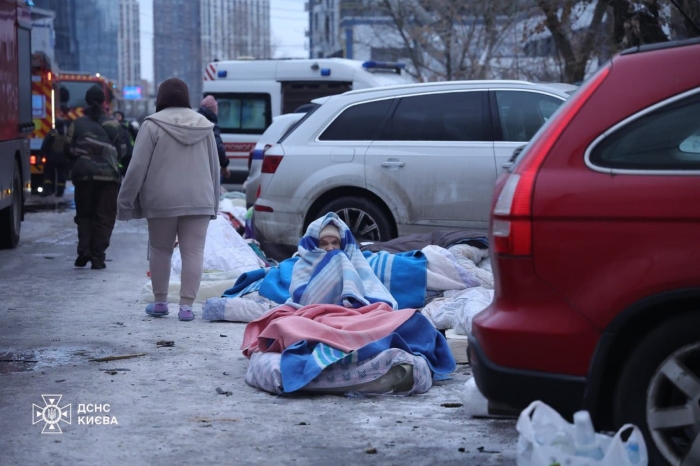
The air raid alert in the capital lasted nearly ten hours, from 1:27 a.m. to 11:21 a.m. It was announced again at 12:12 p.m. As a result of the strikes, two people were killed in Kyiv and the surrounding region. Twenty-eight others were injured, including two children. Authorities also report that one person may still be trapped under the rubble.
Videos from the attack clearly demonstrate that, beyond energy infrastructure, the enemy’s objective was chaotic terror against residential areas. The assault followed a deliberate pattern. Missiles were launched first, then drones, followed by another wave of missiles, maximizing psychological pressure on civilians.
Consequences
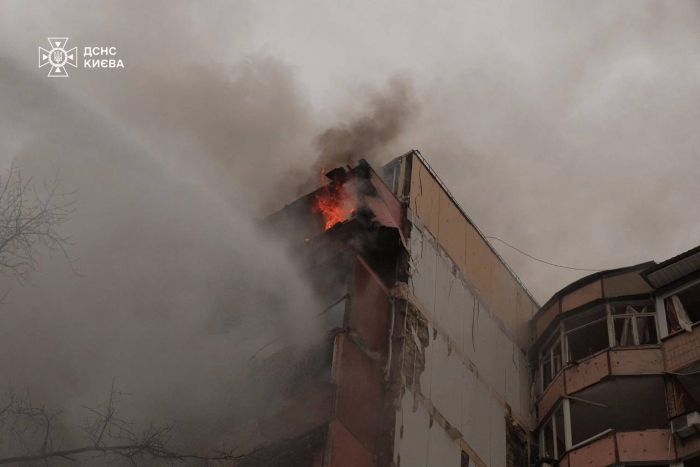
At least one-third of Kyiv is currently without heat and water. Fires broke out in several high-rise buildings in the left-bank districts of the city. The Ministry of Internal Affairs confirmed damage to at least ten residential high-rise buildings.
As a result of the strikes, parts of Kyiv and the Kyiv region were left without electricity. The outages affected approximately 600,000 subscribers. Multiple residential buildings were hit by drones. Among them was a dormitory of the National Aviation University.
Beyond the capital, the Odesa region also suffered damage. Russian strikes hit port infrastructure, grain storage facilities, and vegetable oil storage tanks.
Timing and Reactions
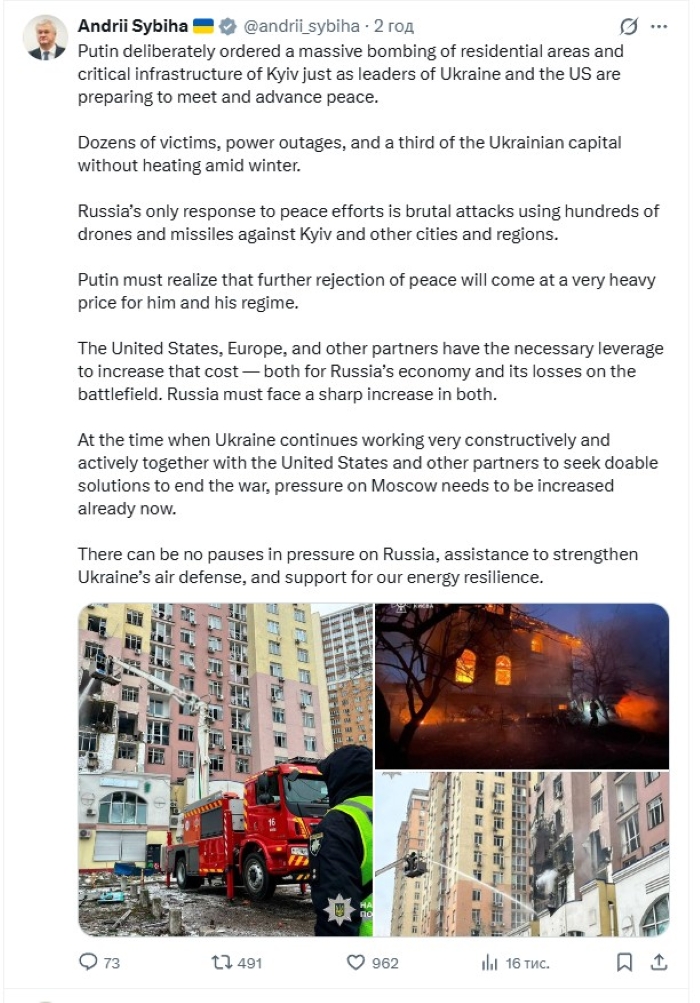
Russia launched the attack on the eve of key diplomatic engagements. A phone call between European leaders and President Volodymyr Zelenskyy is scheduled for Saturday. This consultation is expected to serve as a preparatory step toward a potential face-to-face meeting between Zelenskyy and Donald Trump in Florida, preliminarily planned for Sunday. President Zelenskyy has already begun his trip to the United States.
Ukraine’s Foreign Minister Andrii Sybiha emphasized the deliberately undiplomatic timing of the attack:
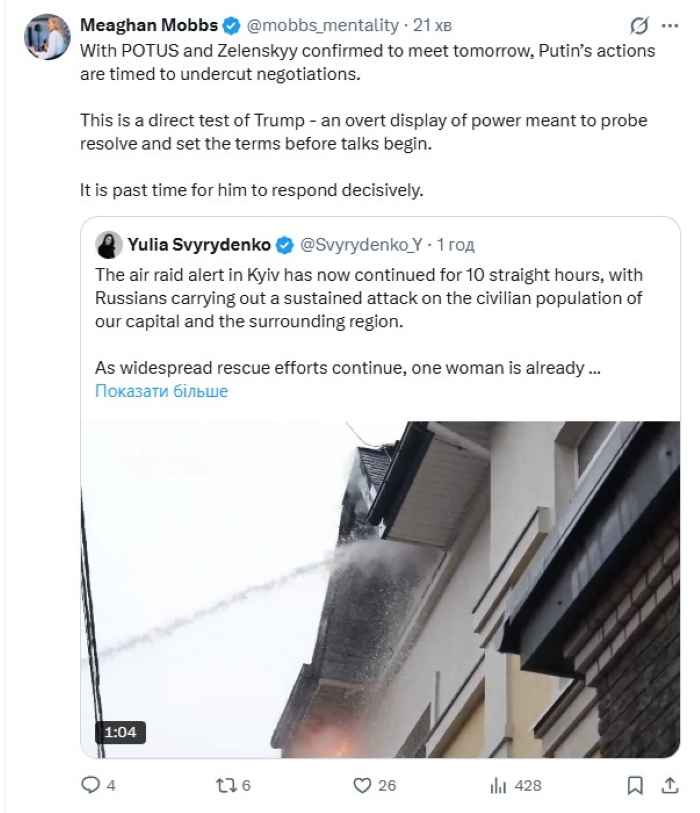
Meaghan Mobbs, President of the RT Weatherman Foundation and Director of the Center for American Safety & Security, also noted that the strike constitutes a direct message to Western partners:
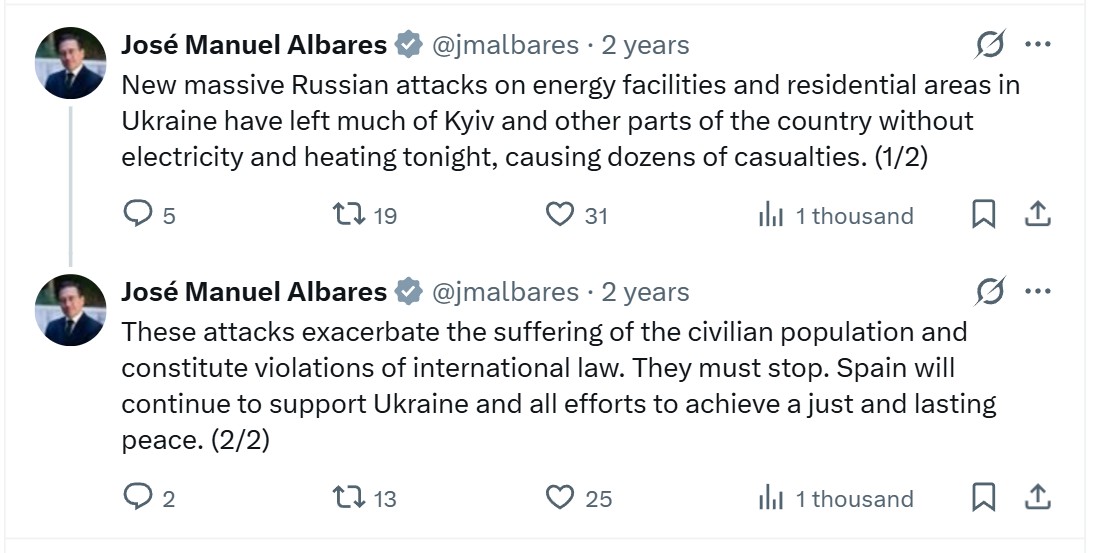
José Manuel Albares, Minister of Foreign Affairs, European Union, and Cooperation of Spain has condemned terrorism:
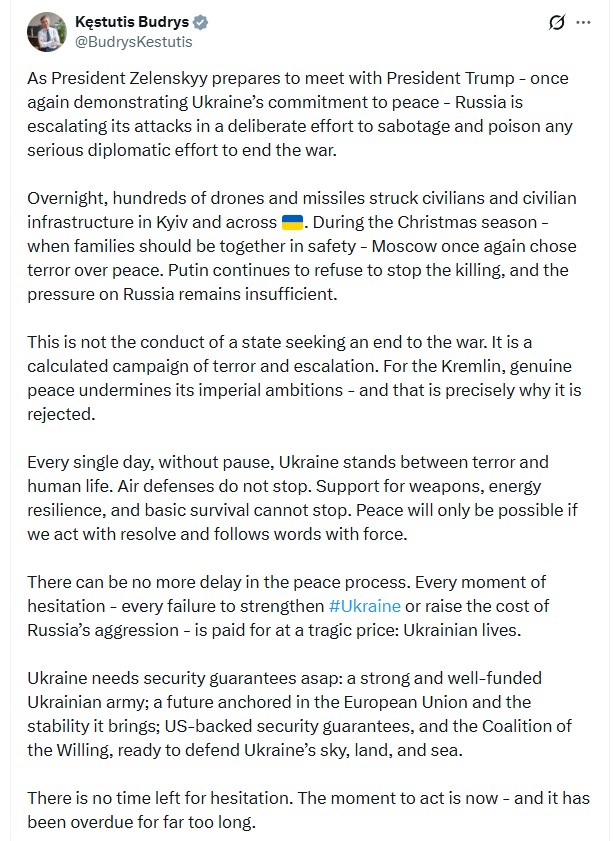
Minister of Foreign Affairs of Lithuania Kęstutis Budrys has also noted that this is the deliberate sign:
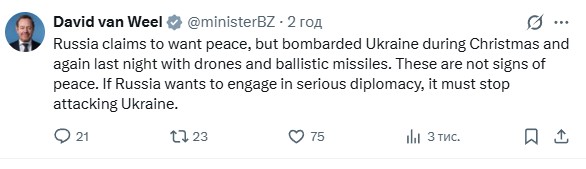
David van Weel, Minister of Foreign Affairs of the Kingdom of the Netherlands, reminded that Russia is not interested in peace:
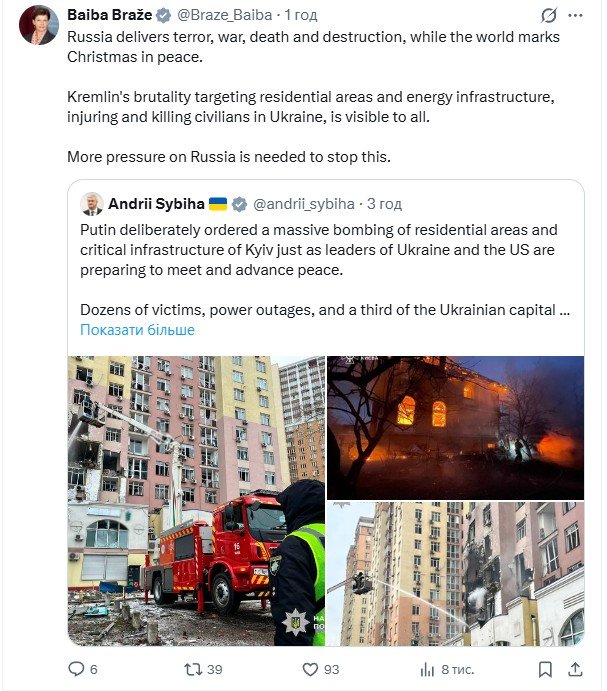
Latvian Foreign Minister Baiba Braže also condemned the brutal attack:
Conclusion
This latest Russian terrorist attack combines all the cynical elements of Moscow’s strategy. These include freezing winter temperatures, snowfall, the holiday period, and the scheduling of high-level diplomatic talks between Ukraine, European partners, and the United States.
There is no doubt that continuing the war remains Russia’s primary plan for the coming year. This attack is a clear signal that must be recognized in the West. Ukrainian officials have repeatedly stressed that such strikes demonstrate Russia’s lack of interest in peace. This time, however, that conclusion is echoed across all major international media. The attack also serves as a message to Donald Trump. It shows that Vladimir Putin does not respect peace initiatives or negotiation efforts.