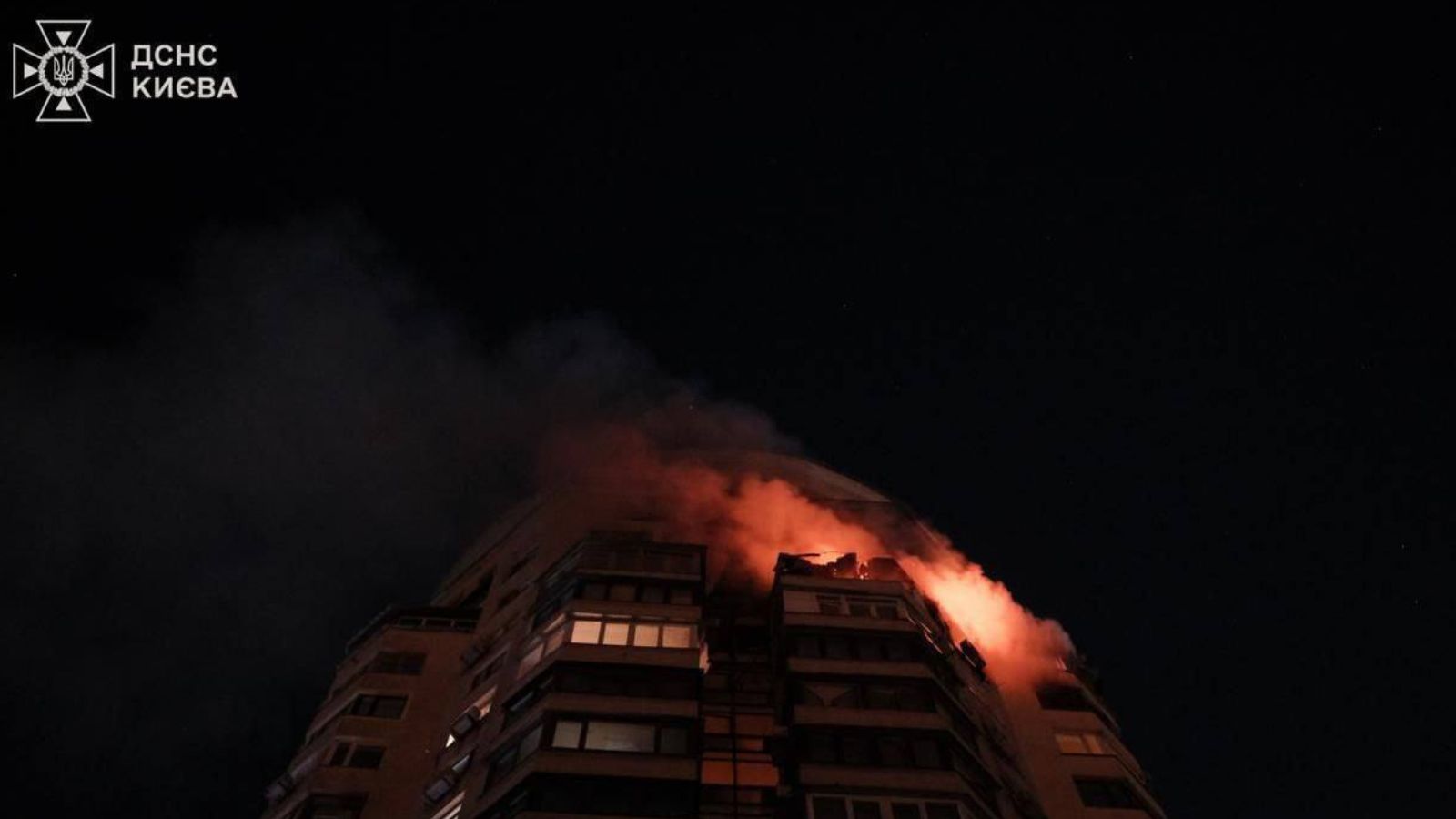


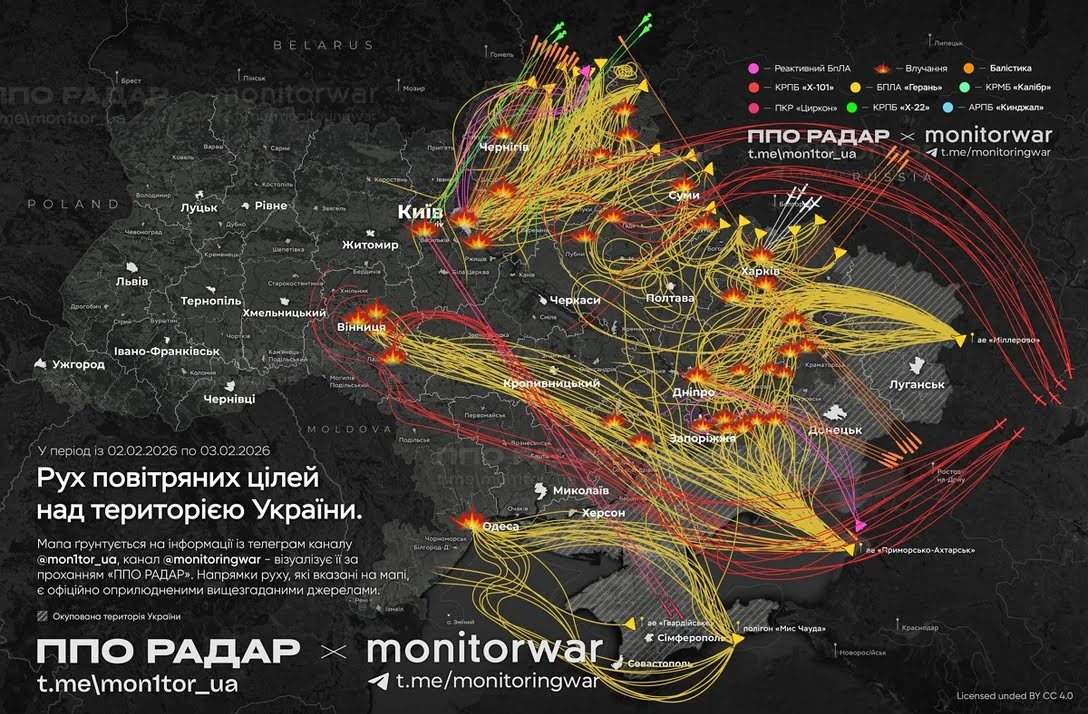
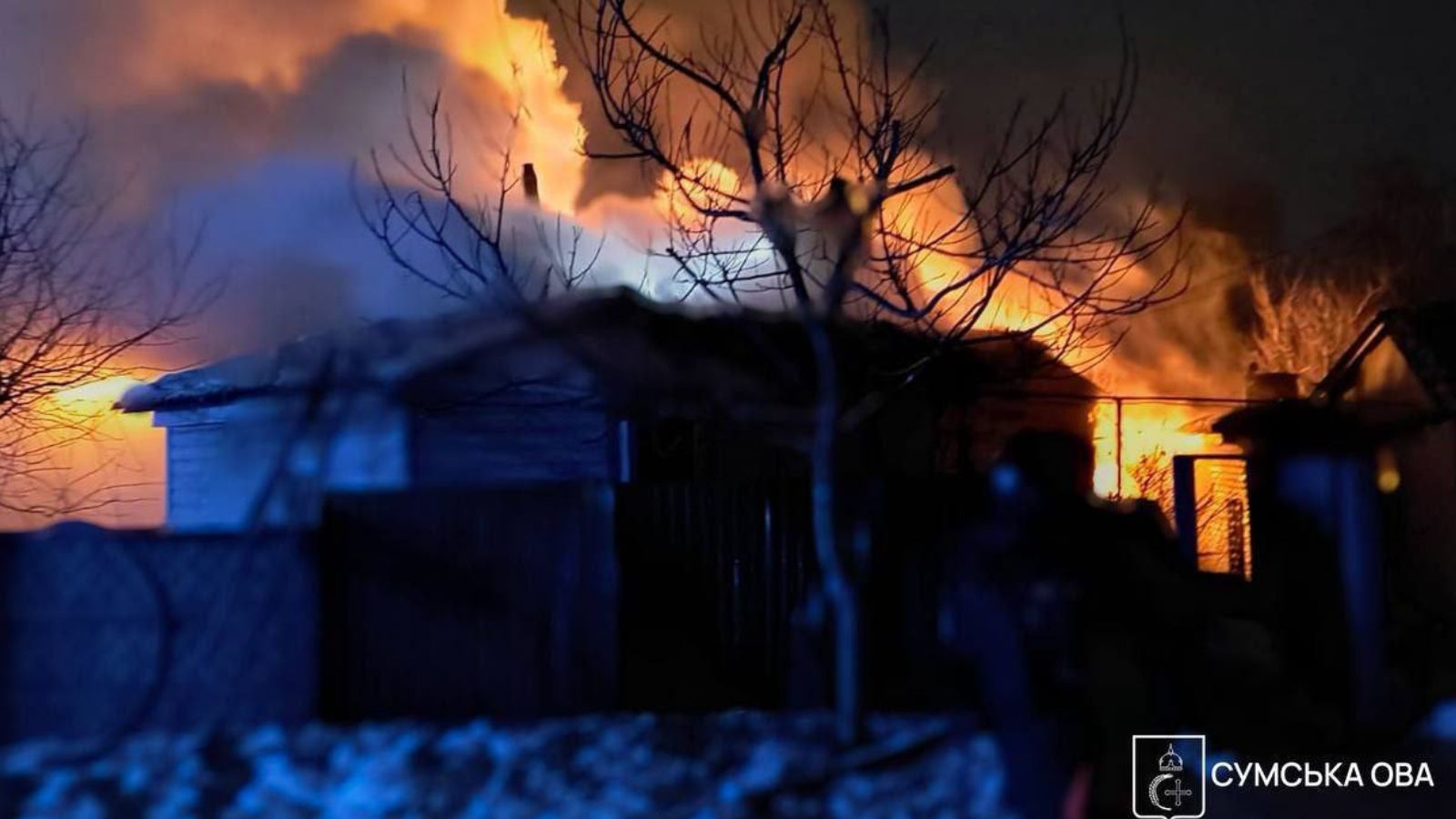
On the night of February 3, Russian forces executed an unprecedented attack on Ukraine’s critical infrastructure and residential areas. Occupiers launched over 60 missiles and approximately 500 drones, specifically targeting energy facilities during temperatures of -20°C (-4°F). Major strikes hit Kyiv, Kharkiv, Odesa, Vinnytsia, Sumy, and Dnipro.
President Volodymyr Zelenskyy reported that the assault injured at least nine people. The attack caused significant damage to power grids across several regions. Consequently, many Ukrainians face heating interruptions during the coldest period of winter.
Regional impact and thermal power plant damage
In Kyiv and the surrounding region, Russian missiles struck residential buildings in five districts and hit the Trypilska Thermal Power Plant. In Kharkiv, Mayor Ihor Terekhov described the attack as unprecedented. Workers must drain heating systems in 820 Kharkiv buildings. In Sumy, drone strikes on multi-story buildings caused fires and damaged heat supply networks. In the Odesa region, over 50,000 residents lost electricity, while 50 settlements in the Vinnytsia region remain without power.
Polish Foreign Minister Radosław Sikorski reacted sharply to the Kremlin’s actions on social media. He noted that this massive strike effectively broke Vladimir Putin’s previous promise to Donald Trump regarding a temporary halt on energy infrastructure attacks. Sikorski highlighted that Russia continues to use winter temperatures as a weapon against the civilian population.

Escalation of air terror
This operation involved a record number of ballistic missiles. Monitoring channels confirmed the use of Zircon hypersonic missiles and Kh-32 cruise missiles. The EU Ambassador to Ukraine emphasized that targeting heat and power sources is a deliberate Russian strategy to maximize human suffering. On January 27, Russia launched 165 strike drones in another large-scale air attack against Ukraine.
Previously, The Ukrainian Review reported that Russia supposedly accepted Trump’s request to halt massive strikes on energy infrastructure until February 1. However, the latest escalation proves the Kremlin ignored these diplomatic efforts.