

American media as exponents of political positions
The US has a powerful and extensive media system with its own traditions and accents in political preferences. Classic media operate in a single information field with the “new”, although they retain a significant level of trust and audience coverage. The division into republican and democratic media is not a fiction, but a historical feature in a country with a two-party system and stable political relations along the line of two ideological poles. In a way, this is a real reflection of the polarization of the citizens of this state. The line of division of Americans’ opinions is a whole range of problems of domestic and foreign policy, social and economic relations, migration, etc.
Today, Americans do not have a coherent position on Ukraine, it is divided by a system of stable beliefs that do not always correspond to reality, but become a profitable plane for building political competition. Such competition, along with a rational vision, sometimes appears in the form of populist statements. They are becoming entrenched, which is reflected in statistical studies of American society.
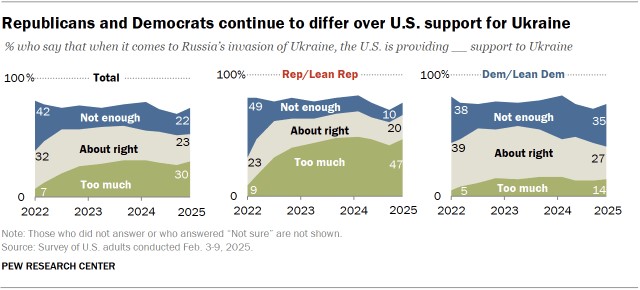
The current stage of the full-scale war in Ukraine brings the need for American support to a new level. Most aspects related to the specifics of the domestic political agenda in America are more relevant than ever. The need for Ukrainian diplomacy to respond in a timely manner to fundamental changes in the rhetoric of the leading American media appears urgent.
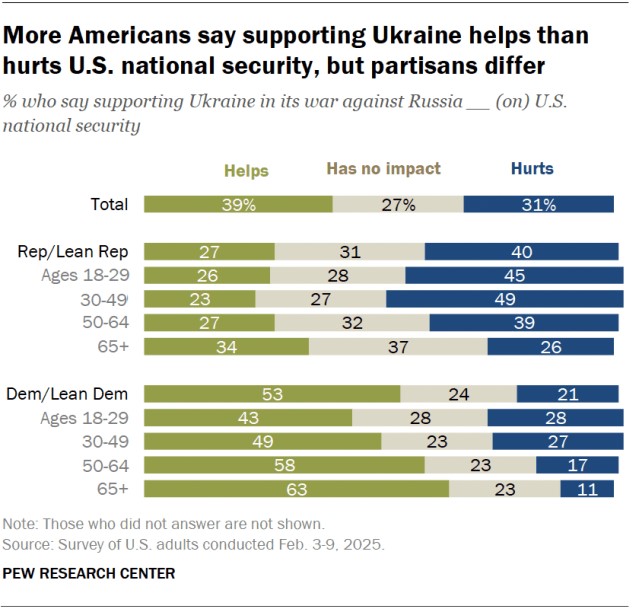
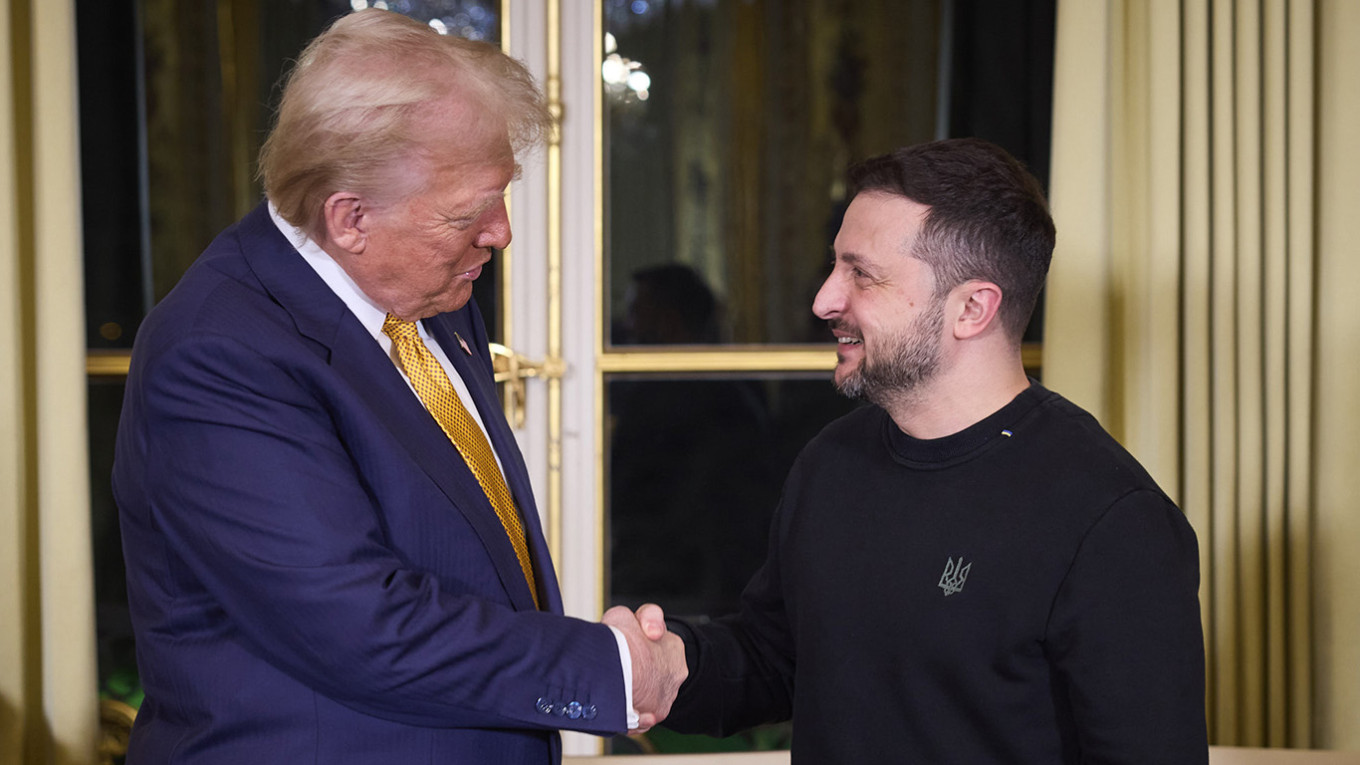
This is happening against the background of a general transformation of the positions of the current American President Donald Trump regarding support for Ukraine. Instead of the position on the “grand deal”, he begins to act in the formula of “coercion through force”. The new formula is reflected in the information field. It is picked up by the media and reinforced by constructive statements by other high-ranking officials, Marco Rubio or J.D. Vance.
The main question that arises concerns precisely the changes in the positions of the right-wing Republican media. They reflect political “fluctuations” in support for Ukraine, based on the perception of the target audience. The topic of support for Ukraine is not the core here. It is covered fragmentarily in terms of America’s “strength” or “weakness” at the current stage in solving world issues, the need to focus on its own problems, or “Making America Great Again.”
Is the media a mouthpiece for the Republican position?
The perception of the positions of conservative Republican media requires a deep analysis of both the media – leaders of public opinion among the Republican electorate, and the general “background” features of information content. 2025 puts forward new markers that require attention. Thus, the statements made on the key Republican TV channel reproduce the understanding of the failure of the “Russian war” against Ukraine.
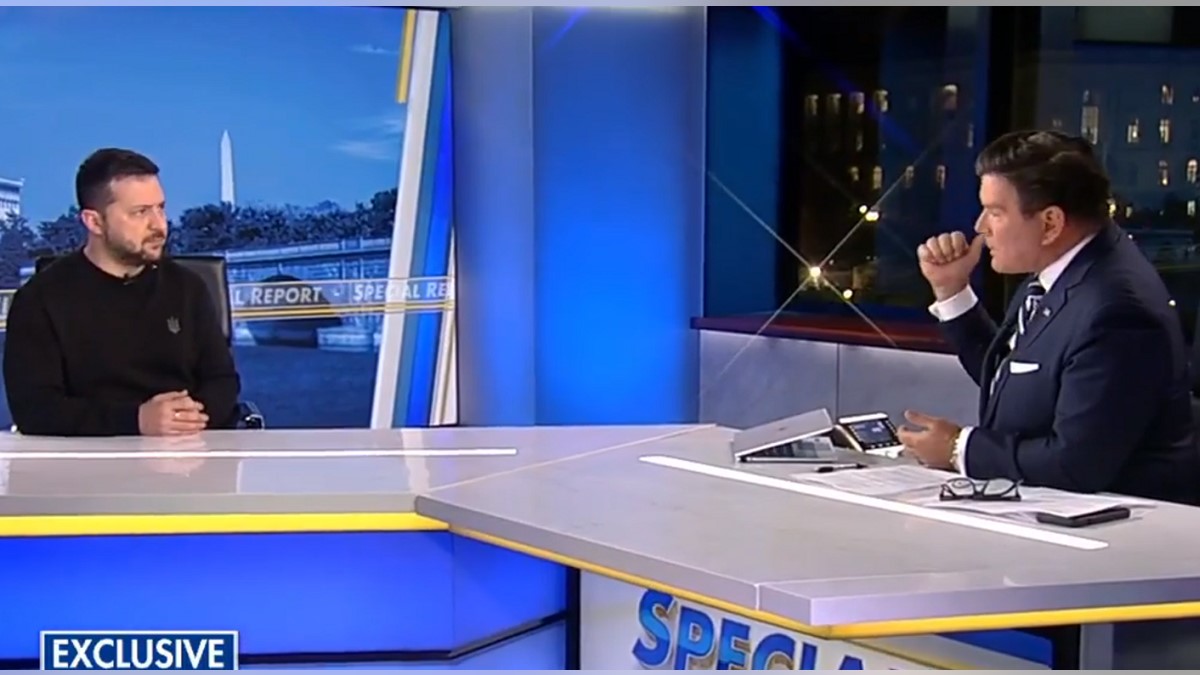
This was noted, in particular, by Fox News correspondent Dan Hoffman in the “Fox Report” program. He, among other things, emphasized Ukraine’s successful strikes on Russia’s oil and energy infrastructure. This statement is an important marker of the fragility of Russian infrastructure and the military and economic weakness of the Russian Federation. Against the background of the failed visit of the Russian representative Kirill Dmitriev to the US, this looks especially systematic and noticeable in the media. But such a marker is not the only and core one.
There is an awareness of the steadfastness of the EU countries in providing comprehensive assistance to Ukraine. A comprehensive European strategy to support Ukraine “for as long as necessary” certainly has a positive impact on the messages of presenters, journalists, and the expert community. This trend is noticeable and is growing stronger with each broadcast. The difficulty lies in finding common “points of contact” between politics and media.
Regarding the relationship between political and media rhetoric, Volodymyr Dubovyk, a scientist, political researcher, director of the Center for International Studies of the I.I. Mechnikov ONU, reveals significant aspects.
Mr. Volodymyr, do you see any real changes in the attitude of conservative media towards the full-scale war in Ukraine? What essential points should be highlighted?
Recently, there has been an improvement in the attitude of some pro-Republican, pro-Trump media towards Ukraine. This is partly due to changes in the rhetoric of President Trump himself, which has become noticeably more critical of Russia, its leader and their unwillingness to end the war. President Trump’s position and even minor changes in his position will obviously not go unnoticed by his supporters. The second factor may actually be simply the evolution of some channels themselves, be it publications or podcasts. There is an awareness that Russia is not interested in a settlement. The third factor is perhaps that there are more Republican politicians who are now more actively and openly offering to support Ukraine. This is related to the first point – Trump. Changes in his rhetoric allow others in his party to express their position more openly. So, now there are more opportunities and space for expressing pro-Ukrainian opinions. The danger here is that it is a bit situational; if Trump’s position changes for the worse, then this may also have an impact.
What accents or theses in the Republican media should the Ukrainian side pay attention to today? What topics are in the spectrum of attention?
Important theses: Putin is destroying Trump’s peacemaking efforts, manipulating, deceiving him; Russia is not just fighting, but killing peaceful people, children, kidnapping children; destroying churches and persecuting believers of certain Christian denominations; Putin is destabilizing NATO countries, making provocations against them; he is making nuclear threats, in particular against the USA; Ukraine is not losing, but holding on, so supporting Ukraine is not pointless.

What messages are currently filling the agenda of the “republican” media in the US? American political journalist and analyst Veronika Kyrylenko answered this question:
Ms. Veronika, how, in your opinion, has the rhetoric of the leading “republican media” changed regarding support for Ukraine? Is there a tendency for them to “radicalize”?
Approximately half of the “conservative” media support Trump’s “conditional” aid to Ukraine (“we help, but only if we see personal benefit in it”), presenting it as a pragmatic “America First” approach. About a third are skeptical, portraying Kyiv as corrupt and ungrateful, and the support as a waste of taxpayers’ money. A small, more “hawkish” part considers Ukraine an important frontier for deterring Russia.
How are these positions manifested in practice in specific statements and accents in the media? Where can we see the same line of demarcation regarding Ukraine?
Fox News reflects this divide: some stories praise Trump’s diplomacy – “Trump, Zelenskyy agree on crucial aspect to end Ukraine war: ‘good compromise'”. At the same time, others warn that his “zeal on Russia is fading”. Breitbart portrays him as a peacemaker, then a tough leader – “Trump: Kyiv in Position to Fight and WIN All of Ukraine Back”. Bordering on “I told Zelensky and Putin, ‘It Is Time to Stop the Killing.'” The Washington Examiner presents the “hawkish” wing, demanding an increase in support – “Trump must escalate to de-escalate the war in Ukraine”, although it also quotes Trump’s words that the US “cannot give all its weapons to Ukraine”. The Daily Wire alternates accents between Trump’s optimism – “Ukraine can return its country in its original form” – and restraint – “Not Ready to Give Ukraine Tomahawk Missiles.” National Review tries to maintain a balance: it warns against turning Ukraine into a “permanent dependent”, but publishes materials like: “Tomahawk Missiles for Ukraine Should Be on the Table.”
What prospects do you see for changing the rhetoric of the right-wing Republican media?
It is important to remember that the media, “right” or “left”, are far from objective. Large media outlets and platforms like Rumble are funded by elite interests and shape public opinion, rather than reflecting it. While some publications extol Trump’s “negotiating genius”, while others demand increased support for Kyiv, some of his allies in Congress remind us that intervention abroad contradicts his promise to end “eternal wars”, especially against the backdrop of economic and social difficulties within the United States.
Thus, isolationist trends in media rhetoric run counter to the worldview of scaling up American involvement in world politics and support for Ukraine. Conservative media also reproduces a noticeable polarization. The image of a “strong President Trump” is significantly different in different media sources.
CONCLUSION
The new White House administration and President Donald Trump directly influence the positions of the “republican” media. Donald Trump sets the accents for the leading media, which are more positive for the Republicans, in relation to their own policies. Democratic media follow the path of highlighting the negative aspects in the political decisions of the current American leader.
Understanding the failure of the Russian offensive in Ukraine and the general outlines of Russia’s “failed” and “destructive” war against Ukraine is key. General access of representatives of the Ukrainian political elite to the broadcasts of the main republican media is important. Direct communication of Ukrainian high-ranking officials strengthens Ukraine’s reputation and contributes to the formation of a new system of “support messages”. The speeches of President Volodymyr Zelensky are a signal for the launch of a new “window of opportunity” for dialogue (Ben Shapiro’s trip to Ukraine and an interview with Volodymyr Zelensky, the broadcast of the President of Ukraine Volodymyr Zelensky by the Right Side Broadcasting Network 10/17/2025, etc.).
The existing interests of the American conservative elites are reflected in the media. Not all of them are ready to support Ukraine. Some advocate an active isolationist position (essentially focused on their own audience of “red states”, even on right-wing radicalism), which has little correlation with the idea of comprehensive assistance to Ukraine. However, systemic political, diplomatic, financial and military support for Ukraine in the information space of conservative Republican media is possible. Such a position should be supported by lobbying for Ukraine’s interests and the presence of opinion leaders in the media for the American audience who are ready to convey the truth.