

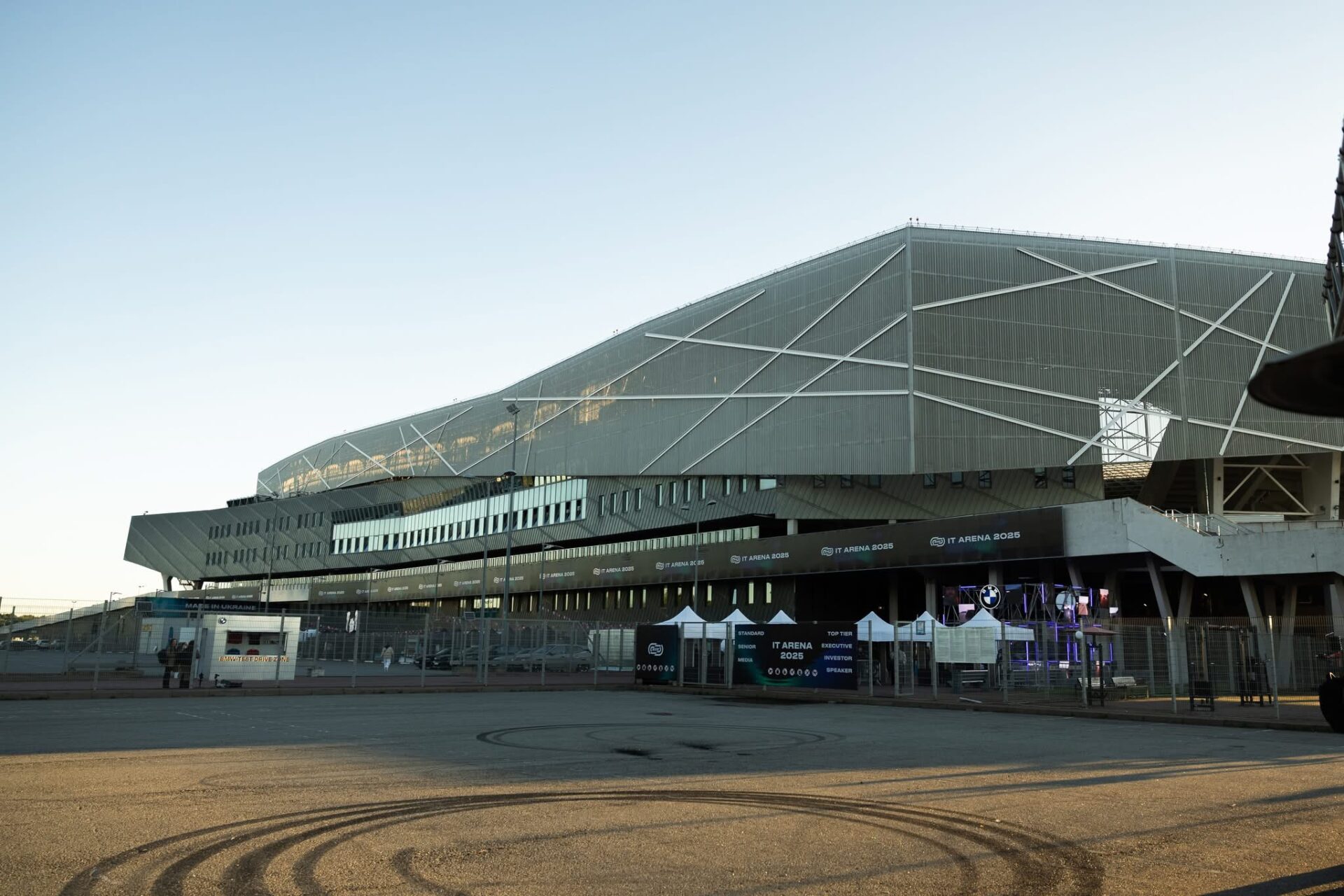
IT Arena is Ukraine’s leading tech event, held annually in September in Lviv. This conference fosters innovation and connections and creates space for networking and business matchmaking.
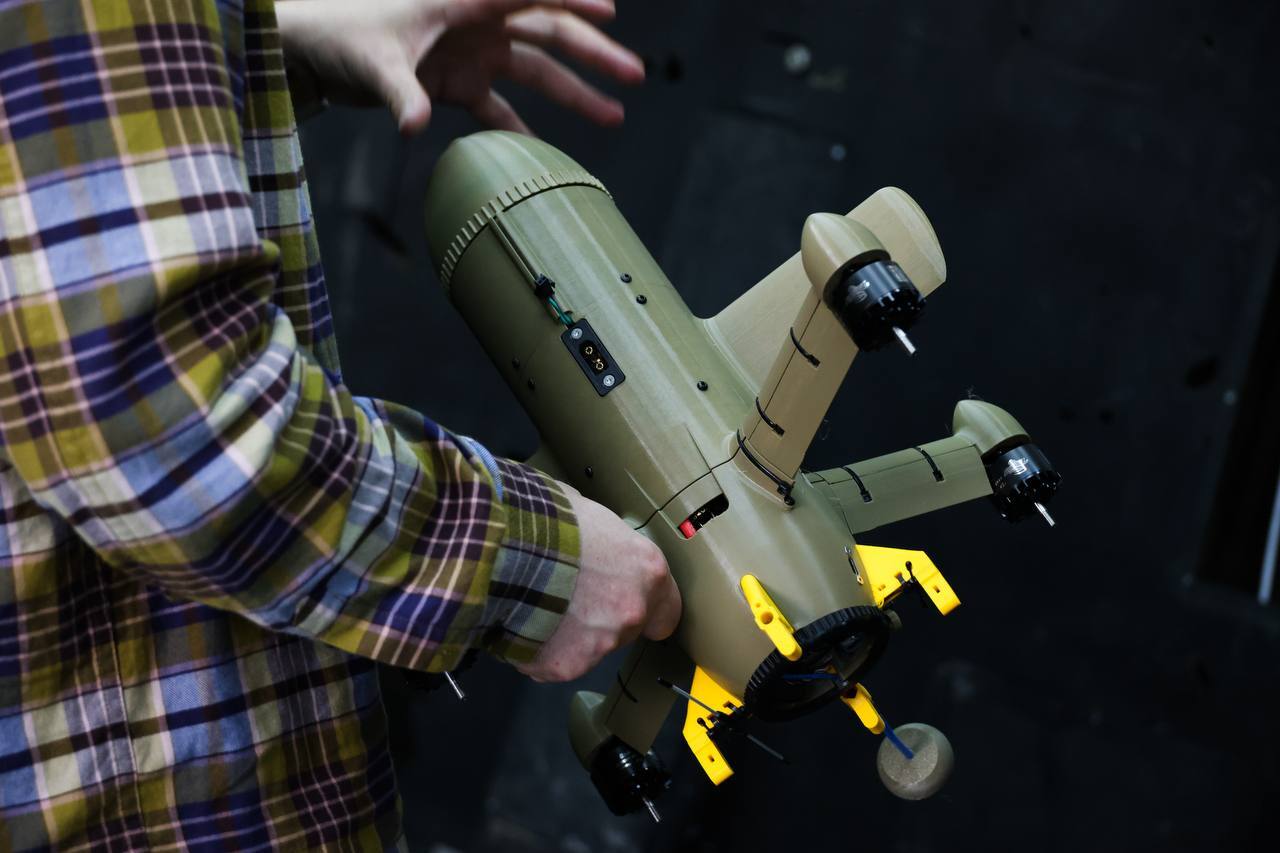
Traditionally, 3-day events are divided into 5 sections – tech, business, startup, product, and defense. This year, the main focus of discussions and meetings was dedicated to AI, digitalization (both in businesses and in military), and Ukrainian defense strategies and new products devoted to it.
This article provides an overview of the most remarkable presentations, cutting-edge products, and major events of IT Arena 2025.

AI innovation in focus
Communicate with the minister via an AI chatbot – yes, now it’s possible!
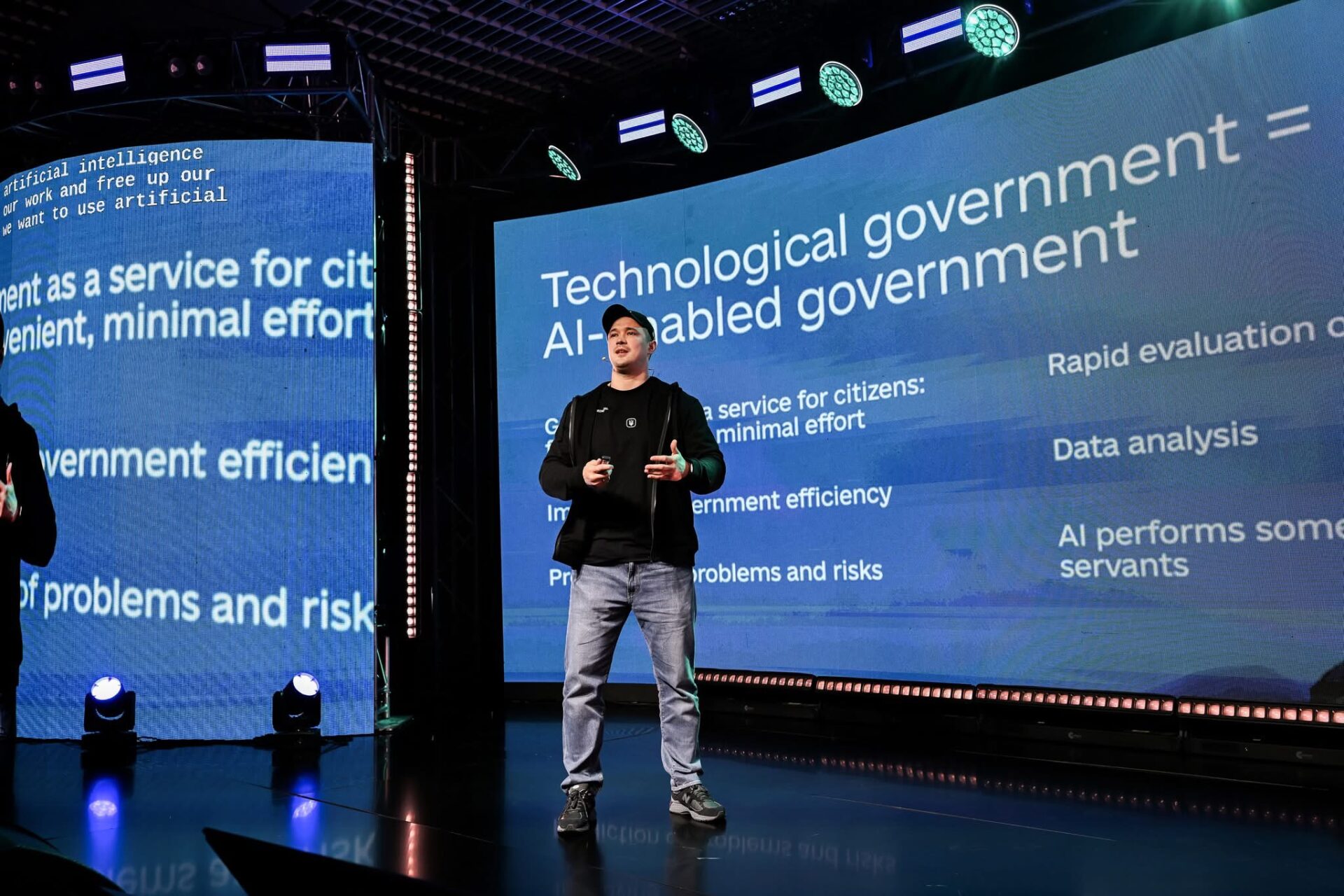
For the first time in Ukraine, a minister was digitized using artificial intelligence. Now, Ukrainians can communicate with the digital twin of a minister simply in a chat. The goal is to collect fresh ideas for digitalization, respond to problems, and attract new talent to the team of the Ministry of Digital Transformation of Ukraine. The twin was presented by Mykhailo Fedorov at the conference.
“The main task of AI is to solve people’s problems. We created a chatbot so that no idea is lost and talented people do not go unnoticed. Through the chatbot, Ukrainians can share ideas on the digitalization of public services, send a resume to join the team, talk about problems with public services, ask questions or get recommendations for self-development and professional growth. This is a step into a new era of interaction between citizens and the state, where technologies allow for quick, transparent and effective communication and solving problems together,” said Mykhailo Fedorov.

The digital twin responds in living language and can communicate both in text and in the voice of Mykhailo Fedorov.
“Mykhailo Fedorov’s digital twin is one of the world’s first examples of digitalization of a minister for communicating with citizens. We trained him on Mykhailo Fedorov’s public statements: in total, this is over 10 thousand materials from the media and social networks of the Ministry of Digital Transformation of Ukraine. We also included voice integration so that interaction with the minister would be as convenient as communicating with friends or acquaintances in messengers,” said Danylo Tsvok, Chief AI Officer Ministry of Digital Transformation of Ukraine та CEO WINWIN AI Center of Excellence.
To chat with Mykhailo Fedorov’s digital twin:
- Go to the chatbot @thedigital_bot in Telegram.
- Log in through the Diia application.
- Ask your question by voice or text.
Artificial intelligence will analyze your request and provide an answer. The most interesting ideas and requests will go directly to Mykhailo Fedorov. The next step is to launch the minister’s digital twin on WhatsApp.
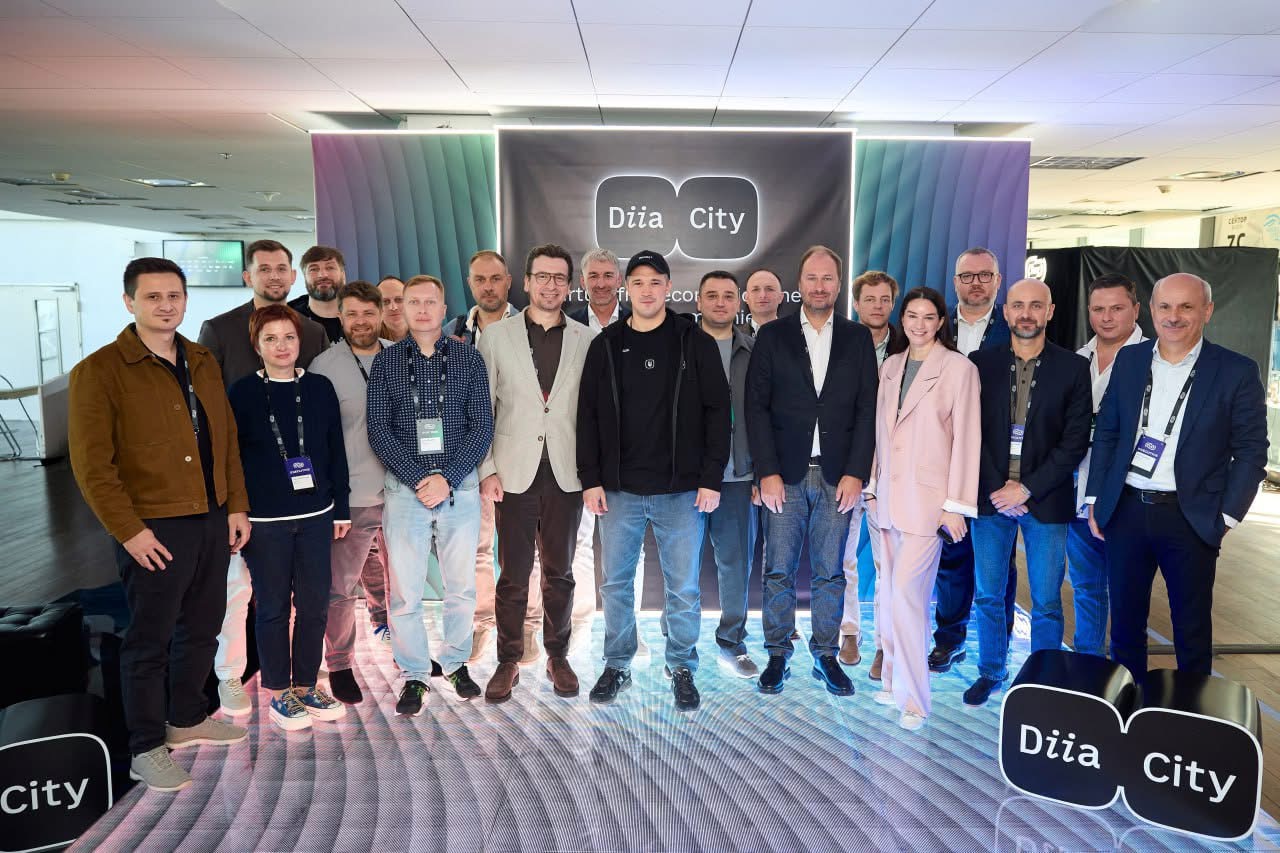
Ukrainian state services will “speak” thanks to AI
Ministry of Digital Transformation of Ukraine began cooperation with ElevenLabs, a world leader in the field of artificial intelligence voice technologies.
ElevenLabs will help integrate voice interfaces into Ukrainian government services, Mykhailo Fedorov announced at IT Arena.
“The future belongs to agent states. Ukraine is already moving towards a format where interaction with the state is reduced to a single request or voice message. The partnership with ElevenLabs, a world leader in voice technologies, gives our digital services a human voice and makes them more accessible to everyone. We have proven our ability to innovate at scale, and this cooperation will accelerate the transition to a proactive, agent state, where artificial intelligence really makes the lives of citizens easier,” said Mykhailo Fedorov.
For the first time, the company’s voice technology has been used to voice the digital twin of Mykhailo Fedorov, who works in the format of a chat bot – we wrote about this above.
ElevenLab voice technologies will also “voice” other government services. The plans include – Integrate voice AI on the portal and in the Diia application, introduce innovations into educational platforms, add voice functionality to the Ministry’s internal tools. In particular, in AI assistants for onboarding and the HR team.
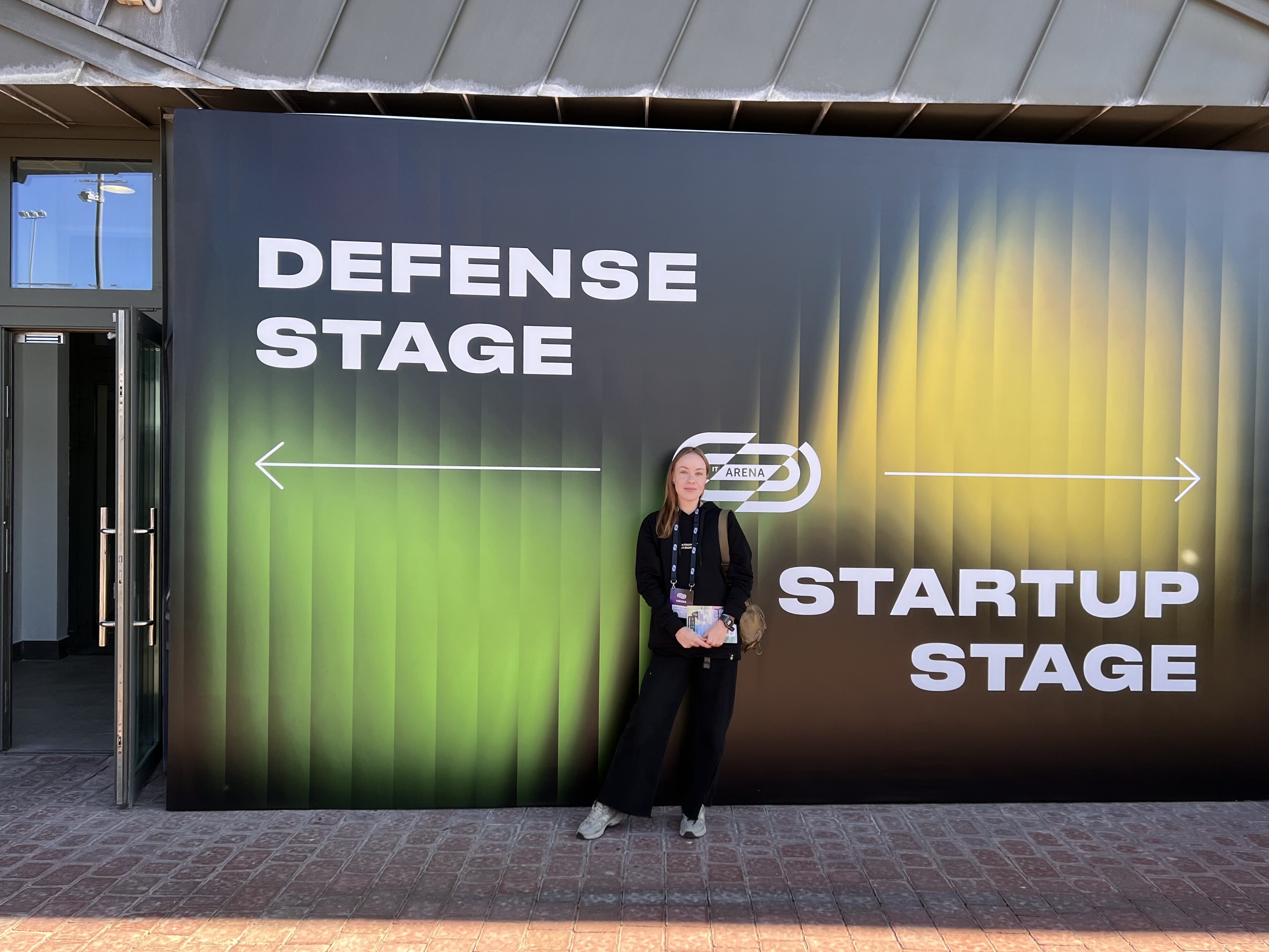
The Startup Defense Session: IT Arena 2025, Lviv
The war has made its own adjustments. IT technologies are now at the forefront of the battlefield. Therefore, some of the sessions were devoted to defense and military startups.
“Today, defense and the IT community are united by a common mission – to strengthen the state. For the army, technology is no longer just a tool, but a prerequisite for efficiency. Therefore, we are open to partnership to jointly create innovative solutions that strengthen defense capabilities and save the lives of military personnel,” said Oksana Ferchuk, Deputy Minister of Defence for Digital Transformations.
As part of defense tech, a startup competition was held, the largest and most prestigious startup competition in Ukraine. The participants managed to attract the largest investments in the history of the competition and receive significant cash prizes for the development of their own products. The organizers of the competition managed to break last year’s record and received 202 applications from teams from all over the world: Warsaw (Poland), Berlin (Germany), Tallinn (Estonia), Kaunas (Lithuania), Minnesota, Boston (USA), Dundee (Scotland) and even Hong Kong (special administrative region of the People’s Republic of China). 60 of the most promising teams, who presented their projects, made it to the semifinals.
Participants competed for a grant prize fund of $60,000. It was divided between the six main winners of the competition. Half of the amount was raised thanks to the support of the Ukrainian Startup Fund (USF), and the same amount was provided by the Brave1 defense cluster.
Each team had only seven minutes to present their idea and answer questions from the jury members — entrepreneurs and investors from EU and Ukraine.

Dwarf Engineering: Building the Future of Autonomous Defense Systems
The winner of the defense category was Dwarf Engineering, which presented a B2B platform for integration between developers of autonomous control systems and manufacturers of UAVs, IRCs, ammunition, and surface and underwater drones. The team received $15,000 to develop their product.
“We are now the first on the market. Of course, there are other teams that make similar solutions. However, they make them for themselves. And our development can be used by anyone. Now our technical capabilities allow us to provide an autonomy system for a large number of manufacturers in a short time. And this is a direct path to accelerating Ukraine’s defense capability, which is our main priority,” emphasized co-founder and CEO of Dwarf Engineering Vladyslav Piotrovskyi.
The company already has several clients among Ukrainian drone manufacturers, as well as the first serial modules.

Dwarf Engineering is not just another drone-or-robot-maker. They are building the infrastructure layer — the shared, scalable, secure backbone — for autonomous robotics and unmanned systems in the defence domain. Their ability to combine hardware & software, provide modular, interoperable platforms, secure collaborations, and real-world proven products makes them outstanding in a competitive and fast-moving sector.
A few competitive advantages:
- They handle hardware + software, they can optimize both sides for integration, reliability, ruggedness.
- Their platform model means clients don’t have to build everything themselves — cost & time saved.
- Security & zero-trust architecture: in defence this is a major differentiator.
- Rapid scalability: according to one article, their module production can reach 20 000 units/month if needed.
- Their platform allows cross-vendor interoperability — historically a big challenge in unmanned systems and robotics.
BabAI: Securing the Sky with Intelligent Counter-Drone Tech
Second place and $10,000 went to the team of the startup BabAI — a developer and manufacturer of electronic warfare equipment for protection against drones. Thanks to artificial intelligence technologies, these electronic warfare systems operate fully automatically, which allows them to effectively respond to threats without operator intervention.

Development
- BabAI was developed by Ukrainian engineers motivated by the widespread use of enemy drones on the battlefield after the full-scale invasion. The project began with simpler anti-drone “rifle”-type tools, but as adversaries shifted to non-standard frequencies the team decided a new system approach was required.
- The system evolved into a fully automatic electronic-warfare (EW) complex, featuring a wide scanning frequency range to detect UAV signals, and integrated modules for suppression.
- A key device associated with the company is the portable drone detector “PES Sirko”, capable of 360° coverage, detection range up to ~2 000 m (depending on signal strength), and supports integration with external electronic warfare systems and other manufacturers’ devices.
- Web interface, remote diagnostics and modular design were emphasized by BabAI. The system supports remote access via WiFi/Ethernet, system logs, spectrum analysis, module control and automatic/ manual modes.
The company’s products have shown high efficiency in real combat conditions, protecting crews and equipment from enemy FPV and other UAVs. And one of the advantages of BabAI’s electronic warfare equipment is invisibility: in “silent mode” the system does not emit signals into the air, which provides additional security and camouflage for military personnel.
BabAI already cooperates with several brigades of AFU – 10th Separate Mountain Assault Brigade “Edelweiss”, 59th Separate Assault Brigade of Unmanned Systems named after Yakov Handziuk, 92nd Separate Assault Brigade, 156th Separate Mechanized Brigade and others.
Bravo Dynamics: Advanced UAV and Defense Solutions from Ukraine
The third place with a prize fund of $5,000 was taken by the Bravo Dynamics team. The company developed a mesh system for unmanned ground vehicles (UGV) — Phantom 3.0. It provides stable communication without the need for airborne repeaters even in the most difficult conditions under powerful electronic warfare.

Development
- The Phantom line was developed by Bravo Dynamics with iterative field testing through 2024–2025; Phantom 3.0 is the current major evolution intended for completion within the year and to support a multi-node ground mesh tailored specifically for UGVs.
- Design priorities have been robustness in EW environments (adaptive FHSS / frequency-hopping spread spectrum), modularity for easy integration into existing platforms, and a node architecture that keeps networks alive even if individual nodes are lost. Reported technical goals include support for up to 5 nodes per group and a claimed maximum data-range planning up to ~80 km under ideal conditions.
Use on the ground
- Phantom 3.0 is aimed at UGVs and ground robotic complexes rather than being repurposed UAV radios. By using only ground nodes (no airborne relays), the system reduces exposure to detection and makes the network more resilient to aerial electronic warfare and visual detection. That makes it suitable for logistics convoys, remote reconnaissance robots, explosive-ordnance-disposal (EOD) platforms, and distributed sensor/control meshes on the battlefield.
- Bravo reports modular kits and progressive firmware upgrades; earlier Phantom kits have already been sold in small batches during 2024–early-2025 and the company iterated the design after frontline evaluations. The system is presented as integrable with multiple vehicle types and with remote diagnostics.
Contracts and partners
Bravo Dynamics already has its first contracts worth about $25,000, including an agreement with Dwarf Engineering for the supply of Phantom systems.
Conclusion
The IT Arena 2025 in Lviv highlighted how Ukraine has become a driving force in defense innovation. The best form of international support today is not only military aid, but also helping Ukrainian tech companies enter global markets, export their technologies abroad, and integrate into NATO’s defense ecosystem. While much of the Western world still approaches security with a peacetime mindset, Ukraine’s experience proves that defense innovation is what safeguards the future. At this year’s event, visitors could explore a dedicated pavilion showcasing cutting-edge military technologies and engineering breakthroughs, demonstrating how Ukrainian ingenuity continues to set new standards for resilience and technological advancement in modern warfare.
Author: Natalia Vlasenko
Photos provided by IT Arena 2025 Lviv