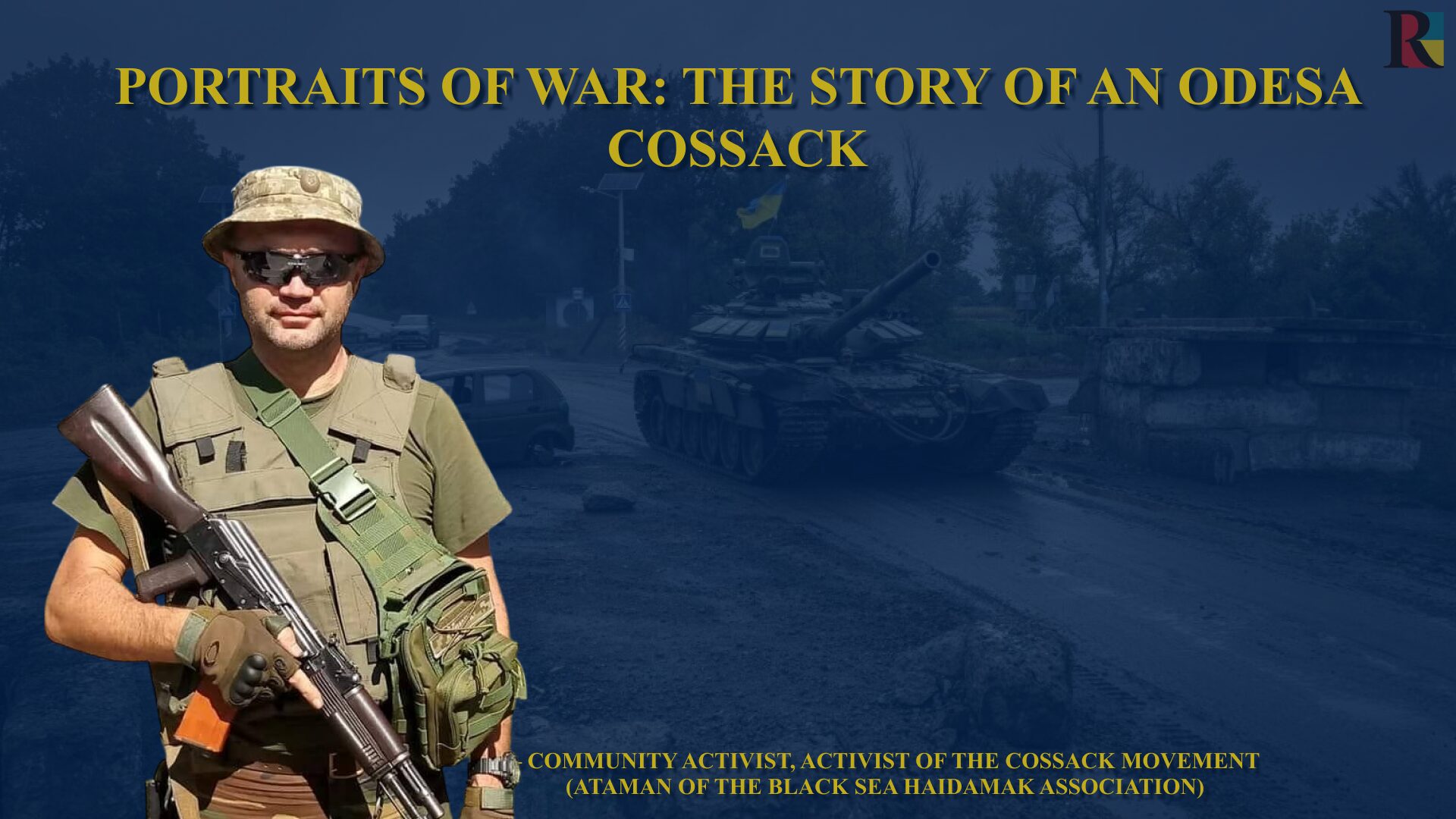


In Odesa, Serhiy Hutsalyuk is known as a public figure, activist of the Cossack movement (ataman of the Black Sea Haidamak Association), and director of the Southern Branch of the Ukrainian Institute of National Memory. Nevertheless, Serhiy has been defending our homeland with arms for years.
The beginning of his service
Kostyantyn Grechany (K.G.): Tell us, how did you decide to join the Armed Forces? When did it happen? What was your motivation?
Serhiy Gutsaliuk (S.G.): My motivation was very strong. When the aggression began in 2014, I was just ashamed to sit at home with my wife when a lot of my friends, comrades, and acquaintances from the Maidan were already defending Ukraine. But I had problems with the fact that, first of all, I did not serve conscript service, my eyesight is poor. I went to the military registration and enlistment office and was sent to the Filatov Institute, where they gave me a conclusion. They said, we can’t take you with your eyesight.
I said, I want to, I want to volunteer. They started collecting certificates of no criminal record and everything else, but at that time a criminal case was opened against me for the Shufrych situation, you remember. It lasted almost until 2016. In 2016, it was all closed against me. And then I was able to join the Armed Forces. At that time, I was assigned to the 59th Brigade.
All this time, while this criminal proceeding was hanging over me, the guys and I were preparing for the Armed Forces as part of our Odesa self-defense (Maidan Self-Defense – ed.). When I came there, to the 59th Brigade, I was already ready, in principle. This helped me a lot in my future service, the skills I acquired during this time.
K.G.: You are a professional historian and have also been involved in a lot of social activities. To what extent did your professional skills help you at the front?
S.G.: You know, everything helps. In addition to physical training, psychological, moral, this knowledge that you gained at university… Then the ability to find a common language with people, to communicate with large groups. This helped me a lot, of course. As soon as I got there, my then-commander told me that we needed a person who would be responsible for moral and psychological support, how do you see it? I had just arrived, I was starting from scratch. I said, ‘Well, let me stay for a while, see what’s going on. He said, yes, I agree. I started as a soldier, then I got a senior soldier, then a junior sergeant. I was already demobilized as a sergeant.
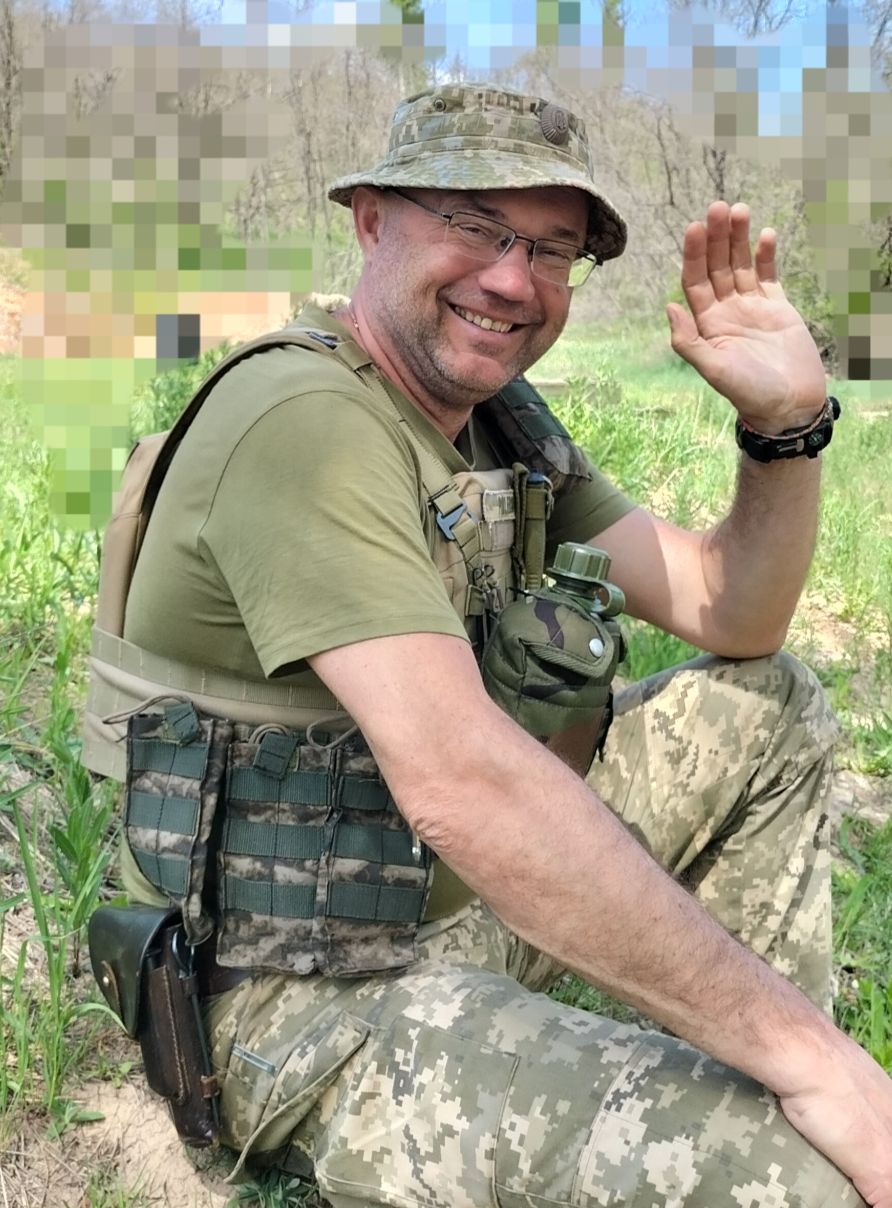
My military specialty was first a rifleman, then a machine gunner (PKM machine gun), then a squad leader, and I was already discharged as a senior combat medic, and I took courses. At the same time, I was dealing with these issues that the then-commander offered me when I first arrived. I was also actually acting as a deputy company commander for moral and psychological support at the time.
Although none of me had the duties of a machine gunner at that time, or a squad leader, or anything else. Here in the army, there is a feature that you do a lot of things. Not necessarily those that your position requires.
The front and human psychology
K.G.: By the way, this is an extremely important question. I know that you have had more than one, let’s say, stressful situation. In particular, you were once contused. How do you deal with stress and emergencies psychologically at the front?
S.G.: There is a whole methodology for doing this, but a lot depends on the team, a lot depends on your mood, your motivation. There are people who, no matter what happens to them, always remain optimistic. I try to do the same, because there is no other way. You always have to be positive, despite various difficulties.
By the way, it was very difficult for me to get used to being a subordinate, because I have always been either a free man or a superior. In fact, during my first combat training, I was, as they say, advised and led by the hand by a guy who is my son’s age. His name is Serhiy, too. I said, “Serhiy, you can scold me, curse me, but just tell me what to do. So he explained everything to me.
And then I started explaining it to people. By the way, my son is also in the Armed Forces, he is a captain in the Armed Forces. I am now a lieutenant. Basically, it so happened that I started my service very late in life. I was 43 years old at the time. And now I’m 53, I’m already a lieutenant. This is my career. Although, I never had any aspirations or plans to build a military career. But this is how life happened.
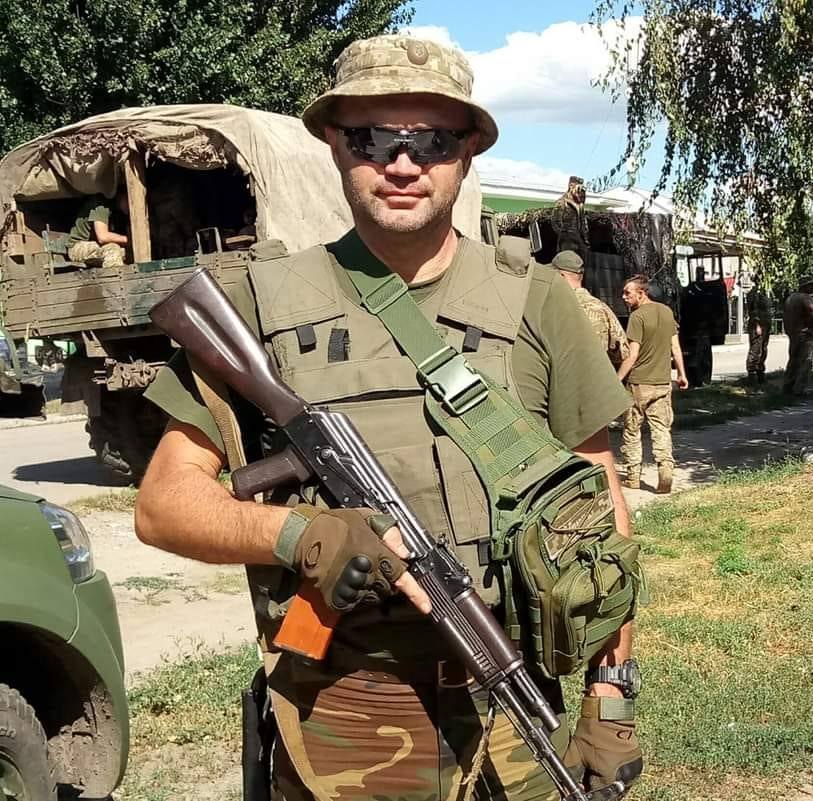
K.G.: Serhiy, how important is the factor of brotherhood, the feeling of a comrade’s shoulder at the front?
S.G.: It must be there. A lot depends on the commanders, who show by example how to do it. After all, there is a clear vertical, subordination. It is very important for a commander to be an example for his subordinates. If this is the case, then the unit shows good results, and people do not have any deviations from the military norm.
The army is not a simple matter. The armies of different countries are roughly the same in terms of people. Our army is unique now in that we have a large number of people in the Armed Forces who are non-cadre military personnel who became military because of the war. This is my situation. This is our national war.
Full-scale Russian invasion: back to the front
K.G: How did you perceive the full-scale Russian invasion of Ukraine? To what extent was it expected for you?
S.G.: I was demobilized in 2019, in the spring. I applied for the position of head of the newly created southern department of the Ukrainian Institute of National Memory. I passed the competition. And so we began our activities on decommunization, decolonization, and everything else, the results of which are still ongoing and this struggle continues. But this is another big topic.
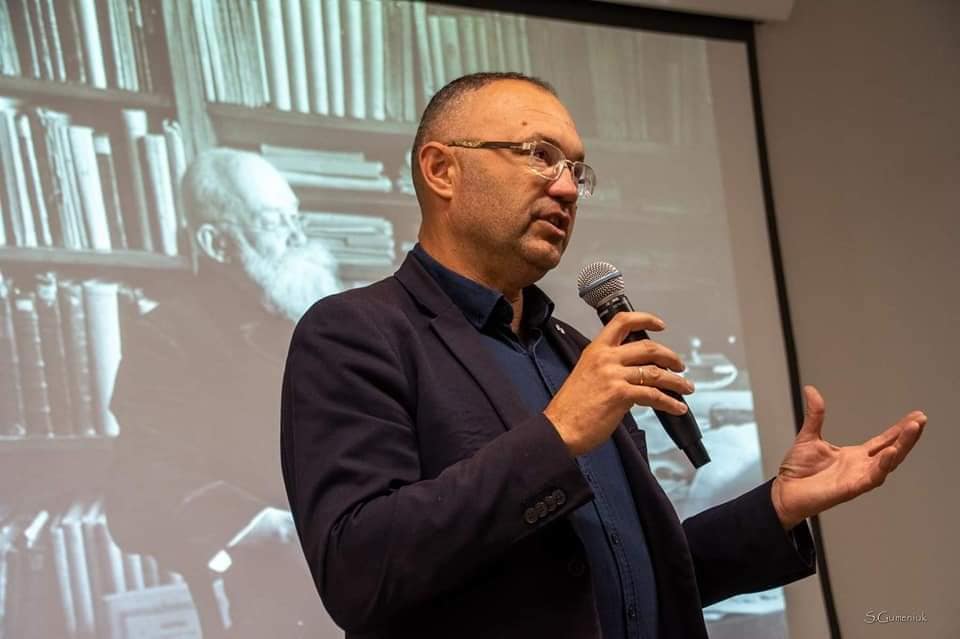
After the full-scale invasion, I was in the Armed Forces from the first day. To be honest, I expected them to attack only in the East, in Donetsk and Luhansk regions. I didn’t expect them to come from all sides. It came as a shock to me, to be honest. I didn’t expect them to have so much strength. But then these timetables showed that they didn’t have that much strength.
From the first day, I have been in various units of the Armed Forces of the Operational Command “South”. Now I am a lieutenant performing my duties as assigned. I cannot say more. It’s after the war.
K.G.: I think that’s enough. Tell us, how do people at the front perceive the peace talks?
S.G.: Well, in the circle that I communicate with the guys, everyone understands that all these negotiations with Russia are worthless, because their goal is to destroy us. That’s why everyone treats this as a stage we have to go through. I mean, let them negotiate up there, it’s their business. Since the start of the anti-terrorist operation, a very large number of people have grown up who have been living with this war all their lives. That’s why the guys are in the mood… Everyone will understand that we are in the army until our victory is achieved. Or international relations will develop in such a way that they will be forced to leave us.
Kostyantyn Grechany