

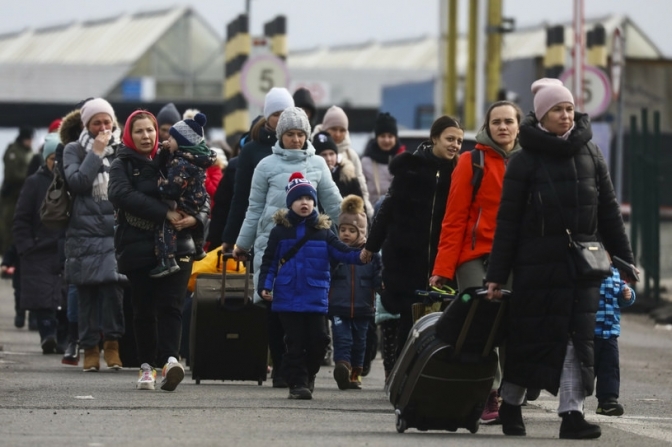
Since the large-scale Russian attack in February 2022, more than one million Ukrainians have fled to Germany. It was one of the largest refugee movements in Europe since the Second World War. Unlike in previous crises, the European Union reacted quickly and cohesively to at least this aspect of the war: On March 4, 2022, the so-called Mass Influx Directive came into force, which was implemented in Germany through §24 of the Residence Act. This paragraph granted immediate protection to Ukrainian refugees – without a lengthy asylum procedure, with access to the labor market, social welfare, language courses and medical care. For many, this finally meant some stability in the midst of a shattered life.
According to the Federal Office for Migration and Refugees, there were around 1.1 million Ukrainian refugees living in Germany at the end of 2024, around 850,000 of whom had protection status under Section 24. Many of them are women with children, elderly people or people with health problems. The §24 status has been extended several times – most recently until March 4, 2025. A further extension until March 2026 is currently being discussed politically, but it is already clear that this does not mean a permanent right to stay.
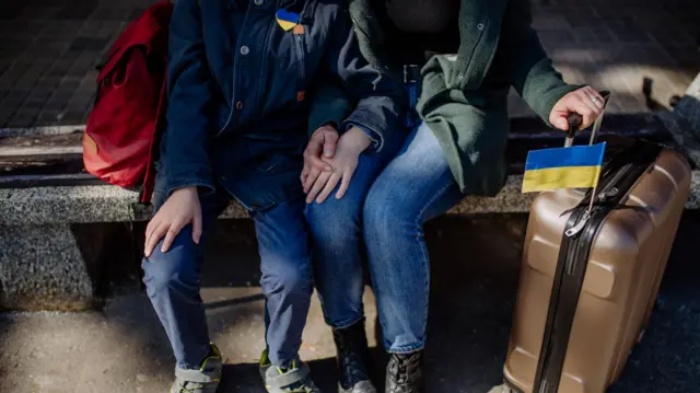
Ukrainians must therefore look for alternatives in good time. The right of residence provides for transitions to other residence titles – for example by taking up employment, training or family ties. In practice, however, this change is often associated with bureaucratic hurdles, ambiguities and high requirements. For single parents or older people in particular, such a transition is almost impossible to achieve.
The Ukrainian government is monitoring developments closely. In several statements, including from the Ministry of Foreign Affairs and the Ministry of Reintegration, Germany was thanked for its willingness to take in refugees – but at the same time appealed not to end the protection status prematurely. In September 2024, a Ukrainian delegation in Berlin called for long-term prospects for refugees, especially for families with school-age children. President Zelenskyy himself spoke in the EU Parliament of Europe’s “shared responsibility for those who have been uprooted by Putin’s war”.
The reason for such a position is understandable. Ukraine is missing its citizens – and not just for purely fiscal or economic reasons. In the first months of the war, many women left the country with their children – a perfectly understandable decision. But now, in the fourth year of the war, many of these children are becoming more and more integrated in their new countries. The chance that they will return at some point becomes smaller with each passing month. For Ukraine, this means a postponed demographic catastrophe.
In Germany, the debate about Section 24 is increasingly part of a broader migration policy discussion. The Greens and parts of the SPD have consistently advocated a generous extension of protection status beyond 2026.
Integration has been successful – now we also need legal certainty, – said Filiz Polat (Greens), migration policy spokesperson for her parliamentary group.
SPD interior politician Helge Lindh also spoke out in favor of “permanent residence prospects for well-integrated Ukrainians”.
Parts of the FDP and the CDU/CSU take a different view. In spring 2025, CDU Secretary General Carsten Linnemann called for a “return strategy for Ukrainians as soon as the situation in the country allows”. Interior Minister Nancy Faeser was also cautious: “The protection is intended to be temporary – everything else depends on the security situation in Ukraine”. The CDU’s position is not Ukraine-sceptical, but rather based on general scepticism towards socially subsidized migration movements. Since the German labor market – in contrast to the labor markets of neighboring Poland or the Netherlands – is rather hostile to immigrants, Ukrainians living in Germany are more often dependent on social assistance than Ukrainian refugees in other European countries. The complicated health insurance system also ends up having the effect that many parts of the population see themselves at a disadvantage compared to refugees. The conservative CDU can hardly ignore this sentiment.
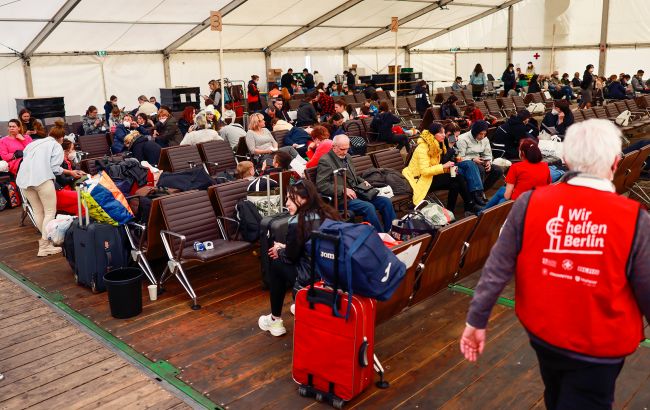
However, an abrupt end to protection status would have far-reaching consequences. Although some refugees have returned to Ukraine since 2022, according to a survey by the Federal Institute for Population Research, around 44% of Ukrainians living in Germany want to stay for the long term. There are many reasons for this: children are now integrated into German schools and many speak the language. Housing conditions in Ukraine are often precarious – entire cities such as Mariupol, Bakhmut or parts of Kharkiv are still destroyed. There are also security risks, especially for men of military age. Families in particular are faced with the question of where to return. In many cases, they simply no longer have a home.
While women, children and older people make up the majority of refugees, tens of thousands of Ukrainian men are also living in Germany – despite the general ban on men of military age leaving the country. Many of them were allowed to leave legally, for example as fathers of three children, students, chronically ill people or through humanitarian exceptions. However, some also entered illegally via third countries.
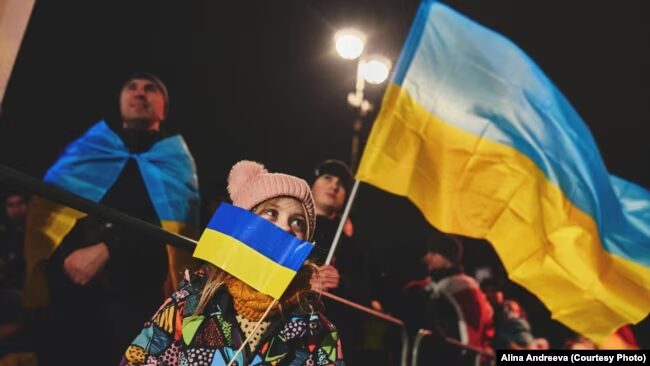
The situation is particularly dramatic for this group: A return to Ukraine could mean immediate conscription – with no opportunity to prepare for a civilian life. Although statistically speaking, military service for most means serving far from the front line or even in a non-combatant role, the psychological perception of an inevitable call-up immediately upon return is one of the most widespread fears of the men, but also of their families. At the same time, their situation in Germany is often uncertain, as they rarely have access to integration facilitation measures such as family reunification or language support. It is particularly difficult for them to obtain a regular residence permit.
In Poland, where over one million Ukrainians have also found protection, temporary protection status has already been extended until June 2026. The Polish government even announced its intention to create long-term residence opportunities for well-integrated refugees – for example, by facilitating labor migration.
The Netherlands was also open to the idea: In January 2025, the parliament passed a regulation that grants Ukrainian refugees with jobs a three-year residence perspective – regardless of how the war develops. While Germany is still debating, other countries are creating facts.
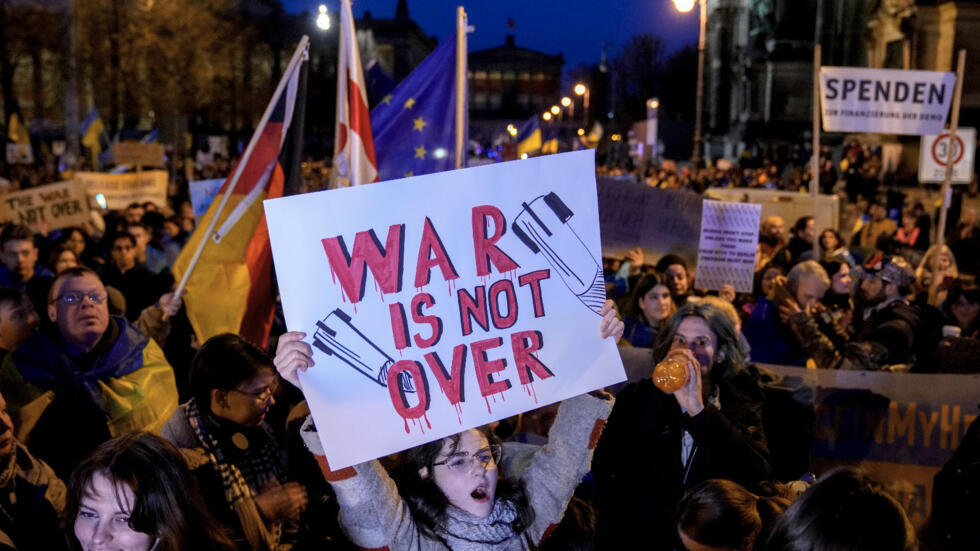
The political future of Ukrainian refugees in Germany remains uncertain. Much depends on the migration policy of the new German government under Chancellor Merz. But much also depends on the Ukrainians themselves. Will a strong, coordinated diaspora with political weight – comparable to the Jewish or Turkish community, for example – emerge from this hitherto largely fragmented community?
So far, there has been a lack of a unified voice. But the need is growing. Because only those who are visible will be heard – and only those who are heard can stay.
Sergej Sumlenny