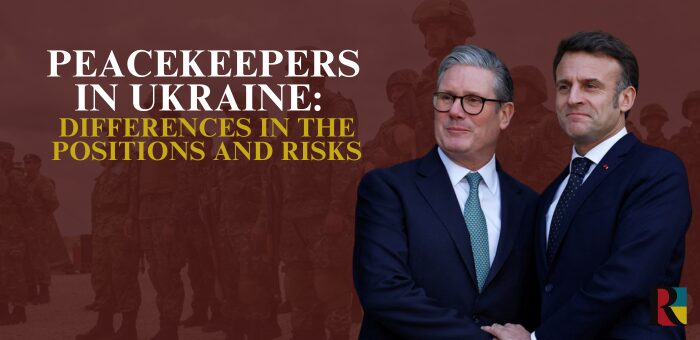


Significant intensification of the international debate on the possibility of ending Russia’s war against Ukraine (freezing the conflict, a peace agreement) has actualized the topic of the next stage – the formation of a peacekeeping contingent. However, the leading democratic countries do not currently have a consolidated position on sending their military personnel to Ukraine, while risks to the peacekeepers and civilians cannot be ruled out, and the President of Ukraine has proposed a compromise.
The history of the issue
French President Emmanuel Macron was the first Western leader to voice the possibility of sending Western troops to Ukraine. However, at the time, it was not about peacekeepers, but about conventional ground forces. Sending Western troops to Ukraine is “not excluded” in the future, the French leader said in late February 2024 in Paris, where more than 20 European heads of state and government gathered to demonstrate their support for Ukraine. At that time, Russian troops had already captured a strong Ukrainian defense area around Avdiivka, the city itself, and launched an offensive in the Pokrovsk direction.
French President Emmanuel Macron:
We will do everything necessary to prevent Russia from winning this war, – said the French president. – Today, there is no consensus on sending troops on the ground in an official, approved manner. But in terms of dynamics, nothing can be ruled out.
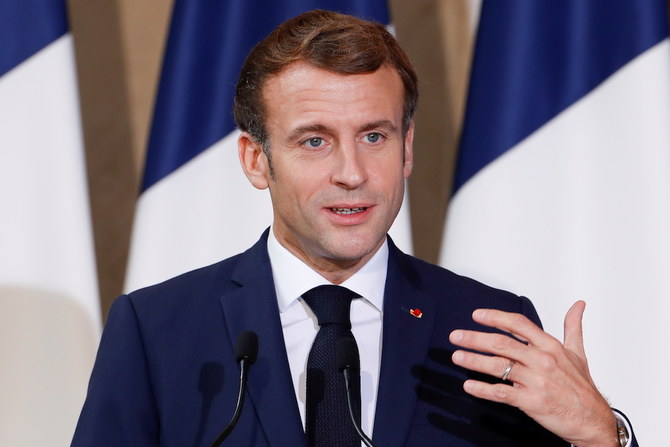
However, Macron refused to provide details of which countries are considering sending troops, saying that he wanted to maintain a certain “strategic uncertainty.”
The only consensus that European leaders managed to reach in Paris a year ago was on the need to increase military assistance to Ukraine with ammunition and military equipment.
Positions of the leading countries
Conversations, comments, official negotiations, and consultations on the possible deployment of a peacekeeping mission to Ukraine intensified sharply, primarily in Europe, in the second half of December 2024. It was already clear then that US President-elect Donald Trump would put pressure on both Russia and Ukraine to “end the war as soon as possible.” At least to fulfill one of his main foreign policy promises.
On December 17, 2024, at a meeting of the leaders of the Joint Expeditionary Force (JEF) in Tallinn, they discussed the possibility of a peacekeeping operation in Ukraine. Estonian Defense Minister Hanno Pevkur emphasized:
Even before peace comes, it must be made clear that no option can be ruled out.
According to him, the West should help Ukraine guarantee peace as long as Ukraine is not a NATO member.
Months later, on January 15, the British newspaper The Telegraph reported that French President Emmanuel Macron and British Prime Minister Keir Starmer discussed sending their soldiers to Ukraine as peacekeeping forces after any potential agreement to end the war. It is noted that Macron supports this idea and has already spoken about it with Ukrainian President Volodymyr Zelenskyy and Polish Prime Minister Donald Tusk.
Downing Street and Elysee Palace spokespeople also did not deny that Starmer and Macron had discussed this possibility. Officials in London and Paris keep the details of the conversations secret. One of the sources among British officials told The Telegraph:
There are issues about what we could support, what we would like to support, and the wider question of the threat that those troops might be exposed to and whether that is an escalation.
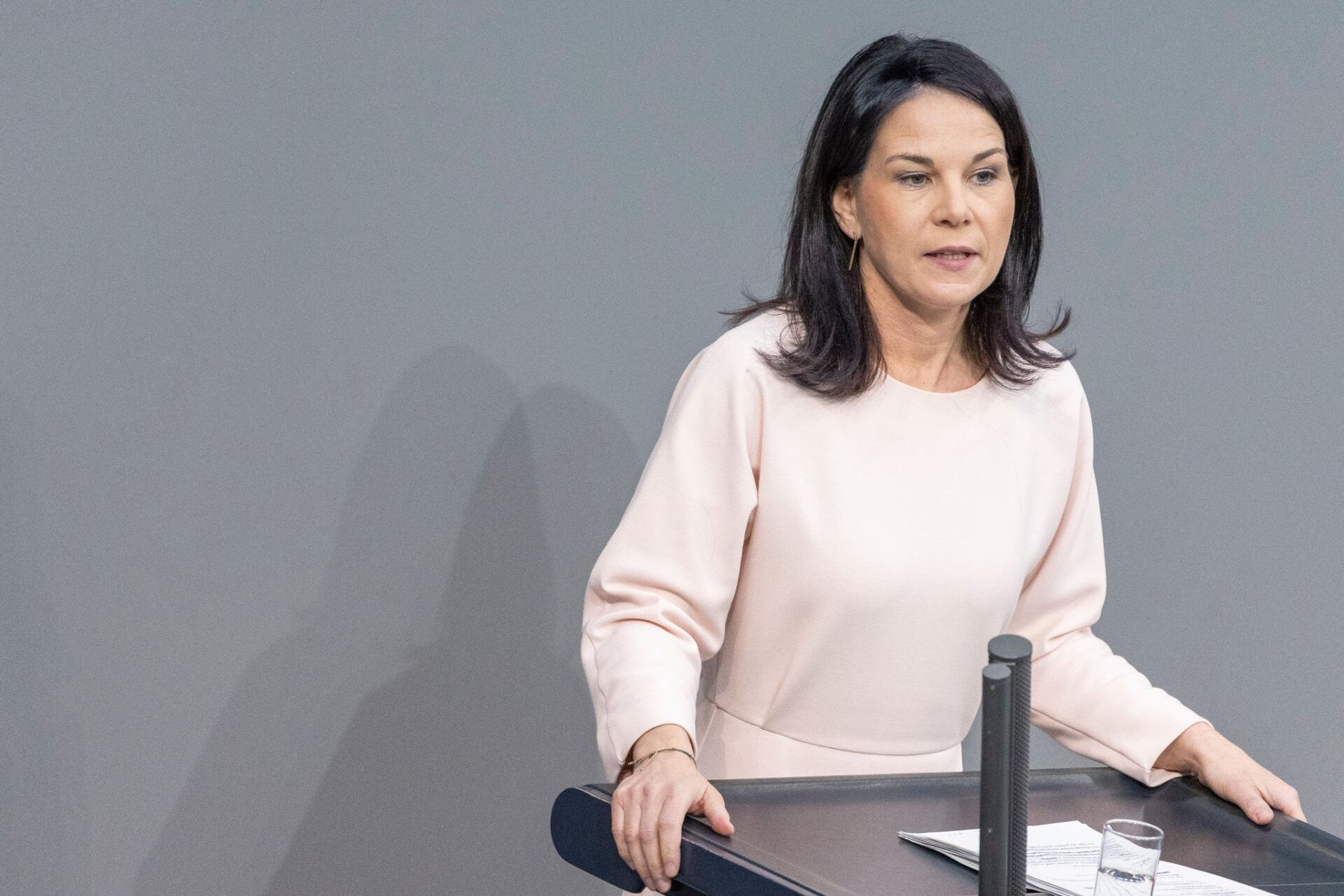
The German Foreign Minister did not rule out the participation of German representatives in the peacekeeping mission. Annalena Baerbock believes that a peacekeeping mission in Ukraine should consist of both Europeans and representatives of other regions.
A peacekeeping mission can also be an element of this, of course, it requires the participation of us, Europeans, as well as others. We know that the more international commitments there are, the more stable peacekeeping missions are. At the same time, they should come from countries outside of Europe, with which Putin is interested in good relations. In this sense, our involvement on other continents, whether in the field of development or security policy, is very important.
But a radically different position was voiced by a representative of a leading global security player. U.S. Secretary of Defense Pete Hagel said that his country would not participate in the peacekeeping mission: “We are not sending American troops to Ukraine”. This position greatly complicates the creation of a peacekeeping contingent, because the United States has the largest military resources, and many countries around the world are guided by its position.
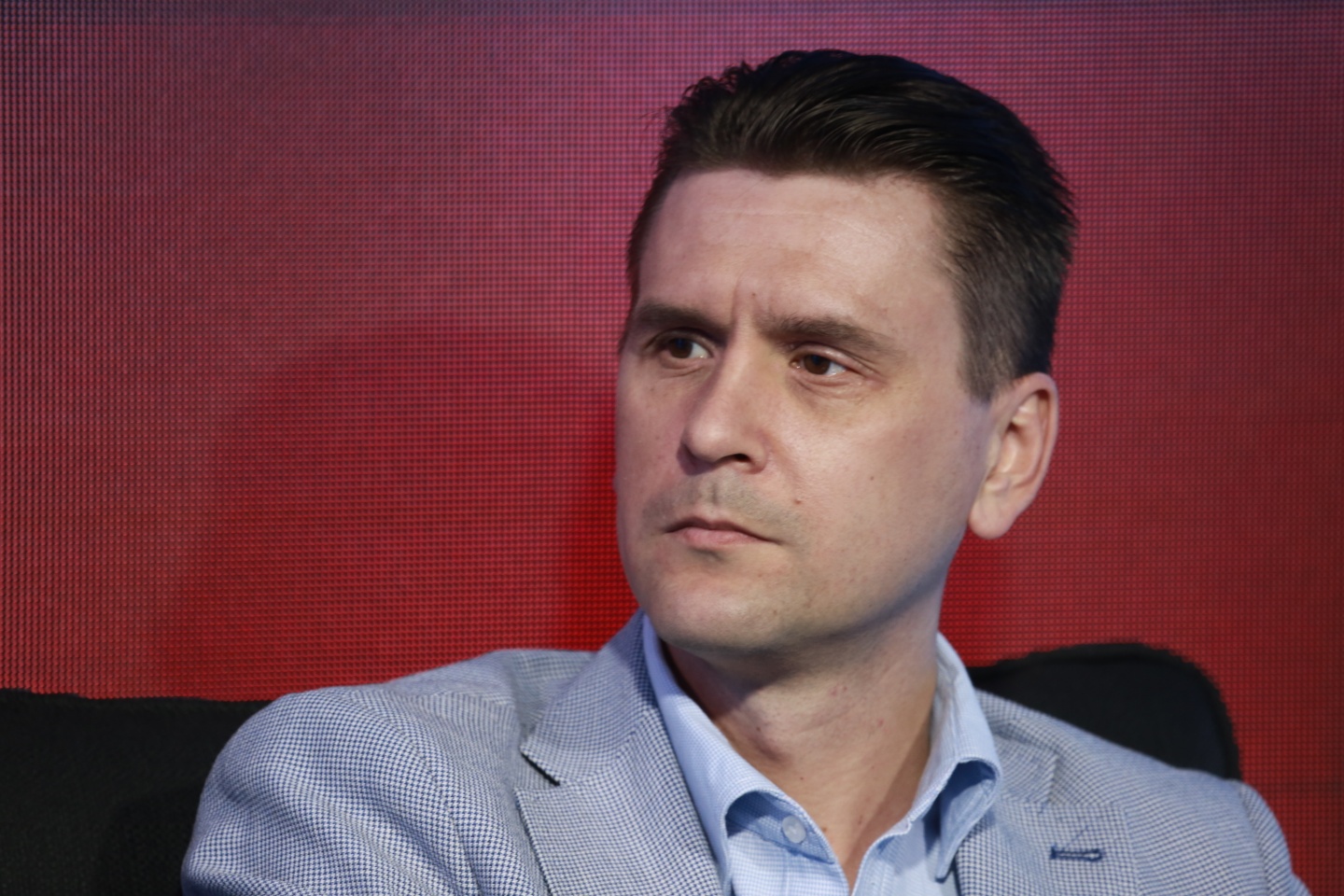
Oleksandr Kovalenko, a Ukrainian military and political expert, writer, and columnist for the Information Resistance group, emphasizes the enormous challenges and difficulties of a peacekeeping mission of any format and under any mandate.
The combat line on the territory of Ukraine is more than 1,200 kilometers long. Not a single peacekeeping mission, for example, within the framework of the UN or with the support of NATO, has ever faced such a problem. This is the biggest problem in the history of any peacekeeping mission. It requires a very special approach to defining the mission’s functionality, both in terms of numbers and powers… The Russians will still be shelling. And the powers and capabilities of the peacekeepers will be limited. That is, if the Russians kill representatives of the peacekeeping mission – French, German or British – Article 5 of NATO’s collective security will not automatically be triggered.
Risk to peacekeepers and civilians
There is also no answer yet to whether a foreign contingent could be deployed under a NATO or UN mandate. However, Moscow was quick to state through its permanent representative to the UN that any peacekeeping force deployed to Ukraine without a UN Security Council mandate would be considered “legitimate targets.”
The deployment of peacekeepers requires security guarantees, and some countries are already ready to provide their peacekeepers, Volodymyr Zelenskyy emphasized during a conversation with journalists at the Munich Conference.
But the security of not only the professional military of the partner countries but also of Ukrainians living near the possible demarcation line cannot be neglected. Especially when the Russian army, notorious for war crimes, provocations, and violations of any agreements, will be on the other side of this line.
We must not forget the tragic events in Srebrenica, when the UN peacekeeping mission failed to protect civilians from genocide during the war in Bosnia and Herzegovina. In July 1995, Bosnian Serb units attacked the city of Srebrenica, which had a majority Bosnian Muslim population and had been previously declared a safe zone by the UN Security Council. During the storming of the city, some representatives of the UN peacekeeping mission retreated, leaving their observation positions, while others were imprisoned by the Serbs. After the capture of the settlement, Bosnian Serbs massacred about 8,000 Bosnian Muslim men and boys. The Hague Tribunal for the former Yugoslavia recognized these events as genocide.
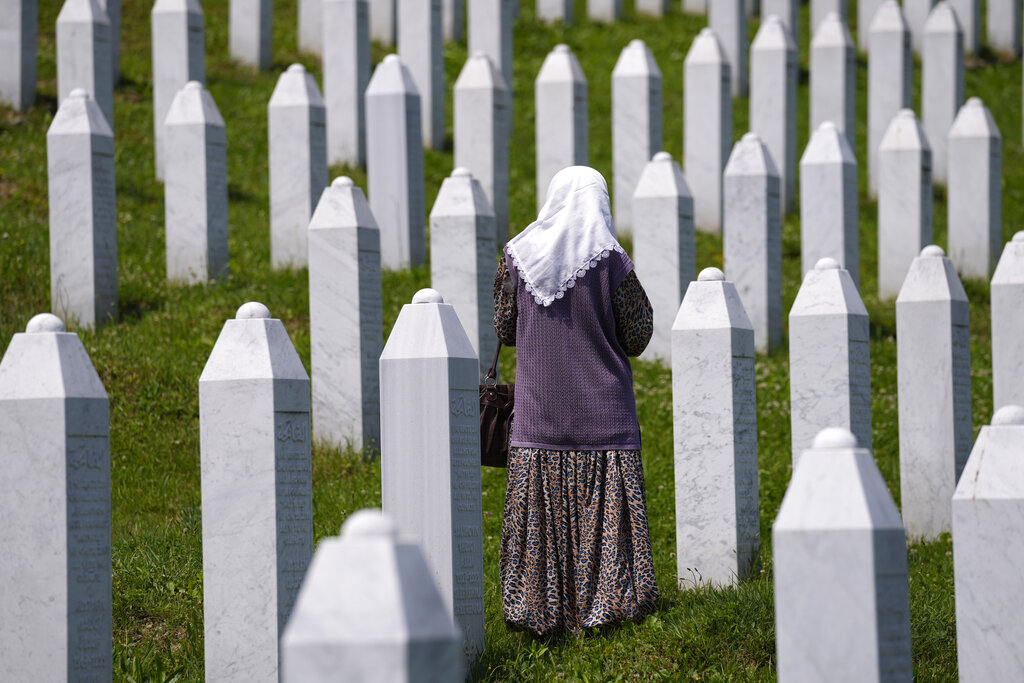
By the way, about two thousand Serbs stormed Srebrenica and the surrounding area. In Ukraine, Russia has concentrated a group of 70,000 occupants in the Pokrovsk direction alone.
Foreign peacekeepers will not be able to solve the scope of tasks that the Ukrainian Defense Forces are solving. They will not take it on. Therefore, there will be maximum risks for the civilian population. These risks, in particular, will be associated with the propaganda line of the Russian Federation itself, which will strike at civilian objects and blame Ukraine for it. We have seen this repeatedly during the Minsk agreements. Also, the Russians can, for their part, conduct attacks on civilian objects in the occupied territories to blame Ukraine and reduce international support. Such discrediting took place regularly from 2014 to 2022, – said Oleksandr Kovalenko.
Are the Armed Forces the best peacekeepers?
To reliably defend Ukraine and resist a potential Russian invasion in the future, our country needs to have a one-and-a-half million-strong army. This opinion was expressed by Volodymyr Zelenskyy during the Strategic Investment: The Future of U.S.-Ukraine Security Cooperation.
Security guarantees should come from the US and Europe together. If we consider the contingents as part of the security guarantees for Ukraine… It doesn’t matter from which country these forces come, in any case, we need 1.5 million troops if we are not in NATO. If we want to not be afraid of a new occupation or a new Russian invasion. And these are real security guarantees. If Putin knows that he has a 1.5 million army and Ukraine has an army of 1.5 million people. If he wants to come and die, he’s welcome…
Former Ukrainian Foreign Minister Dmytro Kuleba believes that instead of spending money on a peacekeeping mission, partners should provide the Ukrainian Armed Forces with weapons.
My position here is very simple: those countries that complain that they do not have money to support Ukraine, but are ready to throw away tens of billions of dollars and euros on a peacekeeping contingent, better give part of that money to Ukraine, and invest part of it in their own weapons production and for this money give all the necessary weapons to our Armed Forces so that they can beat the enemy on the ground. This will be a more efficient use of this resource.
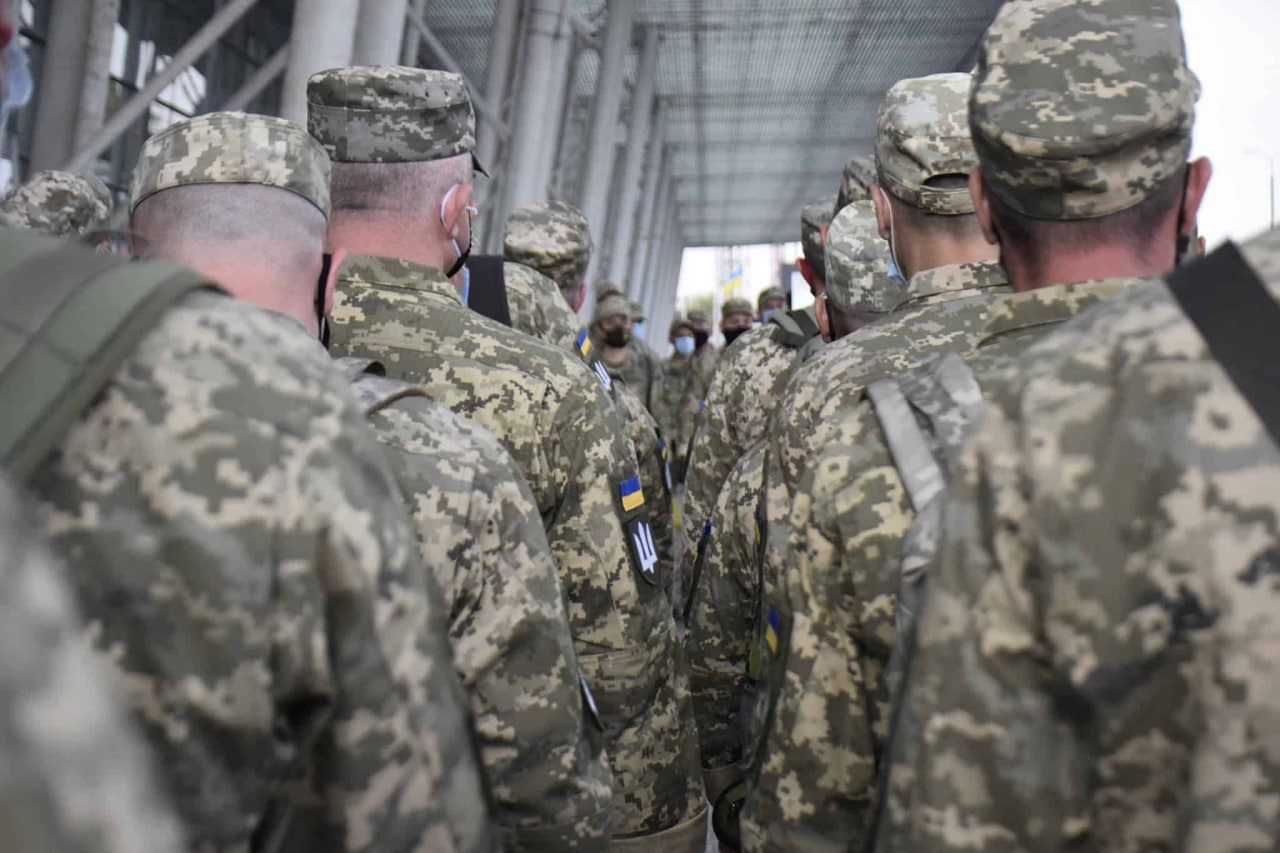
However, not only the expansion of the army, but also additional mobilization of society and intensification of information work are necessary if Ukraine wants to survive this war, Oleksandr Kovalenko is convinced.
We not only need an army of 1.5 million, we need to mobilize society… We need to prepare citizens for the fact that tomorrow each of them may have to defend the country, that is, basic training of citizens in basic weapons skills, both men and women, according to the Israeli concept, and the involvement of civilian structures in supporting the military. A completely different approach is needed to inform the population about the responsibilities of a civilian citizen and how a civilian can help the army.
In conclusion, it is worth noting that the Ukrainian state has extensive experience in peacekeeping. Since 1992, Ukraine has been actively involved in more than 20 peacekeeping operations of the UN, NATO, OSCE, and other international organizations. In early 2000, Ukraine was among the top ten countries in the world in terms of the number of peacekeepers. This not only increased the prestige of the state on the world stage, but also provided significant revenues to the state budget. In addition, the military personnel involved in the missions received decent pay, had the opportunity to improve their training and interact with colleagues from other countries.
In the spring of 2022, in connection with the outbreak of Russia’s full-scale aggression, the President of Ukraine issued a decree recalling Ukrainian peacekeepers from around the world to protect the Ukrainian state. Unfortunately, during the war with the Russian occupiers, Ukraine did not receive significant assistance from NATO, the most powerful military bloc, in whose peacekeeping missions the country has repeatedly participated. Only some NATO member states provide military and financial assistance to Ukraine on their initiative.
Petro Chumakov