

Dovydas Vitkauskas’ various consultant roles in Ukraine include a Team Leader of a number of EU-funded governance and rule of law reform projects since 2016. During that time, he has also been acting as advisor to two consecutive administrations of the President of Ukraine. He shared his thoughts with The Ukrainian Review on the situation with rare earth minerals, which is currently the subject of a geopolitical game between the United States and Ukraine.
Artem Kasparian: US government is moving away from the position of “donor” to that of Ukraine’s “co-owner”, tapping into the country’s rich mineral resources worth trillions of dollars …
Dovydas Vitkauskas: The idea for pawning Ukraine’s rare earths in fact came from Zelenskyy’s Office, when it first pitched it to the then candidate Trump in September 2024. The new Trump Administration is now proposing a “return” version, which suggests collateralising Ukraine’s untapped rare minerals and oil-gas reserves, in order to get a “USD 500 billion payback” back to the US for the assistance already given or planned. If the Trump Administration is aiming at political marketing, this seems a rather logical idea, because the US support to Ukraine could now be sold to a wider US electorate as “beneficial” to the American taxpayer. These benefits might, however, remain merely illusory in practice.
A.K.: What are the main obstacles for such a deal?

D.V.: First of all, the subject matter of the proposed agreement are “rare earths” of Ukraine, which are actually not so rare. Nor is there a scarcity of these commodities in the World that only Ukraine can fulfil. Many countries from Asia to Africa have the same potential, in some cases – in a more accessible state. Ukraine’s oil and gas reserves have been proven not be extraordinarily huge, merely satisfying local consumption needs. Chevron of US pulled out from the shale gas extraction more than a decade ago. There is no independent or comprehensive expert analysis of a real financial value of various rare metals in Ukraine. One can only rely on the validity of official calculations of the Ukrainian government. But the practice shows that various political, logistical, technological and market risks might soon make these estimates of potential “trillions” evaporate, especially after one takes into equation the political instability, legal uncertainty, corruption and, most importantly, financial and business management risks at extraction.
A.K.: The proposed agreement gives the US a “50% share” in proceeds from all the exploration and licensing to third parties …
D.V.: Creating realistic exercisable options of foreign ownership for billions of dollars worth of untapped raw materials abroad is not a legal text of the same complexity as, say, a contract for selling a piece of real estate in New York. Agreements between sovereign powers are usually written in the form of treaties, which have to be domesticated through various additional political, bureaucratic and judicial mechanisms – frequently supplemented with numerous executive rules and regulations – if they are expected to have enforceable effect in domestic law of either US or Ukraine. Especially where, as here, the scope and extent of that legal effect would depend on a multitude of factors, such as respecting the existing competing rules – from export to national security statutes, from ecological standards to shareholder protection. One cannot override these established legal frameworks simply by saying “New York law will apply”. Enforcement, even in case of theoretical legal effect, is another matter altogether. Ukraine has endemic problems with non-enforcement, including poor implementation of arbitration awards, and, most notably, decisions of foreign courts. If any dispute arises over a real US “50% share” at implementation, the ultimate decision to comply will remain, by an large, in the discretion of the Ukrainian – not US – political, executive and judicial authorities. As the matters stand, even if signed, such an agreement would remain purely declaratory in nature.
A.K.: Surely the US has the experience of doing similar complex deals pawning strategic natural resources abroad?
D.V.: The US government and the eventual private investors would still needs one of the two types of basic risk assurance of future compliance by the other party – either by way of the rule of interest (for example, in dealing with a personally interested leader in an autocratic state), or, alternatively, by using the rule of law with clear and foreseeable property rights. For better and for worse, Ukraine can provide neither of those types of risk assurance …
A.K.: The agreement intends to create a “joint investment fund” between US and Ukraine to manage the implementation and ensure that revenues are properly collected …
D.V.: Some risks for this type of agreement would arise “top down” from the aforementioned formal statutory or jurisprudential obstacles. But most significant risks would come from the “bottom up” – owing to the inherent Ukrainian culture of handling the State property and natural resources. I assume the joint investment “Fund” contemplated here would be, at best, an operational project office designing tenders. However, “the Fund” would still rely heavily on feasibility studies, analytical reports and other paperwork submitted by the Ukrainian government and private contractors. Furthermore, adequate Ukrainian government and business participation would be essential for any tender or licensing process to bare results. It looks like this whole agreement has been designed on two assumptions – first, that Ukraine has a system to maximise the benefit in handing the State property and natural resources; second, that Ukraine has a practice in place for respecting foreign ownership interests in doing so. Both assumptions are unfortunately false.
A.K.: Tendering processes for devolving the State property have improved over the years?
D.V.: Indeed, process has improved, not the result. Owing to the Soviet traditions, tenders and procurements are frequently designed to dump, rather than maximise, the value of a government asset, while at the same time excluding genuine competition. Last year the Ukrainian government struggled in significantly smaller tasks, for instance, by putting for privatisation a few ports in the Danube and Dniester deltas for relatively small amounts – in the region of USD 5 million each. A few tender announcements were either delayed or in some cases quashed, because no investor wanted to buy a cat in the sack. Foreigners cannot own land in Ukraine. There is no consolidated system of a building permit for deepening the port basin. Any port infrastructure is not even listed on the relevant land or real property registers. These are just a few practical issues persisting from the potential investor perspective on the question of: what was really for sale there? At the end of the day, only a local Ukrainian investor could reasonably navigate and undertake all those risks, and only by paying a “below ask” price.
A.K.: Ukraine is also privatising many State-owned enterprises (SOEs) right now …
D.V.: Yes, but only when they are dying. The whole logic of privatisation has been turned upside down since the early 1990s. The role of SOEs in Ukraine’s economy is disproportionate by number. Despite a few stages of privatisation over the years, Ukraine has always had an exorbitant amount of State-controlled companies – currently more than 3,000 at the central government control level, or 17,000 if including municipal ones. More than 1,000 SOEs are now in the hands of the State Property Fund, which acts as a sort of hybrid between a business graveyard and garage sale. Most valuable assets are being stripped for a fraction of the market cost. Financial health of the living SOEs also continues to suffer, before and after the active phase of the war. Take Energoatom, for example, an operator of nuclear plants, which is the biggest corporate loss-maker in the country. Energoatom recorded hundreds of million of USD in losses in all 3 recent years, despite the fact that the electricity price, and thus its income, were constantly on the rise. The statutory licence to Energoatom and other major SOEs to burn debt notices – or so called ‘moratoria” – have not helped either. The problems of quality of corporate governance at SOEs have not been tackled, in essence. Since the Soviet times, SOEs are still considered as “milk-cows” for the political power to cover unrelated social obligations or other government shortcomings in financial planning and execution. The “informal KPIs” for SOEs have traditionally been designed to benefit the SOE management, the so-called “red directors”, and their friendly contractors who make supplies at inflated prices – but not necessarily the clients, other partners or the general public. Unless some tectonic domestic political shifts take place, the management of Ukraine’s strategic natural resources will remain in the hands of SOEs. And if so, those SOEs will likely be continuing to post losses every year, as they have done in the past. What will be the use of such a mode of operation for the US?
A.K.: But Ukraine also has successful private enterprises in the commodities sector …
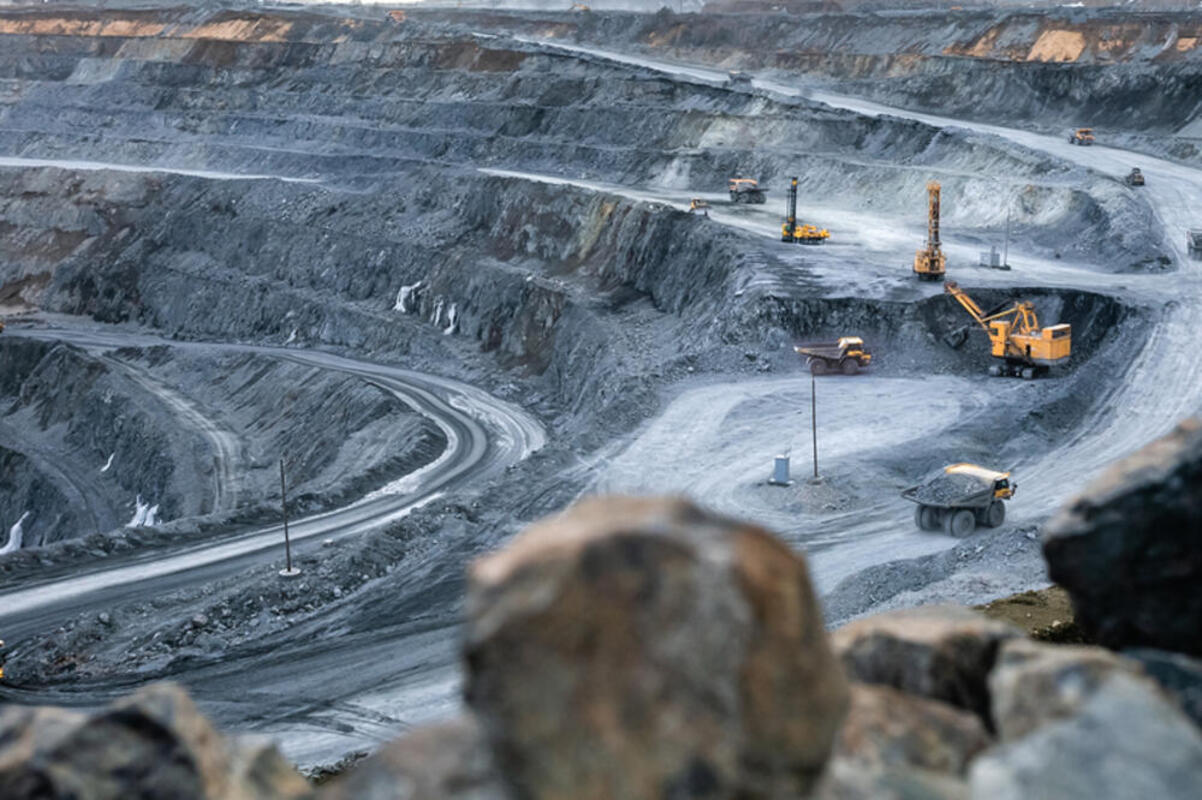
D.V.: Good point, but only proving my argument. Ukraine is already a very successful exporter worldwide – but most notably, only in the agricultural sector. Ukraine ranks in top 5 as the World’s leading exporter of many agricultural commodities. One should ask why the country has already been so successful in agro, but not in the mining and export of rare metals or minerals? Were the Ukrainian and foreign commodity businessmen not smart enough to lobby the opening of all the mining and export mechanisms some 30 or, at least, 20 years ago? And if it didn’t work out then, why can it realistically be expected to go smoothly now?
A.K.: Maybe the war is the reason for a more drastic policy approach to attract private investment, including from abroad?
D.V.: A country can hardly be more attractive because of the war. It is devastated, necessitating higher capital costs than usual. The expected receipts from Ukraine’s rare earths would not flow from a magic pinada. It would necessitate significant investment. But foreign governments do not invest. They give away in the form of grants, subsidies, loans and other financial instruments. Investment must come from private sources motivated by the interest to earn money in a new destination, and willing to take the risk to lose it. In this respect, the US will have to create financial incentives for private American investors to come to Ukraine. This will cost the American taxpayer. The American companies will in turn have to invest in order to participate in tenders, apply for licences, conduct the extraction, develop logistics routes and distribution networks. Will these investments be worth the risk? Just ask Chevron. Or look at the macro picture: Ukraine has never in its modern history surpassed the benchmark of at least 20% of GDP made up of investment. Ukraine’s investment to GDP ratio in the last 5 years has been lingering between 12% to 17%. So – war or no war – money flowing into the future of the country has always been scarce. This likely attests the constant leaking of the potential investment from Ukraine to various jurisdictions abroad. It results in the “getting-by economy”, which does not do enough to build foundations for profitable new and competitive industries, or generate added value in the future.
A.K.: Which foreigners have invested most?
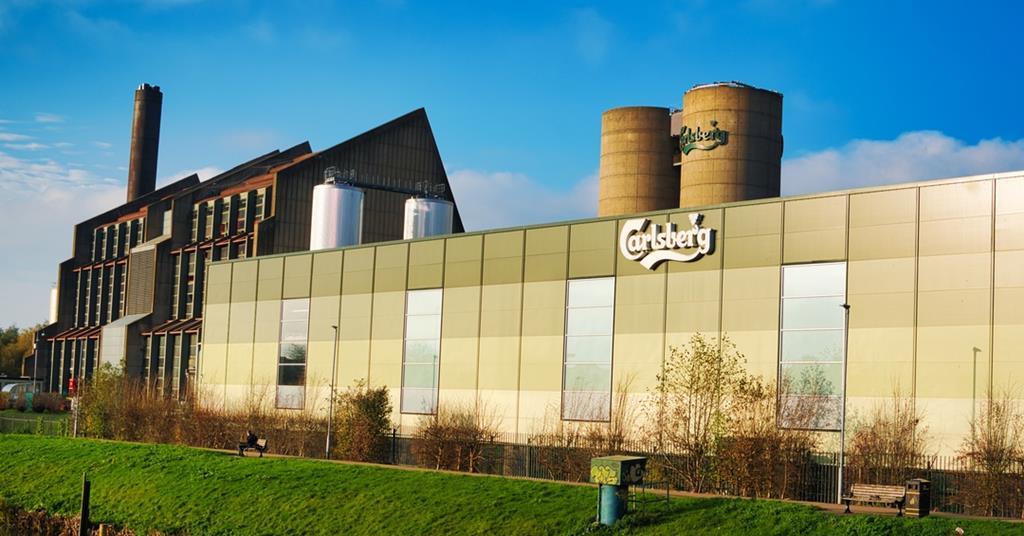
D.V.: Foreign direct investment (FDI) has been a fraction of the overall investment pie. Especially so, if we do not count various Cyprus or Netherlands-based holding or trust structures, which remain prevalent investment vehicles in Ukraine, with the rationale of creating a corporate veil over the real origin of money and the identity of beneficial owners, which in many cases are local. The best years for foreign investment in Ukraine – to the tune of some USD 10 billion annually – predate the Financial Crisis of 2008-2009. Much less since then. The FDI in Ukraine stood at some USD 3.2 billion in 2024. It was in fact higher (USD 4.2 billion) the year prior, in 2023, despite the war. Currently, foreign investment coming to Ukraine is arriving from the already established players, who are reinvesting their revenues into infrastructure improvements. The biggest foreign investors during the wartime period in 2022–2024 were: the Russian-owned (now sanctioned) telecom Kyivstar (USD 300 million), the Indian steel producer Arcelor-Mittal (USD 250 million), and the Turkish telecom Turkcell (USD 180 million). But this top 3 is an exception rather than the rule – otherwise, the scale of recent foreign investment is much lower. The fourth biggest foreign wartime investor, the Danish beer maker Carlsberg, invested USD 45 million. The food producer Nestle of Switzerland put up with a similar amount. The biggest wartime investor title in Ukraine belongs to the local oligarch Rinat Akhmetov, whose electricity trader DTEK invested about USD 800 million, and the steel producer Metinvest put up some USD 600 million during 2022-2024.
A.K.: Is corruption the main factor discouraging foreign investment in Ukraine?
D.V.: No. The main underlying factor is the local business culture, which remains very short-termist and competition-averse. Corruption is a symptom and tool, enabling the local State and private monopolies and their very ad hoc approach to partnerships with foreigners. There have been 4 distinct periods in the modern Ukrainian history when foreign investment was disparaged directly by action of the Ukrainian political and business elites. The US government and business should be very attentive in studying those historical lessons. The first epoch came in the early 1990s, when no genuine opportunities were created for foreign capital to benefit from the privatisation schemes of various State-owned industrial and commodity enterprises, which eventually found their new local owners. Many of them were the aforementioned “red directors”, Soviet-style CEOs with excellent political connections. The exodus of foreign money was exacerbated at the turn of the millennium, when Ukrainian business partners were systemically squeezing out foreign shareholders by issuing new shares, changing corporate governance structures in absentia, fabricating the business register data etc. At that point, the consolidation of business in the key sectors such as energy and agriculture became almost complete in the hands of local oligarchs. Notably, only Russian-owned businesses in Ukraine stood out as resilient, in view of the stamina of Russian investors for risk, and a similar understanding of the business culture.
A.K.: Then the Financial Crisis came …
D.V.: Indeed. The next stage in the squeeze of foreign capital came around 2008-2009, when the Ukrainian authorities succumbed to the local lobbying to re-denominate loans of Ukrainian debtors in the local currency, hryvna (UAH) – despite the fact that they had been issued in USD or EUR. That was a stab in the heart to foreign creditors, who had to assume full costs of the subsequent devaluation of hryvna. More recently, some foreign (including non Russian) investors became collateral damage in view of the Ukrainian sanction lists, which now include more than 15,000 private and legal persons. Interestingly, the Ukrainian sanction lists are almost 10 times larger than those in EU or US. And, unlike in the West, Ukrainian sanctions have given rise to outright expropriations of Ukrainian companies and other assets from the sanctioned owners.
A.K.: Why did the Ukrainian courts or law enforcement do nothing in view of discrimination against foreign business?
D.V.: It is very naive to think that the justice institutions are supposed to act independently. They are very sensitive to pressure from the local political and business elites in any country, including Ukraine. Courts and prosecution are paper monsters, as long as there is no genuine demand by the ruling political and business elites for an independent arbiter of equal rules of the game. As long as a country has no sufficient competition in its political system and each of its sectors of the economy, there is no source where this genuine demand for an independent arbiter can come from. As a result, justice institutions act mostly as rubber-stamping organs to formalise the interests of those with more powerful connections. The Ukrainian political and business elites have for years made a lot of public declarations, but no genuine demand for an independent judiciary or law enforcement. Each time a significant legal problem arises, the elites tend to settle matters by way of backroom deals with each other, not by relying on transparent judicial process. As a result, there is nobody to set equal rules of the game – either with respect to property rights, investor protection, or any other area of the legal system. Interests coming from greater power, not rules, tend to prevail in this environment. Building competition in each sector is a keyword here, and the rule of law will follow. Not vice versa. And it will take a long time. Unfortunately, these basic decision-making drivers have not been fully understood by the US and other Western donors in charge of designing a reform path for Ukraine or other developing countries. The donors are frequently satisfied with building and nurturing paper institutions, not real justice.
A.K.: Are there deeper cultural factors involved in the distrust of foreign influence in Ukraine?
D.V.: For centuries, Ukraine has been ravaged by foreigners, running the country according to their different customs. A certain “poetic justice” can be understood even today, in ensuring that a local Ukrainian interest should prevail. However, the non-competitive political and economic environment described above is damaging not only to foreign investment, but most of all, to local small and medium business of Ukraine. In a globalised 21st century economy, one needs proper partnerships in defence, security, trade and investment more than ever. And long-term partnerships cannot exist without the same rules of the game for everybody. However, elements of rising economic nationalism appear unavoidable in modern politics, including in Ukraine. Just a few weeks ago one local political old-timer was advocating abolishing the market for private agricultural land, and returning all land to the hands of the “State monopoly”. Such a policy would be a huge step back, because what Ukraine needs right now is more private (including foreign) ownership, which would improve the efficiency or use of land and corporate governance standards. Allowing foreign ownership of land in new EU member states from Central and Eastern Europe in the early 2000s helped dramatically in moving towards higher corporate governance and product quality standards. Yet Ukraine was very late in allowing full-fledged privatisation of land only in 2021. Foreign investors are still unable to benefit from the scheme. One cannot escape the impression that the above Ukrainian politicians are more concerned with protecting the interests of current holders of lease of agricultural land – that is, local agro-oligarchs – rather than the benefits of simple farmers or the society in general. These emerging narratives in the Ukrainian domestic politics should be very concerning for US and other Western counterparts, because they are not only anti-foreign but also quintessentially Soviet in nature.
A.K.: But a Saudi Arabian investment fund is already an owner of 200,000 hectares of agricultural land in Ukraine?
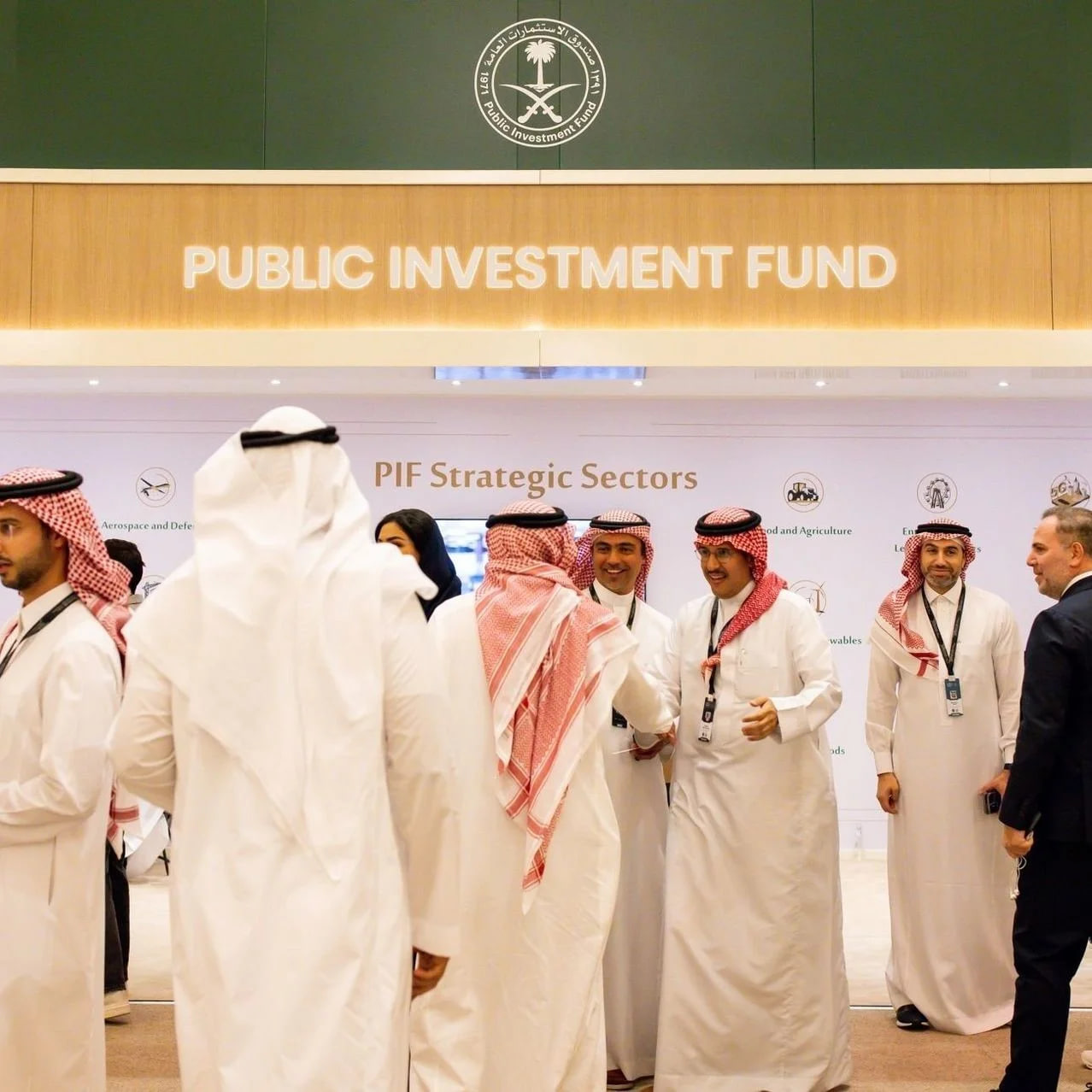
D.V.: (smiling): No, it isn’t. Even though the Saudis were genuinely thinking they were buying that land a decade ago, trusting the assurances of the Ukrainian government at the time. In fact, the Saudis have been sold rather unsafe leases of land from the domestic legal perspective, which should most likely be re-registered in line with the land statute from 2021. Financial benefits for Saudi investors from sub-lending that land to Ukrainian farming companies have also been rather meager. The US government and potential investors should definitely study that case, before venturing into much more complicated area of mining and exporting Ukrainian rare earths.
A.K.: Can the US simply invoke the “payback” clause in the proposed agreement to claim back the USD 500 billion from Ukraine?
D.V.: (smiling): It can. But what would be the outcome? The Ukrainian government would simply renege on paying that debt – as it has to various older creditors, because the country has been in selective default since 2022.
A.K.: So what are the main take-outs for the US government and prospective foreign investors in Ukraine?
D.V.: First, be very careful and attentive to detail, because the ultimate beneficiaries of the proposed deal for pawning Ukraine’s rare earths might not be the American taxpayers or investors, but rather “red directors” and other local players adept at exploiting the uncertain political, legal and business landscape in Ukraine.

Second, since Ukraine practices the system of elected democracy, the US should be aware that any deal of such nature will hold for only as long as it satisfies the prevailing national interest of Ukraine – or its perception as translated by ruling local politicians. Economic nationalism in the country is on the rise, and so is the trend to take back, not give away, the State control of natural and other economic resources.
Third, do not try to invent the wheel. Instead of chasing revenues hidden by extreme uncertainty, focus instead on those sectors where Ukraine is already very strong, such as agriculture. Renewable energy is another good opportunity, as Ukraine will need to guarantee its energy independence – take lessons from Turkish and other investors who are already active in the sector.
Fourth, the key to business success in Ukraine is not so much in flirting with the government in power. Governments change, and even they will not always be able to find adequate remedy for the lack of rule of law or clear and foreseeable property rights. Better assurances might come from finding the right private partnerships with Ukrainian business, which would not only help protect against the political or legal uncertainties, but would also give better business awareness on how to best benefit from Ukraine’s unique position.
Finally, as far as the US and other Western political pressure is concerned: stop trying to build paper institutions in Ukraine. Instead, promote competition in the political system and each sector of the economy, which will in turn generate a genuine demand from the ruling and business elites for the rule of law. Moreover, giving unaccountable money to cover for any government budget deficit is not the way forward, but rather a recipe for even greater embezzlement and corruption. Ukraine needs long term foreign commitment which comes with investment, not bureaucratic gifts. Promote a proper local banking system with private (not State-owned) commercial banks giving financial resources to business, instead of government “chinovniks”. And last, but not least, push the Ukrainian government to allow for foreign ownership of land as soon as possible – it is an essential element in DNA of a market economy that Ukraine has been lacking since its inception.
Artem Kasparian