

The Munich Security Conference has long been known for headline speeches and official statements. Yet in 2026, the most important conclusions emerged away from the main stage. Conversations in corridors, side events, and closed meetings revealed a deeper reality: diplomacy is accelerating, Europe speaks about peace — but increasingly prepares for a prolonged era of insecurity.
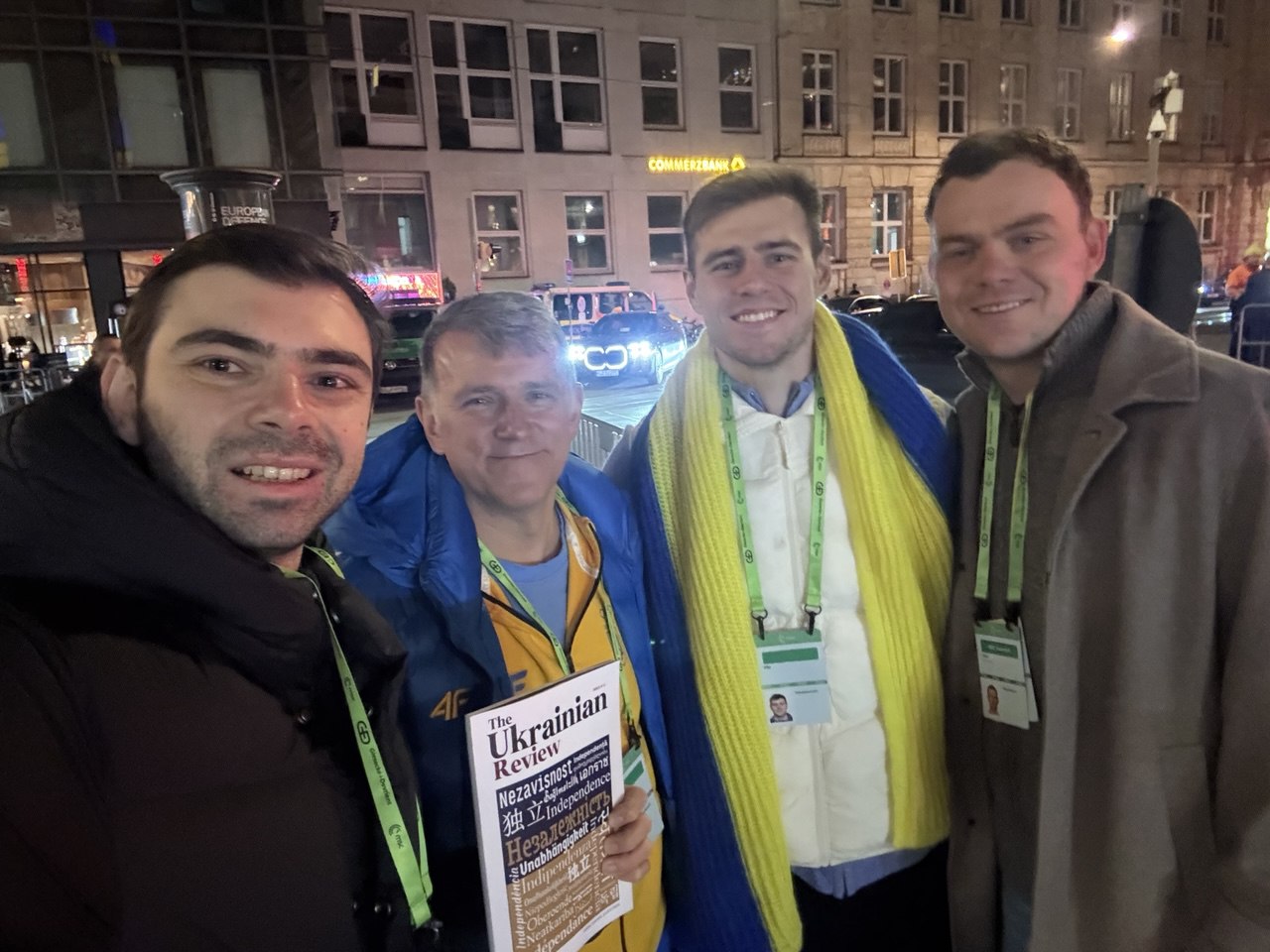
The team of The Ukrainian Review attended the Munich Security Conference 2026, participating both in official sessions and numerous side events where much of the real diplomacy takes place. Over several days, we held dozens of meetings with politicians, diplomats, military officials, and experts. These conversations offered a clearer understanding of the conference’s underlying mood: while the world seeks peace, it is simultaneously adjusting to a new security reality.
Prisoners of War: Where International Law No Longer Works
Our first day began with a meeting with Ukrainian human rights advocate and serviceman Maksym Butkevych, focused on the issue of Ukrainian prisoners of war. The discussion led to a troubling conclusion — existing international mechanisms are proving incapable of protecting POWs in modern warfare.
Reports of systematic violations, torture, and executions continue despite international conventions. As a result, discussions began about initiating new international efforts, including raising the issue at the United Nations level, to bring the protection of prisoners of war back into global focus. Without enforcement mechanisms, international law risks remaining declarative rather than protective.
Europe Begins Talking About Its Own Defense
At the Townhall Defense event, European participants increasingly shifted the discussion from supporting Ukraine to addressing their own vulnerabilities. Air defense, drone warfare, technological adaptation, and the changing nature of conflict dominated conversations.
In discussions on the sidelines, former U.S. Ambassador Michael McFaul emphasized the growing importance of English-language Ukrainian media in the context of information warfare, noting that Ukraine’s ability to explain the war to international audiences has become a strategic factor in itself.
Ukrainian House: A Symbolic Turning Point
One of the defining moments of this year’s conference was the opening of the Ukrainian House organized by the Victor Pinchuk Foundation and YES. For the first time in the history of the Munich Security Conference, Ukraine had its own dedicated space — not merely participating in discussions but actively shaping them.
The exhibition included real Shahed drones, installations showing destroyed Ukrainian cities, and AI-generated simulations illustrating the consequences of Russian attacks. Particularly striking were visual scenarios depicting drone strikes on European capitals, including Brussels and Munich — even showing the hotel hosting the conference itself as a potential target.
The message was unmistakable: the war can no longer be perceived as Ukraine’s problem alone. Ukrainian House symbolized Ukraine’s transition from being an object of discussion to becoming an active contributor to Europe’s future security architecture.
Negotiations Accelerate
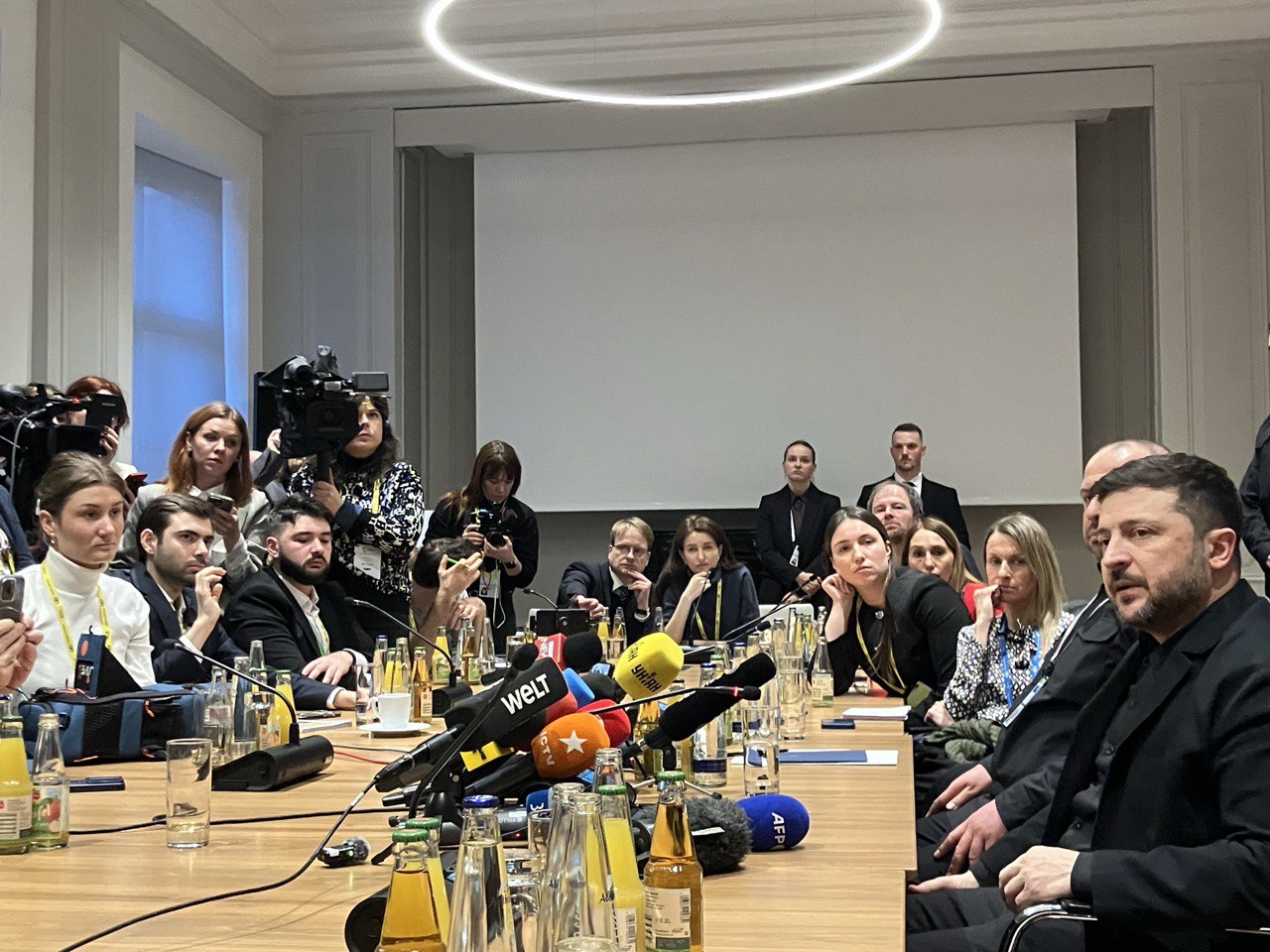
During the conference, The Ukrainian Review attended a meeting with President Volodymyr Zelenskyy focused on peace negotiations and future security guarantees. The President stressed that Ukraine remains open to compromises but will not withdraw its forces from Donbas. Various economic arrangements are being discussed, yet long-term security guarantees remain the central issue.
Following the meeting, Ukrainian officials continued negotiations with American counterparts. At the same time, closed-door talks reportedly took place in Geneva, with parties agreeing to continue dialogue. Diplomatic activity is clearly accelerating, even as outcomes remain uncertain.
The American Factor
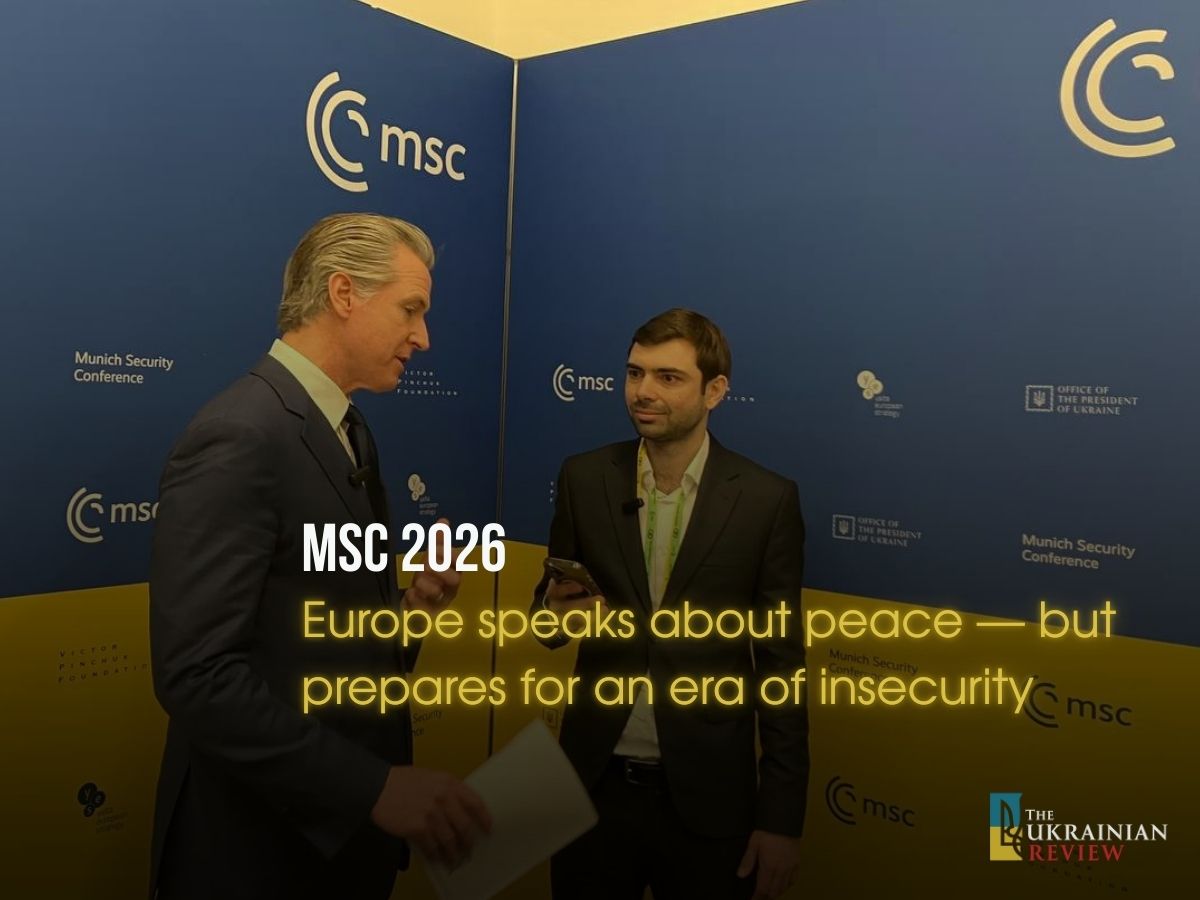
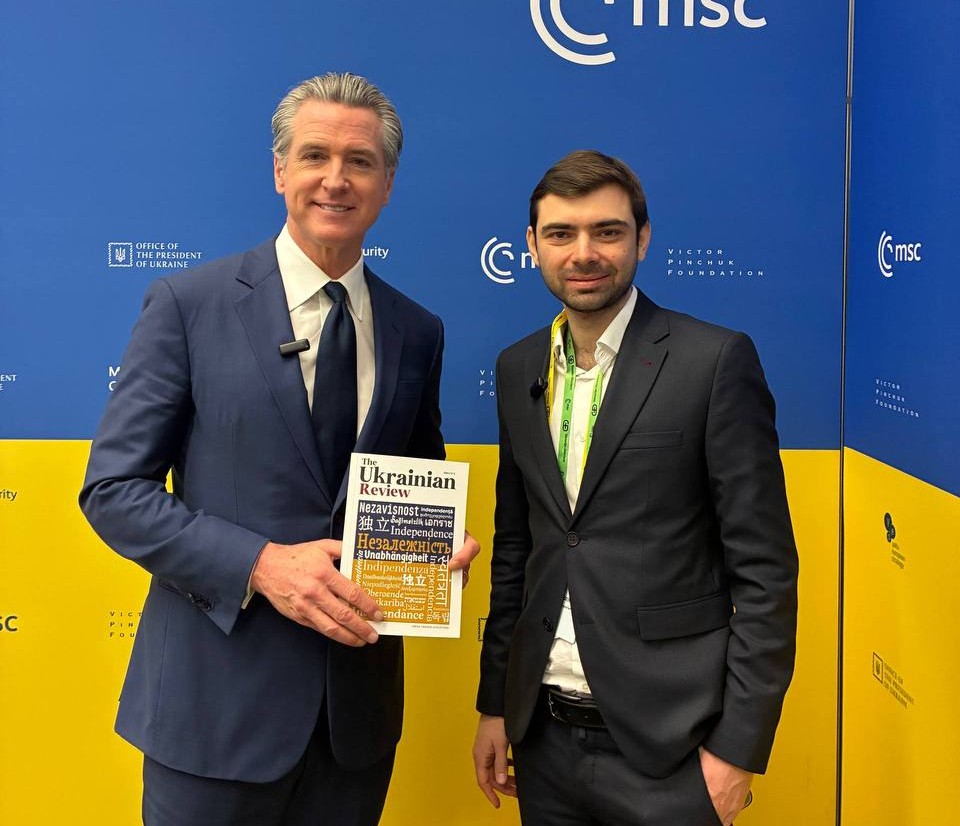
In a conversation with California Governor Gavin Newsom — widely viewed as a potential future U.S. presidential candidate — he emphasized that Ukraine’s security guarantees must be formally approved by Congress. According to Newsom, the United States, having supported Ukraine from the beginning, must remain committed until the end. He also expressed California’s readiness to contribute to Ukraine’s reconstruction.
Retired U.S. General Ben Hodges echoed a more cautious military perspective: Russia cannot be trusted, and Europe must prepare for a prolonged confrontation.
Support Without Decisions
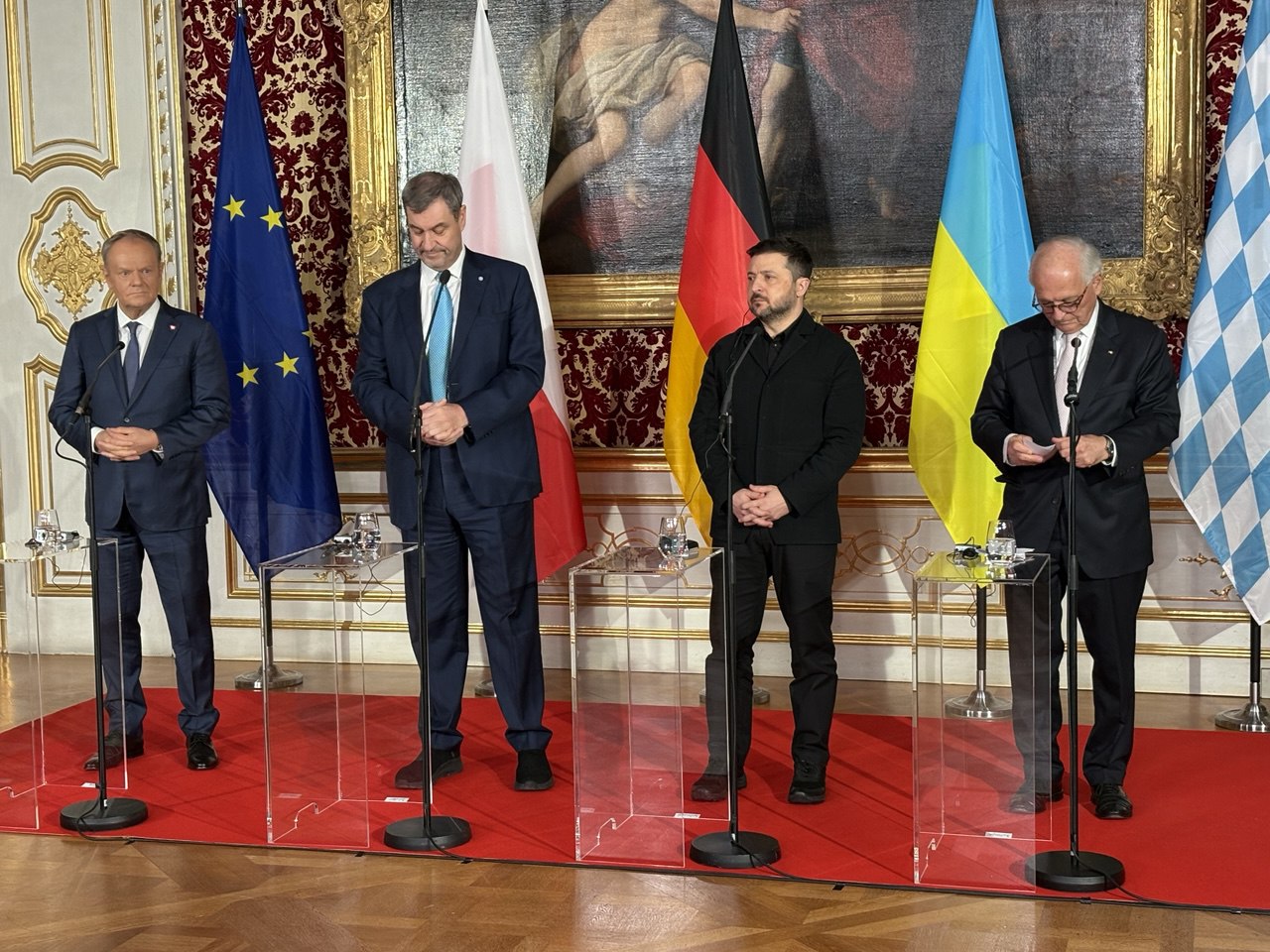
Despite repeated statements of solidarity from European leaders, several key issues remained unresolved. No concrete timeline for Ukraine’s EU membership was discussed, and decisions regarding long-range systems such as Taurus missiles were again postponed.
Even discussions surrounding a new large-scale financial assistance package included conditions determining from which manufacturers Ukraine should procure weapons. From a Ukrainian perspective, this appears contradictory: a country that has spent four years containing the largest war in Europe since World War II still faces external limitations regarding its own defense decisions.
Growing Concerns About Escalation
In a conversation with Garry Kasparov, a stark warning emerged: Russia is unlikely to stop, and Europe must prepare for possible escalation, including risks to the Baltic region in the near future. Similar concerns surfaced repeatedly in informal discussions throughout Munich.
After numerous off-record meetings, one broader impression became clear — despite public rhetoric focused on de-escalation, Europe is quietly accelerating preparations for a long-term confrontation with Russia through joint exercises, defense planning, and technological modernization.
The Realism of Negotiations
A brief conversation with Mikhail Khodorkovsky, who attended the conference at the invitation of organizers, added another perspective. He argued that Vladimir Putin cannot be trusted even within signed agreements and that Ukraine must remain prepared for potential violations of any future deal.
Ukraine as Europe’s Security Factor
Many interlocutors in Munich openly acknowledged that Ukraine today serves as Europe’s primary line of deterrence against Russian aggression. Ukraine possesses one of the most experienced armies on the continent. Yet, as President Zelenskyy himself has said, Ukrainians are not “terminators.”
Ukraine requires credible security guarantees from both the United States and Europe. Any future agreements must carry legal force, including formal ratification by Russia, to avoid repeating the failure of the Budapest Memorandum.
Peace Requires Guarantees
The central conclusion of Munich 2026 is clear: everyone speaks about peace, yet few believe in quick solutions. Ukraine seeks peace because human life matters more than territory. But peace without reliable security guarantees risks becoming only a pause before the next war.
Today, Europe’s security is closely tied to Ukraine’s resilience. The future of European stability will depend on whether Ukraine is treated not merely as a recipient of support, but as a full partner in shaping the continent’s security system.
Editorial Note
During the conference, our team also met with Ukrainian athlete Vladyslav Heraskevych. Following the recent controversy surrounding decisions by the International Olympic Committee, we expressed our support and solidarity, believing the outcome to be unfair to the Ukrainian athlete. We plan to publish a separate in-depth interview with Heraskevych to further address this issue and its broader implications for international sports and justice during wartime.
By Artem Kasparian