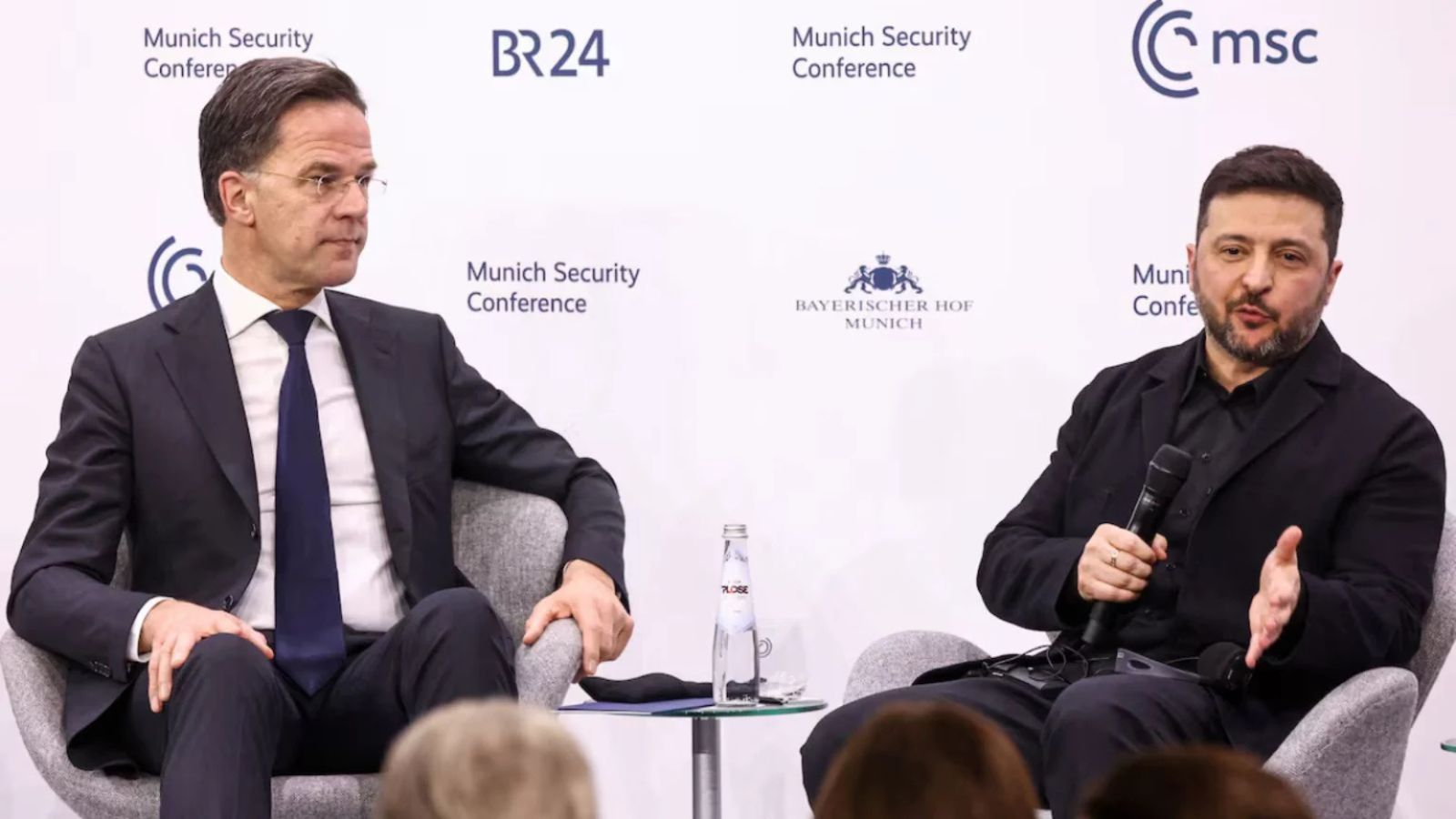


The 62nd Munich Security Conference (MSC), held from February 13 to 15, traditionally outlined the key current features of Western geopolitical strategy. In the face of growing global instability, the forum highlighted both deep divisions and urgent calls for unity. The Ukrainian Review team was present at the conference, capturing the key statements of leaders that will shape the future of international security.
Ukraine: The Struggle for Agency and Long-term Guarantees
Volodymyr Zelenskyy was the central figure of the conference. His speech in Munich was met with a standing ovation. The president emphasized the need for Europe’s full involvement in all strategic processes:
“We Ukrainians are trying to bring Europe fully into the process so that Europe’s interests and voice are taken into account,” Zelenskyy concluded.
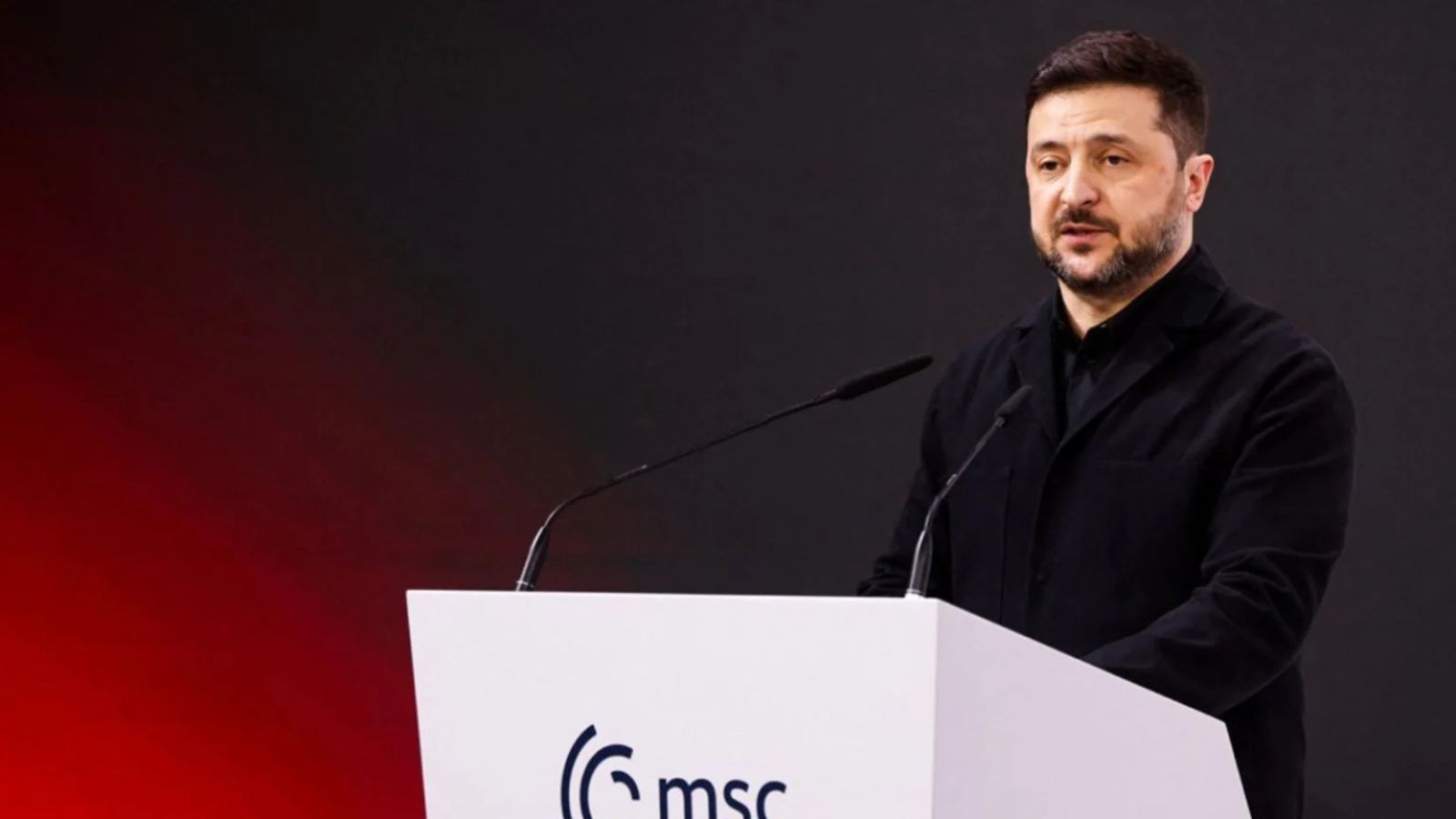
Representatives of The Ukrainian Review attended Zelenskyy’s keynote speech and his subsequent interaction with journalists. The president’s key points that we highlighted:
- Ukraine received a 15-year security guarantee proposal from the US, but Kyiv demands a 30-50 year agreement for real stability.
- Any withdrawal of troops from the Luhansk and Donetsk regions is excluded, as Ukrainians live there, and Russia seeks to seize these territories for internal propaganda.
- Ukraine is ready for prisoner exchanges in any format, including “all for all.” Currently, Russia holds 7,000 Ukrainians, while Ukraine holds over 4,000 Russians.
- The supply of German Taurus missiles remains a relevant issue, with a decision still pending despite the ongoing war and growing needs.
- The successful use of domestically produced “Flamingo” missiles against “Oreshnik” complex bases proves the effectiveness of the Ukrainian defense industry. One production line was relocated following an enemy strike.
- Ukraine is ready to hold elections only under the condition of a 2-3 month ceasefire.
- Ukraine and the US will not allow the Kremlin to start negotiations “from scratch” due to changes in negotiation group leadership.
Foreign Minister Andrii Sybiha outlined the new security architecture during a panel discussion. He emphasized that real progress is impossible without clear, legally binding guarantees:
“The recipe (for ending the war – eds.) is very simple: US involvement and leadership, increasing the cost of continuing aggression for Russia, personally for Putin and his regime. That means sanctions, isolation, and confiscation of frozen Russian assets, as well as a deterrence package for Ukraine, strengthening our defense capabilities and the army,” noted Andrii Sybiha.
The presence of forces on the ground in a “Coalition of the Willing” format was also discussed, with the American “backstop” (guarantee support) being a fundamental element.
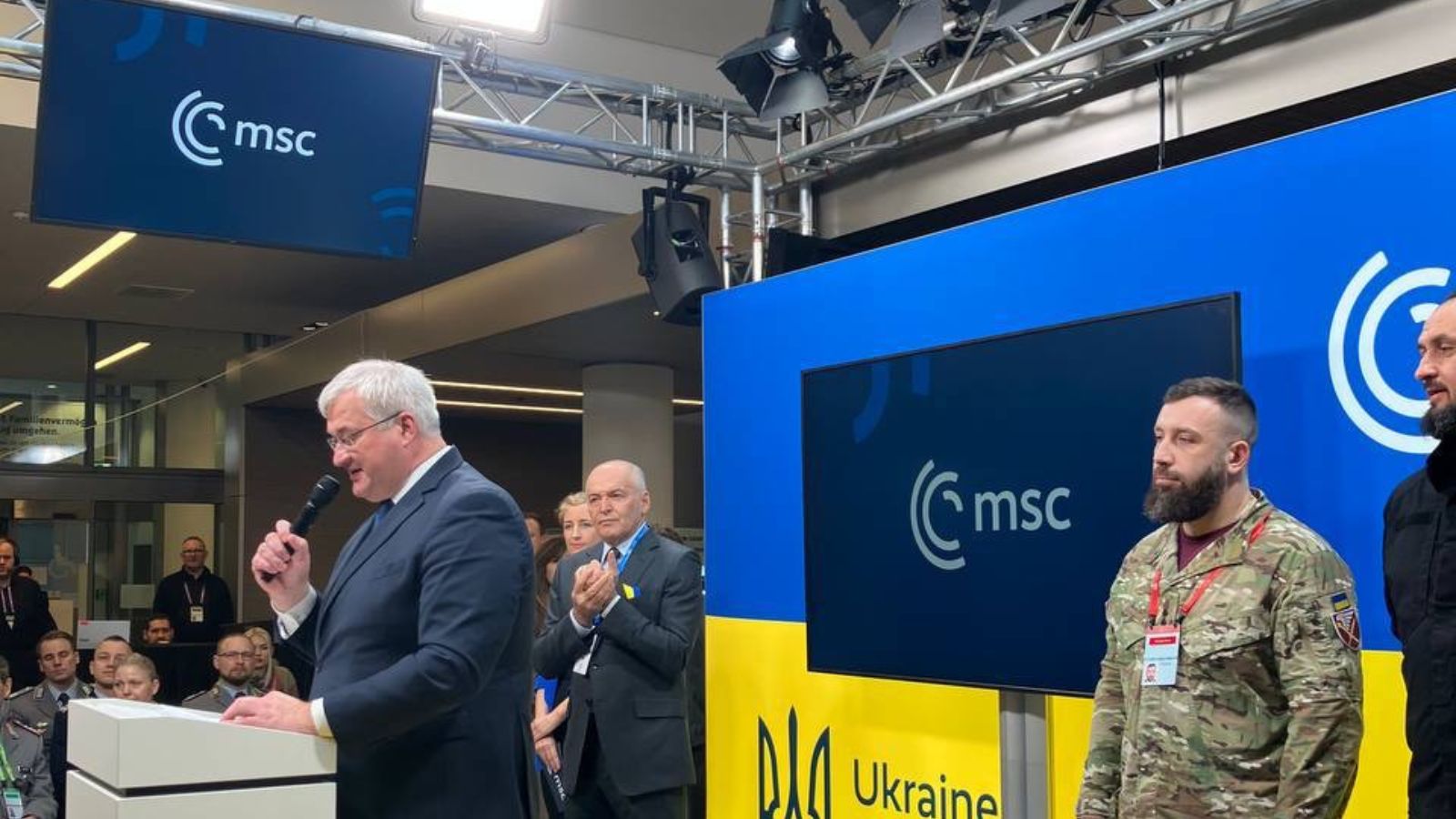
Skeleton athlete Vladyslav Heraskevych was a special guest at the event. The Ukrainian Review team attended the Ukrainian Lunch, where he expressed gratitude for the support and the “helmet of memory” honoring fallen athletes.
“I think in these crazy times, in what I have been dealing with over the last few days, the brightest part has been the uniting around Ukraine, and I hope that we can preserve this as long as possible: unity around Ukraine and the memory of the people who sacrificed their lives. Thanks to this sacrifice, we can be at the Olympic Games today as the team of Ukraine, and I am very grateful for that,” he said.
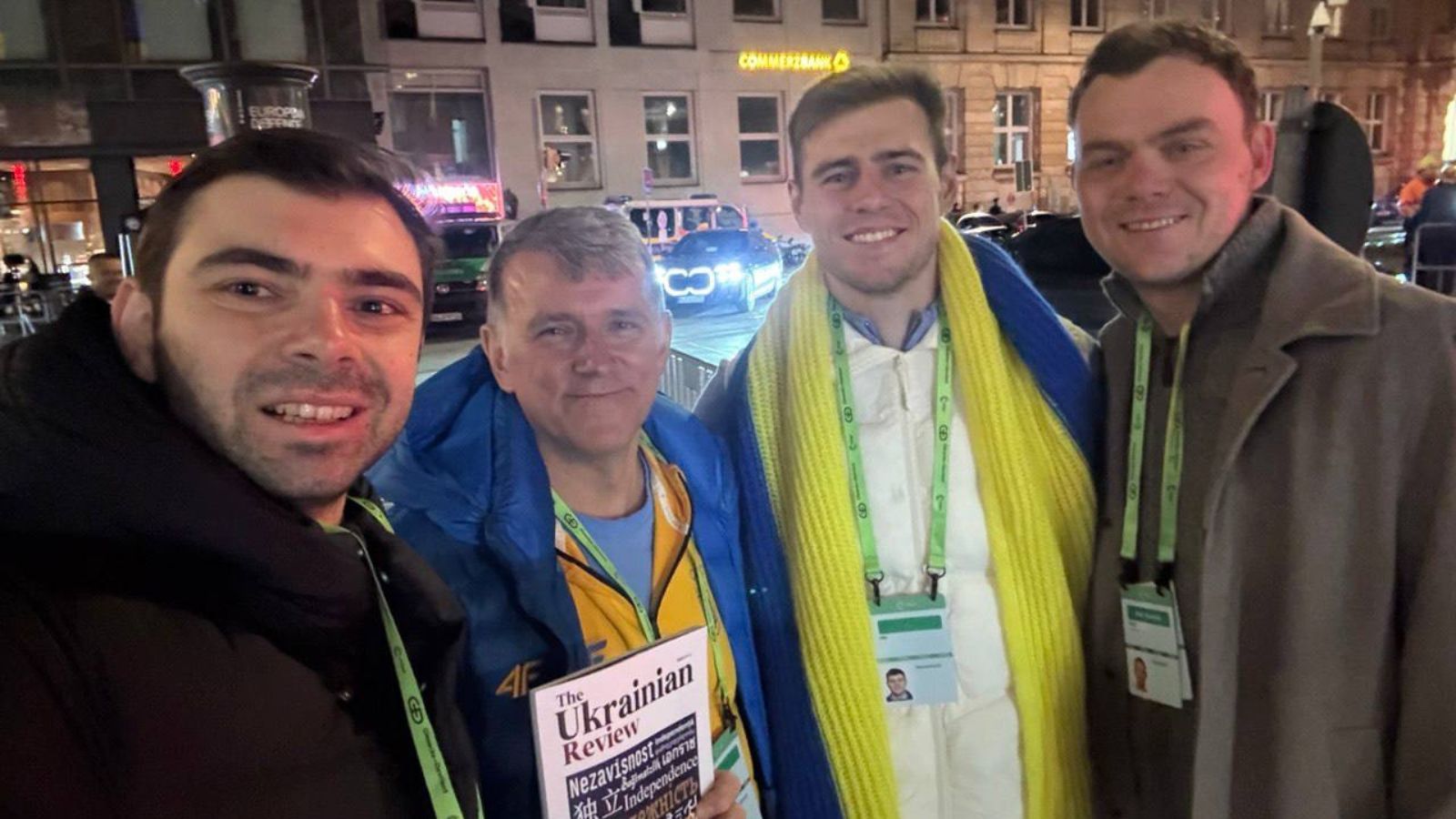
The Ewald von Kleist Award to the Ukrainian People
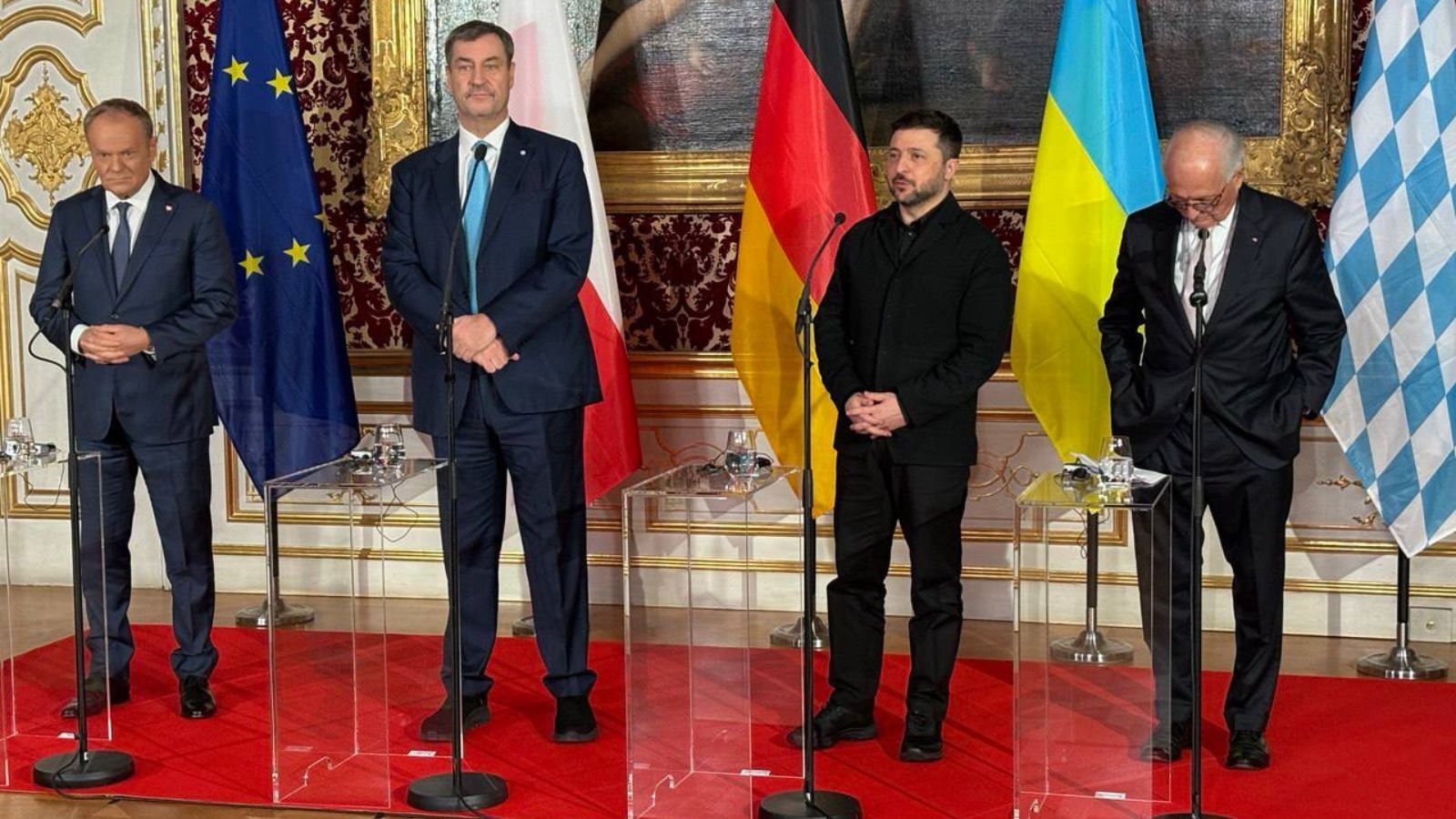
Our publication witnessed a historical moment — the presentation of the Ewald von Kleist Award. On Saturday, February 14, as part of the conference, this prestigious prize was awarded to the entire Ukrainian people for their incredible resilience and bravery in defending democratic values.
President of Ukraine Volodymyr Zelenskyy personally accepted the award on behalf of the citizens of Ukraine. During the ceremony, he expressed deep gratitude for the recognition of the nation’s efforts:
“I am very proud to be the president of Ukraine — our great nation,” he stated.
Zelenskyy also specifically thanked Germany for its comprehensive support against Russian aggression, emphasizing: “We are very grateful to have such partners and friends.” This award is the highest recognition of the Munich Security Conference and symbolizes that the struggle of Ukrainians is perceived by the global community as a battle for the future of the entire free world.
The United States: Soft Power and Strategic Distance
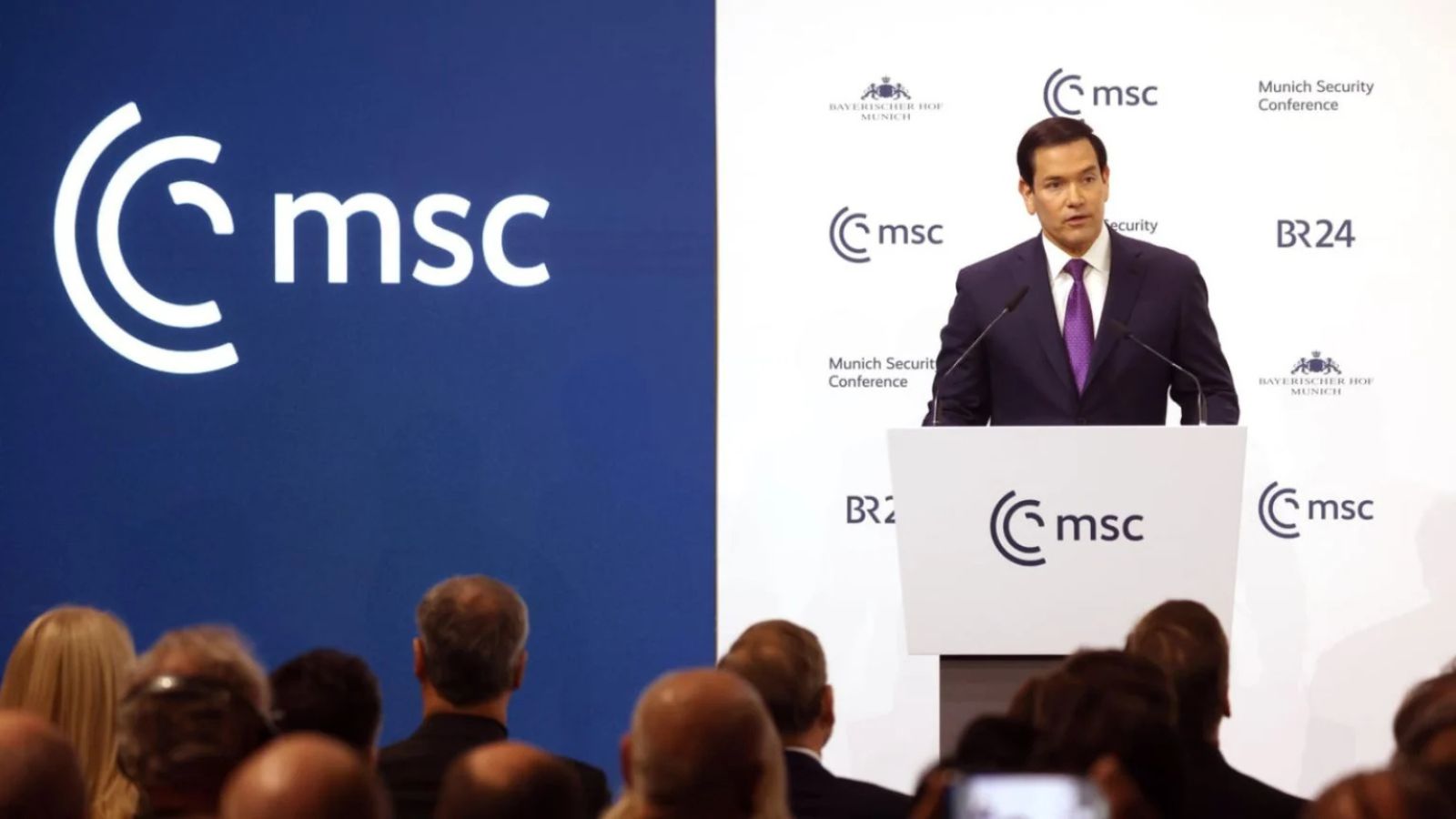
Secretary of State Marco Rubio replaced the sharp rhetoric of his predecessors with a more diplomatic tone. He called Washington the “child of Europe” but made it clear: the US will not be “orderly caretakers of a managed decline” of the West. Rubio emphasized that the West faces civilizational decline due to ill-conceived policies regarding climate and migration.
Speaking to the press, Rubio assured that the US would not abandon efforts to end the war. He noted that Russia loses 7-8 thousand people every week and will not achieve its goals. However, Rubio expressed skepticism about Putin’s desire to end the war, contrasting with Trump’s official statements. After meeting Rubio, Zelenskyy announced separate talks with US representatives regarding the peace process.
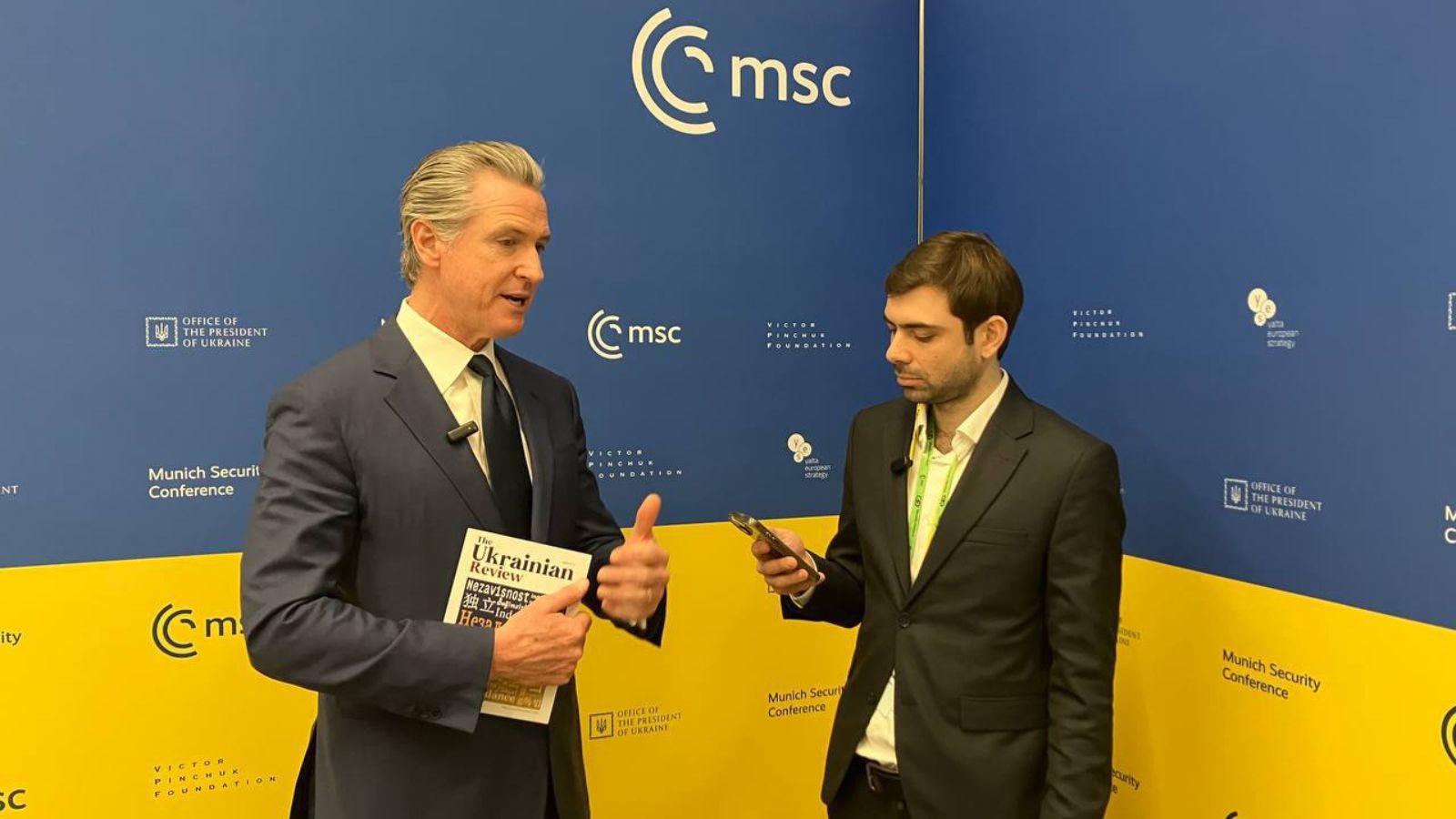
California Governor Gavin Newsom stated during his speech at the Munich Security Conference that he came to Germany to reassure European allies: “U.S. President Donald Trump is temporary,” Bloomberg writes.
According to Newsom, Trump will be “measured in years, not decades.” He suggested that the current president could suffer significant losses in the midterm congressional elections in November, as well as face legal constraints on his powers, particularly regarding the imposition of tariffs. The Ukrainian Review team managed to conduct a brief interview with Gavin Newsom, where he spoke about the prospects of Western support for Ukraine, U.S. assistance, and the partnership between California and Ukraine in the field of innovation.
Germany and France: The Doctrine of European Strength
Chancellor Friedrich Merz and President Emmanuel Macron presented a consolidated position: the old security system no longer works. Merz stated bluntly that “the world order no longer exists,” and modern great power politics has become harsh and unpredictable. He warned that Europe’s freedom is no longer a given and the continent must demonstrate firmness.
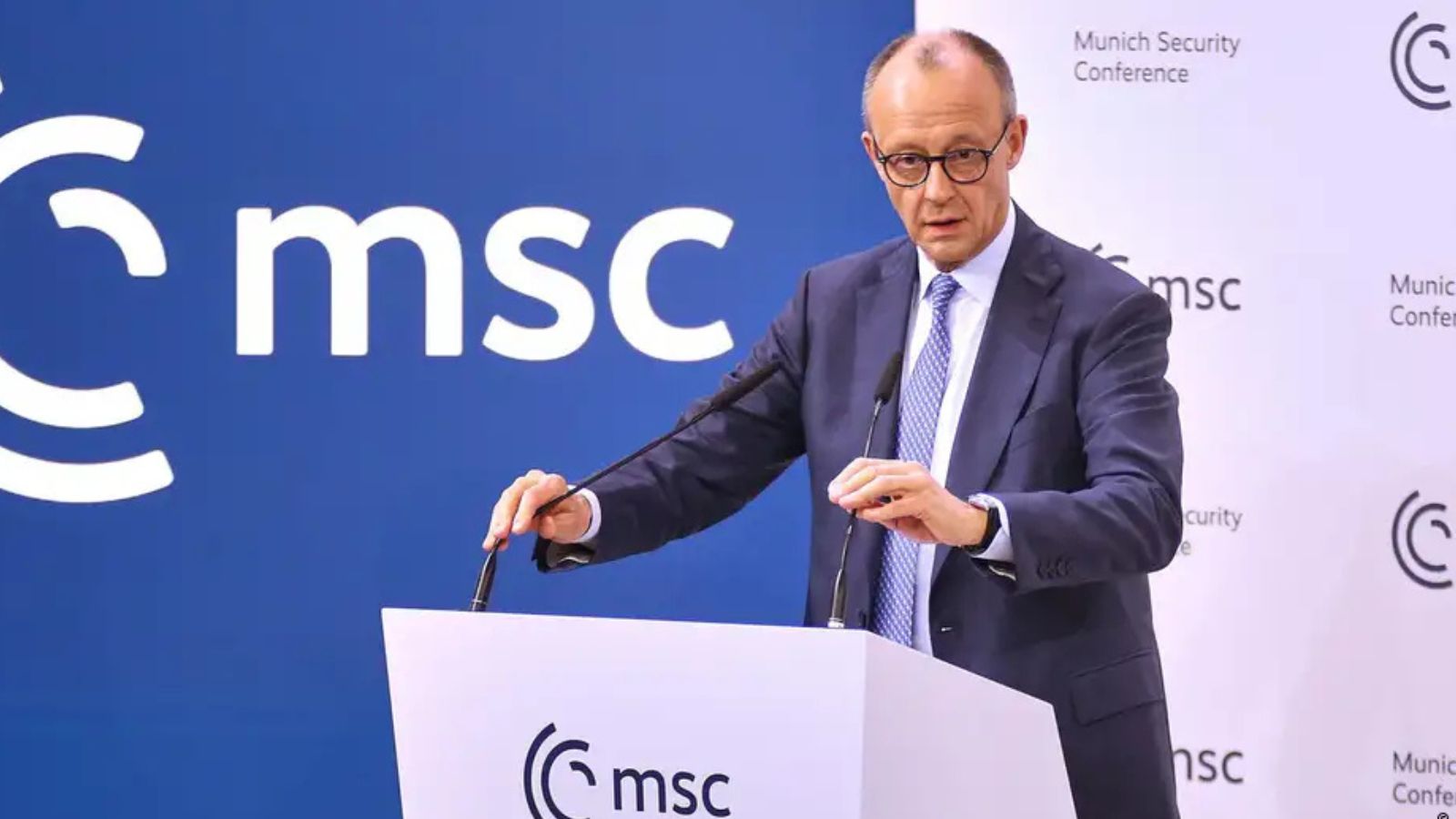
Macron confirmed that France is in dialogue with Merz regarding a “nuclear umbrella.” Both leaders aim to create convergence in a strategic approach where Europe becomes a military-political center of power. Macron emphasized that every country has money for defense, but without joint planning, Europe will be weak in the face of an aggressive Russia. This essentially points toward creating a military confederation as an alternative or supplement to NATO.
United Kingdom and NATO: Deterrence in the Arctic
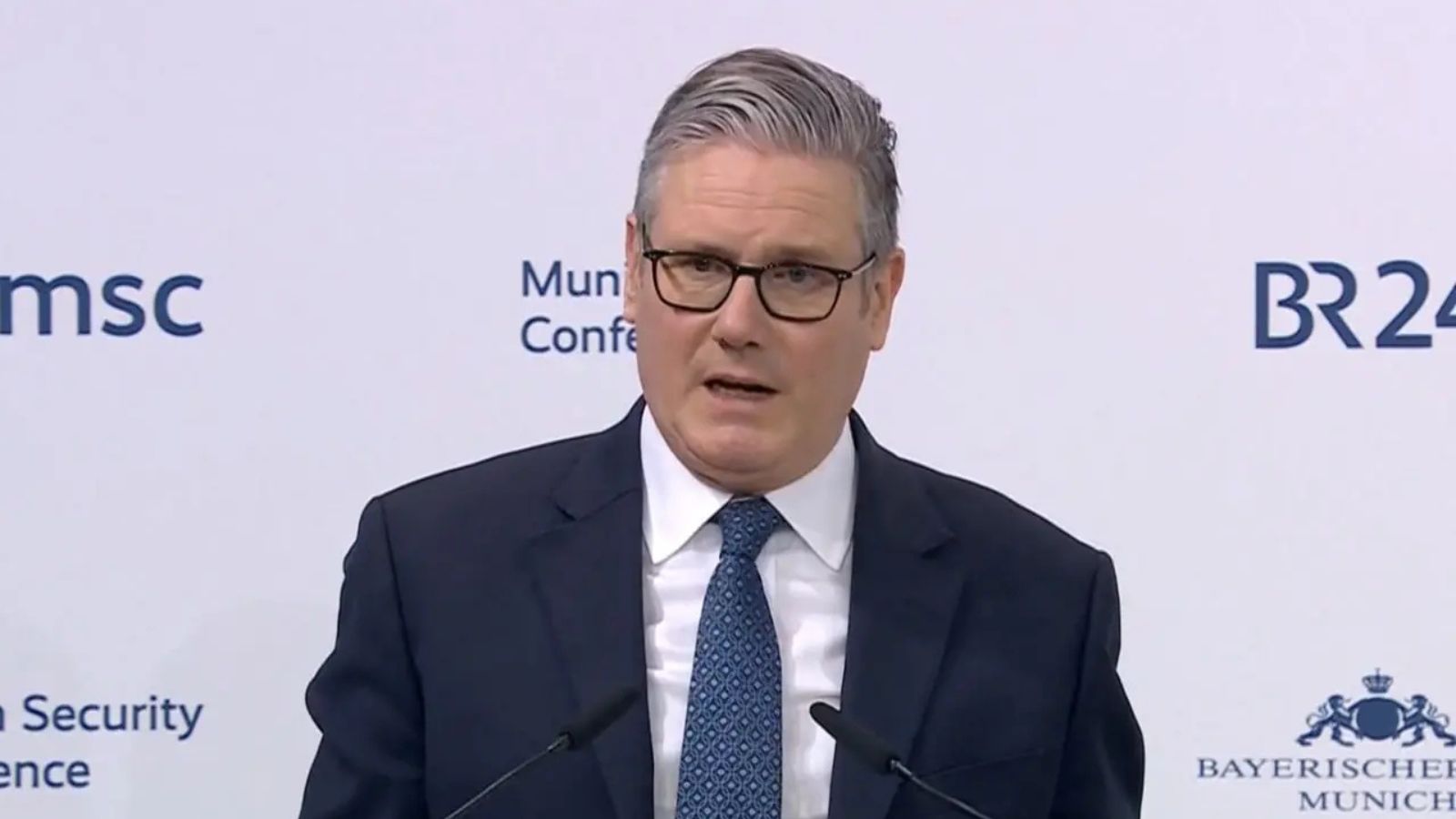
Prime Minister Keir Starmer supported the idea of European power with concrete promises. He announced that Britain would deploy a carrier strike group to the Arctic and the High North to deter Russian threats. Starmer is convinced that any peace deal now would only give Russia a chance to rearm.
“We must be able to deter aggression, and yes, if necessary, we must be ready to fight, to do whatever it takes to protect our people, our values, and our way of live,” Starmer said.
NATO Secretary General Mark Rutte also emphasized military superiority. He noted that the alliance must remain stronger than Russia in the long term, despite any attempts by Moscow to increase its potential.
“We would win every single battle with Russia if they were to attack us now, and we have to make sure that in two, four, six years’ time, that is still the case,” Rutte noted.
Global Challenges and Threats to Democracy
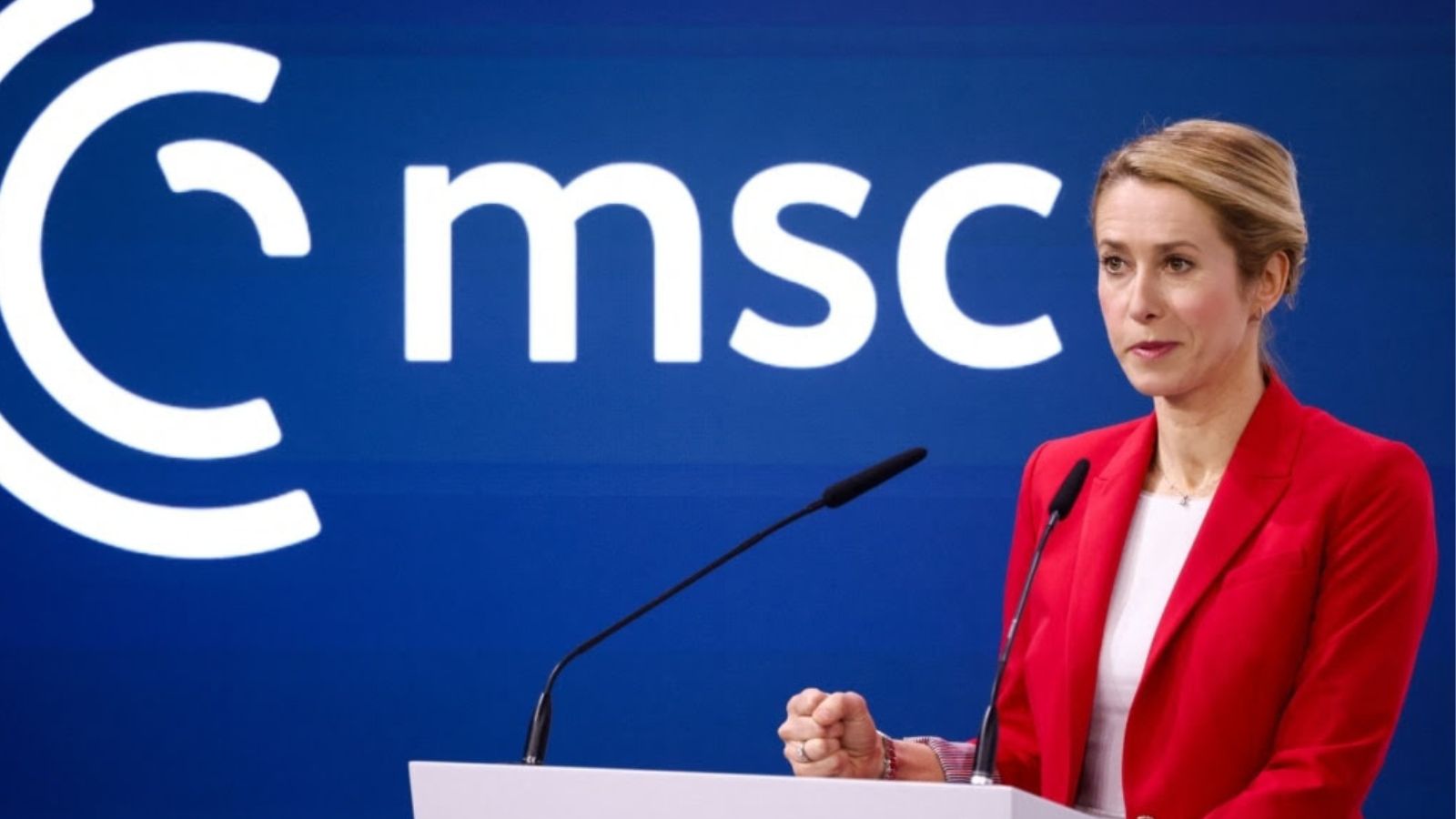
Kaja Kallas sharply criticized claims of European “decline.” She challenged Rubio’s thesis, stating that Europe is not threatened by “civilizational erasure.” Kallas urged allies not to succumb to pessimism and to soberly assess the aggressor’s capabilities.
“Let’s be clear-eyed about Russia. Russia is no superpower,” the diplomat said.
Alongside this, Hillary Clinton, at a panel attended by our team, added context to the Western divide. She noted that while the migration issue is a legitimate topic for debate, Trump’s policy is a betrayal of Western interests and solidarity, only increasing internal instability.
Conclusion
The 2026 Munich Security Conference marked a final transition from the “diplomacy of hope” to “great power politics.” For Ukraine, the key result was the confirmation of partners’ readiness for specific energy and military packages, as well as the recognition of the need for long-term legal guarantees. The most important conclusion of the forum is that Europe’s security now directly depends on its ability to transform into an independent military pole, integrated with Ukraine’s powerful defense potential.