
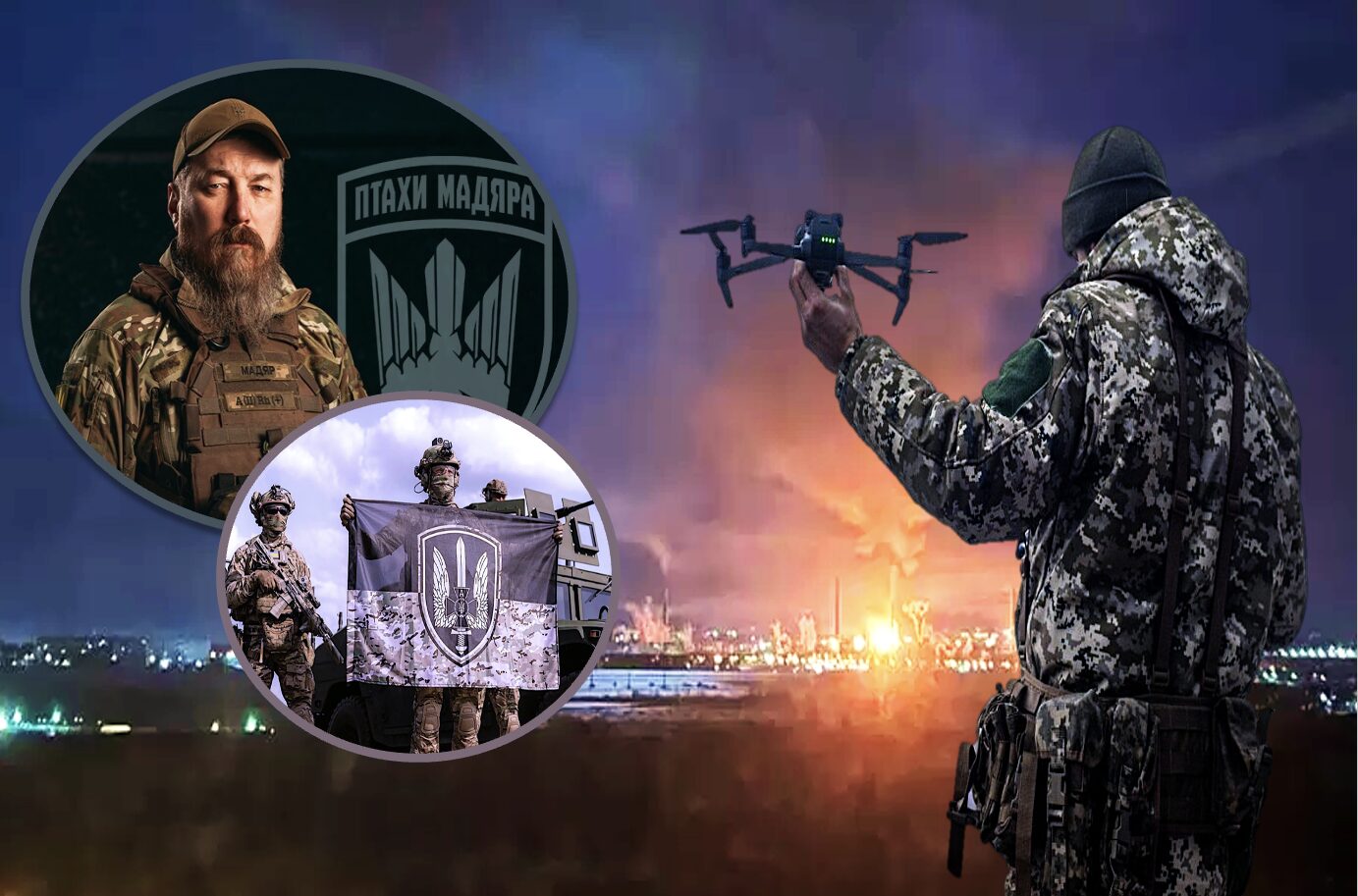


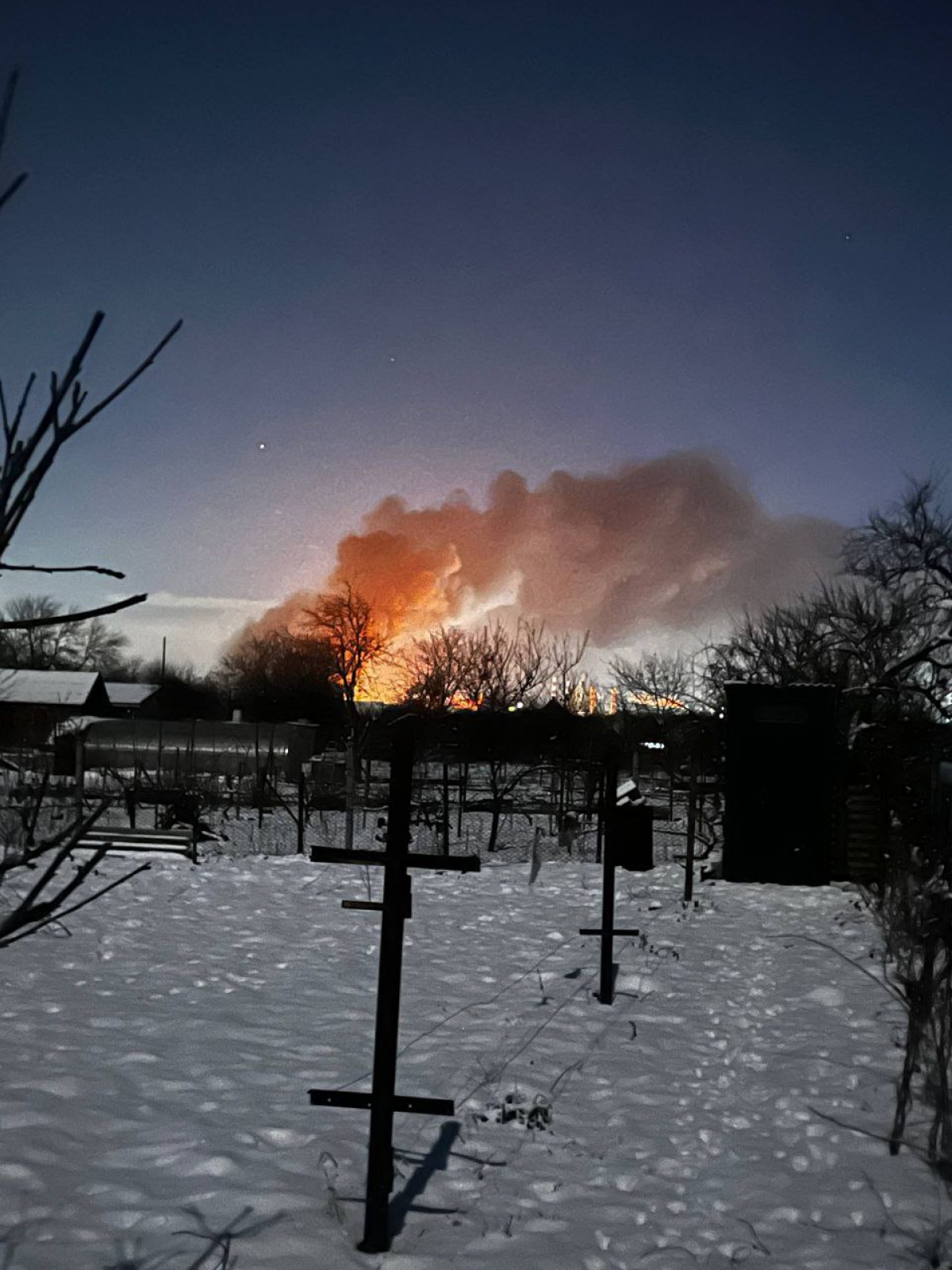
In the first minutes of 2026, Ukrainian drones struck a refinery in Russia’s Krasnodar Krai. The General Staff of the Armed Forces of Ukraine reported the attack. In fire and explosions, the new year began for Russia’s fuel infrastructure.
According to official information, on the night of January 1, Ukraine’s Defense Forces hit a number of military and infrastructure targets both on Russian territory and in temporarily occupied regions. Among them was the Ilsky oil refinery. The General Staff noted that the strike was part of a systematic effort to “reduce the enemy’s military-economic potential.”
Not Fireworks — Drones
While the chimes rang across Russia, Ukrainian drones were already hitting their targets. Robert “Magyar” Brovdi, commander of the Unmanned Systems Forces, reported strikes on ten military and infrastructure objects in the temporarily occupied areas of Donetsk, Luhansk, Zaporizhzhia, and Crimea.
These included the Rovenky fuel depot, radar stations in Hvardiiske, air defense sites, as well as depots of fuel and equipment belonging to Russian units. Some targets, he said, were struck again “to consolidate the effect.”
The General Staff also confirmed a strike on the Almetyevsk oil preparation facility in Tatarstan. Results are still being clarified, but the scale of the fires, documented by local residents and Russian Telegram channels, spoke for themselves.

Expanding the Geography of Strikes
Explosions were reported simultaneously in Kaluga Oblast. In Lyudinovo, a fuel depot owned by Kaluganefteprodukt, a subsidiary of Rosneft, caught fire. Local authorities and eyewitness videos confirm that the blaze followed a drone attack.
According to NV, satellite images from January 1 show a massive fire and thick black smoke, typical of burning oil products. The facility had already been targeted in 2024, but this time the scale was again striking.
That same night in Moscow, reports noted air defense activity. Mayor Sergey Sobyanin quickly announced the supposed destruction of nine drones allegedly heading toward the capital.
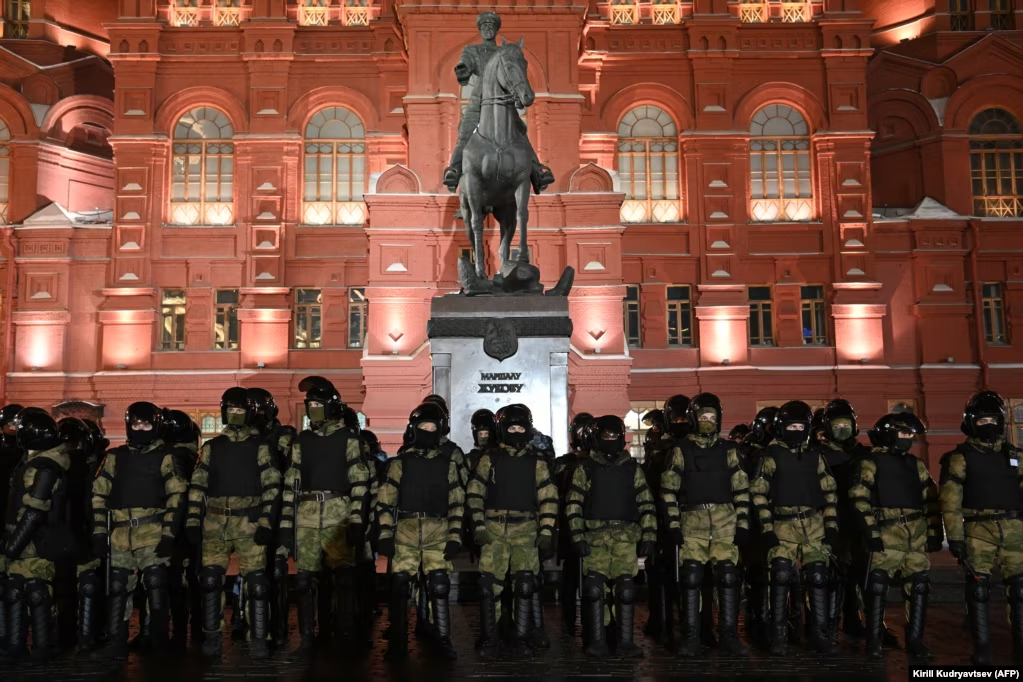
It is also noteworthy that Russians were not allowed onto Red Square on New Year’s Eve. According to BBC Ukrainian, hundreds of security personnel were stationed on the streets to prevent crowds from gathering in central Moscow.
Symbolic? No — Systematic
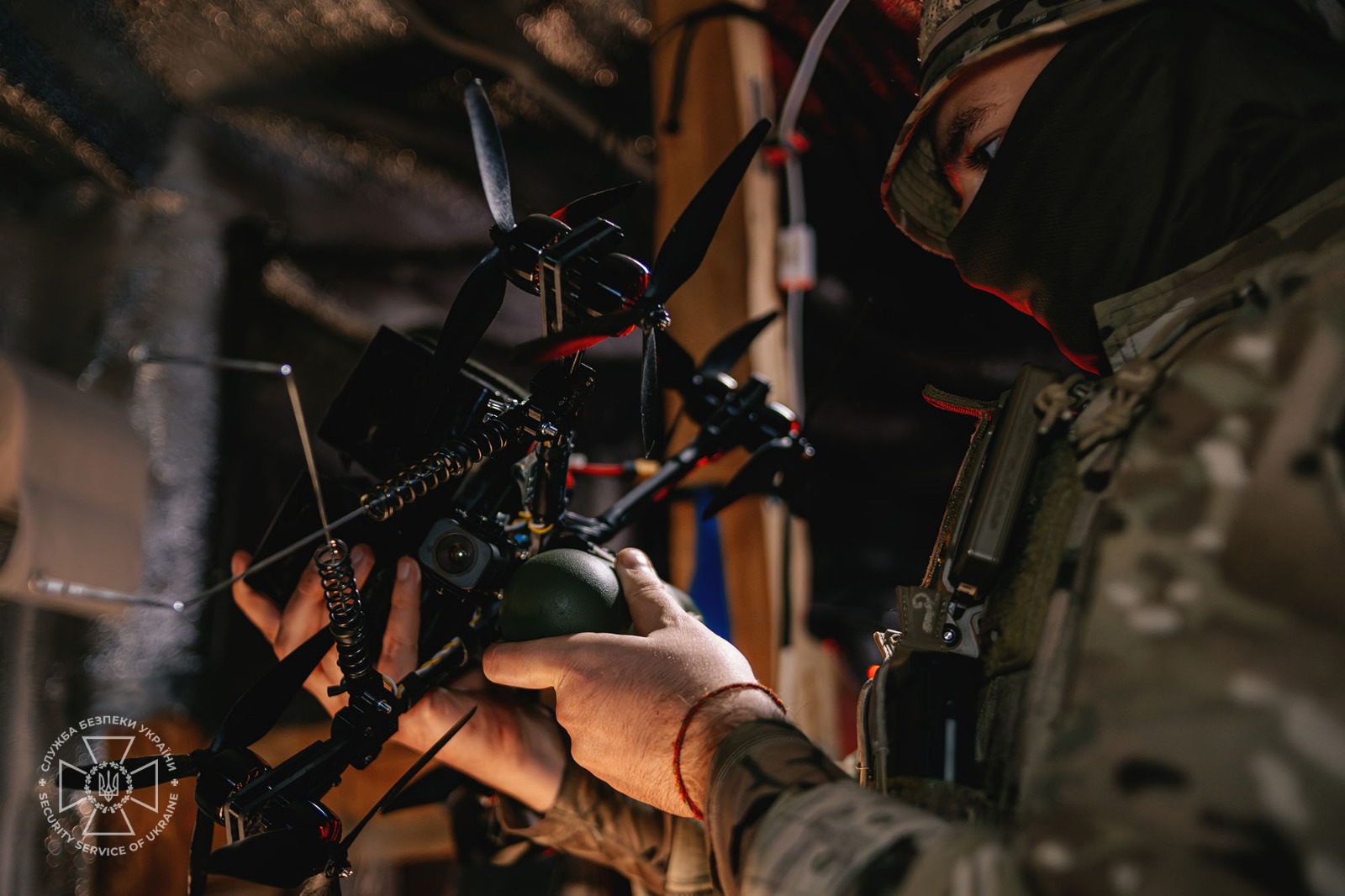
Alongside refinery strikes, units of the Security Service of Ukraine (SBU) have been active. This is about systematic combat work by special forces.
In the past two weeks alone, operatives from the SBU Special Operations Center “A” have destroyed or neutralized 7 tanks, 45 armored vehicles, 13 artillery and multiple rocket launch systems, as well as 3 air defense complexes and 2 electronic warfare systems.
Logistics has been a separate target. Five ammunition depots and two fuel and lubricant depots were hit. Over 250 vehicles were destroyed, along with nearly 300 drones and hundreds of communications nodes. According to the SBU, total enemy losses in this period exceeded two thousand personnel.
Strikes on fuel depots, warehouses, and military infrastructure have long been a core part of Ukraine’s strategy. These numbers are not statistics for the sake of figures. They represent a systematic weakening of the pillars that support what Russia calls the “world’s second strongest army.”
Conclusions
Systematic strikes on Russia’s oil infrastructure show that the war is starting to stall where it once seemed unstoppable. The beginning of 2026 has underscored for Moscow that even deep rear areas are no longer safe.
Officially, the General Staff explains these actions as part of planned work to reduce the enemy’s military-economic potential. But behind the dry wording lies the logic of modern warfare, increasingly a game of precision, endurance, and calculation.
Against this backdrop, the recent DIU special operation to rescue RVC commander Denis Kapustin is especially illustrative. It demonstrated that Ukrainian special services cannot only strike infrastructure but also outplay the enemy at the level of planning, intelligence, and psychological pressure.
The paradox is that all this happens amid talks of “peace plans,” internal political disputes, and Russia’s attempts to demonstrate strength through new waves of mobilization and threats of escalation. Yet while discussions continue, those on the front line and deep behind enemy lines are daily ensuring that the front does not collapse.
Special forces of the SBU, the Forces of Unmanned Systems, the Special Operations Forces, and the DIU perform operations daily that do not always make headlines but clearly change the course of the war. They conduct operations with no real parallel in modern military history. What once seemed impossible a few years ago is now routine for Ukrainian specialists.
In this sense, strikes on refineries are part of a long-term strategy where, despite fatigue, political disputes, and tough decisions, the fight goes on.
And for the occupiers, the ending remains unchanged — on Ukrainian soil, it is always one.