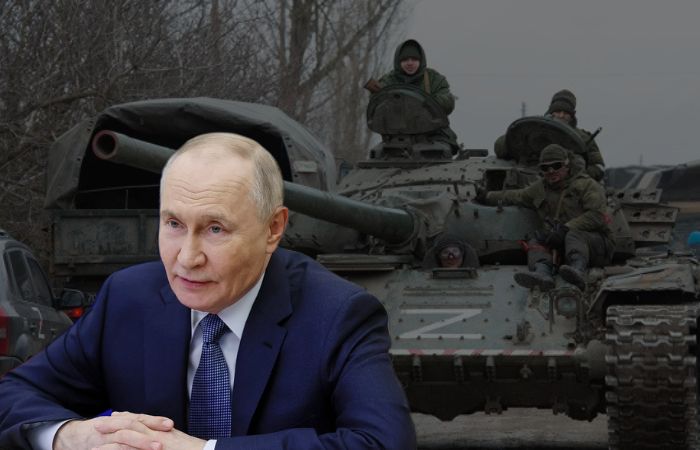


Russia is increasingly deploying the rhetoric of peace as a foreign policy tool while systematically preparing for a protracted war. The transition to a war economy, rising defence spending, and changes in mobilisation policy point to the institutionalisation of war as a model of state governance. Against this backdrop, the Kremlin’s diplomatic initiatives are aimed more at managing the war than at ending it.
A potential peace agreement between Ukraine and Russia is attracting as much public attention in Ukraine and Europe as the question of security guarantees. It is logical to assume that the war should end with the signing of a political document between the parties. At the same time, the question arises: is Russia really ready to sign an agreement? Their official position, recorded in statements by the Kremlin and the Russian Foreign Ministry, has remained unchanged since 2022. The Russian side continues to insist on Ukraine’s refusal to join NATO, territorial concessions, a reduction in the size of the Ukrainian armed forces, the recognition of Russian as a second state language, and other political and humanitarian demands. The Kremlin’s actions as a whole indicate a willingness to continue the war or to conclude an agreement exclusively on its own terms.
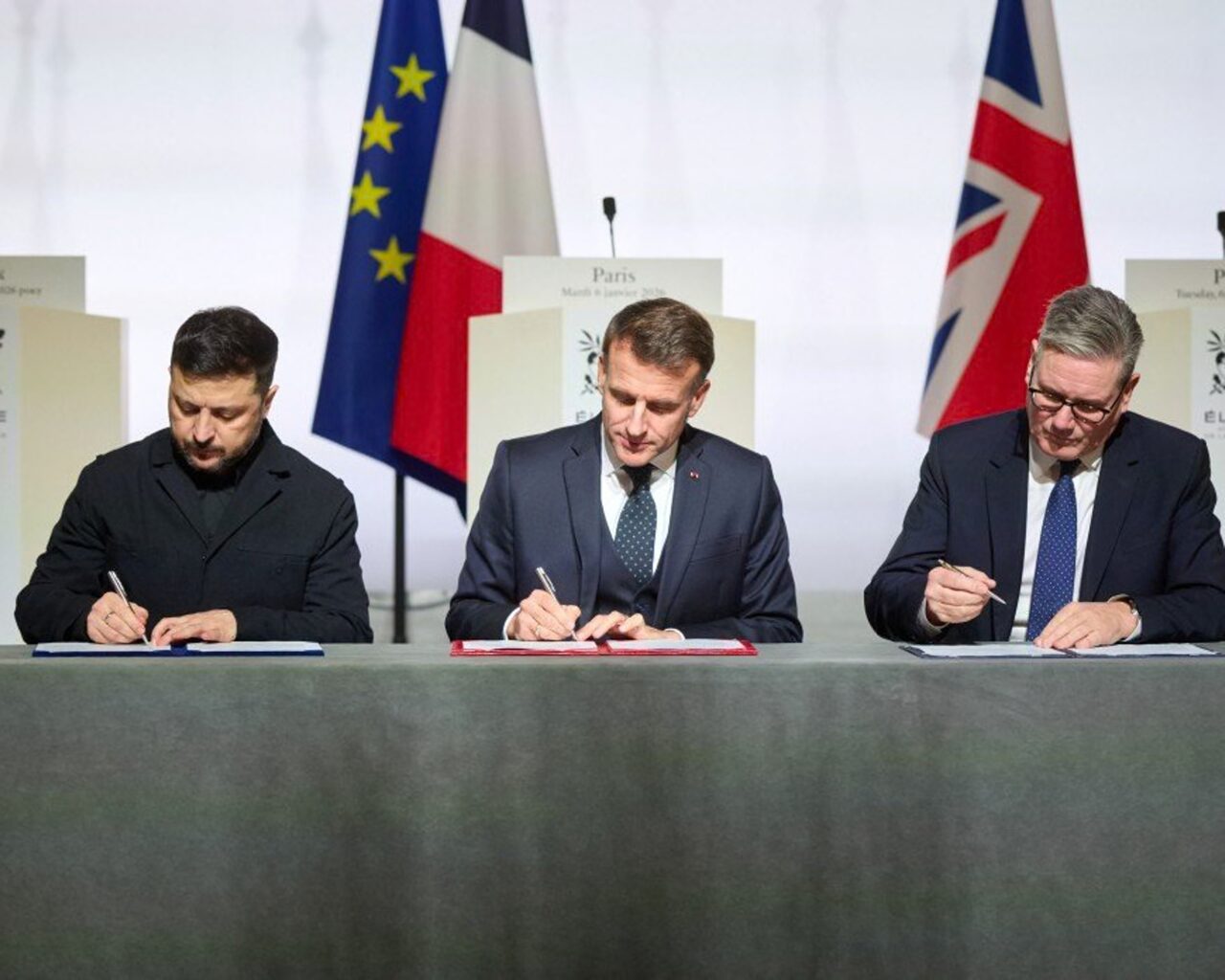
Ukraine continues to work on shaping future arrangements and insists on clear security guarantees. In early January, it signed declarations of agreement with France and the United Kingdom on the deployment of international troops on the territory of Ukraine. This is not about immediate military reaction but rather about establishing a framework for future security guarantees.
If European states refrain from deploying forces today out of fear of escalation, they signal to the Kremlin not deterrence but the limits of Western willingness to take risks. In this logic, the promise of a future military presence after the cessation of hostilities is not perceived as a real guarantee of security, but rather as a deferred obligation that can be revised or not implemented if necessary. Currently, this action is more aimed at normalizing the opinion about the presence of European troops among the European population and is more political than military in nature. Similar signals have previously been used by Western governments to gradually change public perceptions of military presence abroad: after 2014, NATO spent years preparing public opinion for a military presence in the Baltics through political declarations and rotational formats before moving to a full-scale deployment of forces within the Enhanced Forward Presence. Similarly, before operations in the Sahel, France first used framework political statements and training missions to normalize the idea of an external military presence for its own society.
It is important to note the fact that while Ukraine and European partners are discussing a peace plan, Russia continues its military aggression against peaceful cities of Ukraine, strikes on energy infrastructure and civilian facilities, threatens the West, and delays the negotiation process.
Russia is trying to create the image of a stronger actor than it actually is at this stage. Especially considering the latest data on the state of the country’s economy. The desire for “peace” for Russia is only a tool to delay the introduction of new sanctions and provide assistance to Ukraine and to buy time.
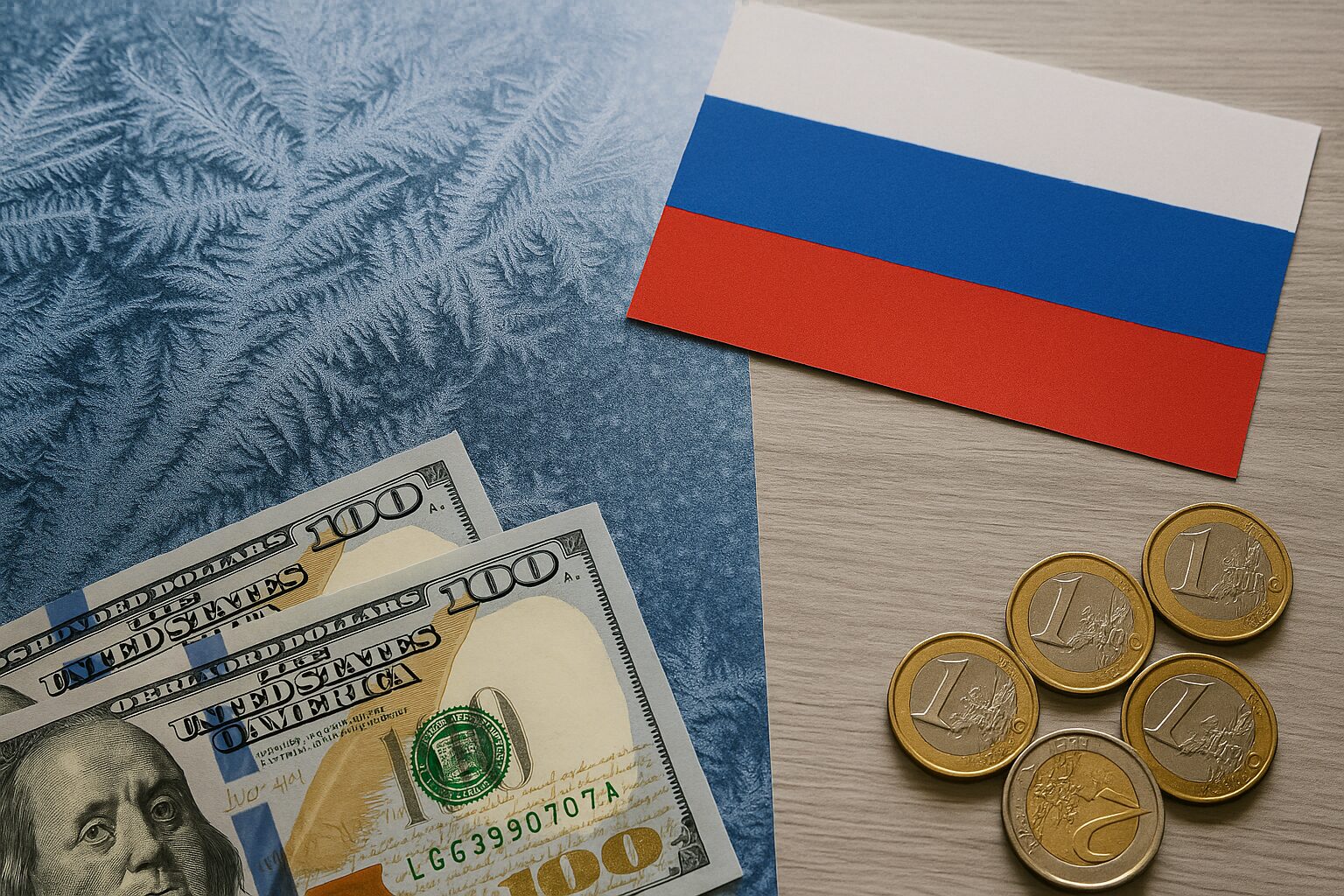
Russia’s economy
Russia is increasingly using the National Welfare Fund to cover military spending. According to analyses published by the Financial Times and The Moscow Times, the liquid portion of the Russian National Welfare Fund could shrink significantly in the medium term if the current level of military spending and budget deficits is maintained. This is forcing the Kremlin leadership to look for alternative ways. In response, they have begun discussing increasing the tax burden, in particular the possibility of increasing VAT, as one way to finance military spending, which means shifting the financial burden of the war onto the population and increasing inflationary pressure.
The transition to a war economy, increased military-industrial complex capacity, and import substitution provided a small boost to economic dynamics. Military pay and increased jobs in the defense industry led to an infusion of finance into Russia’s hinterland. This contributed to economic growth in 2023-2024. The head of the Central Bank of Russia, Elvira Nabiullina, publicly acknowledged in 2025 that the current growth model, based on military spending, is reaching its limits and cannot be sustainable in the long term. Everything indicates that the Russian economy is returning to stagnation and a level close to pre-war indicators.
At the same time, we should not forget about China, which is helping to save Russia’s difficult situation. Although Chinese companies are in no hurry to invest in Russia, fearing Western sanctions, the Kremlin is gradually replacing the dollar with the yuan and deepening cooperation with the Chinese leadership. Reorienting Russian resource exports to markets in Asia and the global South helps alleviate financial pressure.
As the same analysts of the Financial Times and The Moscow Times note, despite the slow process of self-destruction, Russia still has the opportunity to continue the war in Ukraine. There are currently no signs of imminent economic collapse.
Russia’s defence policy
The appearance of bicycles, mopeds, donkeys, and horses at the front is often misinterpreted as evidence of the degradation of the Russian army and the critical state of the Russian economy, as well as evidence of the effectiveness of sanctions. This interpretation is misleading and fosters the impression of a hopeless situation for the Russian army and a quick end to the war. In the long term, this may contribute to a decrease in the level of public mobilization in Ukraine and a weakening of the resolve of European partners.
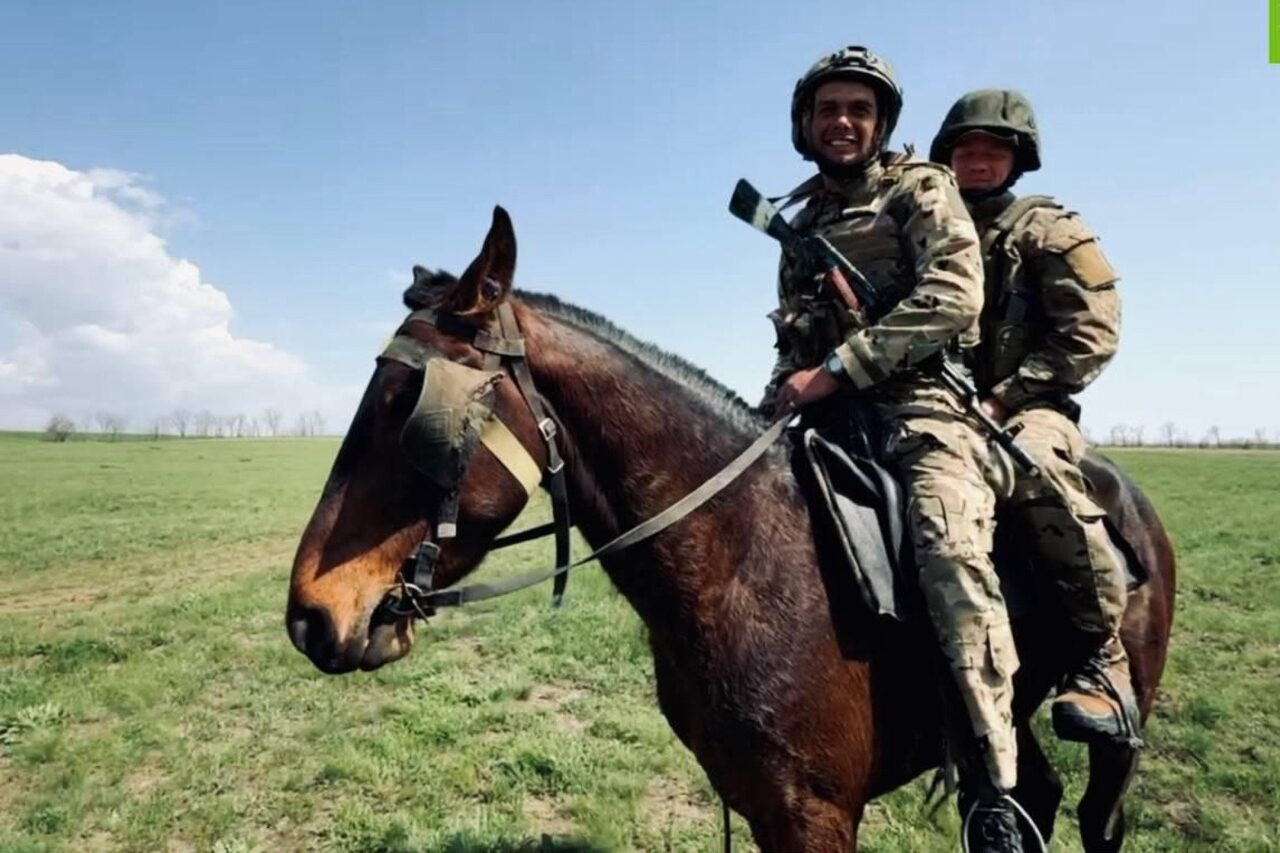
Financial indicators show that Russia is not reducing but increasing its military efforts. Defense and arms spending in 2024 amounted to 7.1% of GDP (38% more than in 2023), or almost $149 billion. For comparison, Germany, Europe’s leading economy, spent $88.5 billion in the same year, or 1.9% of GDP. This difference indicates not attrition but a shift to a military-mobilization model. The Kremlin has reallocated budget resources in favor of defense and the defense-industrial complex at the expense of civilian sectors, indicating that it intends to continue fighting.
In the long term, Russia plans to increase the capabilities of the military-industrial complex and form a state arms program based on the future combat capabilities of the Russian army. This was stated by Russian Defense Minister Andrei Belousov. The issue is not about the number of tanks or missiles, but about the formation of combat scenarios for which the economy and the military-industrial complex are being rebuilt in advance. This suggests that Russia is institutionalizing war as a normal state of affairs.
The changes also affected the mobilisation processes. To increase efficiency, recruitment will be carried out throughout the year, and conscripts will have the opportunity to pass all the necessary tests for the selection of candidates during this time, and distribution will take place in the spring and autumn. Belousov reported that 410,000 volunteers signed contracts in 2025 alone. Thus, the changes in the conscription system format are aimed not at short-term replenishment of losses but at creating a stable mechanism for constant replenishment of personnel.
Russia is not inclined to peace and will agree to cease hostilities in Ukraine only on its own terms. The rhetoric of the Russian president in public speeches is aimed at preparing society for a protracted war, which suggests that the Kremlin views the military path as a long-term foreign policy instrument and not exclusively as a stage of the war against Ukraine.
Military escalation
On January 6, Ukraine, together with France and the United Kingdom, signed important political agreements on cooperation and security, including on the future deployment of multinational forces after a possible end to the war. The Kremlin has said that deploying a foreign contingent on Ukrainian territory would escalate the “conflict.” On January 8, Russia attacked the Ukrainian city of Lviv with an Oreshnik-type ballistic missile, which the Russian government positions as an element of strategic deterrence. This strike fits into the logic of demonstrative escalation, directed not only against Ukraine, but also toward Western partners—given the type of weapons used, the proximity of the target to NATO borders, and the timing of the attack, which coincided with the intensification of diplomatic initiatives by the West.
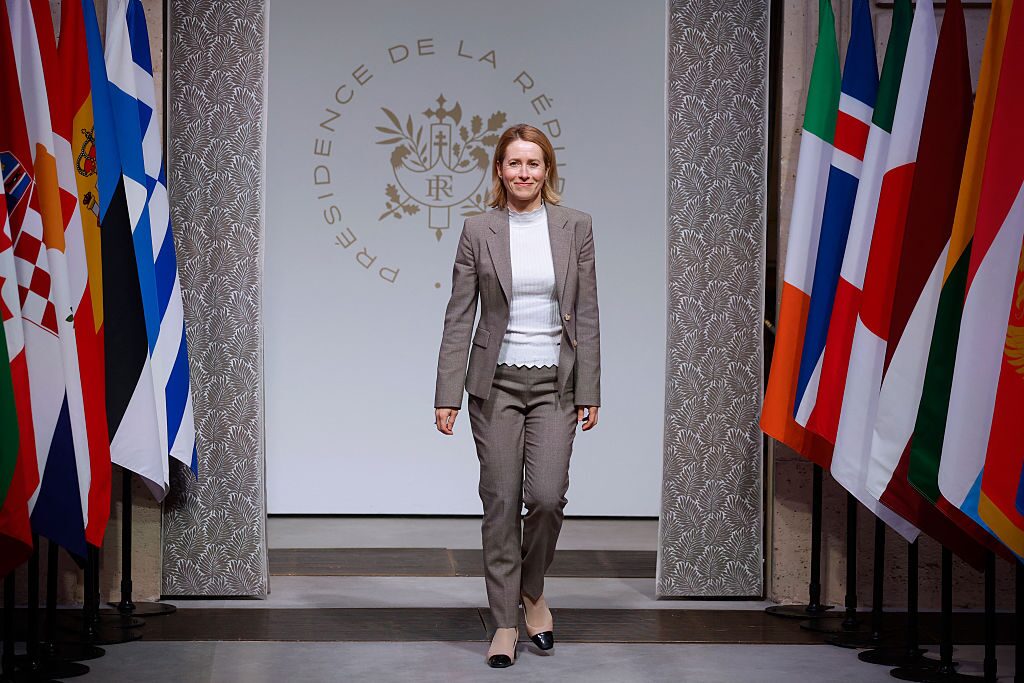
After the attack, Kaja Kallas wrote on her X page that she does not see any desire for peace rfom the Russian side, but it is important to provide security guarantees for Ukraine:
“Putin doesn’t want peace, Russia’s reply to diplomacy is more missiles and destruction. This deadly pattern of recurring major Russian strikes will repeat itself until we help Ukraine break it.
Russia’s reported use of an Oreshnik missile is a clear escalation against Ukraine and meant as a warning to Europe and to the US.
EU countries must dig deeper into their air-defence stocks and deliver now. We must also further raise the cost of this war for Moscow, including through tougher sanctions.“
Thus, against the backdrop of declarative readiness for security guarantees, the Kremlin responds with escalation, which once again undermines the very idea of a negotiated compromise.
Oleksiy Melnyk, Co-Director of the Razumkov Center’s Foreign Policy and International Security Programs, shares his observations regarding current changes in the military planning and industrial defense of the Russian Federation:
“I would still say, or at least assume, that Russia has no intention of ending the war on the basis of some compromise. The option that could suit Russia is the gradual capitulation of Ukraine. And the first step is to agree to the conditions that are put forward: this is a voluntary withdrawal from the government-controlled territories of the Donetsk and Luhansk regions and the assumption of obligations regarding non-joining NATO.
But anyone who knows Russia should clearly understand that Russia will not stop there. This will be followed by the next demands and the next until a pro-Russian regime is established, which will deprive Ukraine of any subjectivity. This is if we are talking about the goals and options for ending the war, Russian aggression against Ukraine.”
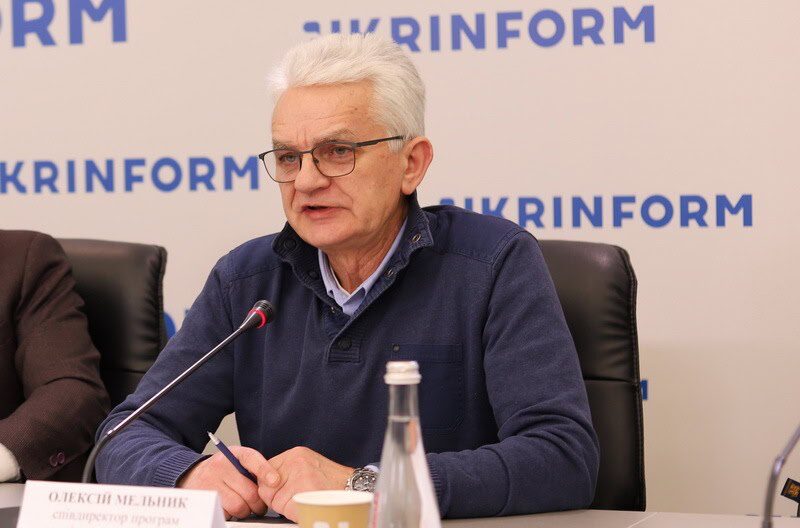
War for Russia is a format of existence, says Melnyk, they will seek the gradual capitulation of Ukraine:
“If we consider the prospects in general, the war today has become a format of existence for Russia for a longer period. If in 2022 for Ukraine it acquired an existential character, then for Russia it was a war of choice. That is, Putin could start, he could not start. And today he and his entire Putin regime have already fallen into this trap. They cannot stop. This is already the format, the modus operandi of the Russian economy, Russian society, and in principle the existence of the Russian regime.
Therefore, if we look at the events in Ukraine, one option is that Russia will seek a gradual surrender from it.
The second option is if under some circumstances, it is even difficult to say what they are, Donald Trump will take some radical actions and Russia will stop, the fire will cease. “However, the military machine cannot be stopped – this over-excited flywheel will have to be directed somewhere. And the most threatening direction today, let’s say, is the Baltic countries, Estonia in particular.”
Oleksiy Melnyk notes that the main goal of the peace plan is to undermine Ukraine from the inside and create a split between the allies:
“If you look at the first draft of this plan, there were 27 points, you can see the extremely low quality of the project preparation.
It seems as if it was written on some kind of napkin, with points scribbled on and on, not always connected, perhaps united by some specific idea, but this is not typical for Russia. And this is a sign that the authors of this draft of 27 points were definitely not going to work on it to come up with some acceptable option. But, if we look at the example of the Minsk agreements, authored by Kozak, as we know, one of Putin’s closest aides who was removed, then there, in these agreements, a plan was clearly traced – how to achieve the goals that were in Russia at that time, which in principle have not changed – the undermining of Ukraine from within. How to achieve goals with a peaceful plan.
He was an evil genius, Kozak, his plan in itself was brilliant. I mean in its cunning, in its sequence of actions, which was not visible in this project. Therefore, it is obvious that the main purpose of these proposals and in general of Russia’s participation in the negotiation process is to avoid sharp movements on the part of Trump.”
In his opinion, there are additional goals for which the peace plan is used:
“In addition, there are other goals that are also being used. This is to create a split between Europe, Ukraine, and the United States. Putin wants to delay the moment when Trump “slams the door loudly,” imposes some effective sanctions, or takes some radical action. At the same time, he wants to play on these vulnerabilities that are now emerging between Europe and the U.S.”
Peace as an instrument of war
Gustav Gressel, a political-military analyst and former senior fellow at the European Council on Foreign Relations, who now works at the Austrian Ministry of Defense, notes that Russia can theoretically declare its readiness for peace, but the question is whether it is capable of it in practice.
“For a totalitarian regime, mobilisation against the enemy is something practical. Also the threat of being sent to the frontline is a better one than just the threat of being sent to jail. Of course it would be difficult to pivot away from the wartime production model, but it would be feasible.“
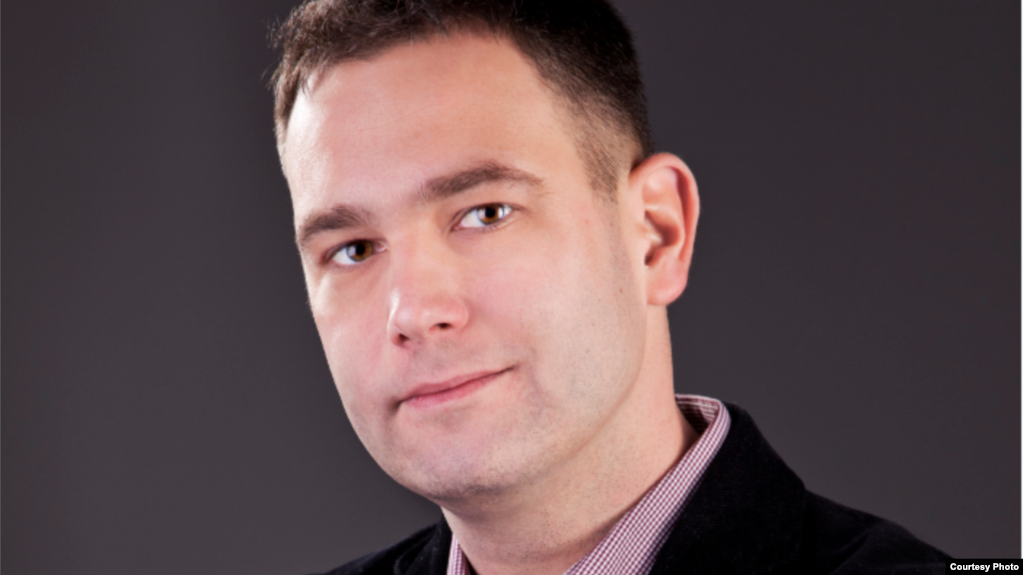
Gressel believes that peaceful rhetoric is being used as a tool, which is why Moscow is negotiating with Witkoff and his colleagues.
“I think this is the main and sole purpose why Moscow is even talking to Witkoff and consorts. To divide the West, peel off the US from the coalition of supporters to erode public support for continuous arms-supplied to Ukraine, fake-negotiations are a useful tool.“
The term “negotiations”, in his opinion, has a different meaning for Russia and the West. Each interprets it in their own way:
“There is quite a different meaning of the term “negotiation” between Russia and the West. For the West, negotiations are an alternative to war. The prospect of a peaceful solution, or if not a solution, at least a state of non-violent conflict that can be managed by guys in suits and ties rather than combat gear. For Russia on the other hand, negotiations are part of the war-effort. The Foreign Ministry, so to say, covers the paper-flank of the military. “
Gressel says the talks are only needed to isolate Ukraine and cut off Western aid. This is a military operation against opponents that takes place before hostilities begin.
“Negotiations are to increase the chances for successful military operations against her opponents before the war (weakening the enemy through arms-control and arms-limitation treaties, isolating the victim through neutrality provisions, vetoing preparations for defence though collective security organisations, etc.) or to improve the Russian army’s chance of winning a war (by concluding fake ceasefires and the ceasefire conditions would allow Russia to restart the war under better conditions, etc.).
Because of this different perception in the aim and value of negotiations, Westerners — in the past rather the Europeans, now the Americans are the naive guys — often fall for Russian “negotiation” attempts or completely misjudge the situation.“
The analyst agrees that Russia’s current policy is aimed at long-term confrontation with the West:
“As far as we know the current contracts for Russia’s defence industry, they do not intend to scale back for the years even after a possible end of the war. They are building up military infrastructure in Belarus and close to the NATO border in Finland, they are ramping up their recruitment for subversive agents to prepare for escalation.
Their armed forces are not to be de-mobilised after the end of the war of aggression against Ukraine, but military units than distributed to the newly conquered territories, Belarus and the Leningrad military district.“
Gressel recalls the methods Russia used before its full-scale invasion of Ukraine. He shows that all the tools Russia used before are now directed at the West:
“We need to remember that the aggression against Ukraine had a long prelude, from ramping up the propaganda war (2003), then building up political proxy organisation inside Ukraine (1997-2014), then preparing for covert military operations (2007-2014), then executing that covert military operation (2014-2022), preparing for the full scale invasion (2014-2022) and then executing it. Now regarding Europe, we see preparation for both covert and open aggression. If Europeans are unable to set up a credible deterrence, they will have their very own 2014 or 2022.“
Conclusion
War has ceased to be merely an instrument of Russian policy—it has become its foundation. There has been a transition from an authoritarian state to a military dictatorship. War has been institutionalized as a model of state existence. It is not a question of whether Russia wants to fight, but of the fact that it no longer has any other way of existing.
Understanding this forces us to look at the process of negotiations and the agreement on a peace agreement between Russia and Ukraine differently. For Ukraine, this does not mean the end of the war, but a change in its form.
The efforts of European leaders to restore contact with the Kremlin’s master and the signing of political declarations with Ukraine on possible security guarantees without visible practical results indicate that the West is simultaneously preparing for war and trying to avoid it.
It is important to realize that the policy of negotiations and “appeasement” or bribery no longer works. The stakes have risen—and it is time to act. There is no reason to expect the Kremlin to do otherwise.