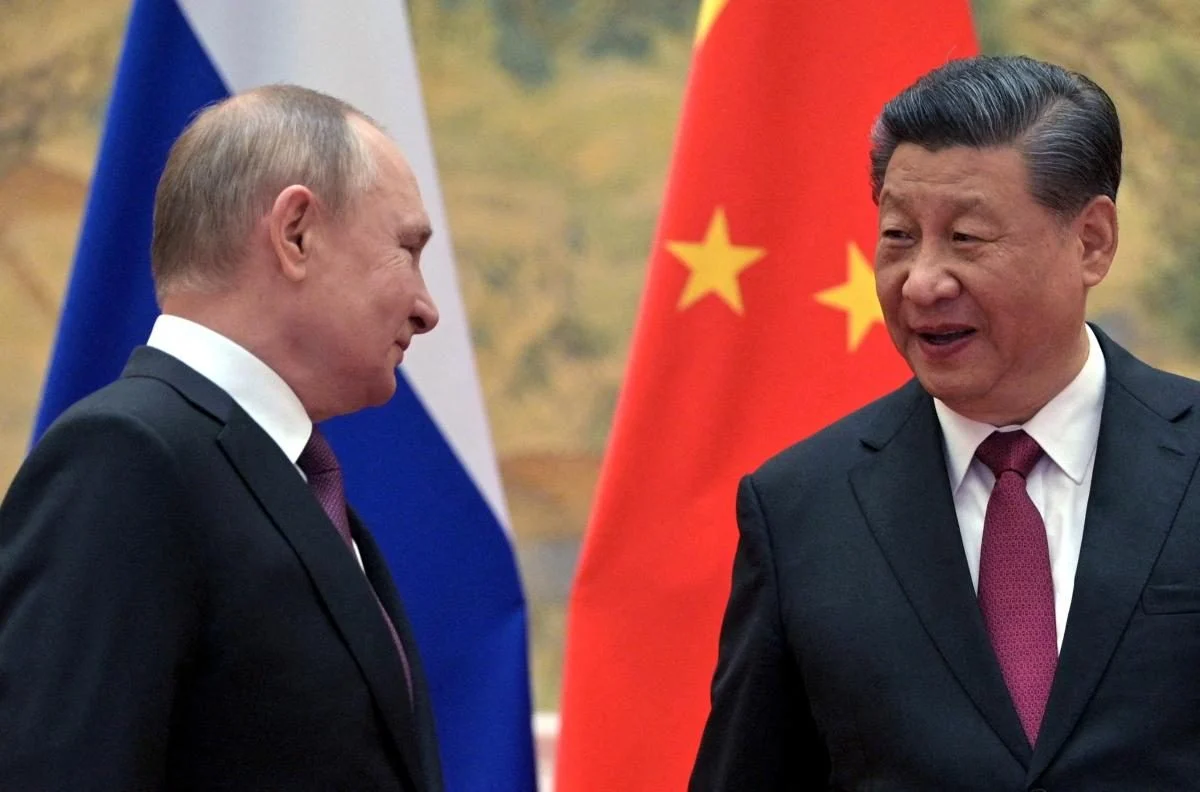


In 2023, Chinese media systematically avoided directly recognizing Russia as a party to aggression. The war was presented as a “conflict” or “crisis” that allegedly arose due to NATO expansion, US actions, and internal processes in Ukraine. Official statements of the Russian Ministry of Defense, which were published without alternative assessments or verification, often served as sources of information.
Such narratives included allegations of US-funded biolaboratories in Ukraine, the presence of NATO military personnel on Ukrainian territory, and the treatment of the Azov unit as a “neo-Nazi group.” All of these messages coincided with key elements of Russian propaganda and were aimed at removing responsibility from Russia and forming the perception of the war as a consequence of the actions of third parties.
To analyze the current rhetoric of Chinese media, some of the main media outlets were taken – Global Times, People’s Daily, and China Daily. According to Similar Web, the audience of these newspapers is over 500,000 people.
How rhetoric has changed in 2025
In 2025, the central element of rhetoric remains the term “conflict” rather than “war,” which allows China to continue to avoid a clear legal and political assessment of Russia’s actions.
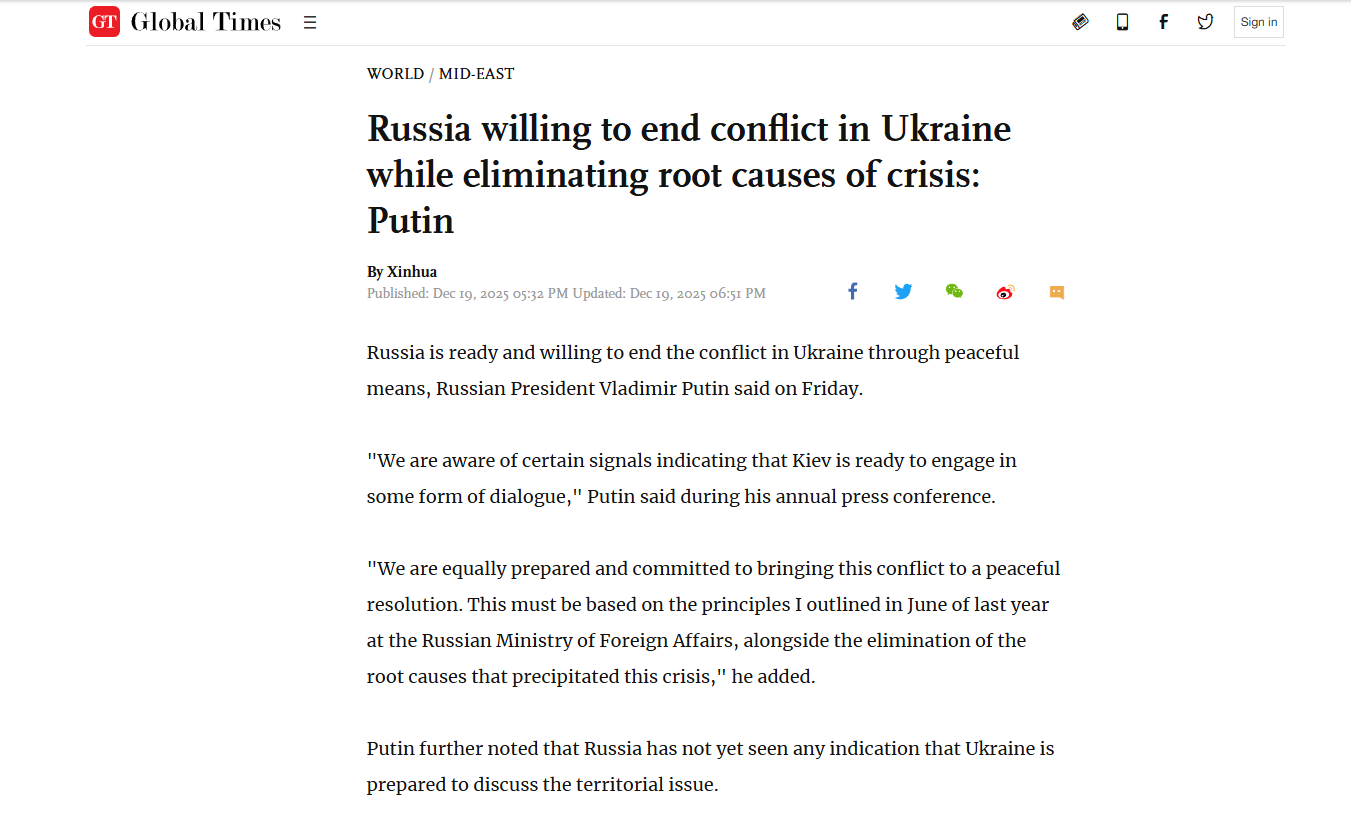
At the same time, current publications focus much more often on the topic of peace negotiations, diplomatic initiatives, and “eliminating the root causes of the crisis.” In statements that are actively quoted by the Global Times and China Daily, Russia appears as a party ready to end the conflict provided its demands are taken into account, while the US and the West are presented as factors that either put pressure on Ukraine or are not interested in a real settlement.
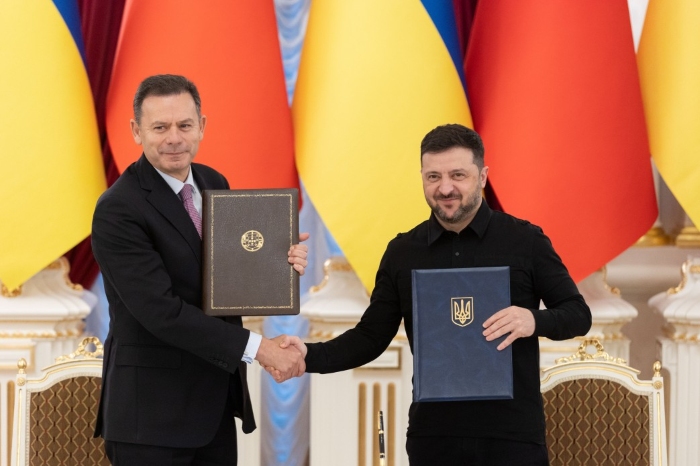
Another change is also noticeable: the Ukrainian side appears in the information field not only as an object of external influence, but also as a participant in the negotiation process. The People’s Daily materials cite statements by Volodymyr Zelensky, Ukrainian officials, and Kyiv’s position on “red lines” in peace agreements, in particular the issue of territorial integrity and the Constitution.
However, even in this case, Ukrainian subjectivity is presented in a limited way: key decisions allegedly depend on Washington, and Ukraine itself is seen as a party forced to maneuver between external centers of power.
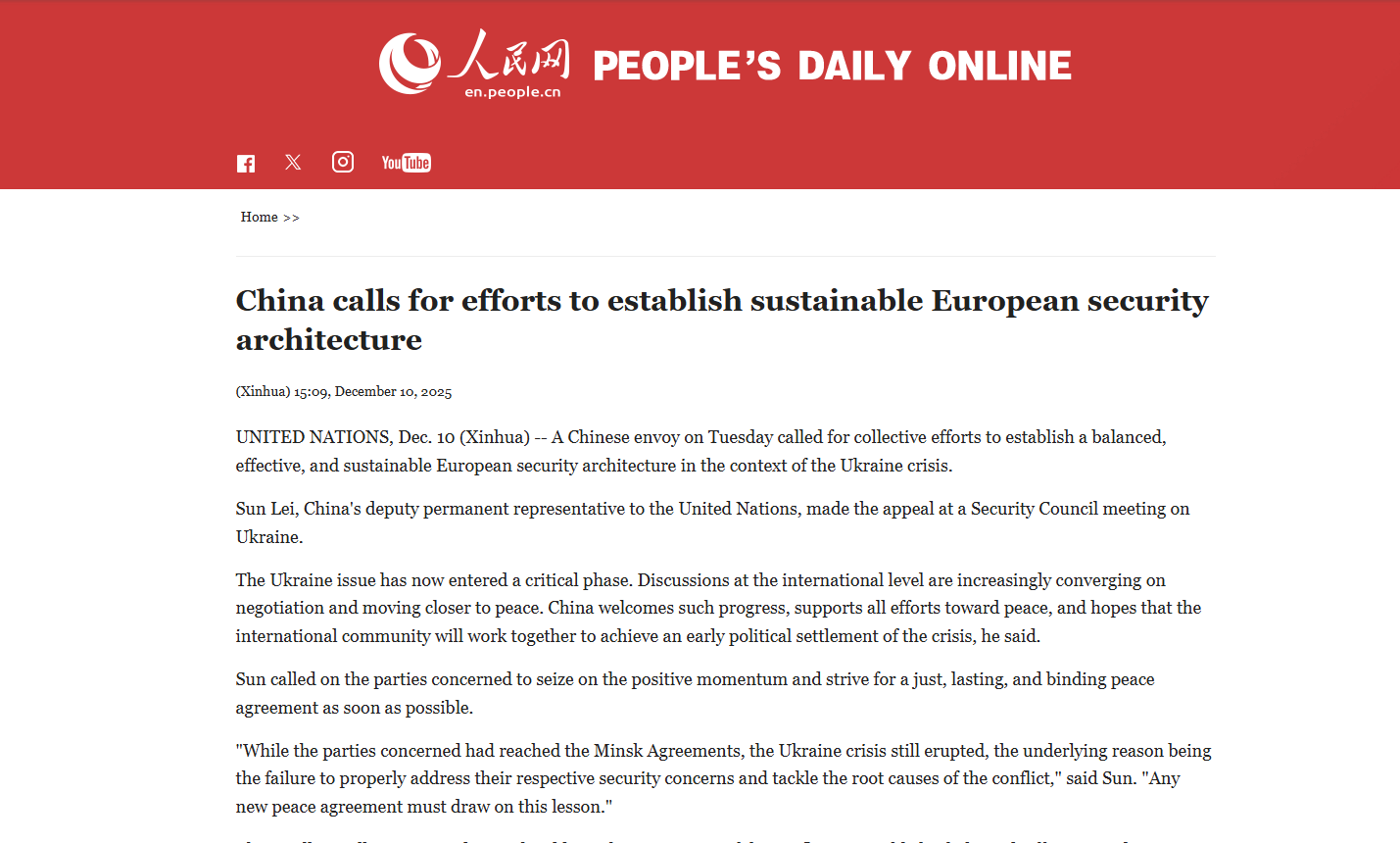
An important feature of the current rhetoric is the active promotion of the image of China as a responsible global actor and potential mediator. Calls for “creating a stable European security architecture” and emphasizing the need for negotiations allow Beijing to position itself as a neutral party interested in stability.
At the same time, the very logic of these calls remains close to the Russian interpretation of the war: the root causes of the conflict are sought not in an act of aggression, but in the security architecture, NATO actions, and US policy.
***
Thus, comparing the materials of 2023 with the current publications of the Chinese state media allows us to speak not about a change in the position, but about a change in the form of its presentation. If earlier direct borrowings of Russian propaganda theses dominated, now they have transformed into a more diplomatic, “peacemaking” discourse.
Chinese media less often resort to outright fakes like bio-laboratories or “Nazi Ukraine”, but they continue to avoid clearly naming the aggressor and continue to blur responsibility for the war.
Anna Romaniv