

Against the backdrop of external rhetoric about the “stability” of the economy, Russia is sinking deeper into economic difficulties. Formally, GDP is growing, but these figures hide signs of stagnation, critical debt burdens and a decline in industrial production. The situation in the lending sector and in certain sectors of the economy is particularly acute. The Kremlin is trying to maintain the illusion of stability, but actual data and signals from the market say otherwise: the Russian economy is entering a phase of systemic crisis.
Industrial production: signs of slowdown
In January 2025, industrial production grew by only 2.2% year-on-year, which is a sharp drop compared to 8.2% in December 2024. This clearly demonstrates a significant slowdown in industrial growth.
And in February 2025, compared to the previous month, industrial production fell by 0.4%, confirming the trend of further slowdown.
Key rate: record high
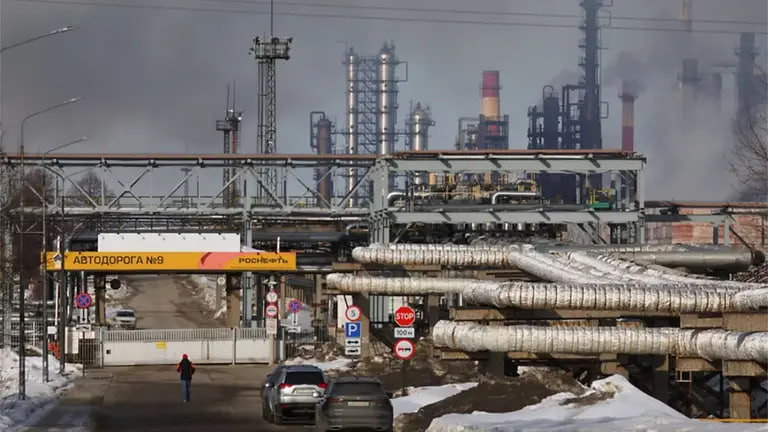
In April 2025, the Central Bank of Russia left the key interest rate at 21% – the highest level since the early 2000s. This was a response to high inflation, which in March reached 10.3% in annual terms. However, such a containment policy has serious side effects: it stifles economic activity, making it difficult for businesses to access credit.
The threat of mass bankruptcies
In January 2025, the Central Bank of Russia’s think tank warned of a possible wave of corporate bankruptcies in 2025. The share of enterprises where interest payments exceed two-thirds of profits has increased to 20%. About 25% of small businesses in Russia are on the verge of bankruptcy due to high inflation, excessively high interest rates and the loss of export customers.
Sectoral problems of the economy
In May 2025, Gazprom announced the refusal to pay dividends for 2024. The reason is debt service costs, which have doubled and reached 482.5 billion rubles.
In 2024, coal companies suffered losses of 91.3 billion rubles, while in 2023 they received a profit of more than 350 billion rubles. This is a vivid example of a sharp change in the situation even in industries that were considered profitable until recently.
Economic Growth Forecasts
The Russian Ministry of Economic Development forecasts GDP growth to slow to 2.5% in 2025, down from 4.3% in 2024. The Central Bank of Russia is even more cautious, estimating growth to be in the range of 1–2%. Given the already existing problems in industry and the debt burden, even these modest figures may be overstated.
Industrial Stagnation in Russia: A Signal of Deeper Problems
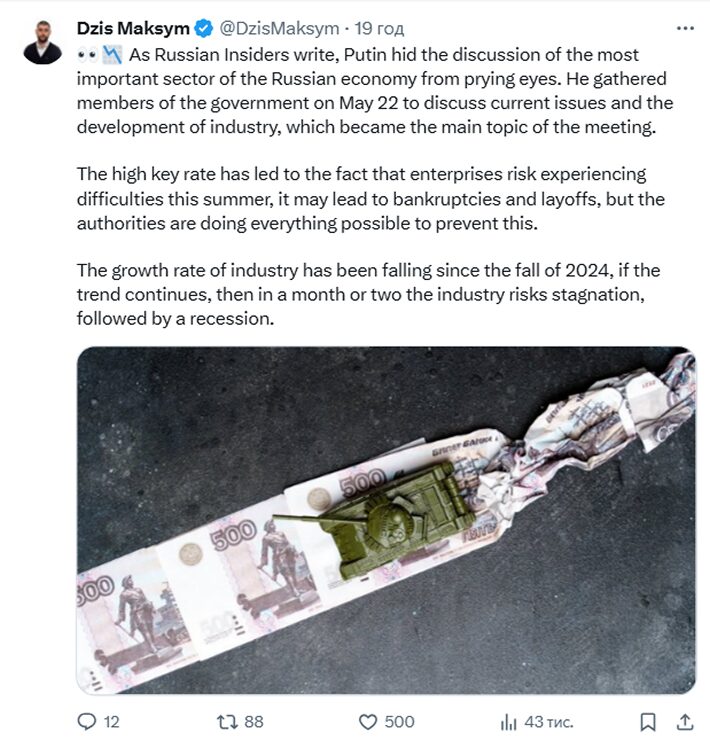
Despite the Kremlin’s attempts to present the situation as under control, economic reality tells a different story. The high key rate of the Central Bank of Russia is one of the main reasons why the country’s industry is rapidly losing momentum.
The cost of loans has become critical for enterprises. Financing for the renewal of equipment, raw materials and logistics has become inaccessible to small and medium-sized businesses. Large players are kept afloat only thanks to state subsidies, but even this is not enough to ensure growth.
The main factors pulling the industry down
Enterprises cannot afford expensive loans for operating activities due to the high discount rate. There is a decrease in domestic demand, as falling incomes and rising prices mean that manufacturers are facing a lack of orders.
Sanctions and logistical restrictions have reduced the export capabilities of enterprises. At the same time, small and medium-sized producers may leave the market as early as the summer due to financial instability.
If the current dynamics continue, Russian industry will soon enter a phase of stagnation. And this is a prerequisite for a deeper recession, which even manual management of the economy will not be able to stop.
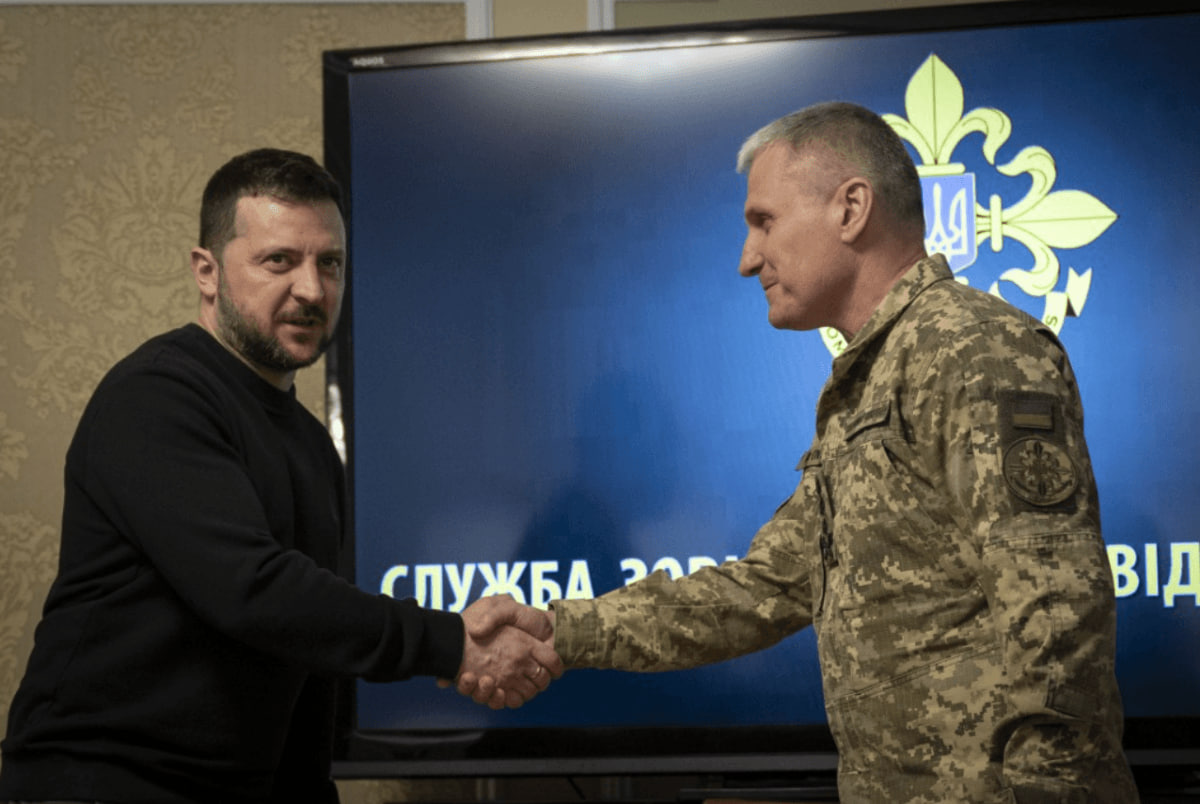
By the end of 2025, serious economic difficulties are predicted in Russia. In total, Russia’s military overspending in the first three months of 2025 will reach $5 billion, – the head of the Foreign Intelligence Service Ivashchenko.
By the end of this year, the Russian economy is expected to face problems with funds and labor resources. A large-scale crisis in the energy sector, housing and communal services, as well as a shortage of personnel, is possible, – he added.
Conclusion
The Russian economy is facing a classic overheating crisis. High interest rates, inflation, falling demand and export restrictions create a vicious circle. At the same time, the Kremlin’s public rhetoric is trying to create an illusion of stability, while systemic indicators signal a growing crisis.
The focus on “manual management” and “import substitution” projects are not able to compensate for the growing structural imbalances. If a deep revision of economic policy does not take place in the near future, Russia risks finding itself in a prolonged phase of recession with devastating consequences for the population and business.
Volodymyr Savchenko, CEO of “The Ukrainian Review”