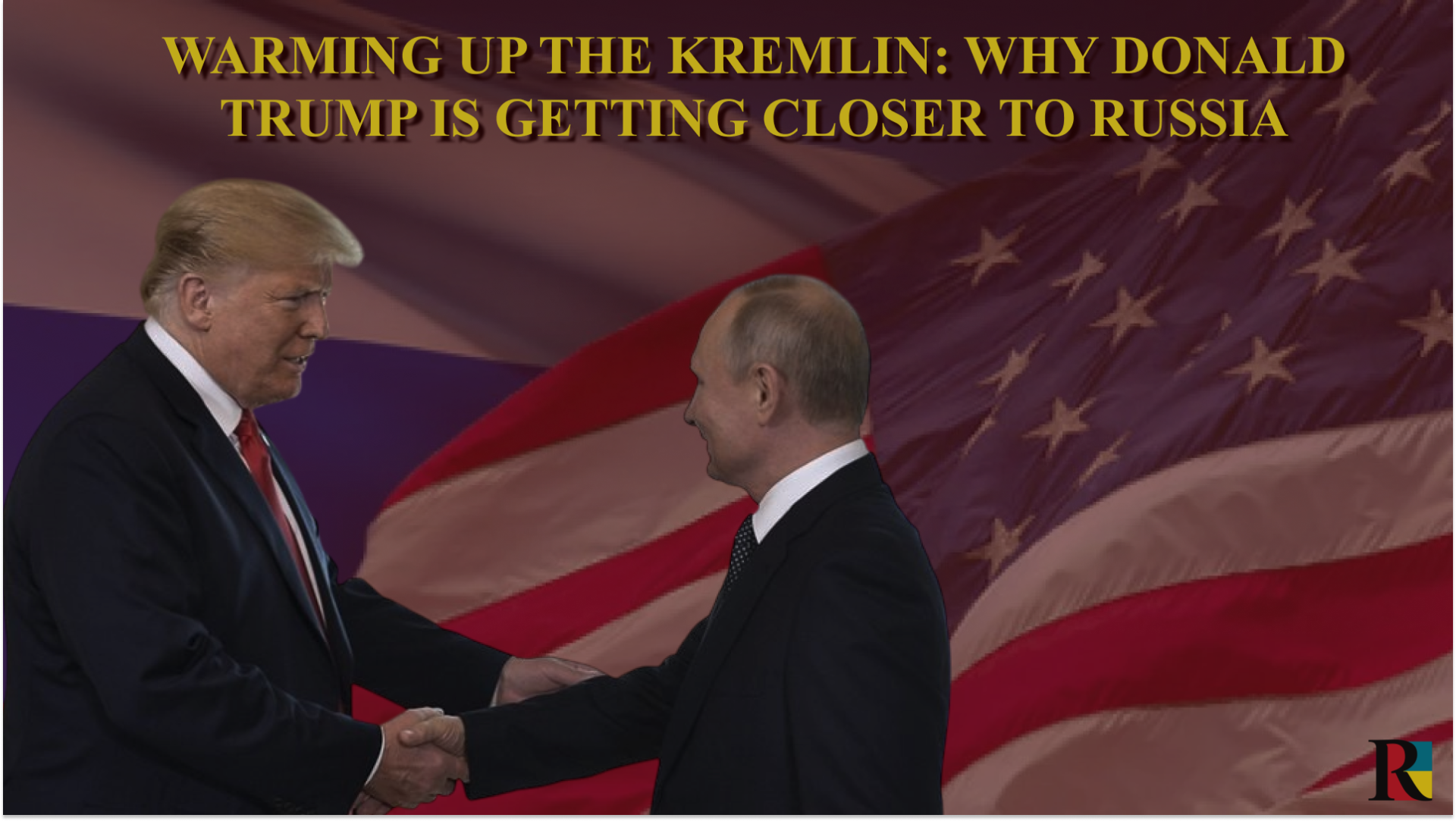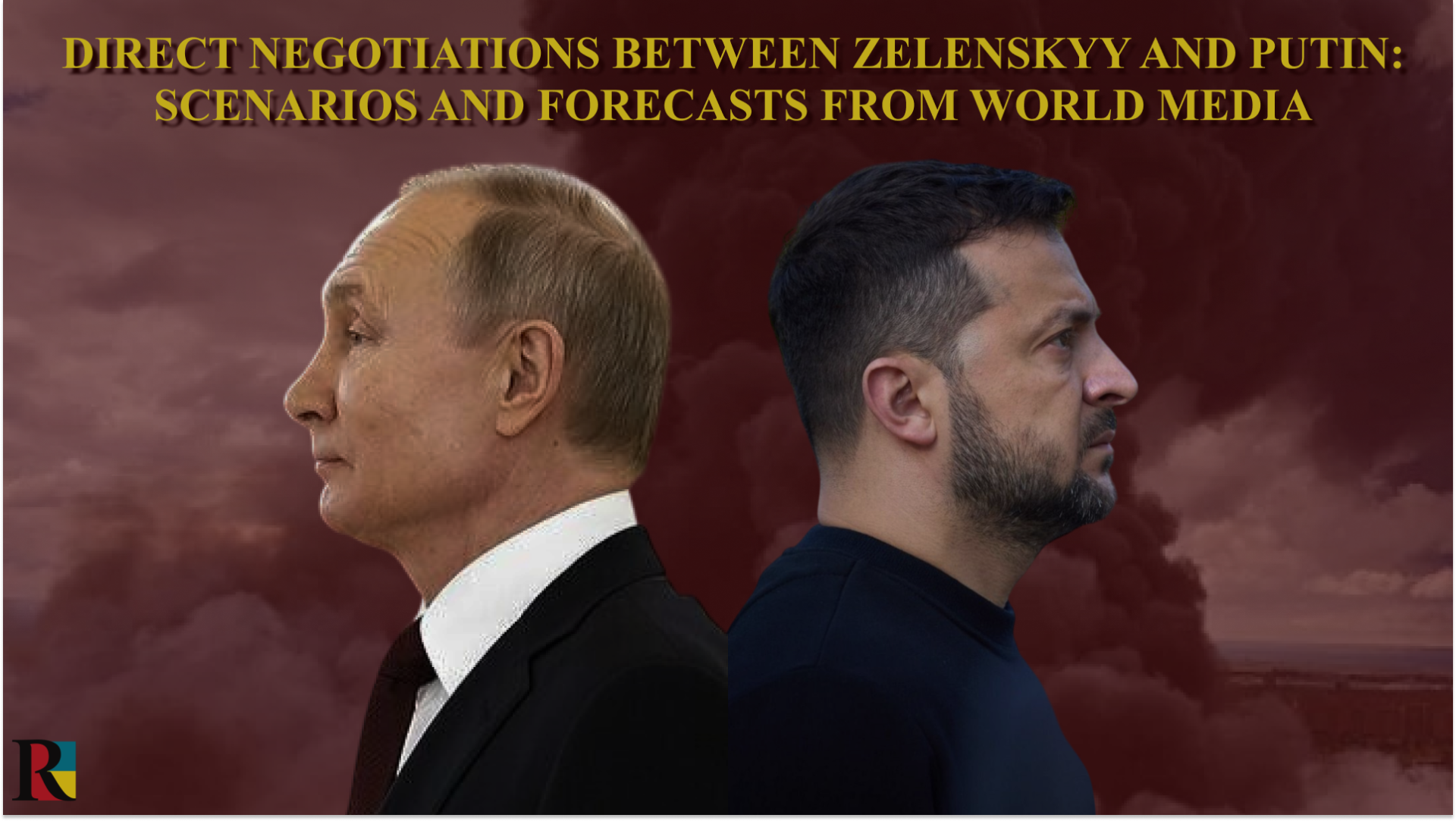


According to Ukraine news in Ukrainian, president of Ukraine Volodymyr Zelenskyy will arrive in Istanbul on May 15, 2025, for direct negotiations with Russian President Vladimir Putin.
Putin proposed the resumption of direct negotiations on May 15, rejecting the 30-day ceasefire proposed by Ukraine and the “coalition of the willing” (France, Britain, Poland, Germany) to begin a diplomatic end to the Ukraine war today. In the event of a refusal to cease fire, the West, together with the United States, was to impose new sanctions against Russia.
At the same time, as of May 13, 2025, there had been no official statements about whether Vladimir Putin would be present in Istanbul for the negotiations to stop war Russia-Ukraine. The Kremlin stated that the Russian delegation would wait for the Ukrainian one, but did not report on its composition.
We analyze below what the world media is writing about the possible negotiations on May 15 in Istanbul and what development scenarios they predict.
Russia has no point in negotiating: British media
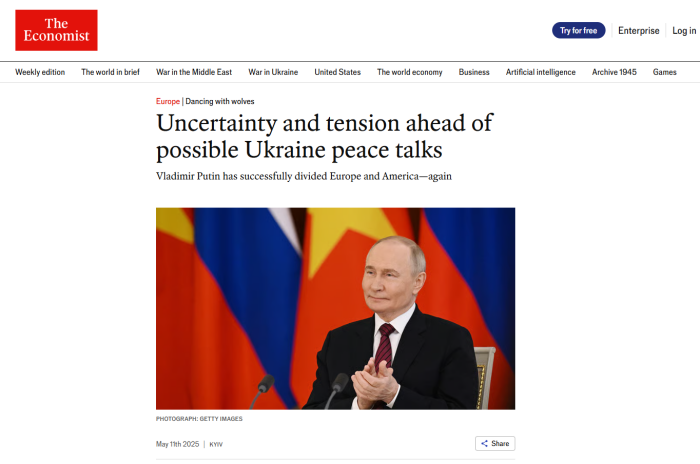
The Economist, in its article “Uncertainty and tension ahead of possible peace talks in Ukraine,” emphasizes that “Ukraine’s offer of an unconditional full ceasefire was a significant compromise”.
They also note that a return to the Istanbul talks in 2022 would involve a return to Kyiv’s “red lines,” but Volodymyr Zelenskyy is agreeing to them anyway. In this way, he hopes to show Trump that Putin is an obstacle to peace.
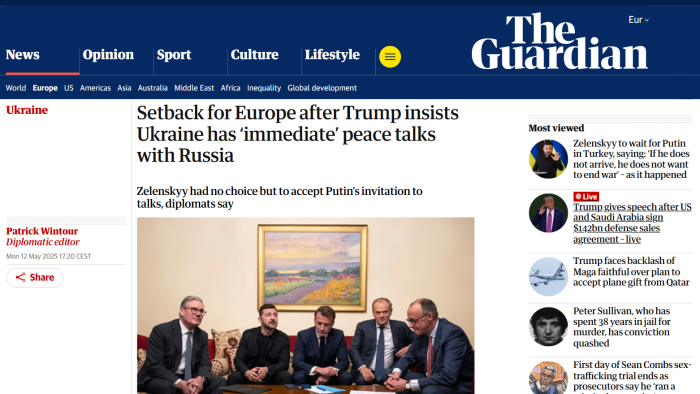
The Guardian article “A retreat for Europe after Trump insists Ukraine must hold “immediate” peace talks with Russia” states that “Zelenskyy had no choice but to accept Putin’s invitation to negotiate.”
At the same time, Trump’s insistence on these talks could undermine “Europe’s long-held plans to persuade the US to impose sanctions on Moscow for rejecting the US president’s offer of a 30-day ceasefire.” But the opposite could also convince the US president that Putin is the main obstacle to ending the war.
“If Putin delays the ceasefire or the talks in Istanbul, the aim will be to get back to Trump and urge him to admit that Putin is not interested in a just peace, only in Ukrainian surrender”, the article says.
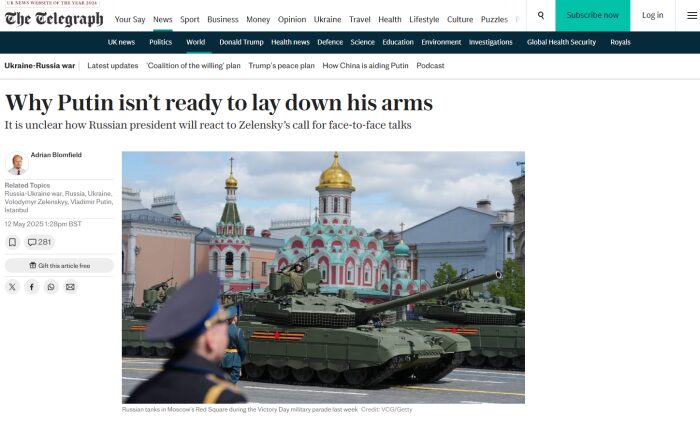
The Telegraph’s article “Why Putin is not ready to lay down his arms” says that the West had hoped to present a united front and force Putin to agree to a 30-day truce – but Trump “was only too happy to accept Putin’s sidelong rejection of his ceasefire offer and immediately backed his counter-offer of negotiations”.
Journalist Adrian Blomfield notes that Putin has the upper hand on the battlefield and has no desire to end the war, even if he is willing to discuss the terms of Ukraine’s surrender. He is also confident that Russia “will avoid serious US condemnation if the talks fail”.
Direct talks between Putin and Zelenskyy also seem unlikely, as they would require real substance and would challenge Russian propaganda about the Ukrainian leader’s illegitimacy. While there are signs of talks, it is not clear at this time why Putin would make concessions when he has already reaped significant benefits without any effort.
Trump Wants to Be Convinced That Putin Doesn’t Want Peace: US Media
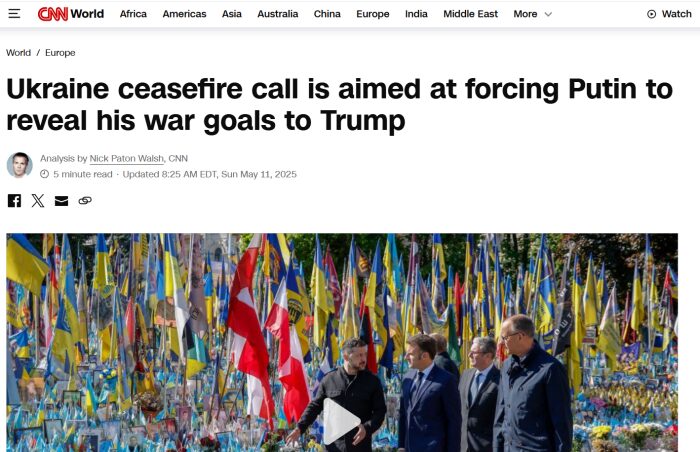
CNN published an article with the already telling headline “Call for a Ceasefire in Ukraine Aimed at Making Putin Reveal Trump’s War Goals.”
The article says that Europe is indeed pressuring Russia to accept the 30-day ceasefire proposal, but is also pressuring the White House to “step up and monitor the ceasefire.” European leaders are convinced that the Kremlin does not want an end to the war and are trying to convey this to Trump.
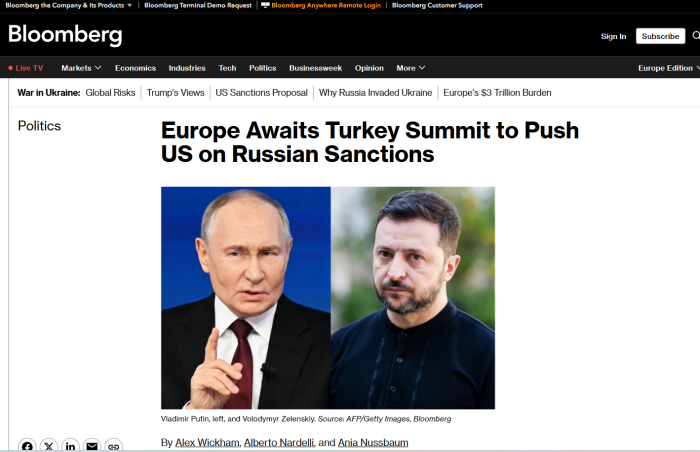
Bloomberg published an article “Europe Waits for Turkey Summit to Push US to Sanction Russia.” It says that if Putin refuses to meet with Zelenskyy or Russia does not agree to an immediate and unconditional ceasefire, European leaders will call on US President Donald Trump to continue sanctions against Moscow.
Journalists are also convinced that the Trump administration has prepared options for greater economic pressure on Russia if Putin refuses to negotiate.
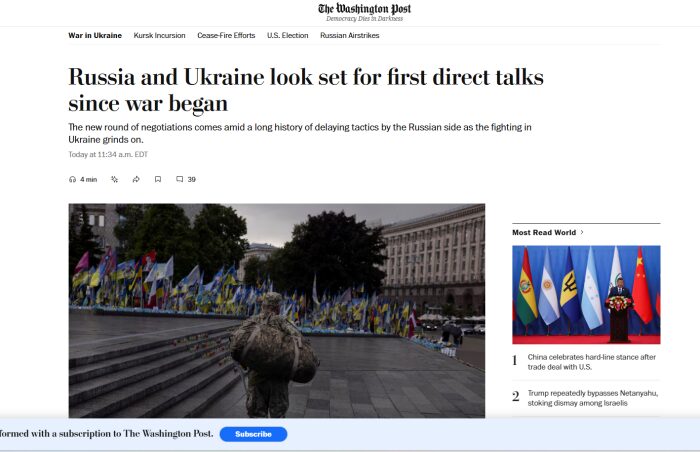
In the article “Russia and Ukraine Seek First Direct Talks Since the War,” The Washington Post, the journalists note that Putin’s offer of talks in Istanbul buys “precious time” by postponing demands for a 30-day ceasefire.
The journalists write that Zelenskyy is ready to meet with Putin, but Putin is avoiding direct contact in order to maintain his image as a “strong leader.” The likelihood of negotiations depends not so much on Russia’s will as on Trump’s position, which could give Putin the opportunity to save face. The war is approaching a critical juncture – either a diplomatic solution or a new wave of escalation from Russia.
Trump avoids confrontation with Putin: French media
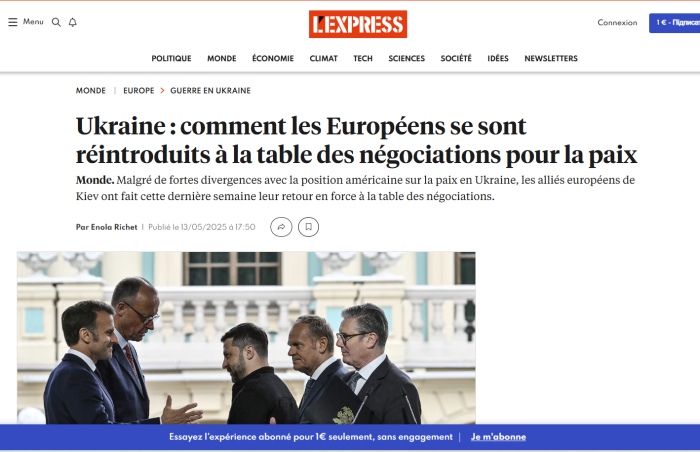
LEXPRESS media published an article “Ukraine: how Europeans have returned to the negotiating table for peace”, which states that European leaders are currently trying to convince Trump to take a “firmer position on Putin”. However, Trump is currently “avoiding confrontation with Putin”.
The journalists also emphasize that Putin practically immediately refused the proposed ceasefire, continuing the nightly bombing of Ukraine.
The article “War in Ukraine: Will Trump, Zelenskyy and Putin end up in Istanbul?” from L’Humanité states that Donald Trump called on Ukraine to accept the Russian proposal to start negotiations.
However, from official information it looks like Putin will not arrive in person for the negotiations. The journalists also emphasize that despite diplomatic efforts, hostilities continue.
Putin trapped: German Media
In the article “Putin Ignores European Ceasefire Ultimatum in Ukraine” by Der Spiegel, journalists write that Putin “supposedly wants to talk, but continues to bomb.” They also note that after the Russian offer of talks, Ukraine was under attack by drones all night.
The publication notes that the Kremlin did not announce Putin’s participation in the talks in Istanbul, but this meeting will be the first personal meeting between Zelenskyy and Putin since December 2019.
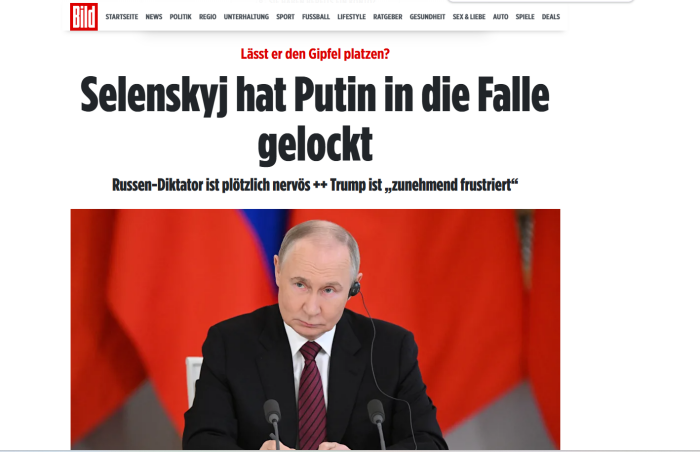
Another article “Zelenskyy Lured Putin into a Trap” Bild says that Vladimir Putin did not expect the offer to meet Volodymyr Zelenskyy in person. And now he is nervous because he does not want to see Zelenskyy, but he cannot cancel Trump’s possible anger if he does not come.
China supports peace talks: Chinese media
Chinese media ChinDaily published several news items on the topic of Russian-Ukrainian talks in Istanbul. It also separately published the news item “Russia focused on long-term settlement in Ukraine”, in which it quotes Kremlin spokesman Dmitry Peskov as saying that Russia “is ready to work on a long-term settlement in Ukraine”.
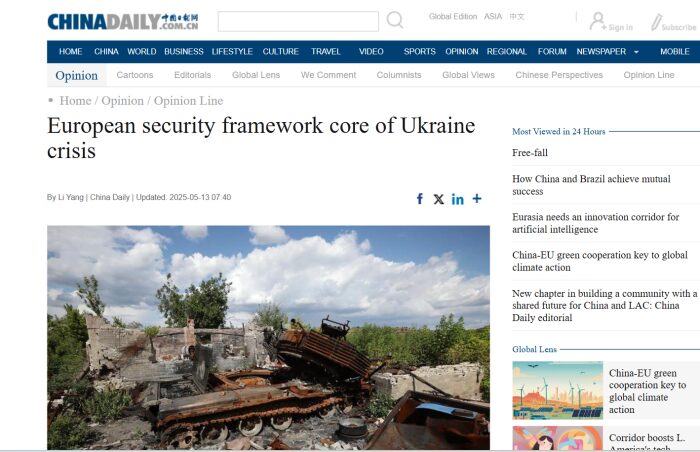
In the article “European Security Framework for the Crisis in Ukraine”, the journalists note that Putin wants “the US to keep Europe away from the negotiating table”. They also write that the US has been putting pressure on Ukraine for 3 months, and it has agreed to significant concessions, including territorial ones. They also emphasize that China supports dialogue and a peace agreement.
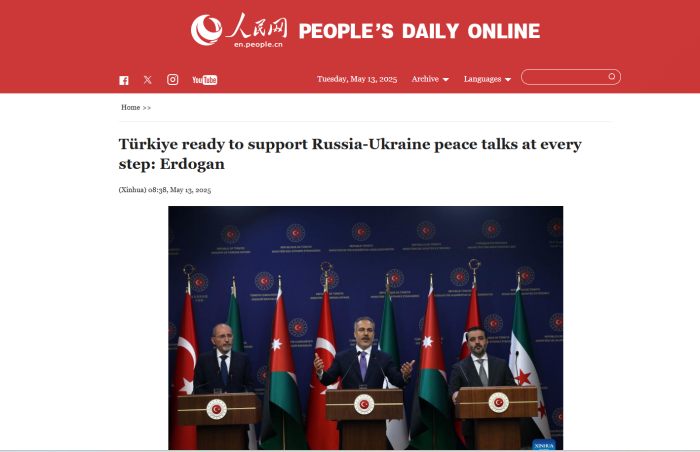
The People’s Daily media only emphasizes that Turkey supports the Russian-Ukrainian talks at every step. However, there are no other analytics or forecasts for the meeting.
***
Possible direct talks between Volodymyr Zelenskyy and Vladimir Putin in Istanbul on May 15 have catalyzed a global debate about the Kremlin’s real intentions, the role of the West, and the US position. For the most part, the world media is covering these talks not as a chance for peace, but as a tool for political pressure on the US – to demonstrate who is actually blocking a diplomatic settlement.
Analysts agree that Putin is not interested in real peace, but only wants to buy time, preserve his image, and avoid new sanctions. At the same time, Zelenskyy, despite the military and political risks, is demonstrating a willingness to engage in dialogue – to expose the true essence of Russia’s position to the world community.
Thus, the talks in Istanbul may not be the beginning of a peace process, but another test for diplomacy, a test for the West, and a key moment that will determine the further course of the war – either the path to an end to hostilities, or a new wave of escalation.
Anna Ostymchuk