

Trump’s “peace” initiative has met with little success. Putin has been stepping up his attacks on civilian targets for weeks. He has been sending hundreds of drones and missiles. His “Russian World” means destruction and death for the people of Ukraine.
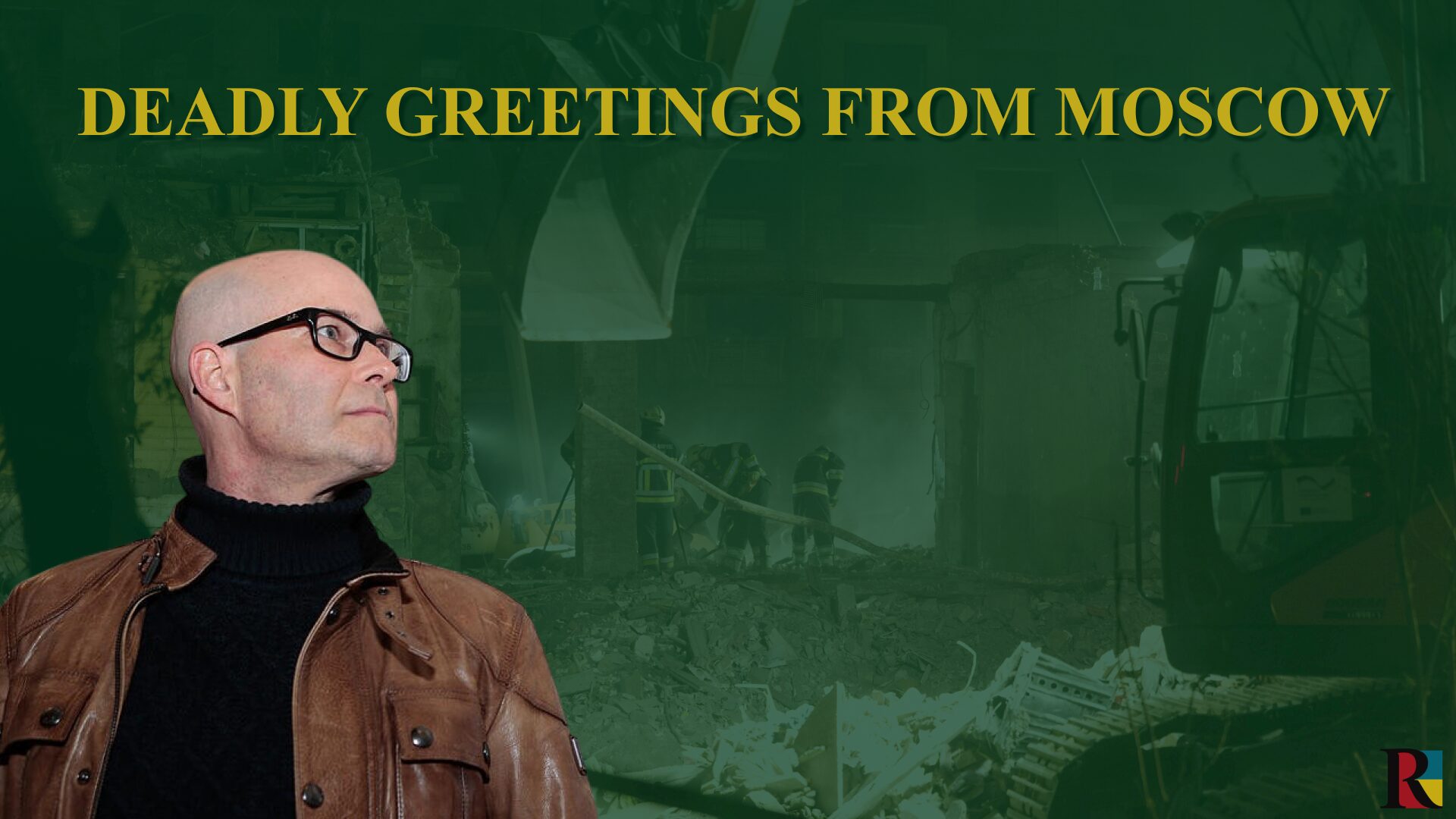
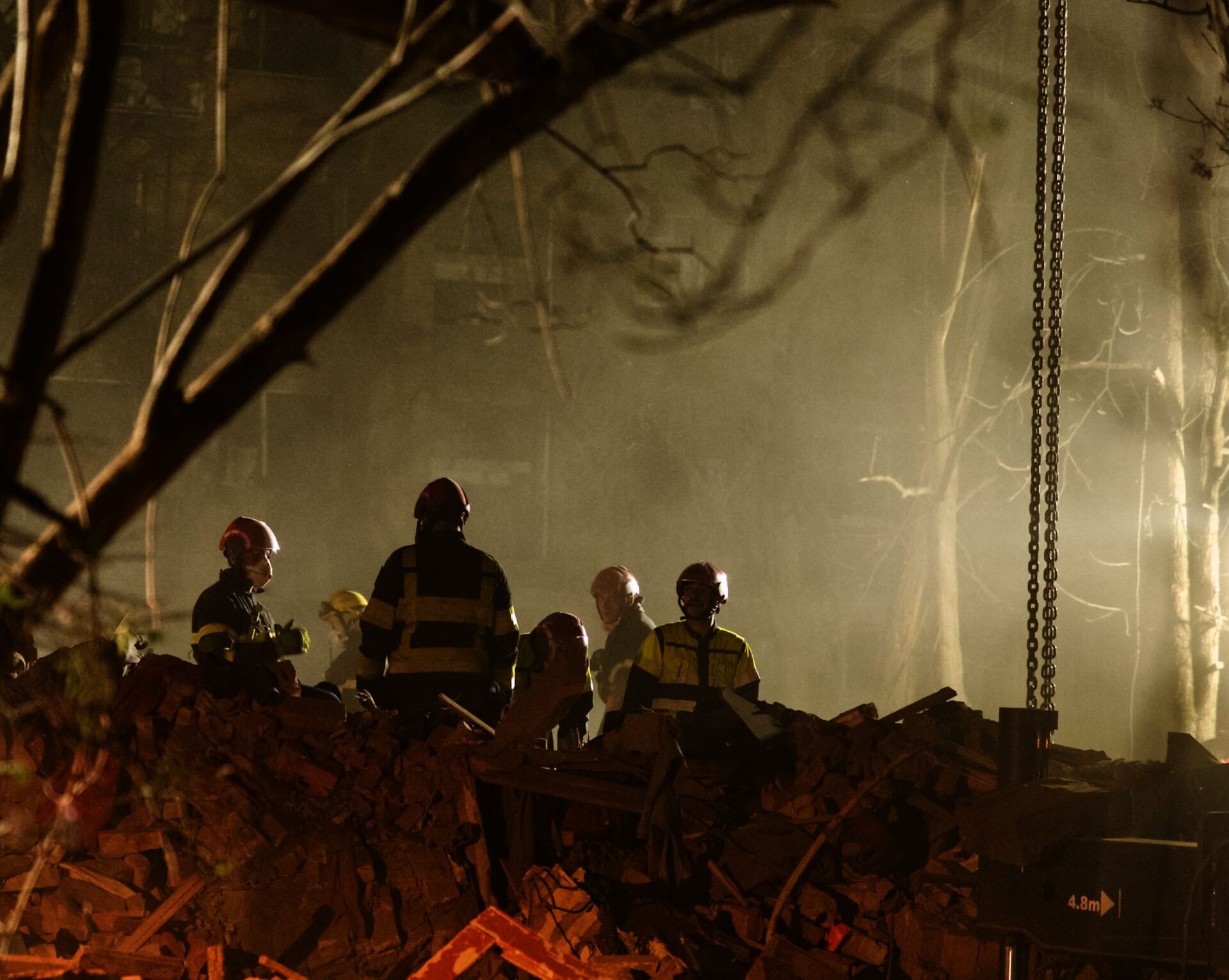
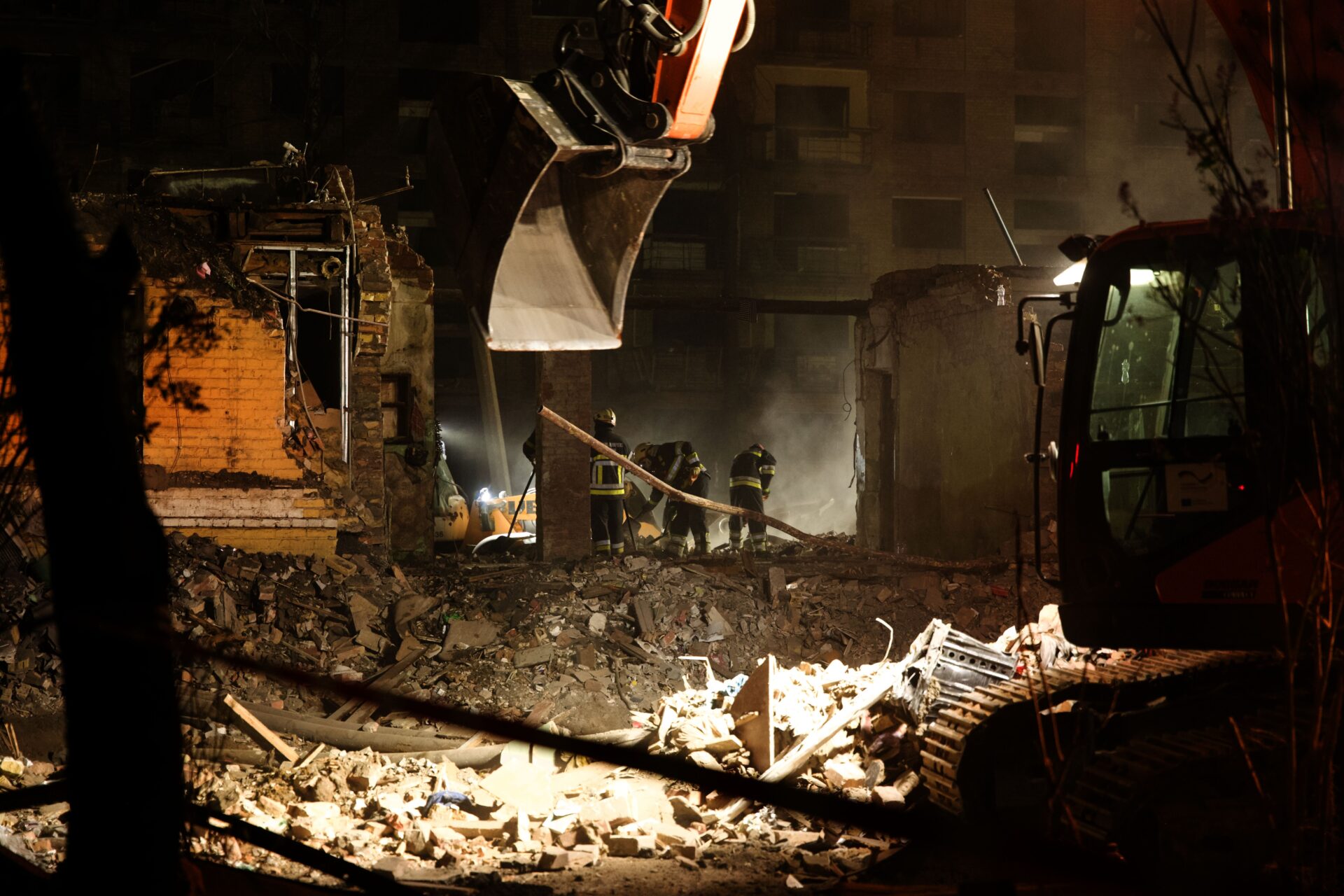
Kyiv/Sumy. Chunks of wall stick out like sore thumbs from a mountain of rubble. This is all that remains of the building. A few walls that defiantly remain standing. In the middle of the rubble. The evening turns to blackness. Searchlights shine over all the ruins, the light lingering in the mighty clouds of dust. In the spotlight, the excavator makes its way through bricks, beams, and boards. The residents have not yet been found. Firefighters stand ready under the rubble to find their bodies. It’s a sad picture in Kyiv that has been repeating itself since the beginning of the invasion. Just like this weekend.
However, the intensity of the attacks has been increasing for several weeks in a row. Twelve people were killed and 70 wounded when, for example, Russia launched a combined drone and missile attack on the night of April 23-24. The explosion from the strikes and the triggering of air defense systems shook the Ukrainian capital, as it has on many other nights. But this attack is particularly severe. And it comes at a time when U.S. President Donald Trump wants to present himself as a peacemaker. The people of Kyiv and Ukraine do not feel any signs of peace at hand. The attacks continue unabated. Last weekend was another nightmare for Kyiv residents. Dozens of dead and wounded.
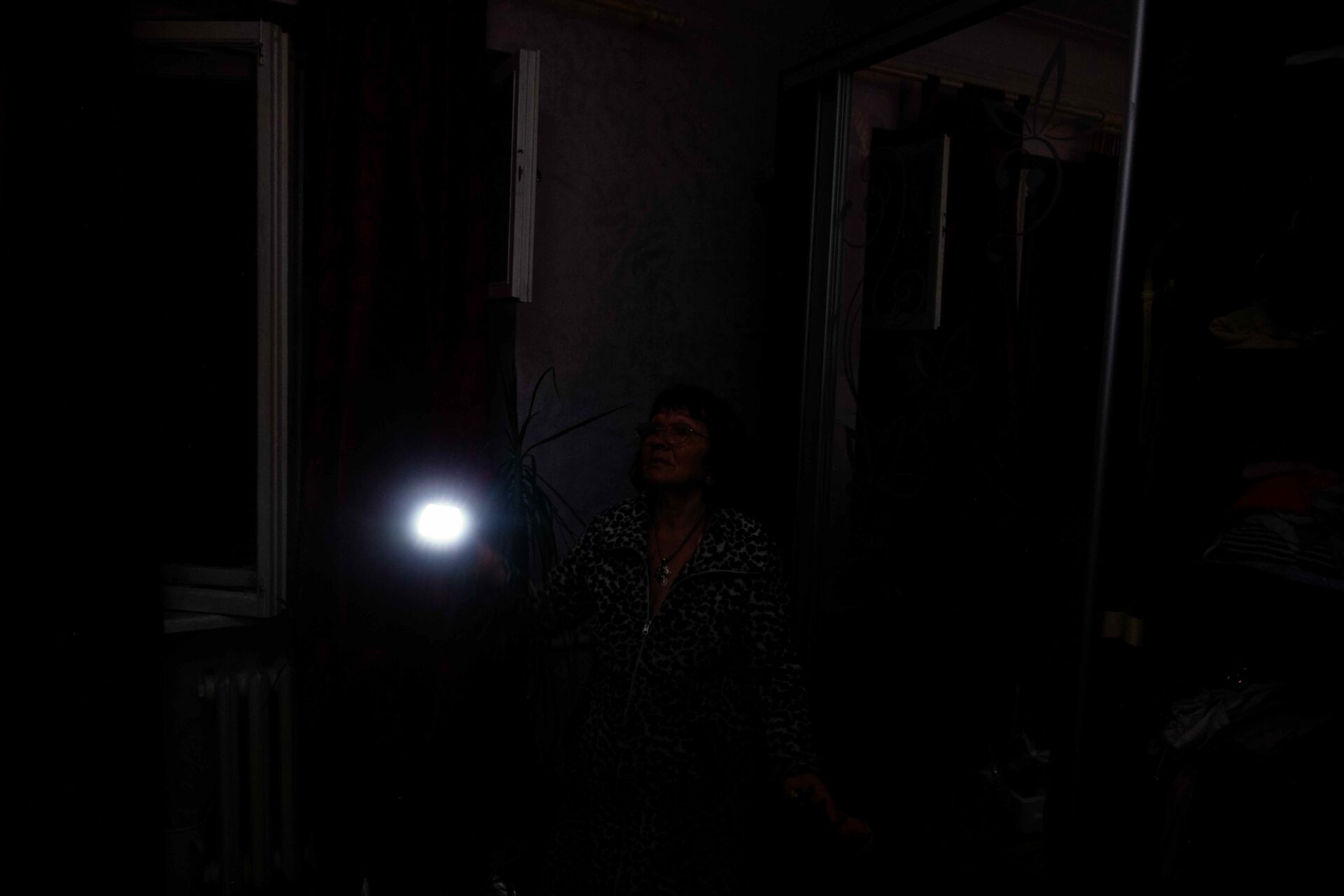
Putin’s “will to peace” creates new ruins and new graves. In the darkness of the first night after the strike, residents hurry between Soviet-era apartment buildings with LED lights. Shadows carry things from the damaged buildings. Roofs are covered or damaged by the blast wave, windows are shattered. Just like Halyna’s after the attack in late April. The 68-year-old woman stands stunned in her apartment. Wherever the light of her LED flashlight falls, chaos reigns in the headlights. Glass is broken. Shelves are tipped over. Plaster crumbling to the floor next to shrapnel.
Please excuse the mess, – she mutters over and over again.
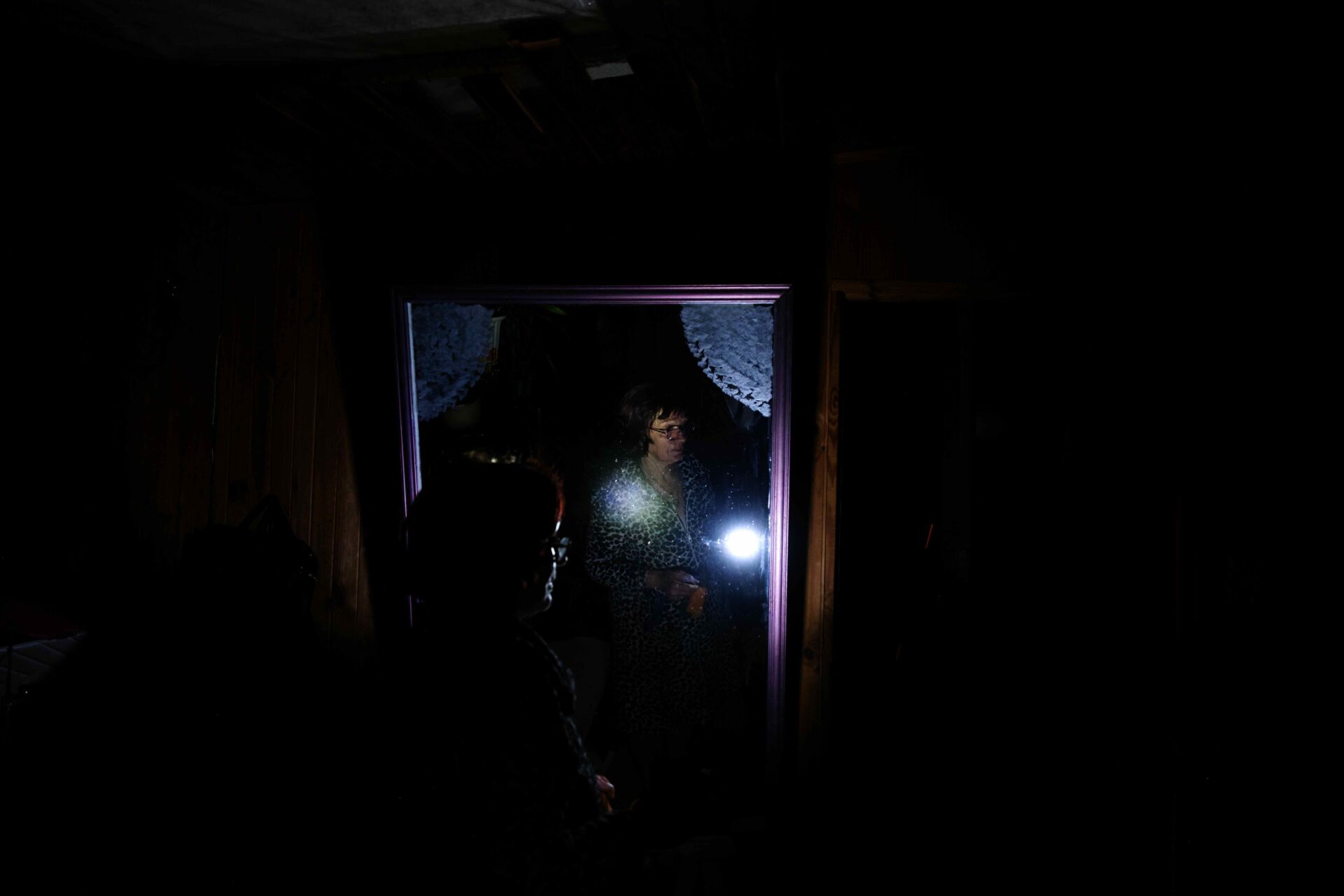
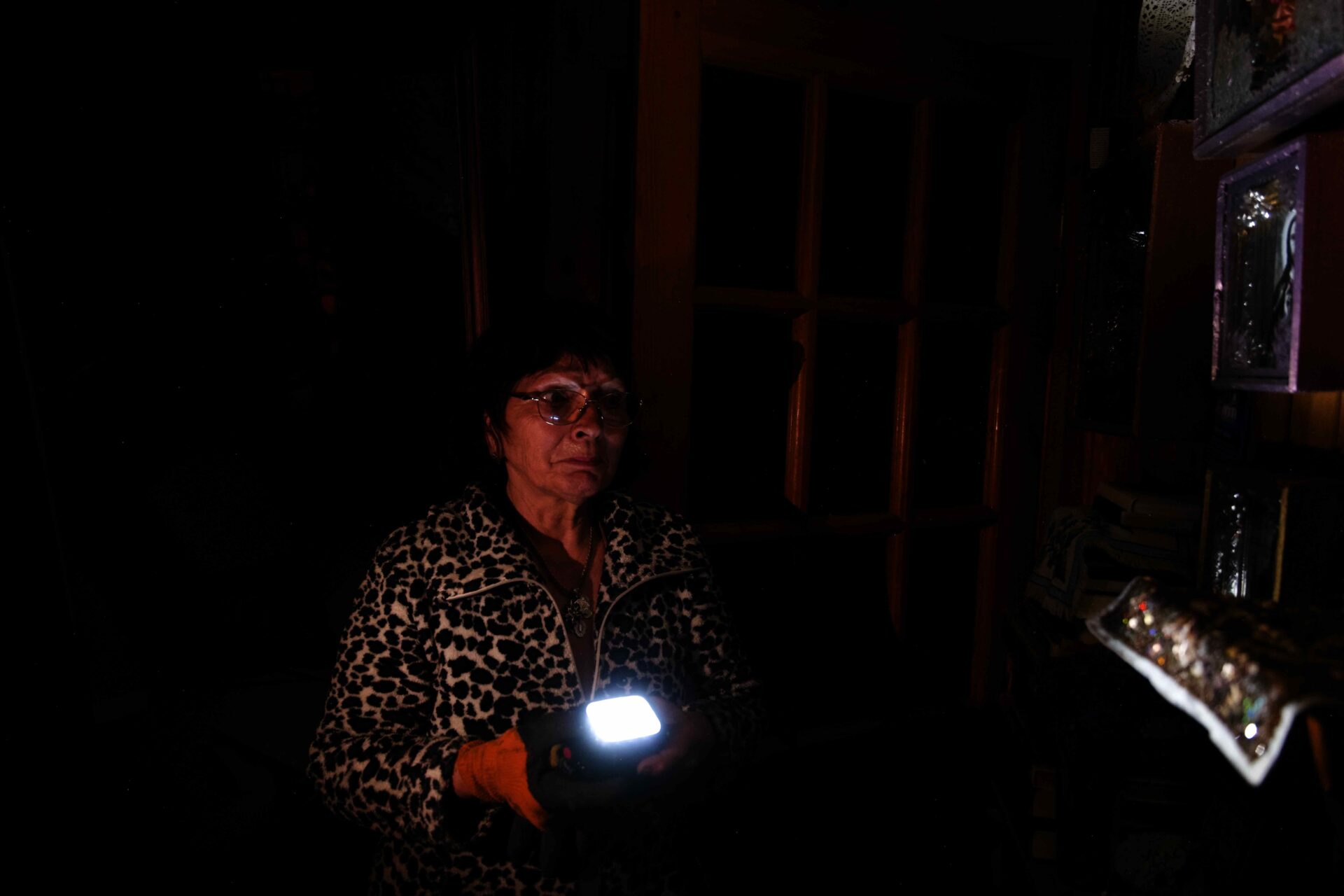
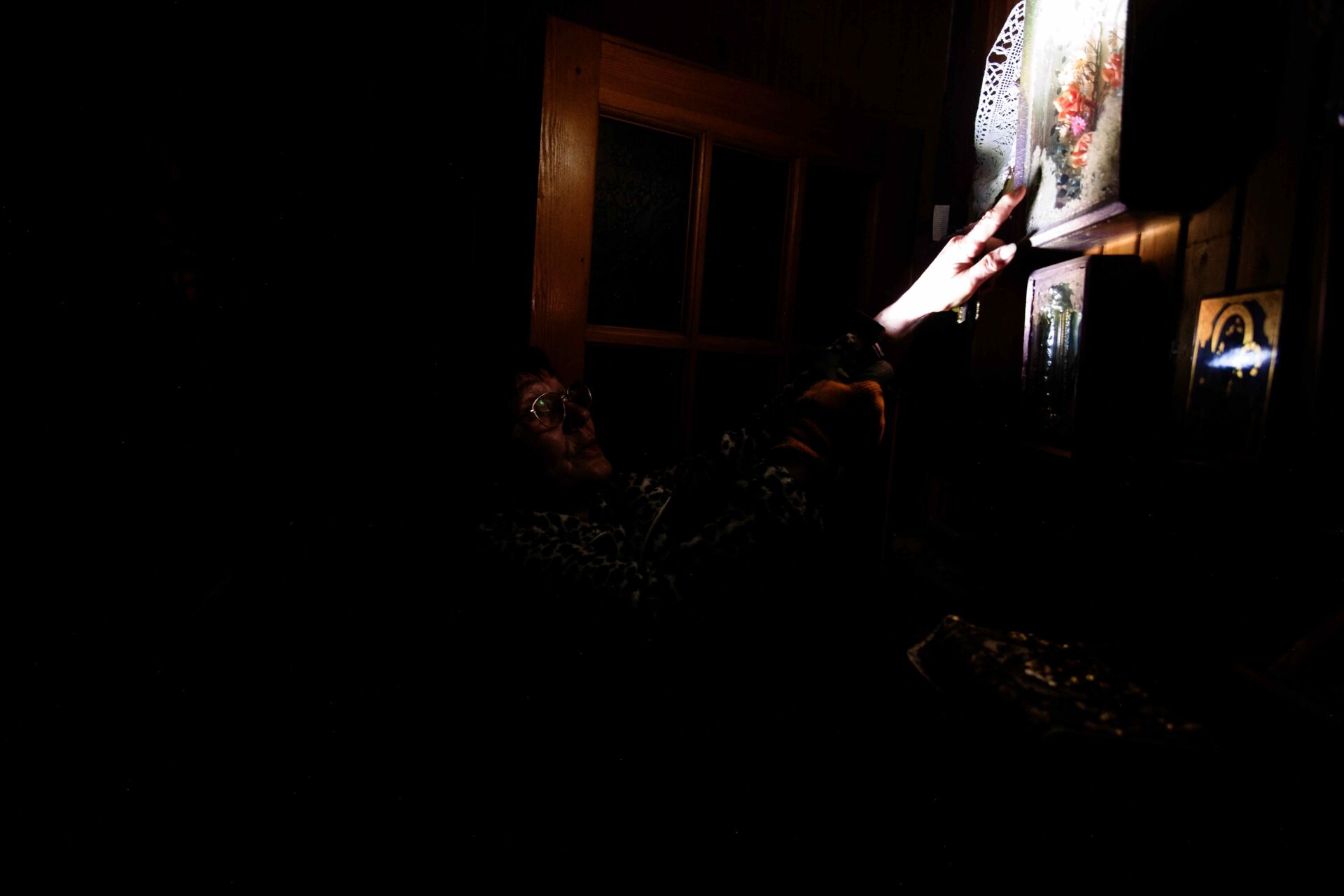
She then talks about her aunt in Abkhazia as her footsteps crunch on the broken glass. Abkhazia is her old homeland. A region of Georgia that Russia took control of as a “breakaway republic” after the collapse of the Soviet Union and which it continues to control to this day.
Halyna got married in Kyiv in 1986.
I found my new home in Ukraine. The war in Abkhazia cost my aunt her life. She was killed by people supported by Russia, – the pensioner says.
Yesterday, I hid in the basement when I heard sirens wailing. Now, in the midst of this destruction, I have to think about my aunt. Russia is bringing death and destruction. Putin does not want peace, he wants land and power, – says the 68-year-old woman. Then she looks through a broken window into the darkness. An excavator rumbles nearby.
How am I supposed to pay for all this damage? The state will not reimburse everything, – she asks quietly. Her pension is less than 70 euros a month. The next air strike could happen at any moment.
After the interview, there was hardly a night without anxiety. Over the weekend, Kyiv and Ukraine were attacked by hundreds of drones and ballistic missiles. Most of them can be intercepted by air defense. But not all of them. Even falling missile fragments cause enormous damage. Strong explosions shook the Ukrainian capital at night. More dead and wounded, more destruction. Galina is shaken.
Rockets in Sumy
This has been going on for weeks. One particularly vicious attack took place on April 13. Two Russian Iskender missiles hit the center of the city of Sumy in northeastern Ukraine. The first missile hit the university conference center. Two weeks later, Vasyl, the rector of the university, receives guests in front of it. Next to the entrance, the frames of the former glass facade stretch like an empty grid. Inside, the explosion left a trail of devastation.
We are proud of our university’s openness to the world. Before the invasion, we had students from all over the world. That is, from 55 countries, – says the 62-year-old man.
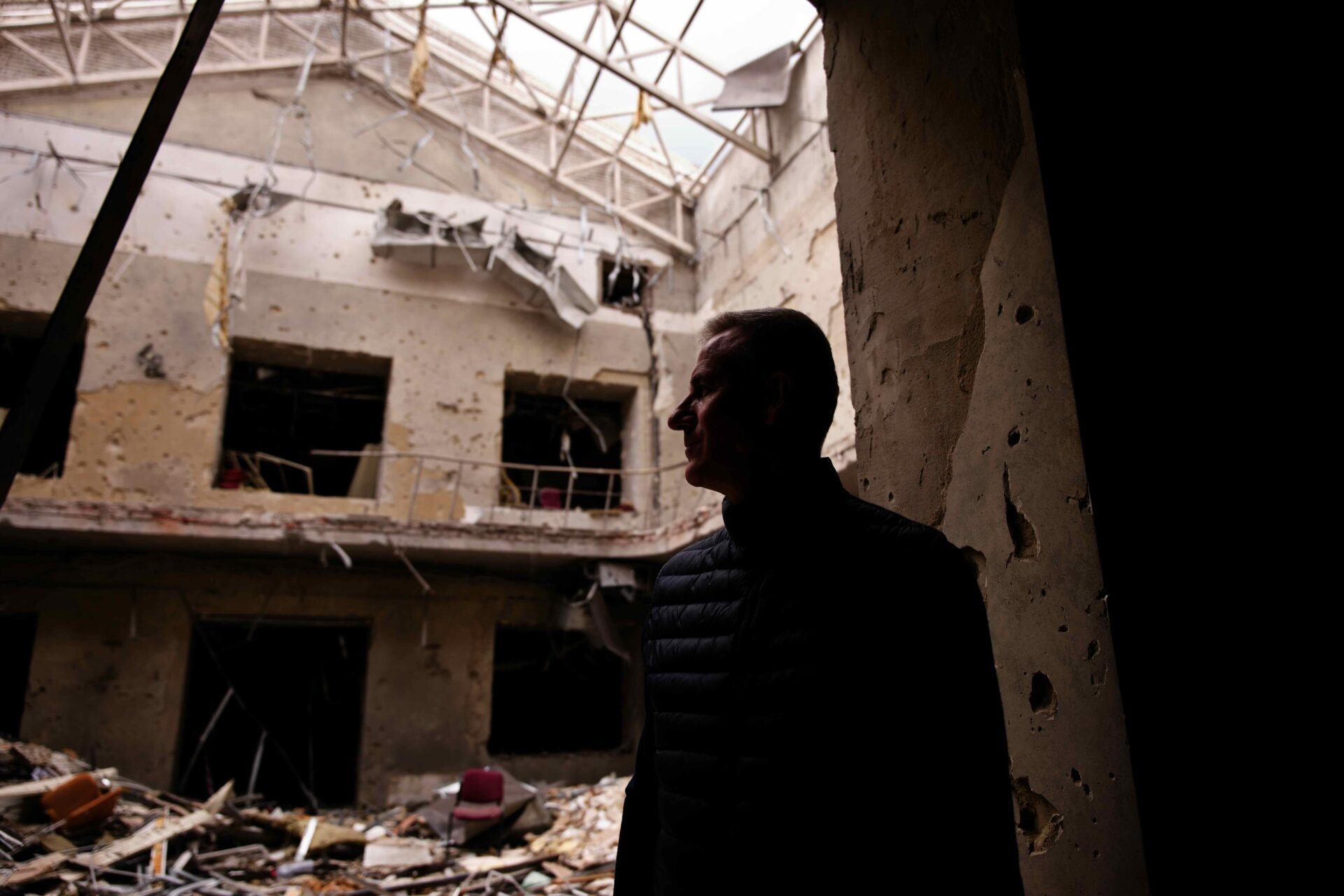
The congress center also houses the international cooperation department.
Fortunately, only three employees were injured, no one was fatally wounded, – Vasyl explains.
The second missile has the most devastating consequences. It hits a few minutes later and less than 400 meters from us, at 10.20 am. The second rocket is loaded with shrapnel and explodes above the ground. It is Palm Sunday and there are many people on the streets. The shelling killed 35 of them. Another 80 were injured, some of them seriously. Some passers-by are literally torn to pieces by the shrapnel.
I left immediately after the attack. When I arrived, I walked over the corpses lying on the ground. I will never forget it. It was horrible, – says the university director.
He shows the way to the place where the shell hit. The university building was also damaged here. The shrapnel literally ate into the masonry.
This is definitely not what peace looks like, – Vadym says as he walks away.
Across the street, three teenagers and an adult lay flowers. People have created a place of remembrance. This is not the first time that Sumy has been attacked. But April 13 showed the city’s residents a new form of ruthless cruelty. Khrystyna has just started her studies in Kyiv. The 17-year-old dreams of becoming a translator one day.
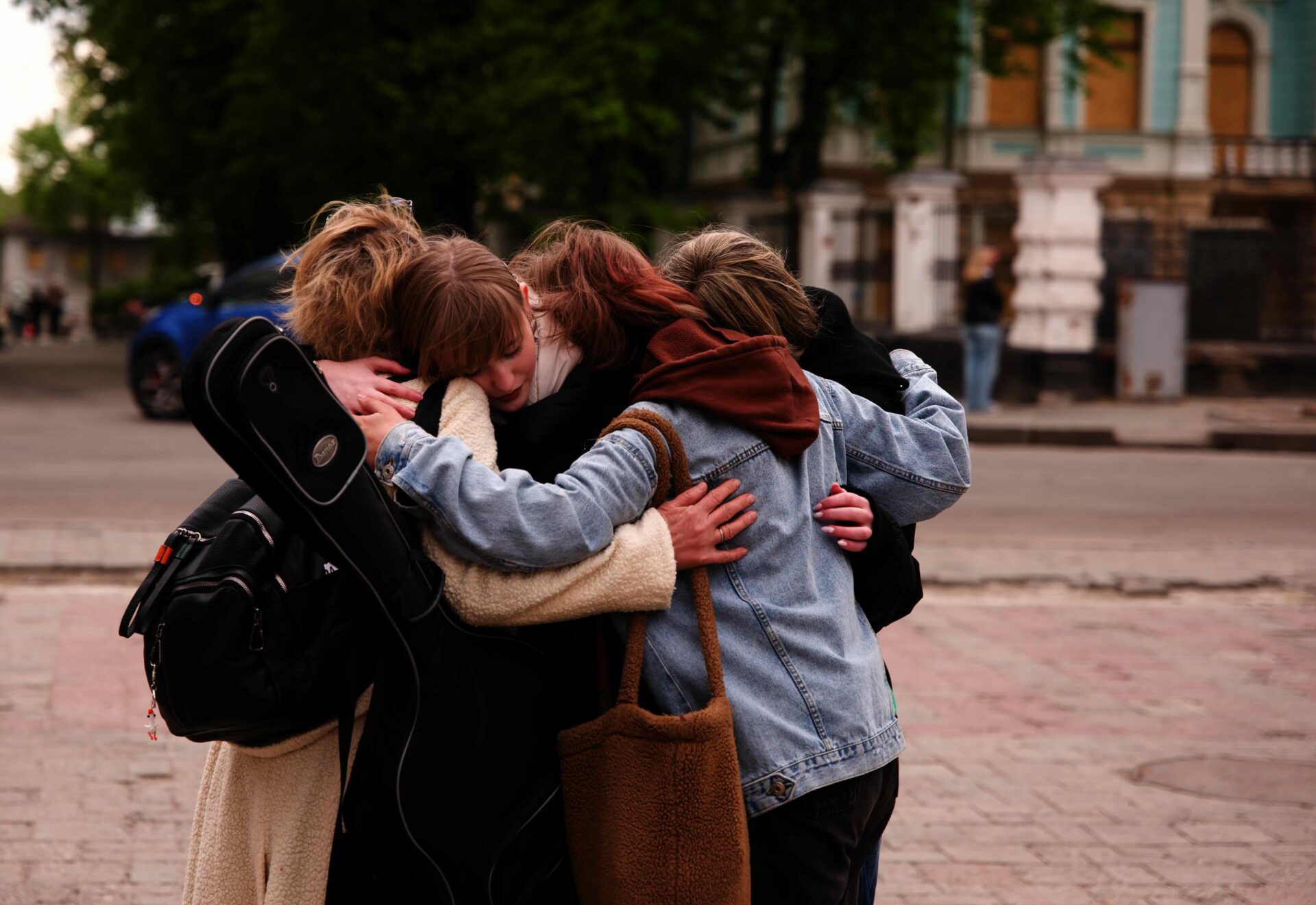
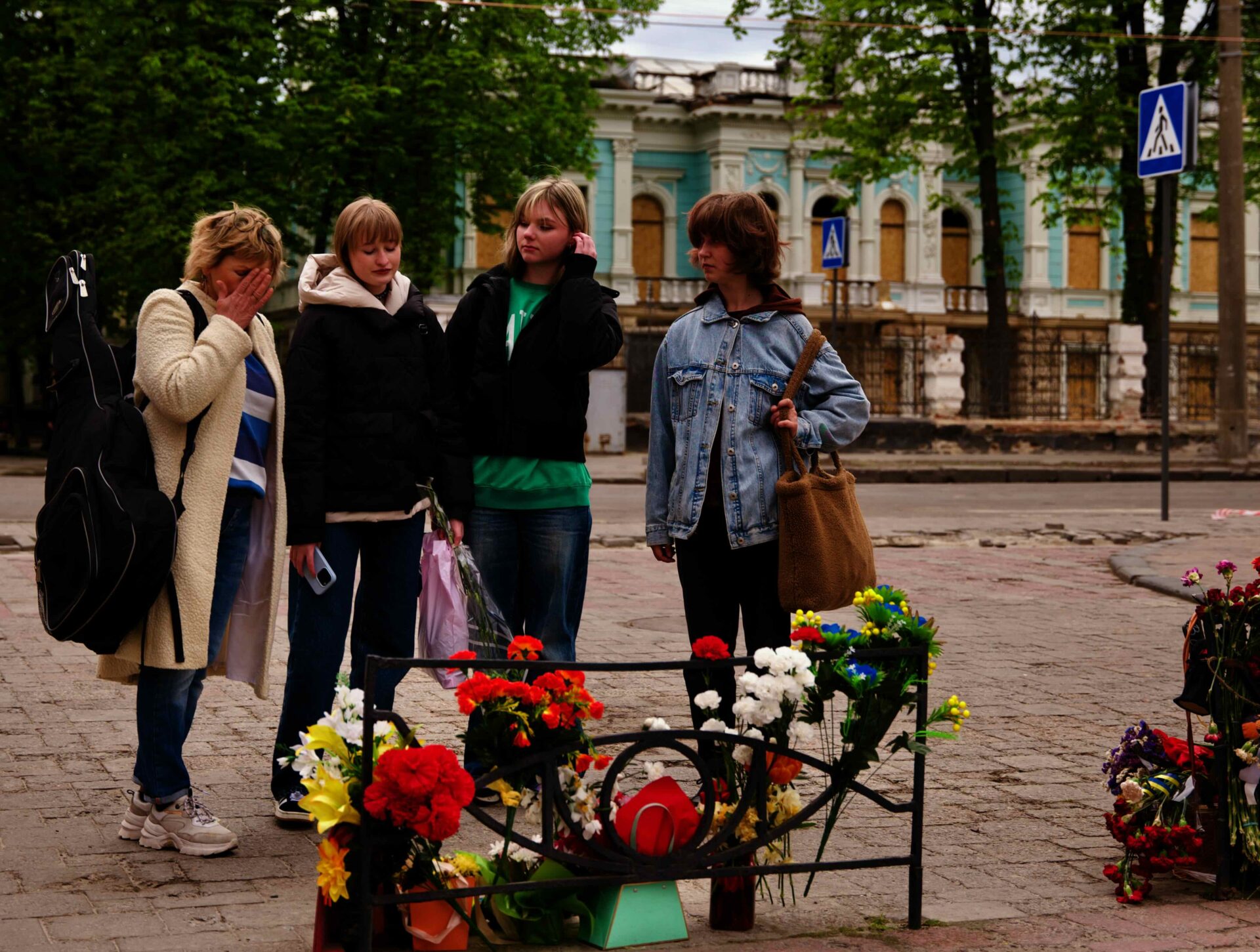
I just cried for three days. One of the dead was a teacher from my old school, – she explains. Shrapnel also hit a bus and its passengers when the rocket fell. – How often do I travel this route? When I’m in Sumy, almost every day. Death can come so quickly,” says the young woman.
Krystyna and her friends Sofia and Valeria like to write poetry.
It helps me cope with the pain of war, – says Krystyna. – My Sumy is Ukrainian and will remain so.
Tortured, missing, raped, murdered, disenfranchised: Ukrainians know all too well what happened during the Russian occupation. At the moment, Kristina is being held by her teacher and friends. Behind her, the walls rise, speckled with stains, with empty window cavities.
A noisy day at the front
It’s a noisy day today, – says Igor, who goes by the call sign Bora.
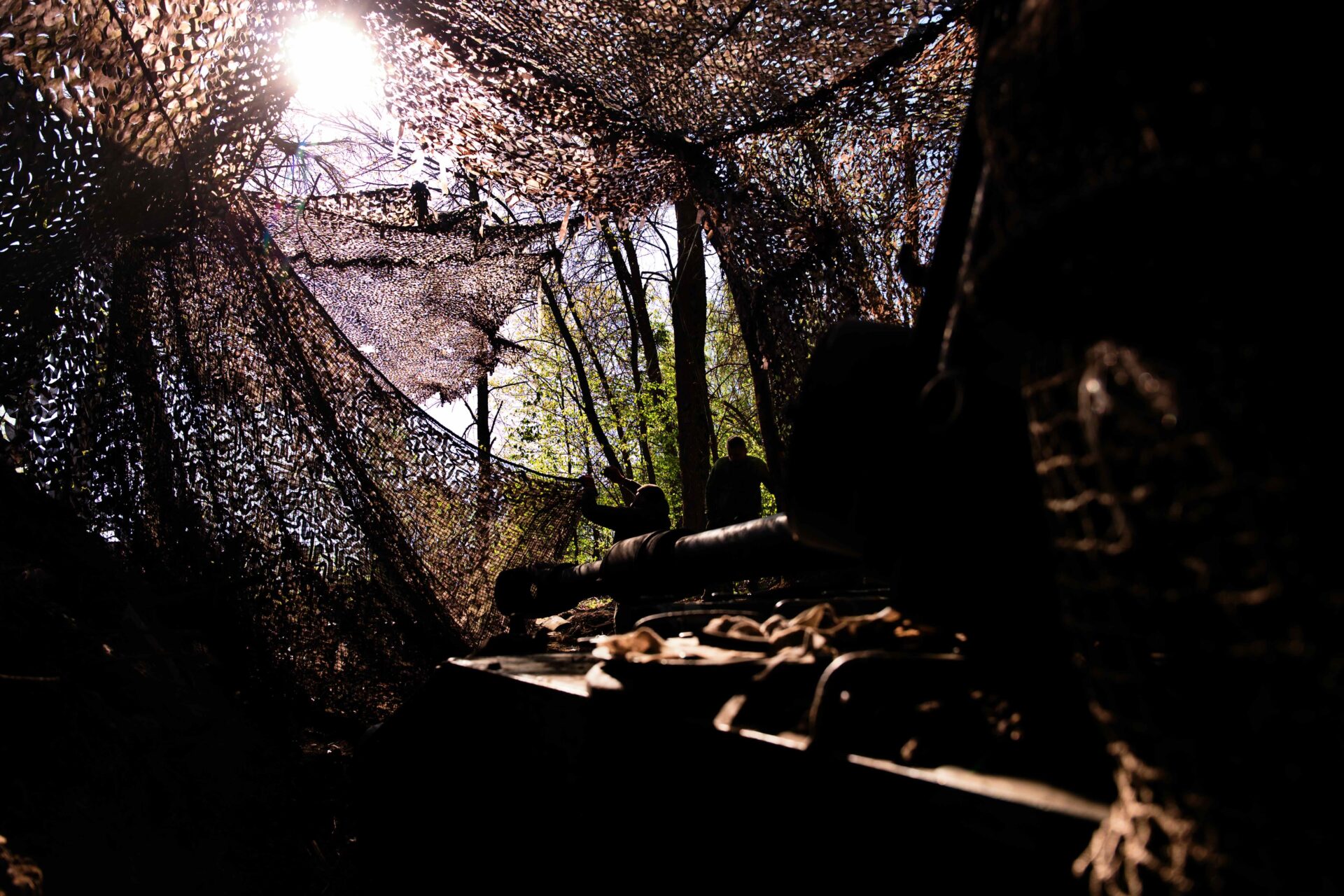
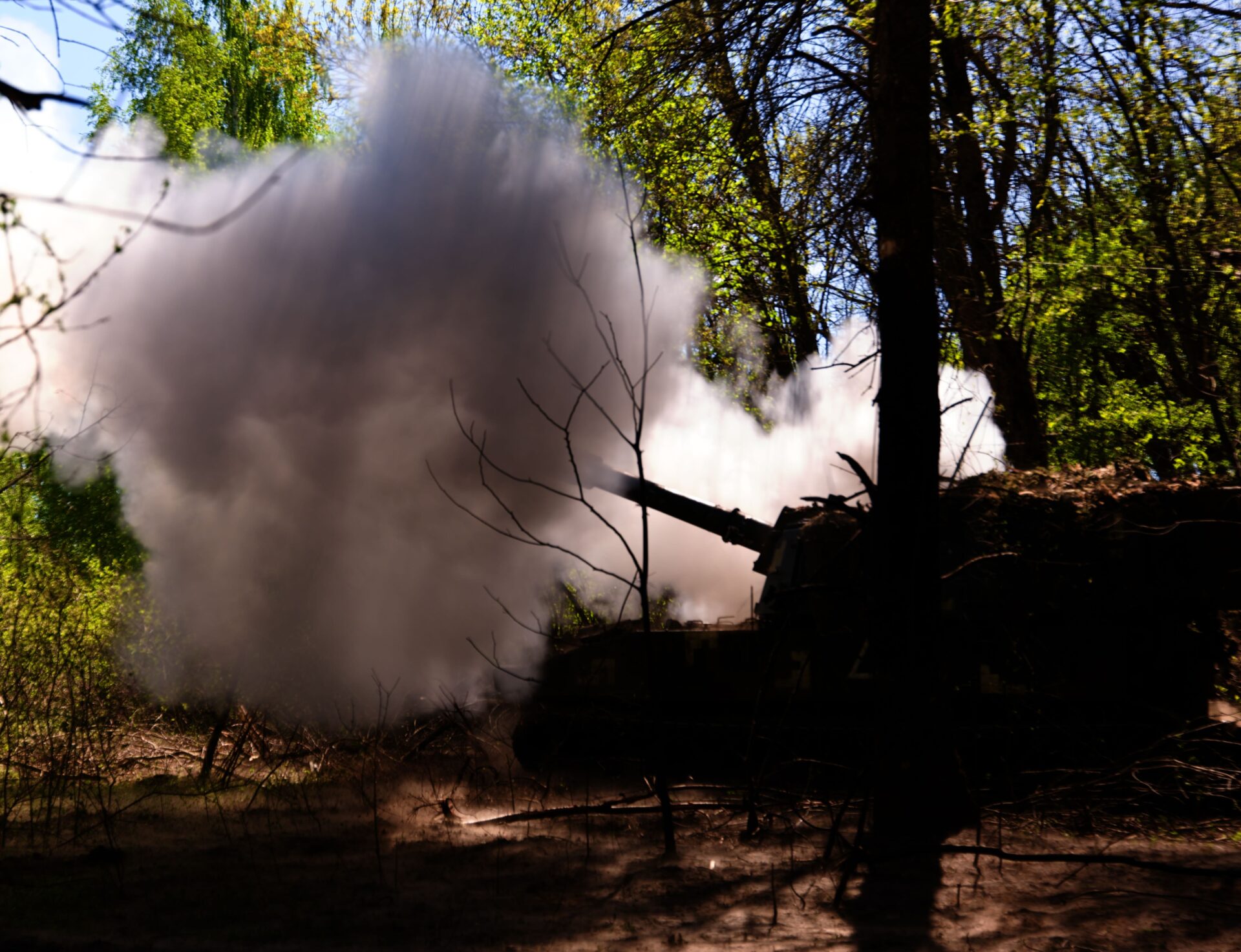
A self-propelled howitzer is moving out of its hiding place in a forest near the border with Russia in northeastern Ukraine. The enemy positions are six kilometers away. A clear line of fire, and the Paladin, an American-made steel monster, spits fire, smoke, and grenades. And the next one. And the next. Each shot is an explosion that shakes the ground. Fine soil flies into the air. Then a radio message to Igor. An enemy drone is approaching.
The self-propelled howitzer returns under the cover of camouflage nets. And for good reason. The explosions from the drones have left their mark on the armor of the multi-ton vehicle. The crew quickly runs into the nearest earthen bunker and waits. For permission to fire the next salvo. To the new coordinates of the target.
Igor joined the army as a volunteer in September 2022. He fought on almost all fronts of Russian aggression against Ukraine: Bakhmut, Pokrovsk, Avdiivka… And now a mission in the northeast. Russia is massing troops on the other side of the border. A new, large-scale front is emerging. A successful Russian offensive would be a disaster for the people of Sumy. The April 13 attack is probably just a bitter premonition.
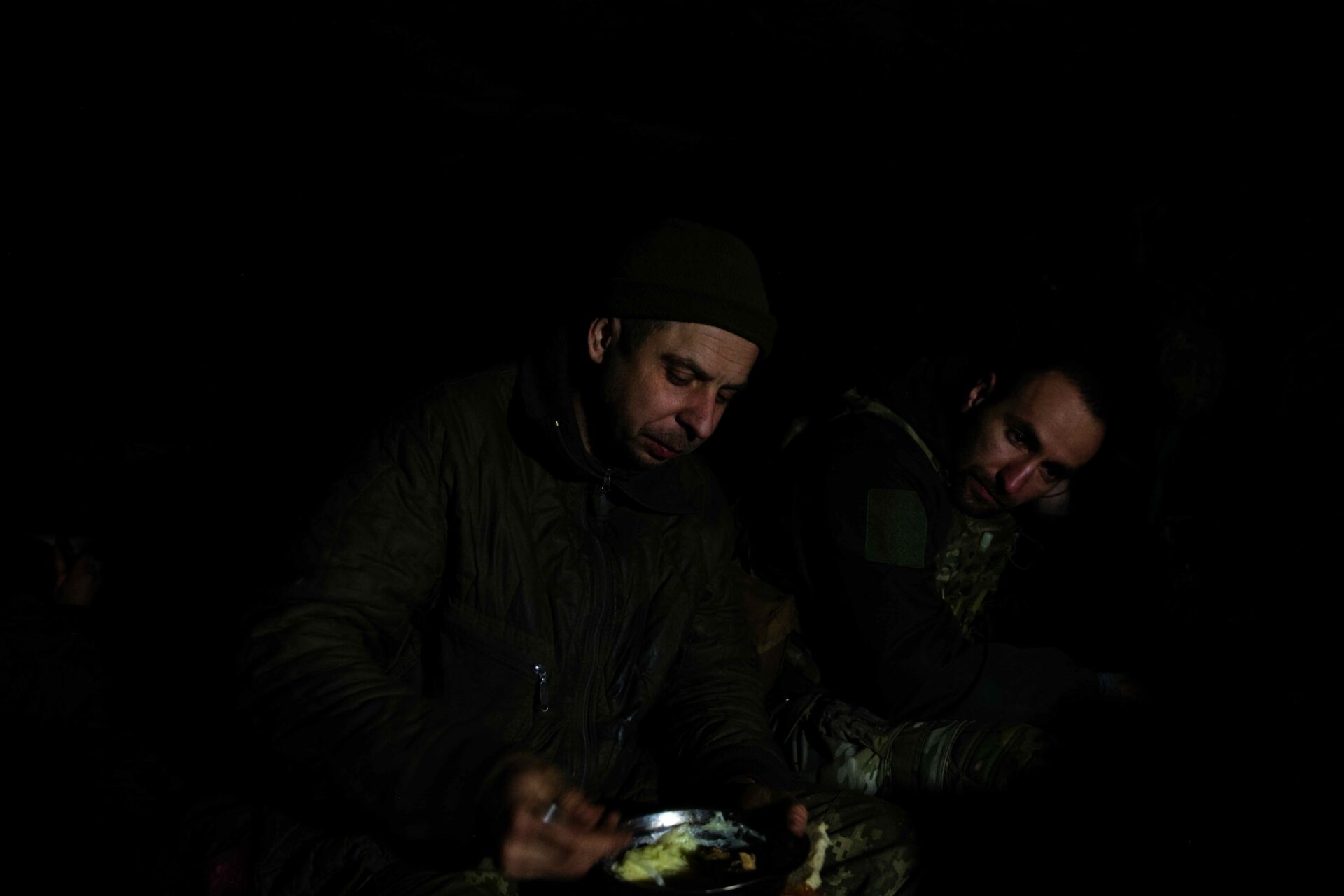
Igor sits in the darkness of an earthen bunker with a cup of coffee in his hand.
My daughter was a baby when I went to war. Now she is a teenager. I am at the front. War means lost time, distance from your own family, – the father says quietly.
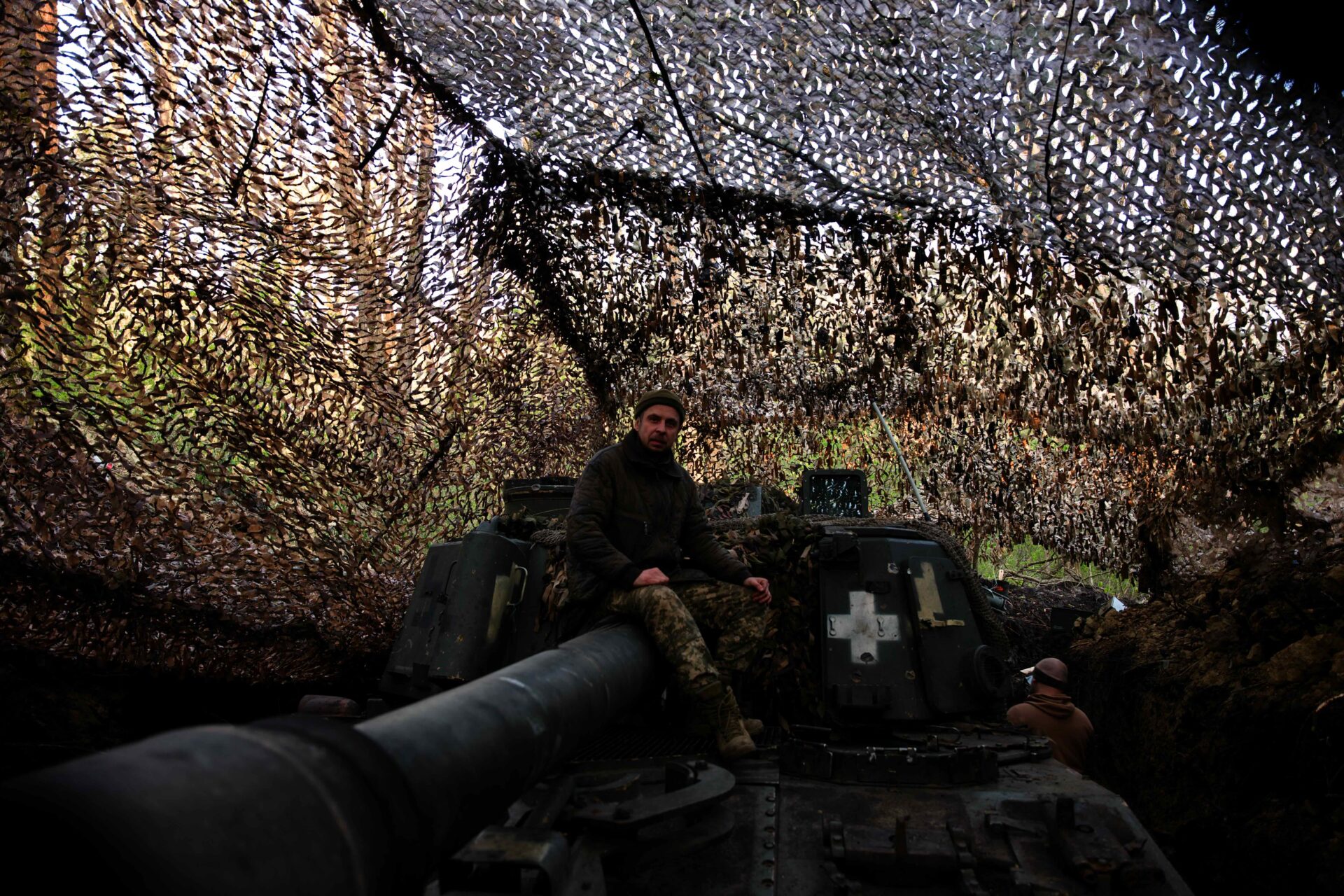
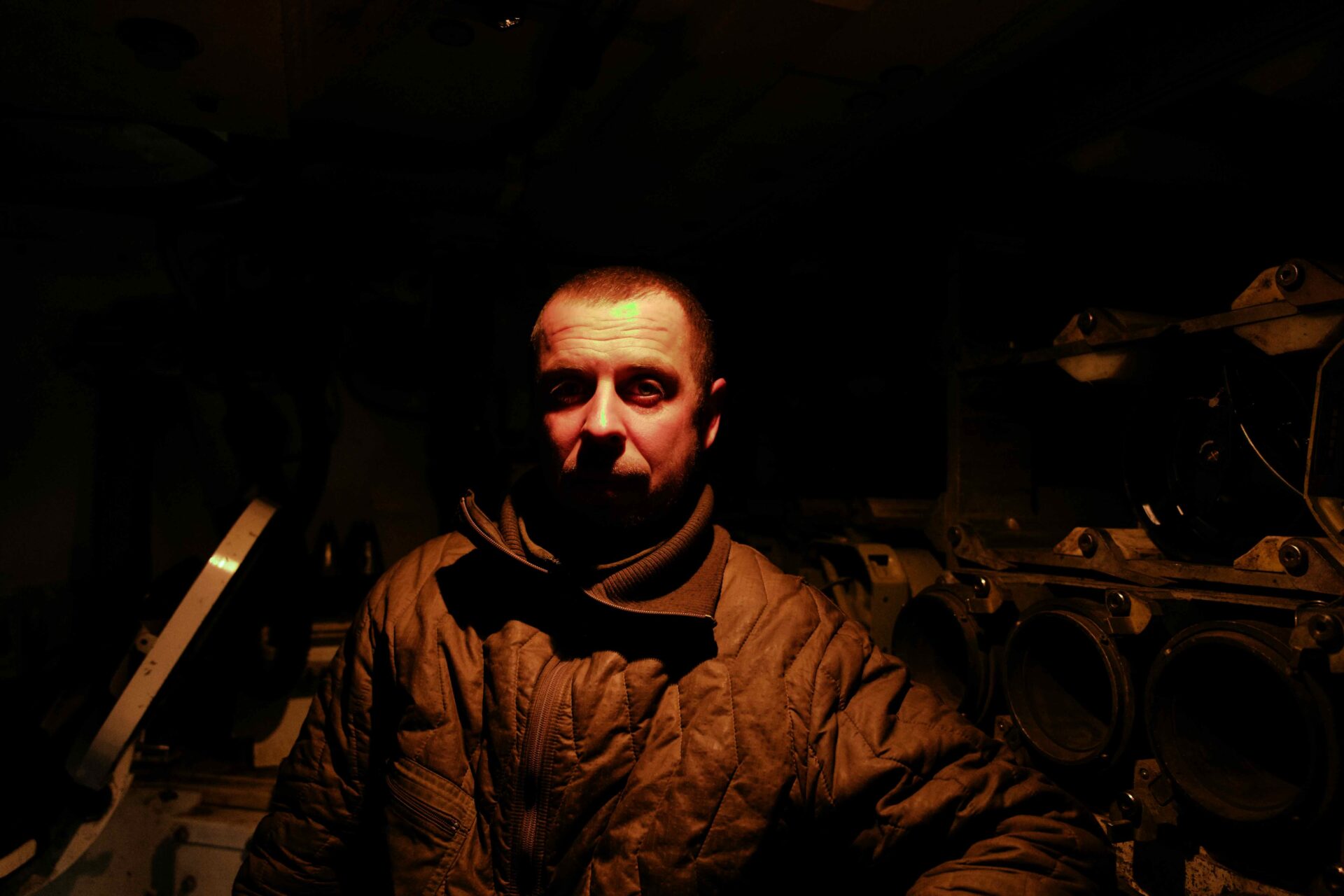
Then he proudly presents his book-lecture and short videos that he launches on his Facebook page. Igor is an engineer in civilian life, but he is also the author of a children’s book. He shows short films about his hometown of Cherkasy. “It’s a very beautiful city”, he proudly explains.
He then tells us that he dreams of traveling to Spain or Portugal with his family in a camper van. Maybe even open a camper van rental business. When peace comes.
But coming back will not be easy. After everything you’ve experienced at the front. To make up for the time that has passed, – he realizes. – A real peace, the peace we successfully fought for. A peace that offers security from further attacks from Russia, yes, that would be good.
The reality looks different for him as the deployment of Russian troops approaches.
I hardly dare to think about the end of the war. Because when I think about it, I get nervous. That’s how I do my job here, – he explains.
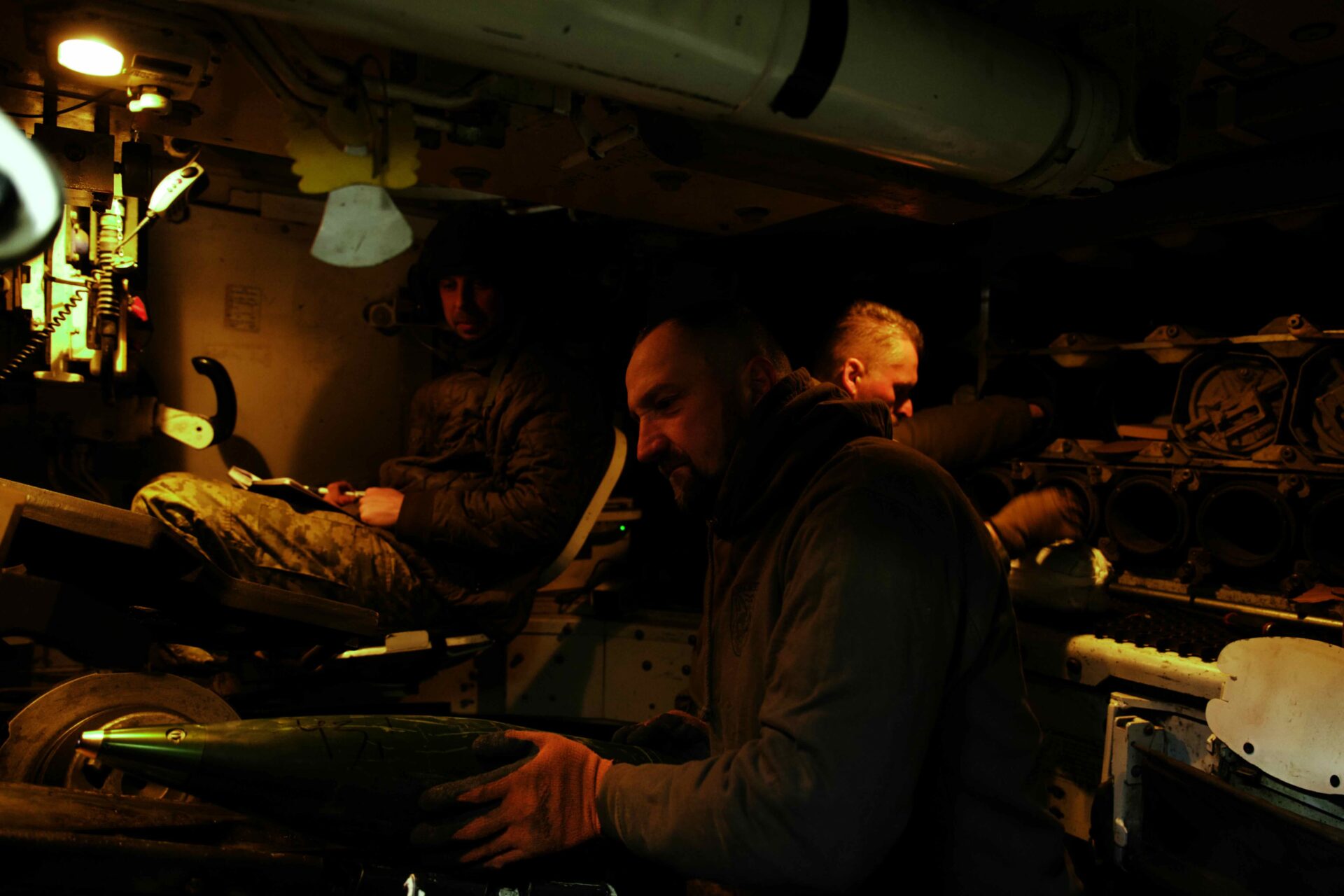
Then a voice comes over the radio. Igor receives new coordinates, the Russian drones have disappeared. The crew starts their “work”. Soon, the explosions of gunfire begin to rumble in the forest. Eventually, they receive a message of success. Two targets important to the Russian offensive have been completely destroyed. That’s all they learn.
This is war. If only the Russians would leave us alone, – the 40-year-old man says as he leaves.
By Till Mayer
The author:
(Photo) journalist Till Mayer (www.tillmayer.de) has been documenting the war in eastern Ukraine since 2017. Since the start of the full-scale invasion in February 2022, he has regularly reported on the consequences of the Russian war of aggression on Ukraine for our editorial team. He has won several awards for his photos and reports. His volume of reportage “Europe’s Front – War in Ukraine” was recently published by ibidem.