

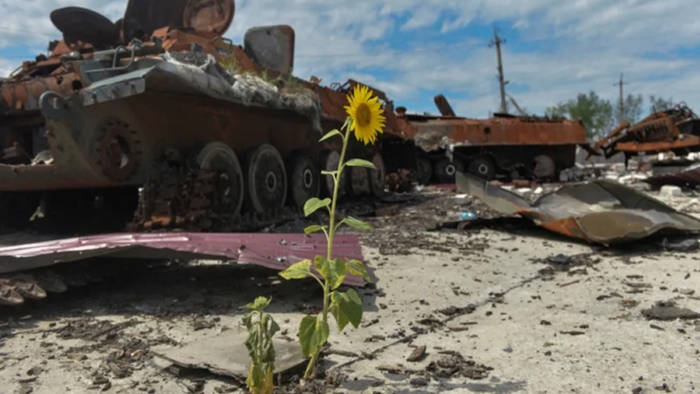
Damage to the Ukrainian ecosystem, which has global consequences, is one aspect of Russia’s war crimes. However, international law still needs a clearer definition of actions against nature, in particular, the Rome Statute of the International Criminal Court lacks the concept of “ecocide. Yuliia Ovchynnykova, an environmental scientist, chairman of the subcommittee of the Verkhovna Rada Committee on Environmental Policy and delegation member to the Parliamentary Assembly of the Council of Europe, shared the assessments of the environmental damage caused by the Russian-Ukrainian war, spoke about the threats to other countries, the changes required by both local and international legal systems to potentially hold Russia accountable as well as achievements in this area.

Daria Maslienkova (journalist): What is the current assessment of the environmental damage caused by the Russian-Ukrainian war? What is irreversible and what is potentially restorable?
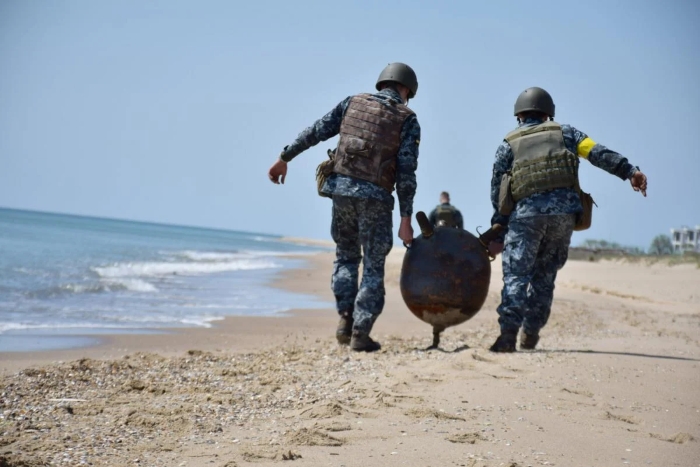
Yuliia Ovchynnykova: According to the Ministry of Ecology, since the beginning of Russia’s full-scale invasion, more than 8,000 crimes against Ukraine’s environment caused by the war have been documented. Damage to Ukraine’s environment has already amounted to almost 4 trillion hryvnias (over 85 billion euros), and this figure is constantly growing. One fourth of Ukraine’s territory is potentially contaminated with explosive remnants of war. One third of the forest is damaged as a result of the fighting.
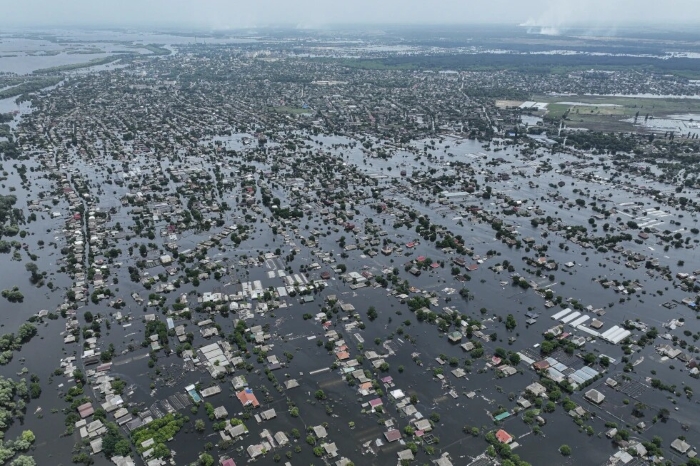
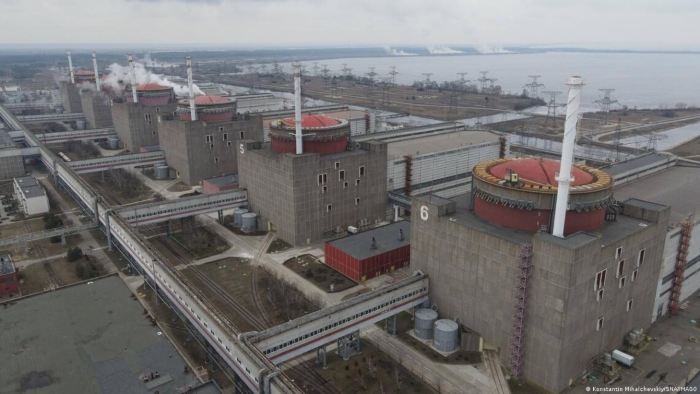
There is a constant threat of nuclear terrorism. We should mention the recent [carried out on the night of 14 February 2025] attack on the Chornobyl nuclear power plant, which damaged the protective shelter, and the seizure of the Zaporizhzhia nuclear power plant. The destruction of the Kakhovka hydroelectric power plant dam, which caused a large-scale flood in the surrounding areas and led not only to an environmental disaster, but also to a violation of humanitarian law and posed a threat to human life and health, is certainly an unprecedented act of ecocide.
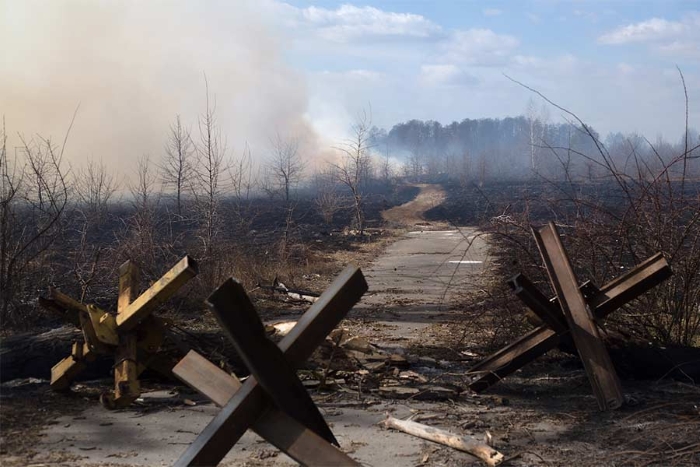
Today, it is difficult to assess the real damage caused to the environment, as well as to say which losses are irreversible and which are potentially restorable. After all, part of the territory is under temporary occupation, part of it is subject to hostilities, and, as already mentioned, part of the territory is mined or potentially mined. Nevertheless, we can already say that the war is one of the most detrimental factors affecting biodiversity, which suffers from the destruction of unique species of flora and fauna, ecological systems, as well as the introduction and spread of uncharacteristic invasive species in Ukraine.
Ensuring mine safety is important for environmental restoration and damage assessment. Mine clearance and land restoration work requires long-term efforts. Cleaning and reclamation of contaminated soil and water is possible with significant investment and time. The environmental consequences of the war in Ukraine are catastrophic and will have a long-term impact on the environment, public health, and the country’s economy. Restoration will require decades, significant financial resources, and international support.
D.M.: What transnational consequences of the ecocide carried out by Russia on the territory of Ukraine can be identified?
Y.O.: Russian aggression against Ukraine has caused large-scale environmental disasters that go beyond national borders and will have serious consequences for neighbouring countries, Europe, as the entire continent shares a common ecosystem, and the world as a whole.
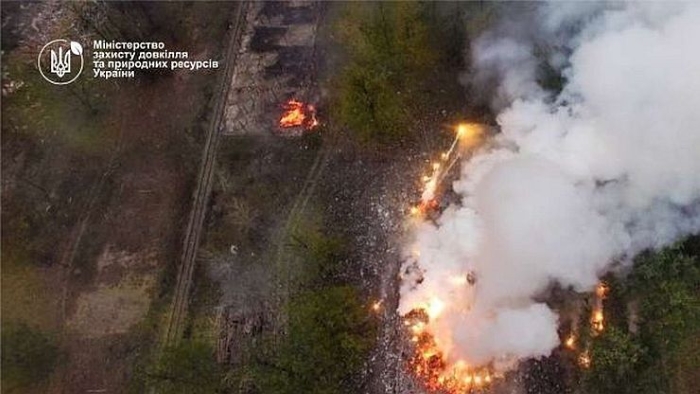
For example, military actions in the coastal areas and waters of the Black and Azov Seas cause large-scale environmental pollution, which has serious consequences for the marine ecosystem and public health not only within Ukraine. High concentrations of oil products, heavy metals, and toxic compounds in the water are poisoning marine ecosystems. The impact of explosions and noise pollution disorients marine mammals and leads to their mass deaths and forced migration.
The issue of mine safety in the Black Sea and its waters is very acute. Not only Ukraine, but also neighbouring states bordering the Black Sea, suffer from the damage caused to the Black Sea. Active hostilities cause significant pollution of Ukraine’s water resources and soil due to the destruction of industrial enterprises, fuel depots, chemical facilities, and water treatment plants. This leads to massive leakage of hazardous substances into rivers, lakes, and groundwater, which threatens the ecological balance not only in Ukraine.
Climate change is a long-term process whose consequences are already global. The greenhouse gases emitted into the atmosphere as a result of the war can be compared to the annual emissions of some countries. The total amount of greenhouse gas emissions caused by the war is 180 million tons, which makes a significant contribution to global warming.
I would also like to emphasize the threat of nuclear terrorism. The nuclear threat from the war in Ukraine is multidimensional and real. It includes both the possibility of using nuclear weapons and the risks associated with the safety of nuclear power plants. The international community must remain vigilant and take measures to prevent nuclear incidents. The ecocide carried out by Russia in Ukraine has far-reaching transnational consequences that require a consolidated international response and the implementation of effective environmental safety mechanisms.
D.M.: How can we assess the effectiveness of the 2023 Resolution of the Parliamentary Assembly of the Council of Europe “The Impact of Armed Conflicts on the Environment” as of today? Is it possible to counteract Russia’s nuclear blackmail, as was intended when it was adopted?
Y.O.: The Council of Europe was the first international organization to recognize the right to a safe and healthy environment as an integral part of human rights. In October 2022, the Verkhovna Rada Committee on Environmental Policy and Nature Management held hearings on the topic “The Impact of Military Operations on the Environment in Ukraine and its Restoration to Natural State”. The hearing was opened by John Howell, Head of the UK Delegation to the Parliamentary Assembly of the Council of Europe, Vice-President of the Parliamentary Assembly of the Council of Europe and Rapporteur to the Parliamentary Assembly of the Council of Europe on the “Impact of Armed Conflict on the Environment”, who took into account the issues raised during the hearing and noted the importance of using the proper methodology for determining damage to calculate environmental damage.
On January 25, 2023, the Parliamentary Assembly of the Council of Europe adopted a resolution on the “Impact of Armed Conflict on the Environment”. This Resolution was an important step in the international recognition of the environmental consequences of armed conflicts, including the war in Ukraine. The document called for the codification of the concept of “ecocide” in national and international law, as well as for amendments to the Rome Statute of the International Criminal Court to include ecocide as a separate crime. The Resolution contributed to raising international awareness of the environmental consequences of armed conflicts and the need for their legal regulation.
The Resolution expresses concern about the threat or use of nuclear weapons. However, despite this, the practical impact of the resolution on deterring Russia’s nuclear blackmail remains limited. Russia continues to use nuclear rhetoric and blackmail, which is a matter of concern to the international community. For example, the drone attack on the protective sarcophagus of the fourth power unit of the Chornobyl NPP once again emphasizes Russia’s disregard for global nuclear safety and poses a threat not only to Ukraine but also to the whole of Europe.
The PACE Resolution “The Impact of Armed Conflicts on the Environment” is an important symbolic step in recognizing the environmental consequences of war and the need for their legal regulation, but requires further practical action.
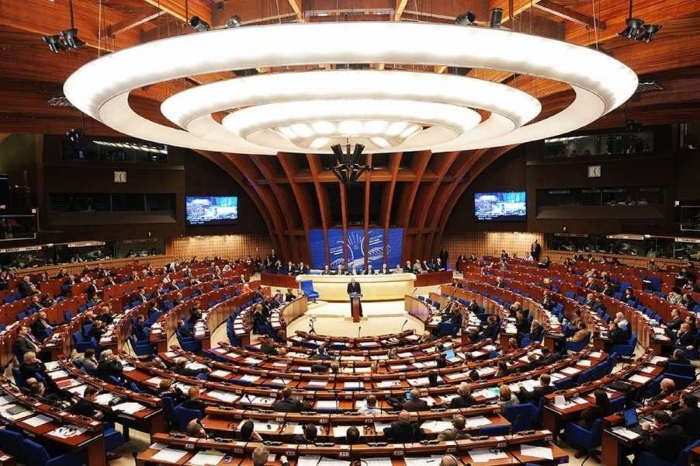
I would like to note that the PACE Recommendation “Addressing criminal and civil liability in the context of climate change” (2021) asked the Committee of Ministers to “conduct a study of the concept of “ecocide”, its implementation in domestic law and its possible universal recognition” and to develop a new legal instrument to replace the Council of Europe Convention on the Protection of the Environment through Criminal Law, which should replace and supersede the 1998 Convention on the same subject. The PACE reiterated this call through the Recommendation on the Effects of Armed Conflict on the Environment (2023), demanding that the new Convention also apply in the context of armed conflicts, wars or occupation, and that it cover ecocide. In addition, the Recommendation “Implementing the human right to a safe, clean, healthy and sustainable environment through the Reykjavík process” (2024) insisted on the need to establish an effective monitoring mechanism for the new Convention.
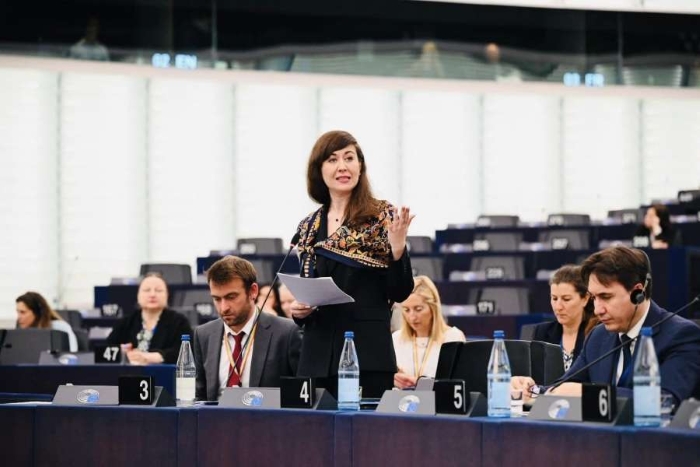
During my speech in April 2025, I drew attention to the fact that many stakeholders around the world are working to recognize ecocide, or widespread, long-term and serious damage to the environment, as a fifth international crime so that it can be prosecuted by the International Criminal Court.
D.M.: How is the concept of ecocide being implemented in international law, in particular, are amendments to the Rome Statute expected in the near future? What fundamental clarifications does the definition require?
Y.O: The environment is no longer a silent victim of war; it speaks with the voices of the military, volunteers, scientists, and youth, and therefore work continues on codifying and recognizing crimes of ecocide at the international and national levels.
As already mentioned, a significant amount of attention in the PACE resolution “The Impact of Armed Conflict on the Environment” is devoted to ecocide. It was the resolution that raised the issue of criminalization in the European political agenda. Currently, the process of recognizing ecocide as a separate international crime is gaining momentum. The key step in this direction is, of course, to amend the Rome Statute of the International Criminal Court.
This is exactly what the International Parliamentary Alliance for the Recognition of Ecocide, which I joined in 2021, is working on. The aim of the Alliance is to recognize ecocide as the fifth crime under the jurisdiction of the International Criminal Court and to include ecocide in the national legislation of its member states. Thanks to the joint efforts of parliamentarians and Stop Ecocide International, the issue of criminalizing ecocide is being raised around the world.
It is significant that on September 9 this year, three island countries: Fiji, Samoa and Vanuatu, submitted the crime of ecocide to the International Criminal Court for inclusion in the Rome Statute. In their submission, they propose to recognize “ecocide” as a crime alongside genocide and war crimes. If successful, this change will make it possible to bring to justice those who have caused environmental destruction, for example, the heads of large polluting companies or top officials of states. On May 29 this year, Monica Lennon, a member of the Scottish Parliament, introduced a bill that would introduce a new criminal offence of ecocide.
I signed an open letter in support of this bill. Other signatories include the Princess of Belgium, MEPs, parliamentarians from the UK, Canada, Ukraine, Switzerland, Austria, Zambia, the Minister of Environment of Vanuatu, environmentalists, educators, journalists, business representatives, NGOs and academic institutions.
Important steps include the EU’s inclusion of crimes close to ecocide in the updated Directive. And also, the adoption by the Council of Europe of the Convention on the Protection of the Environment through Criminal Law, which allows criminalizing actions “amounting to ecocide”.
It is worth noting that more than 72% of people in the G20 countries support criminal liability for large-scale environmental damage. Some states and corporate entities express concern about the possible consequences of criminalizing ecocide for their economic activities, which may lead to resistance or attempts to weaken the proposed rules. Any environmental changes are necessarily the result of the combined efforts of leading experts in this area: politicians, scientists, and the public. It is a political and economic choice of states.
D.M.: What kind of punishment for the aggressor does Ukraine expect when promoting the importance of changing both domestic and foreign legislation?
Y.O.: Ukraine is actively promoting initiatives to change both domestic and international legislation in order to bring perpetrators of the crime of aggression to justice. Thus, the national legislation of Ukraine provides for liability for criminal offenses against peace, human security and international law and order, including liability for ecocide, which is classified as a particularly serious crime. Also, the responsibility for committing crimes of aggression, which are also classified as particularly grave, has been strengthened.
Ukraine seeks to bring the aggressor and all those involved to justice, including through international justice mechanisms, in particular the International Criminal Court. We are talking about cases related to war crimes, crimes against humanity and acts of genocide.
Given the significant damage caused to Ukraine’s environment and acts of ecocide committed on its territory, it is important to include ecocide in the Rome Statute as the fifth international crime along with genocide, crimes against humanity, war crimes, and the crime of aggression. This will create a legal basis for prosecuting crimes against the environment at the international level. Ukraine hopes for fair judicial punishment of the perpetrators of war crimes and crimes against peace, as well as for the aggressor’s material responsibility for the damage caused, including reparations.
Bringing the aggressor to justice will not only ensure fair punishment and compensation for the damage caused, but will also serve as a deterrent to potential future aggressors. The forms of reparations envisaged may include the return of lost property, monetary payments, and other forms of compensation aimed at meeting the needs of victims. In addition, these mechanisms play an important role in the process of rebuilding a country after a war.
D.M.: What actions to improve maritime security are recommended in the resolution on maritime security? Do the partners that share a maritime border with Ukraine share the understanding of the importance of taking action?
Y.O.: In pursuance of paragraph 8 of President Volodymyr Zelenskyy’s Peace Formula “Environmental Security”, the International Working Group on the Environmental Consequences of War presented an Environmental Treaty for Ukraine, whose 6th recommendation states that Ukraine and its neighbours should pay special attention to the environmental damage caused to the Black Sea and coordinate their efforts, which is reflected in the PACE Resolution on the Safety of Seas and Oceans.
It is also important that the adopted resolution recognizes the safety of the seas and oceans as a component of the human right to a clean environment.
The main recommendations for improving maritime security include:
– Creation of marine protected areas to preserve biodiversity and ecosystems.
– Strengthening cooperation with the International Maritime Organization (IMO) to harmonize safety and environmental standards.
– Improving national legislation to effectively prevent and combat marine and ocean pollution, biodiversity destruction, and recognize the crime of ecocide.
The resolution calls for support for the implementation of major international treaties governing the protection of marine life. In addition to the establishment of marine protected areas, in the context of good marine resource management, the resolution calls on Member States to improve reporting, data and experience sharing in the field of marine species and environments protection, as well as monitoring the impact of stressors on marine life. Equally important is monitoring the effectiveness of IMO’s and assessing whether they are achieving their goals. Countries that share a maritime border with Ukraine actively support initiatives to improve maritime security.
D.M.: How is evidence of ecocide crimes collected, and what can be the difficulties in recording offences? Who is responsible for this process at the national and international levels?
Y.O.: In Ukraine, the investigation of ecocide crimes is carried out within the framework of criminal proceedings under Article 441 of the Criminal Code of Ukraine. As of now, law enforcement officers are investigating 11 criminal cases of ecocide. The Prosecutor General’s Office plays a key role in collecting evidence and cooperates with international organizations to effectively investigate such crimes.
At the international level, the International Criminal Court (ICC) recognizes environmental damage as a type of war crime under Article 8(2)(iv)(b) of the Rome Statute. However, at the moment, there is no international judicial practice of criminalizing crimes of ecocide. Therefore, the Ukrainian experience may become a precedent and determine the direction of development of international law in the field of environmental protection.
Collecting evidence requires specialized equipment and expert knowledge. It is extremely gratifying that European partners do not stand aside, for example, France has provided Ukraine with equipment for collecting evidence of environmental crimes, including ecocide. It is worth noting that some acts of ecocide are committed in the temporarily occupied territories or in the area of active hostilities, which makes it difficult to collect and record evidence.
Daria Maslienkova