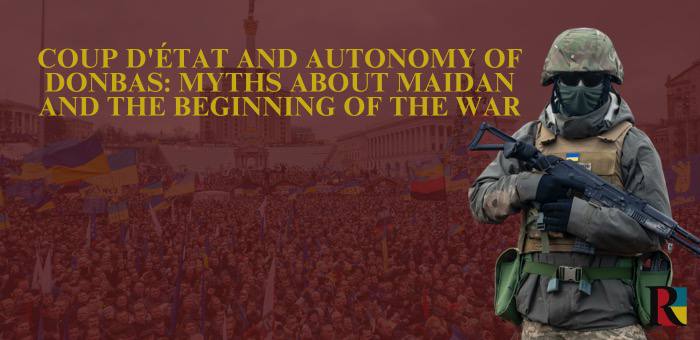


Every winter, Ukraine remembers the Revolution of Dignity, as well as the beginning of the war in 2014. 11 years ago, on the evening of November 21, 2013, several hundred people took to the capital’s Independence Square in Kyiv to protest against the authorities’ decision to suspend preparations for signing the Association Agreement between Ukraine and the EU.
On January 22, 2014, police opened fire on unarmed people – the first people were killed that day. The final day of Euromaidan was February 23, 2014 – the Verkhovna Rada restored the 2004 Constitution of Ukraine and removed Viktor Yanukovych from power.
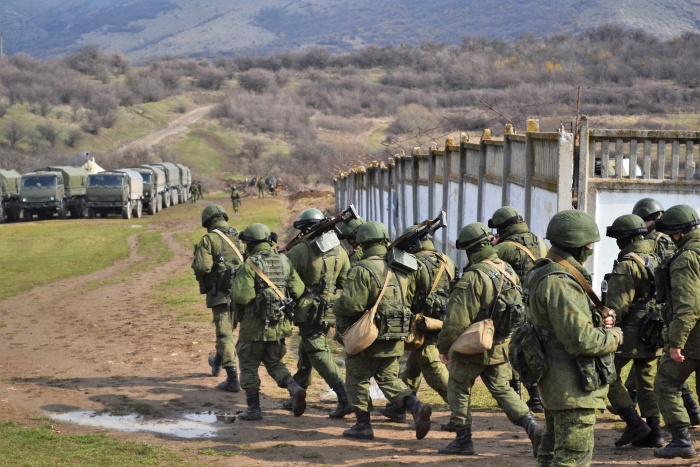
At the same time, Russia took advantage of the precarious situation and on February 20, 2014, began its illegal annexation of Crimea. This day is considered the beginning of the Russian-Ukrainian war.
All these events – the Revolution of Dignity and the beginning of the war in Eastern Ukraine – are among the topics used by Russian propaganda and about which various fakes are spread. Similar narratives also appear in European countries and the USA. The Ukrainian Review will make a selection of such fakes below.
In 2014, a “violent coup” took place in Ukraine
This is a common thesis that was voiced in an interview with Tucker Clarkson and echoed by Elon Musk. Recently, The Ukrainian Review analyzed the statements of Elon Musk and tried to understand whether he is a friend or an enemy of Ukraine.
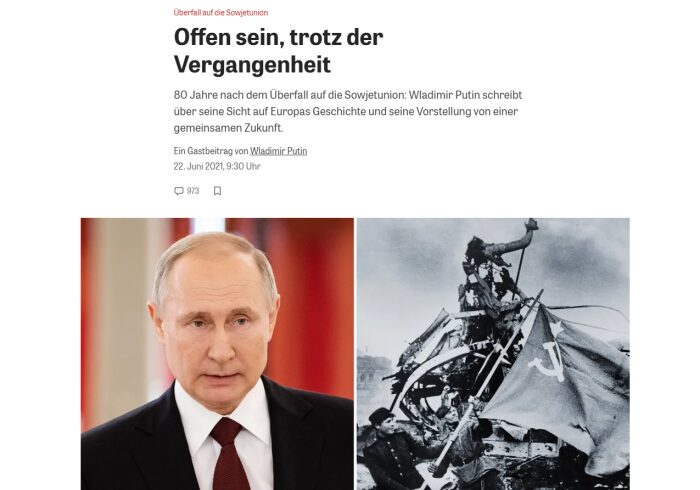
Vladimir Putin also regularly talks about a “state coup”. In particular, in his article “Be open, despite the past”, the Russian president wrote:
In fact, it was an ultimatum. We can see the consequences of such an aggressive policy on the example of the Ukrainian tragedy of 2014. Europe actively supported the anti-constitutional armed coup in Ukraine.
But there was no “violent coup” in Ukraine. According to Article 109 of the Criminal Code of Ukraine, a state coup is a criminal offense, the commission of which is established by the court. The Ukrainian court did not make a relevant decision.
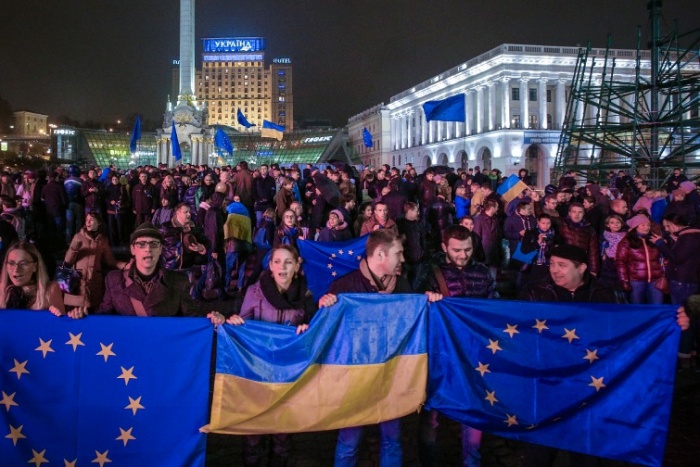
The main signs of a state coup are its unconstitutionality, violent nature, a small number of organizers and participants, the main goal – seizure of power. The consequences of a state coup are the absence of democratic elections, persecution of the opposition, suppression of civil society institutions, and usurpation of power.
The events of November 2013 – February 2014 do not fall under the definition of a state coup by any of the signs. From the point of view of modern social disciplines, these events are a revolution in the modern understanding of this term, aimed at protecting democratic governance, the rights and freedoms of citizens, and the democratization of society. This revolution was mostly non-violent, mass and gained the support of the democratic world, – as explained by the National Memorial Complex of the Heavenly Hundred Heroes – the Museum of the Revolution of Dignity.
The Revolution of Dignity was a societal response to the pro-Russian policy of then-President Viktor Yanukovych, who, among other things, refused to sign the Association Agreement with the EU.
Ukrainian poet and publicist Andriy Bondar commented on his participation in the Maidan:
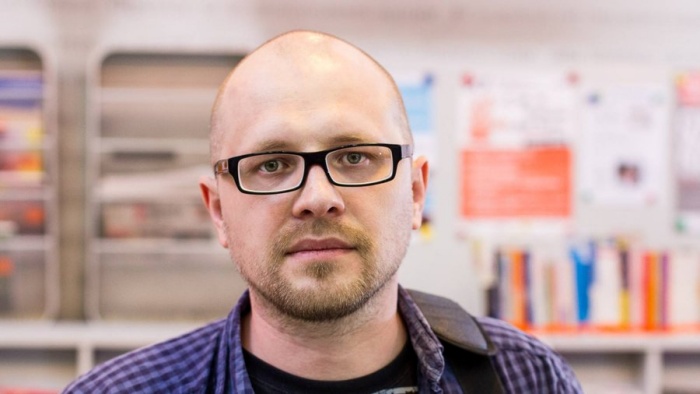
I came to the court because I believe that for the survival of this nation, this country needs a new civilizational path – the European path of development. I came for boring Europe. Boring, conflict-free, democratic.
It is very important to learn one simple thing in this whole process: there is one chance that history gives us. Make an attempt to free yourself from the post-Soviet schedule, the post-Soviet attitude to the person, to the law, to the Soviet development in the space where there is the right of force instead of the force of law. I believe in the power of collective action.
Putin only wanted the autonomy of self-proclaimed DPR, not the territorial expansion of the Russian Federation
Firstly, if Putin did not want the territorial expansion of the Russian Federation, then he would not have annexed the Ukrainian Crimea.
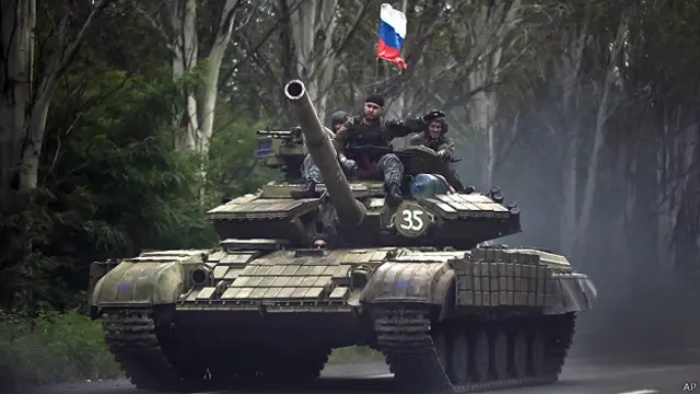
The Ukrainian authorities also agreed to hold elections in the occupied territories of Donetsk and Luhansk regions. However, deseparatization was to be carried out only after the withdrawal of Russian troops from these territories, the provision of normal life and all conditions for holding free elections. However, Russia refused to do this.
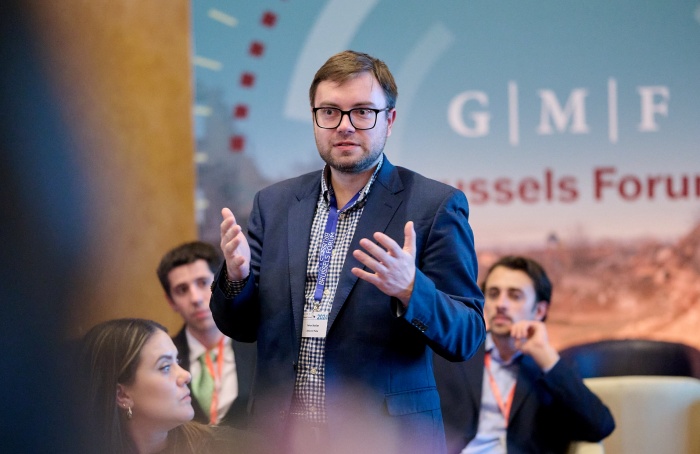
Yehor Brailian, an Analyst Detector Media, Associate Professor at the Department of International Relations and Strategic Studies, State University “Kyiv Aviation Institute”, comments on this thesis:
It was such a manipulation. V. Putin destroyed the occupied parts of Donetsk and Luhansk regions and wanted to give them to Ukraine in the format of autonomy. And let it be on its shoulders to take care of socio-economic policy, restore pensions, etc.
Yehor Brailian explains that Putin planned for representatives of these occupied territories to sit in the Verkhovna Rada of Ukraine and that this would be the Kremlin’s fifth column in the Ukrainian parliament:
This was the initial plan, but it didn’t happen. But the initial option with the penetration of Russian agents (although they are already in the Ukrainian government) failed.
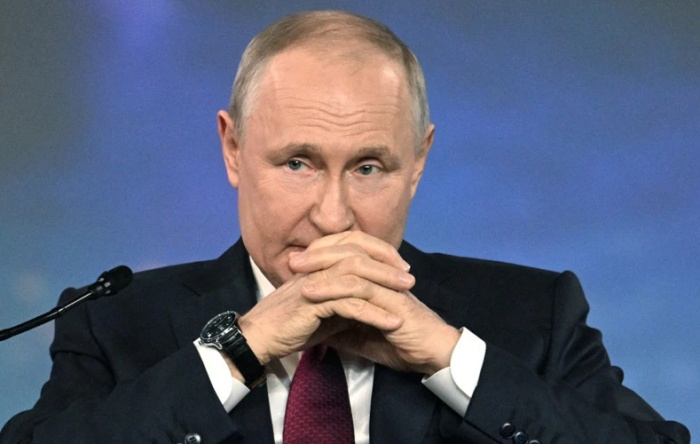
In any case, Putin does disagree that there is a separate Ukrainian statehood with history, culture, and nation. Therefore, he would attack Ukraine in any case on a full scale.
The thesis that Putin did not want to expand the territory of Russia is also false.
First, Putin has been threatening Ukraine with military aggression for many years. He has repeatedly stated that Ukraine is an integral part of Russia and that its accession to NATO is a “red line” for Russia. These statements indicate that Putin was prepared to use military force to achieve his goals.
Secondly, Putin has been massing troops on the border with Ukraine for many months. This shows that he was preparing for an invasion, not for negotiations.
No one followed the Minsk agreements, Ukraine was given time to build up its armaments
The Minsk agreements are a set of documents developed to end the war in eastern Ukraine in 2014.
The first agreement provided for a bilateral ceasefire in the Donetsk and Luhansk regions, the withdrawal of heavy weapons and the creation of a security zone in these areas, the deployment of an OSCE monitoring mission, the withdrawal of illegal armed groups from Ukraine, and the release of prisoners.
The second agreement had 13 points, including a comprehensive ceasefire, OSCE monitoring of the ceasefire regime, and the restoration of full Ukrainian control over the state border in the conflict zone from the day after the local elections.
We asked Yehor Brailian, an Analyst Detector Media, Associate Professor at the Department of International Relations and Strategic Studies, State University “Kyiv Aviation Institute”, to comment on this thesis:
Russia has constantly manipulated, claiming that Ukraine is not implementing the Minsk Agreements, in particular regarding elections in the ORDLO and other important political issues for Moscow.
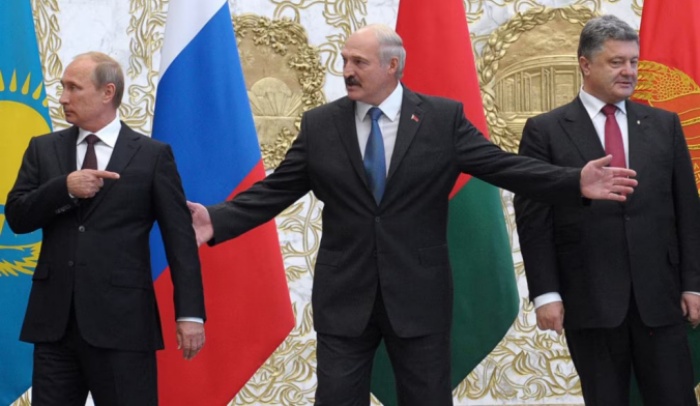
More than 200 rounds of negotiations were held, but Ukraine was unable to fully implement the agreements without withdrawing Russian troops. The main points of the agreements were the limitation of arms on both sides, the holding of elections, and the introduction of representatives of the ORDLO into the Verkhovna Rada of Ukraine. In fact, Russia promoted the idea of an autonomous status for Donbass.
Yehor Brailian notes that the Minsk Agreements concerned only the Donbass, without touching on the issue of Crimea:
Russia skillfully separated these two issues, stating that the situation in Crimea had already been “resolved” by a pseudo-referendum.
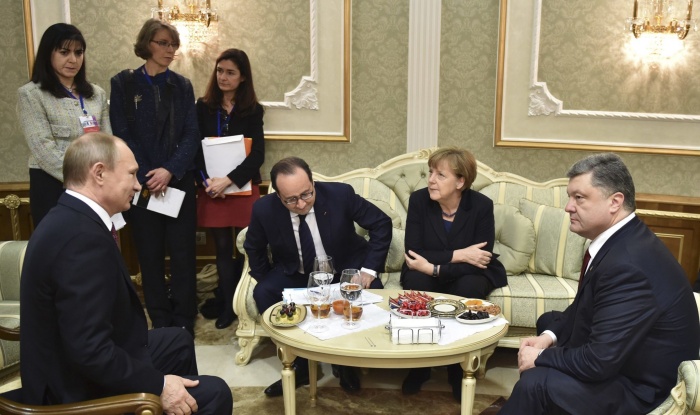
Western countries, in particular France and Germany, insisted on the implementation of the Minsk agreements, considering them the optimal solution. However, the lack of active US participation in the diplomatic settlement negatively affected the process.
The Americans were not involved in any way, although, of course, there was the position of special representative. One of them was Kurt Volker, the former head of the US mission to NATO, an experienced American diplomat.
However, Yehor Brailian notes that they could not have resolved anything, because without the withdrawal of Russian troops from the territory of the ORDLO, nothing would have worked. And the Russians did not want to withdraw their troops:
Looking back, at the time of 2015, the Minsk agreements were the best of the worst options. They gave Ukraine 7 years of relative peace, although the hybrid war continued and Ukrainian military and civilians continued to die.
The question remains open as to why Western countries did not do everything possible to prevent a full-scale Russian invasion of Ukraine, having the economic leverage to do so. This issue requires further study and analysis.
The USA wanted to surround Russia with NATO countries
Note that Russia promoted the narrative of the encirclement of the Russian Federation by NATO countries even before the full-scale invasion.
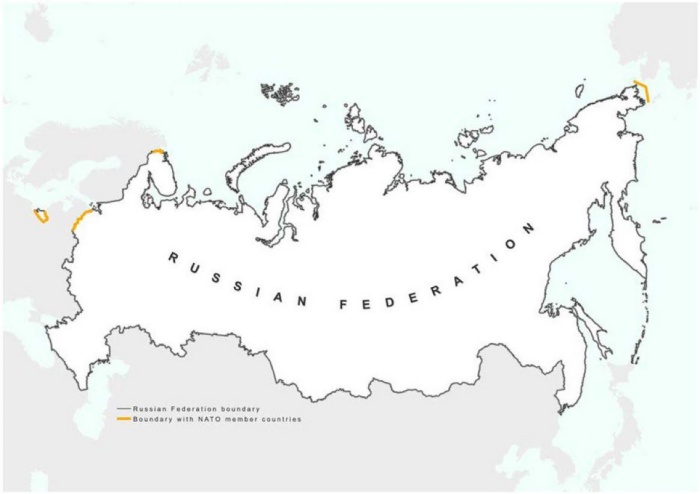
In particular, in 2021, the US Embassy in Ukraine published a map that refutes this myth:
Let’s deal with Russian myths about NATO. Myth: NATO surrounds and tries to contain Russia. Fact: the length of Russia’s land border is a little more than 20 thousand km. Of these, less than one-sixteenth falls on NATO member countries.
There was no such determination to expand within NATO itself. And any stages of expansion that followed the Cold War were solely the political will of Washington. NATO did not want to have so many countries.
However history has shown that those countries that joined NATO received collective security. And this, in principle, is what Ukraine wants to get, and therefore the option that Ukraine will join NATO in parts is delusional – explains Yehor Brailian.
***
An analysis of the events and narratives spread by Russia demonstrates their systematic lies. There was no “violent coup” in Ukraine — it was a revolution aimed at protecting democratic values. The annexation of Crimea, like the war in Donbas, is evidence of Russia’s aggressive territorial expansion, not a struggle for “peace” or “autonomy.”
Despite the long-term manipulation around the Minsk agreements, Ukraine has been given time to strengthen its defense forces. However, it is clear that the Russian aggression aimed at the complete destruction of Ukrainian statehood, not at finding a compromise.
These fakes not only harm Ukraine’s information security, but also test the readiness of the international community to counter hybrid threats.
Anya Ostymchuk