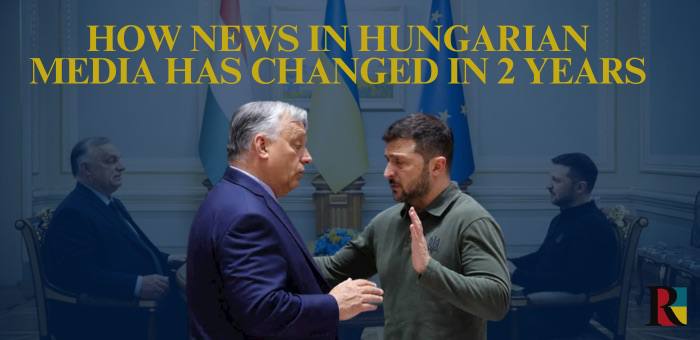


Hungary is a country in the European Union known for blocking military and economic aid to Ukraine. In 2023, The Ukrainian Review analyzed what the Hungarian media wrote about Ukraine.
At that time, the Hungarian media repeated the rhetoric of Prime Minister Viktor Orbán that for peace, Ukraine must be neutral, that Russia would not stop if Ukraine joined NATO, and also emphasized the “covering up of the death toll” and “violent mobilization.”
The Ukrainian Review decided to analyze what the Hungarian media wrote about Ukraine in 2025.
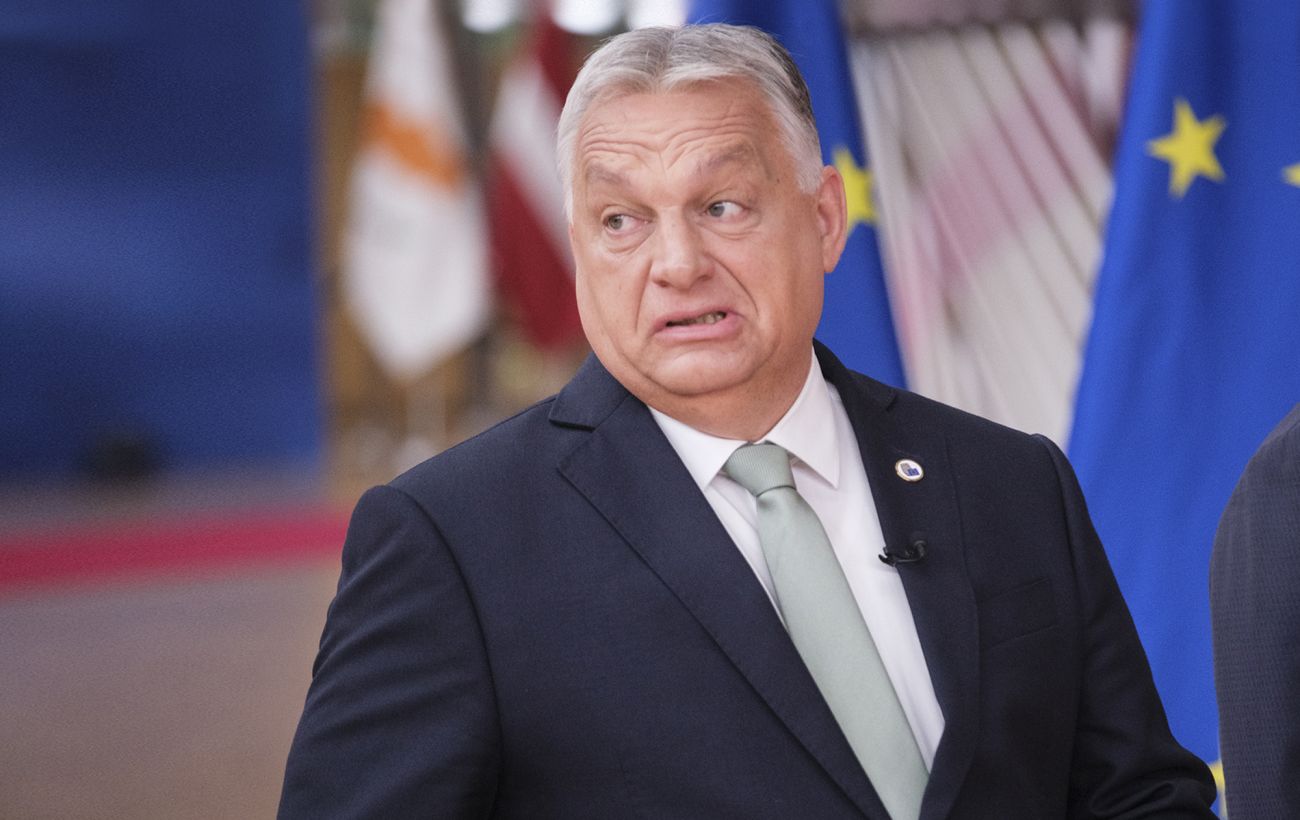
Magyar Nemzet – one of the main Hungarian newspapers
What immediately catches the eye is that the number of publications has increased several times. Mentions of Ukraine and the Russian-Ukrainian war are daily, sometimes several times a day. Topics range from political analysis to battlefield analysis, as well as Ukrainian politicians and analysis of the EU’s positions on the war.
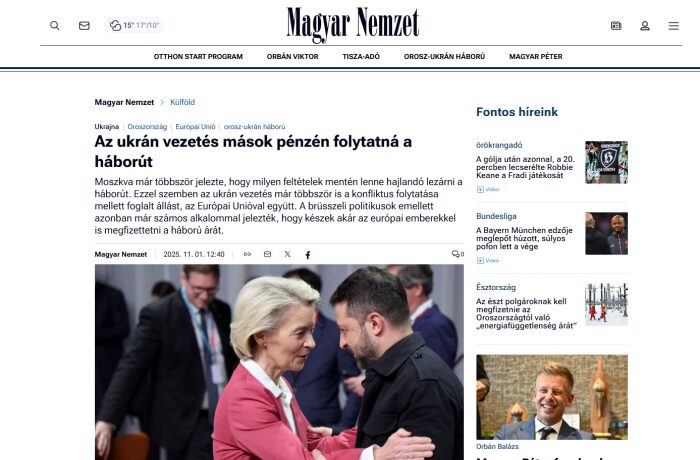
In particular, this article states that the Ukrainian leadership is constantly taking the position of continuing the “conflict” together with the EU:
“Politicians in Brussels have repeatedly stated that they are ready to make the European people pay the price of war.”
On the same day, an article with a similar opinion was published:
“It is not in the interests of Ukrainian President Volodymyr Zelensky to make peace, which is why it is so difficult to even conclude a ceasefire agreement.”
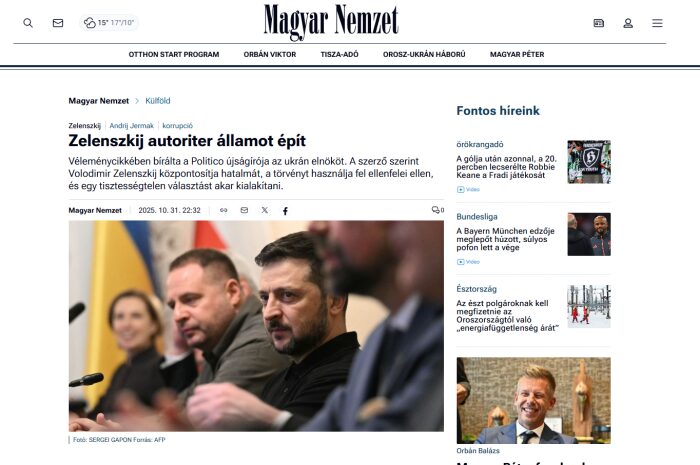
Criticism of Volodymyr Zelensky is a fairly frequent occurrence in the newspaper Magyar Nemzet. One publication says that the Ukrainian president is “building an authoritarian state”:
“Volodymyr Zelensky is centralizing his power, using the law against his opponents and trying to create unfair elections.”
In addition, EU policy and Ukraine’s accession to the European Union are being actively discussed. In particular, journalists write that Ukraine’s accession to the European Union is beneficial to “federalist” and “pro-immigration forces” because a “country at war” will provide them with a majority in the EU.
At the same time, there is no news about the missile attacks or the course of events directly on the battlefield.
Metropol is another newspaper
The media does not publish information about the course of the Russian-Ukrainian war at all. There is also no information about the constant Russian missile attacks.
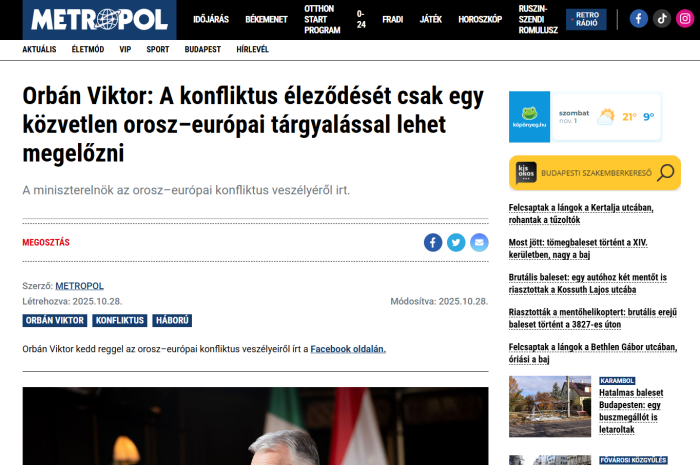
All the media is built on quoting Viktor Orban – his statements regarding Ukraine. In particular, he regularly calls for direct Russian-European negotiations and believes that the simplest solution would be to simply “divide Ukraine”:
“They talk about supporting Ukraine, but dividing Ukraine is already on a daily basis. This is old colonial logic,” the prime minister said.
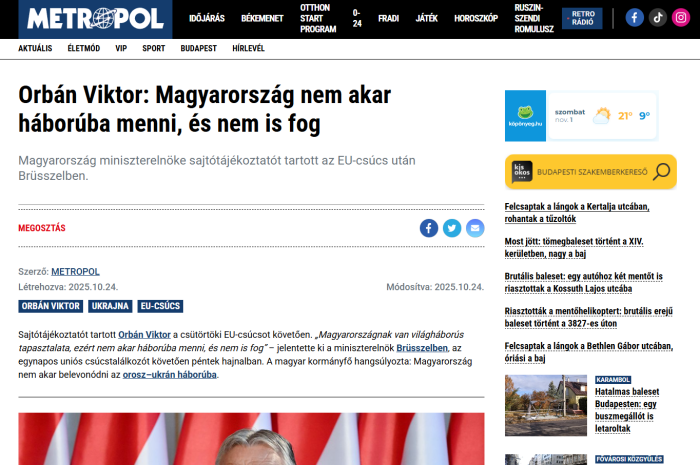
Orban also constantly emphasizes that Hungary does not want war:
“Hungary has the experience of a world war, so it does not want to go to war, and it will not.”
In general, the Hungarian Prime Minister’s rhetoric is hostile towards Ukraine. In particular, he states that Hungarian agriculture is seriously threatened by Ukraine, and that Ukraine’s membership in the EU would lead to war in the European Union.
24.hu – online media
Unlike Magyar Nemzet and Metropol, 24.hu publishes more news directly about events in Ukraine. There are mentions of the situation on the front, statements by Ukrainian politicians and international experts.
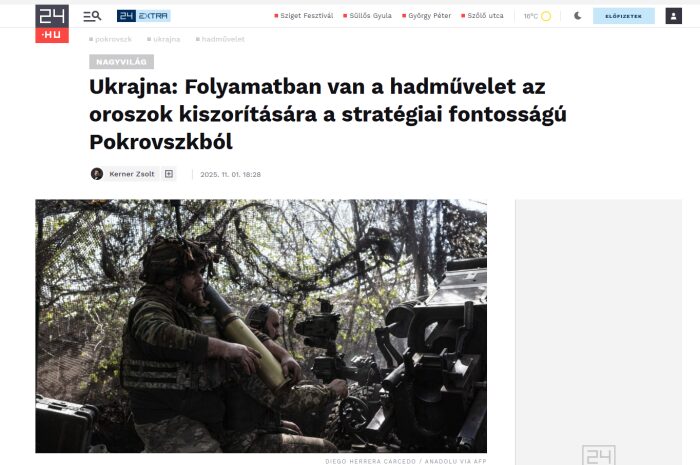
For example, in the article under the headline “Ukraine: Operation to oust Russians from strategic Pokrovsk continues” it is noted:
“If they lost the city, it would be a serious problem for Ukrainians.”
In another article, the publication quotes historian Yuval Noah Harari, who stated that “Ukraine can win the war,” as it is in a stronger position militarily, strategically and politically than ever before.
It also publishes direct quotes from Volodymyr Zelensky, for example:
“Ukraine will not be at war for decades, but the EU must provide stable financial support to Ukraine for some time; European leaders plan for two to three years.”
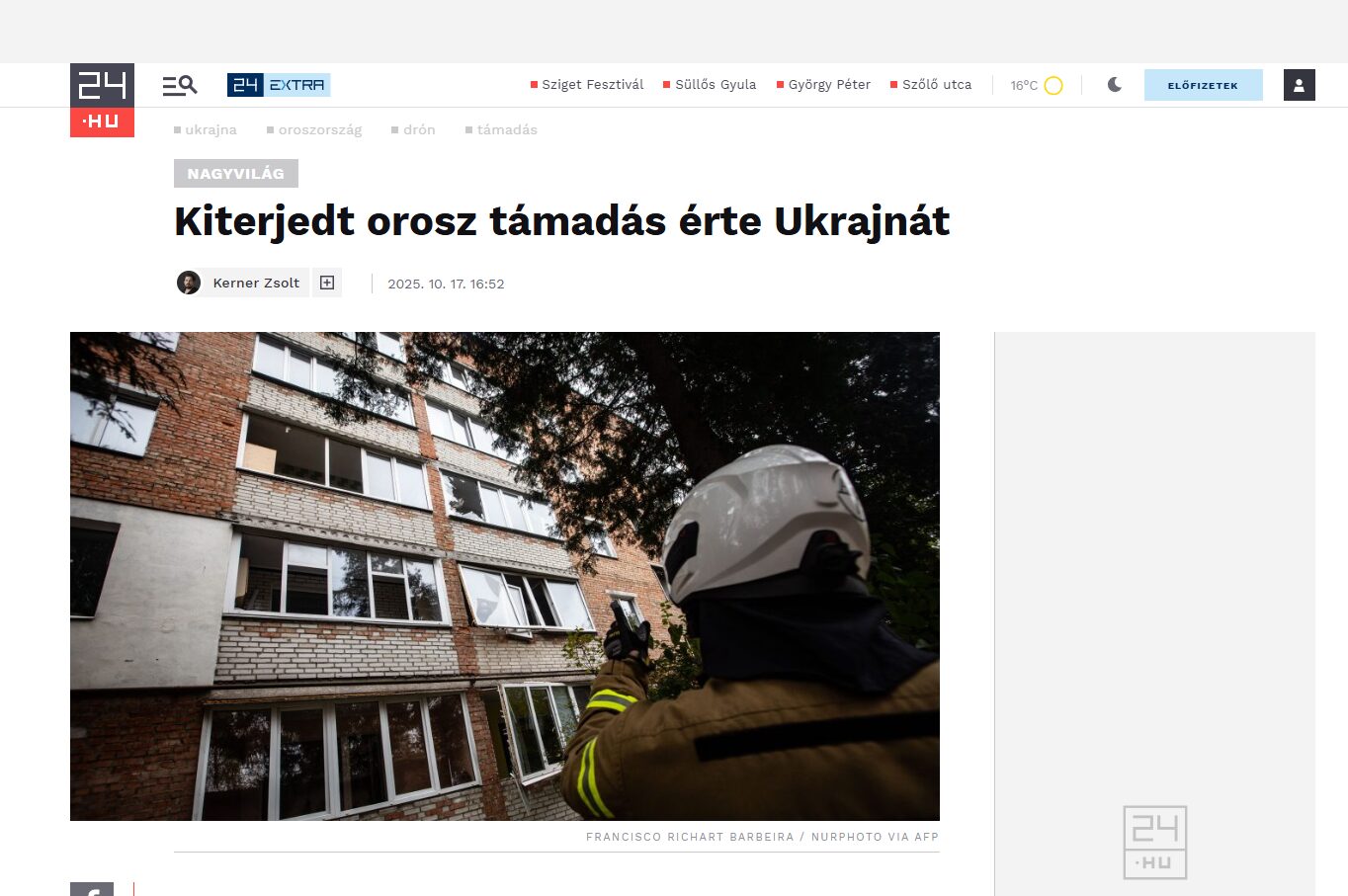
24.hu also reports on large-scale Russian attacks:
“A large-scale Russian attack has hit Ukraine. Russia attacked Ukraine with 70 drones at dawn on Friday, of which the air defense shot down or neutralized 35…” .
At the same time, journalists also quote the Russian side, for example, about the number of captured villages according to the Russian army.
Conclusions
A comparison of Hungarian media shows a clear division between government and independent sources of information. The publications Magyar Nemzet and Metropol reproduce Viktor Orbán’s rhetoric, presenting events in Ukraine through the prism of Hungarian domestic political interests and with an emphasis on “peace at any price”. Such materials almost do not contain reports on real combat operations, shelling or humanitarian consequences of the war – instead, accusations against Volodymyr Zelensky and the EU prevail.
24.hu, on the other hand, demonstrates a different approach – reporting news directly from the front, quoting Ukrainian and international speakers, and also not avoiding the topic of Russian attacks. This creates a more balanced picture of events and shows that there are still independent voices in the Hungarian information field that are able to provide more objective reports on the war.