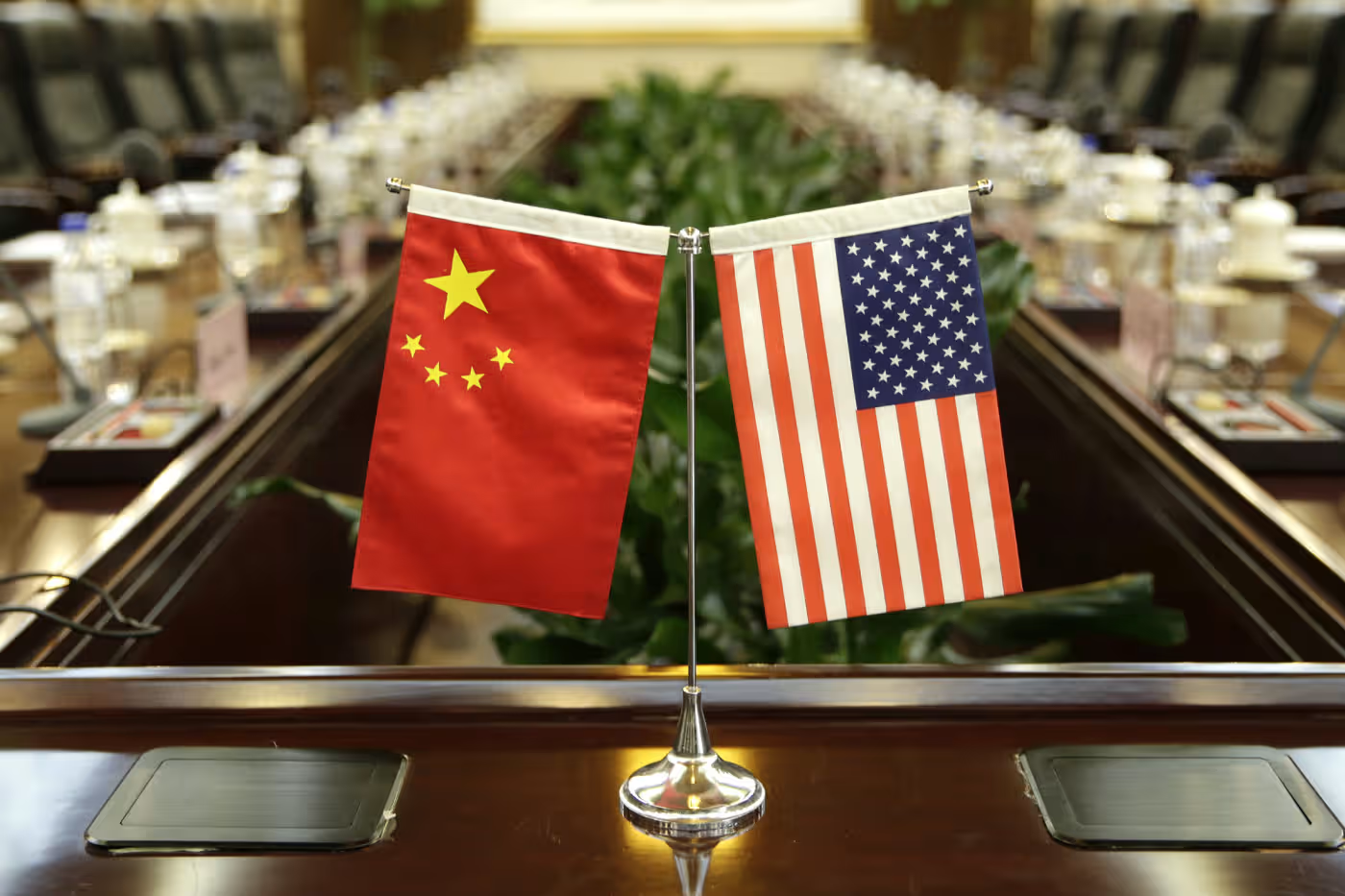


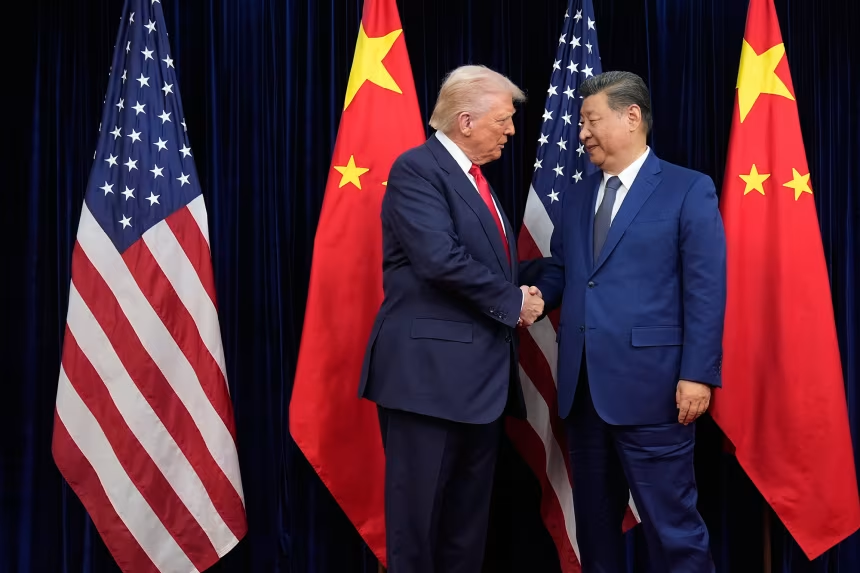
For the first time since 2019, U.S. President Donald Trump and Chinese President Xi Jinping held a bilateral meeting. This took place on October 30, 2025, in Busan, South Korea. According to The Guardian, the talks were expected to last three to four hours but ended after only one and a half hours. The main topics were trade, rare-earth metals, and U.S. tariffs on Chinese imports.
US–China leaders’ talks: key points
Trump said that China had agreed to lift restrictions on rare-earth metal exports for one year, with the possibility of annual renewal. The U.S. would lower the so-called “fentanyl tariffs” from 20% to 10%. He called the deal “amazing” and stated the rare-earth metals issue was resolved. China also committed to buying American soybeans. In effect, the two countries reached a temporary trade truce.
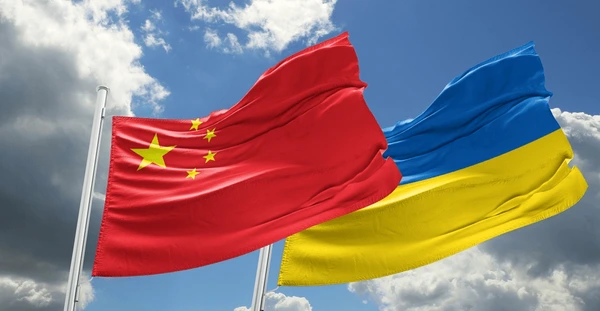
The leaders also briefly discussed the war in Ukraine. Trump told journalists they had agreed to “work together” to find ways to end the Russo–Ukrainian war. He acknowledged that China continues to purchase Russian oil, though the issue was not discussed in detail.
Xi stressed that the U.S. and China must remain “on the right track” and “be partners” in tackling global challenges, and that economic and trade teams had reached a basic consensus on key issues.
What This Means for Ukraine
For Ukraine, the Trump–Xi agreement creates a potential channel for China to exert diplomatic influence on Moscow. Despite the lack of clear public agreements, experts suggest Beijing’s involvement could alter the diplomatic landscape and potentially accelerate the end of the war or slow its escalation.
At the same time, trade agreements could divert U.S. attention from direct military support to Kyiv. Reducing economic tension with China strengthens U.S. resources but may shift focus away from Ukraine.
Analysts also note that China favors a controlled end to the war. Beijing seeks to avoid a collapse in Russia, which could follow Putin’s defeat. The ideal scenario for China is a halt in fighting while preserving the Kremlin regime, without significantly improving Moscow’s ties to the West.
There is no guarantee that China will change its policy toward Russia. For Ukraine, this means a chance for diplomatic leverage, but with uncertainty over results. Kyiv must actively engage Beijing while maintaining strong support from the U.S. and the EU.
Conclusion
In the coming months, Ukraine may seek to use the U.S.–China channel to pressure Moscow. How effective this effort will be depends on Beijing’s willingness to restrict Russia’s access to critical war technologies and resources. For Kyiv, it is crucial to pursue active diplomacy with China, highlighting regional stability and the security of global supply chains, while maintaining support from the U.S. and EU to keep Ukraine a political priority.
The Trump–Xi meeting did not alter the course of the war but opened a potential diplomatic pathway. The next few months will reveal whether this cooperation can produce a tangible impact on the war.