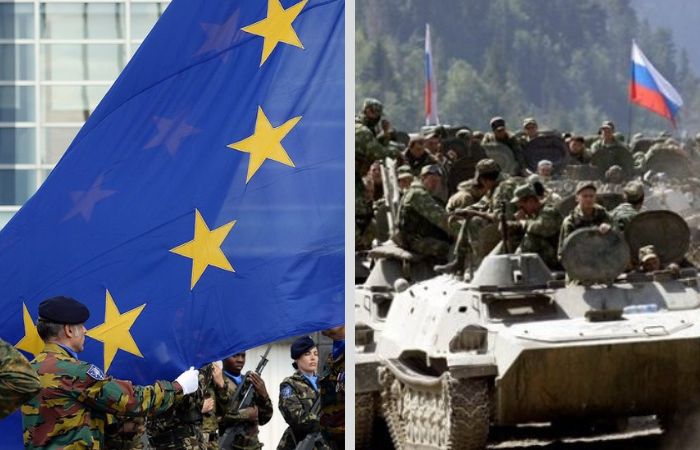


“We have to accept losing our children.” When General Fabien Mandon, Chief of the French Armed Forces, said this in November, his words struck French society like a thunderbolt, as The Economist noted. The article stresses a clear point: not only the army, but society itself, must prepare for war. A lot of Europeans, however, still refuse to accept this bitter truth.
How Europeans Are Being Prepared
Western Europe struggles to realize that it now lives “in a space between peace and war,” as Britain’s intelligence chief Blaise Metreweli stated on December 15.
European leaders increasingly speak openly about this risk. Governments and EU institutions now frame war as a realistic scenario, not a distant abstraction.
For example, in March 2025 The European Commission has urged citizens to store basic supplies of food and essential goods. These recommendations address not only natural disasters but also the possibility of war.
A survey by polling group Cluster 17, published in Le Grand Continent, illustrates the perception gap. The study questioned nearly 10,000 people in nine EU countries. Overall, 51% of respondents believe that a war with Russia poses a high or very high risk in the coming years. Perceptions vary sharply. In Poland, 77% share this view. In Italy, only about 35% do. At the same time, more than 80% of respondents do not believe that Russia genuinely seeks peace.
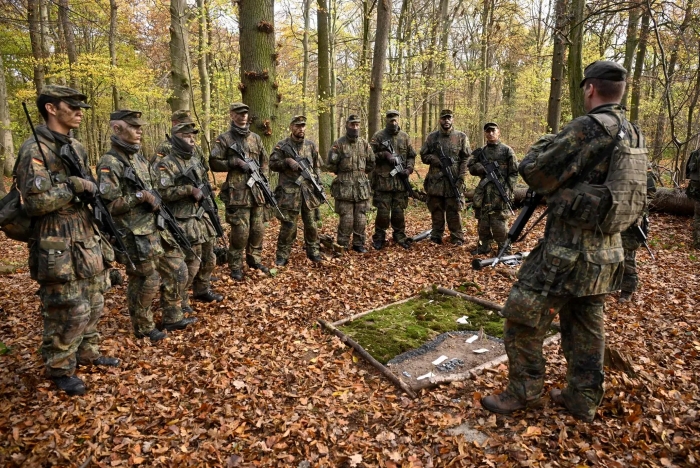
Total Militarization of Russia
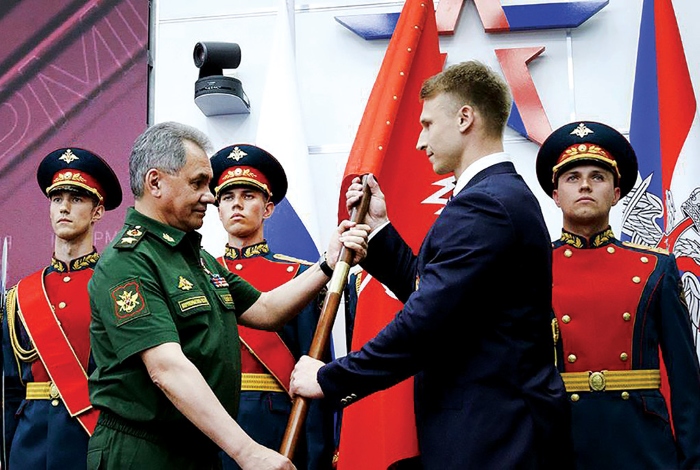
While democratic societies prioritize stability and personal well-being, Russia has deliberately prepared its population for war and Russians are ready to sacrifice their wellness to make others` lives worse. The state presents war as normal and even necessary. Television and official media constantly depict Russia as a “besieged fortress”, portraying the West, NATO, and neighboring states as existential enemies.
Russian leaders reinforce this narrative through historical myths. They frame modern wars as a continuation of the so-called “Great Patriotic War.” The education system supports this approach. Schools rewrite history textbooks, introduce mandatory “lessons on the special military operation,” and militarize children through movements such as Yunarmiya. These initiatives romanticize military service from an early age. Culture follows the same pattern. The state funds films, TV series, and books that glorify the army and security services.
According to the Levada Center, 78% of Russians supported the continuation of Russia’s full-scale war against Ukraine in January-February 2025.
Conclusion
When war begins, the regular army forms the backbone of resistance, but not the only element to ensure peace. Society, however, determines whether a country can endure a prolonged confrontation. Preparing civilians for war remains the hardest task. Europe grew up with the idea of “Never again.” Russia cultivated the slogan “We can repeat it.”
Even after Russia occupied part of its territory in 2014, many Ukrainians underestimated the threat. Long-term propaganda distorted public perception. At the same time in 2014 many Ukrainians went to army as military volunteers and the amount grew significantly in 2022. This lesson leads to a clear conclusion: societies must not downplay danger. Media and political discourse must repeatedly and clearly articulate the need for preparedness.