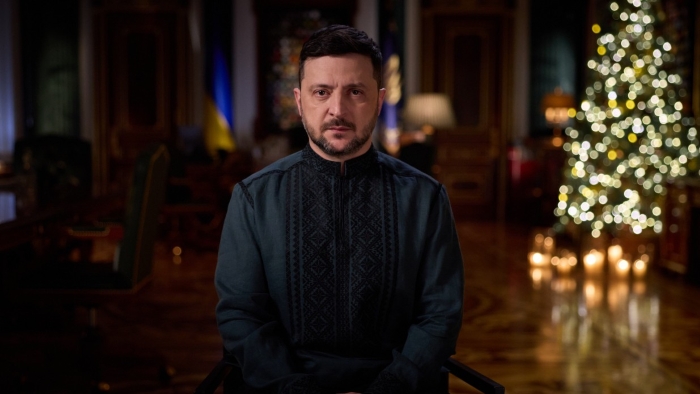


Traditionally, Ukraine’s president delivers a New Year’s address on the night of December 31. In previous years, these speeches relied on complex visuals and dynamic content. On the eve of 2026, however, the format was deliberately simple. Volodymyr Zelenskyy sat directly in front of the camera, emphasizing the need for an honest conversation and underscoring the crossroads Ukraine now faces.
The speech was filled with gratitude — toward the Ukrainian people and toward international partners. At the same time, it contained uncomfortable truth that must be acknowledged:
I want all of us to be on the same wavelength right now, to understand reality in the same way, to be armed—and not only on the battlefield, but armed with the truth. About who really wants what. What Ukraine wants. What America wants. What Russia wants. What Europe and the whole world wants, he said at the beginning of the address.
Mentioning the United States
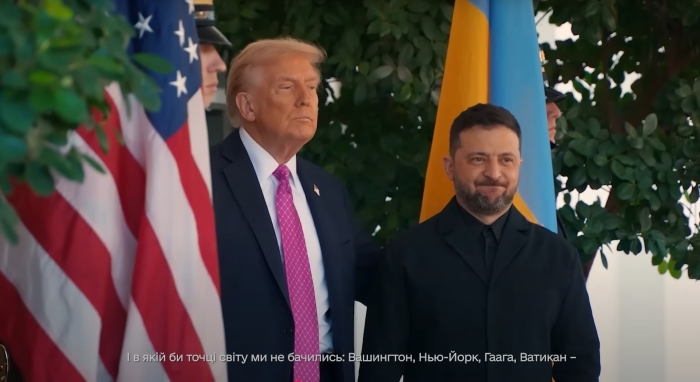
Recognizing the importance of praising the U.S. President for modern diplomacy, Zelenskyy devoted a significant portion of the address to U.S. peace efforts. He recalled a recent meeting in Mar-a-Lago, which, in his view, demonstrated that no agreements are possible without Ukraine’s direct participation. That conversation, he noted, offered hope for peace and marked a positive “change of tone” in relations — from “sharp corners” in the Oval Office to a high level of mutual respect.
Over the course of the year, seven meetings with the U.S. president took place in different parts of the world, during which Trump, as recalled Zelenskyy, acknowledged the courage of Ukrainians. Zelenskyy expressed confidence that the U.S. is capable of stopping the aggressor quickly, calling for sanctions that would create a “deadlock” for Russia. He also argued that the presence of Tomahawk missiles in Ukrainian hands would demonstrate that there is no alternative to peace.
Donald Trump recently stated that it was “good” he had “stopped Tomahawks”. Therefore, amid Russian lies about the attack on Putin residence which the U.S. President didn’t like, this was a good occasion to ask for this type of weapon one more time.
Peace Talks
We want an end to the war, but not an end to Ukraine, became one of the most powerful lines of the speech.
Zelenskyy stressed that weak agreements or documents such as the Budapest Memorandum or the Minsk “trap” would never satisfy Ukraine. Security guarantees, he argued, must be ratified by the parliaments of partner countries. The position of international partners is crucial, but such a peace must ultimately be approved by Ukrainians themselves.
Beyond U.S. leaders, the president expressed gratitude to a wide range of international allies who have supported Ukraine throughout the year.
Ukrainian vs. Russian Approaches
Zelenskyy’s address lasted 20 minutes. Vladimir Putin’s lasted eight, half of which consisted solely of music and footage.
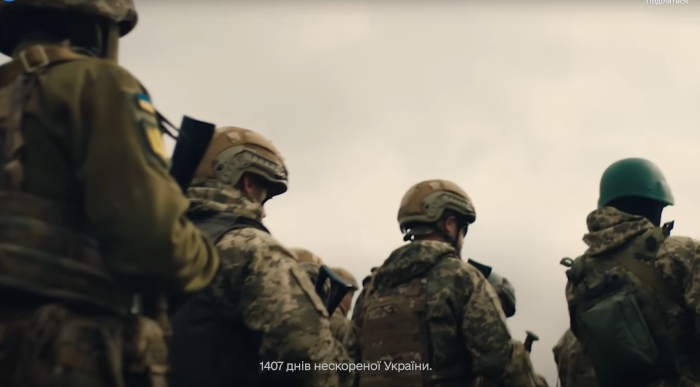
Medical workers, energy workers, rescuers, volunteers, and educators received special thanks in Ukrainian address. The main New Year’s words of gratitude, of course, the Ukrainian President dedicated to soldiers on the front lines, those who returned from captivity, and everyone working for victory, even on New Year’s Eve.
Putin, by contrast, mentioned only his military.
Conclusion
The tradition of watching presidential New Year’s addresses in Ukraine remains strong. This makes these speeches a meaningful reflection of the current situation and a powerful way to communicate messages to the public. The contrast is striking. Zelenskyy repeatedly spoke about peace, while Putin continued to advocate for the continuation of war in what appeared to be a possibly AI-generated video.
This is more than a difference in political positions. It reflects a deep worldview divide between Ukrainians and Russians. Sociocultural phenomena such as New Year’s addresses only additionally proves it.