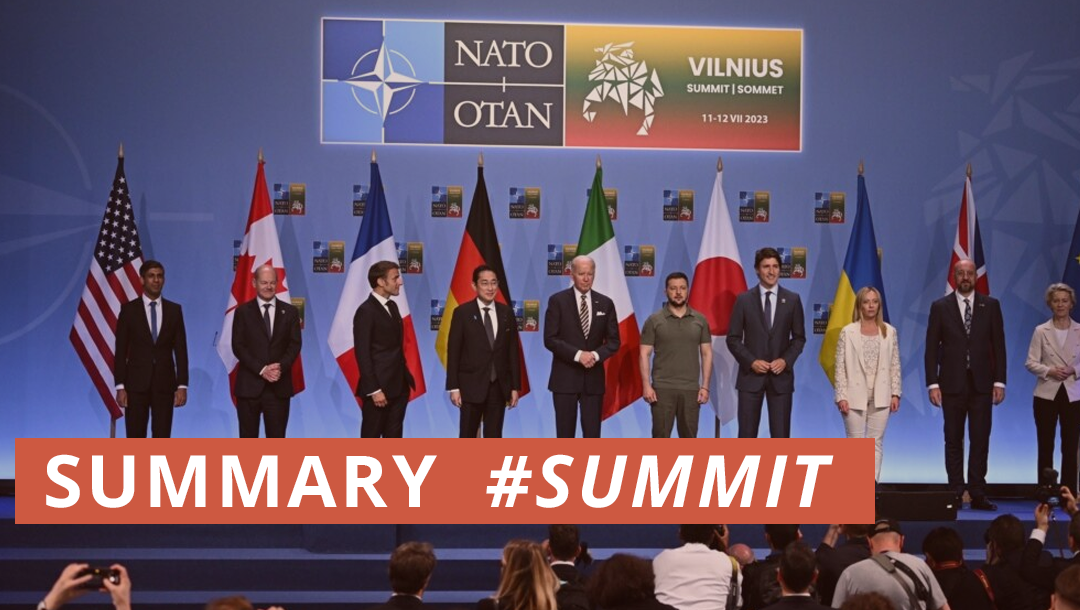


On July 11-12, 2023, a NATO summit was held in Vilnius, Lithuania, where the two main topics at the time – Ukraine and Sweden – were discussed. Accordingly, the majority of foreign media showed interest in this event and the method of its coverage differed significantly. Someone dryly explained the events, and someone did it sarcastically.
We made a brief overview of how foreign media reacted to the main events of the meeting concerning Ukraine.
Ukraine should be “grateful” for the help: as one saying, set the tone for the media
During the press conference, British politician and military man who has served as Secretary of State for Defense Ben Wallace said that Ukraine should be more grateful for the assistance provided to it. This is how it was covered by the BBC:
“The one discordant note came from Ben Wallace, who gave a briefing to reporters warning Ukraine it should show more gratitude for the support it has already given.
This was not a fit of undiplomatic pique, but rather candid advice from a supportive ally. He was saying that Ukraine should do more to understand better the political pressures constraining countries giving them military aid, especially the United States. Turning up in Washington with a shopping list of weapons, treating the US like a branch of Amazon, was, he said, inevitably going to cause a few “grumbles””.
This “advice” is written in the publication. Not only that, comparing the needs of Ukraine with the American Amazon is extremely inappropriate and unsuccessful, because we are a warring country that is constantly updating weapons and ammunition, but the media also picked up on it. The BBC should understand that such “advice” should be given out in peacetime, when formalities are important, but in a state of increased need and danger, it is plainly unwise.
UK’s Prime Minister Rishi Sunak agreed with the inappropriateness of this statement, who publicly rejected the politician’s words. You can read about it in the same article.
“For almost a year-and-a-half, Ukraine’s demands have been heard and largely acted upon in western capitals. Kyiv has always been unsatisfied, it has always asked for more, and eventually the west has delivered – from shoulder mounted missiles, to armoured vehicles, to main battle tanks, and now even to cluster munitions”, – ВВС.
We singled out the previous quote to emphasize once again that Ukraine is not dissatisfied and capricious, but demanding because of the times in which it lives now. Ingratitude should not be confused with a need that is constantly growing and about which we are forced to constantly talk. Such a critical situation requires us to be steadfast and persistent, because without it we would not have gotten even what we have now.
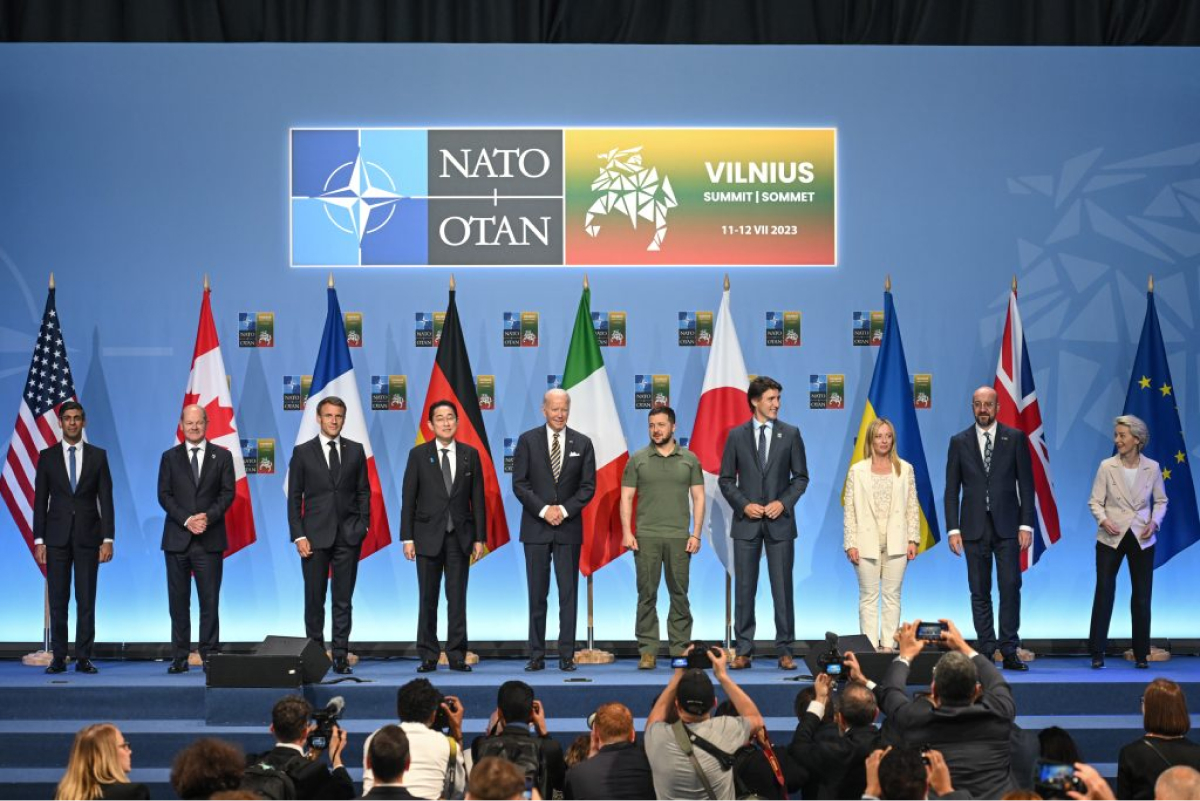
For comparison, here is how the same event was covered in The Economist:
“Mr Zelenskyy, whose mid-summit tweet that the decision was “absurd” was thought to have irritated American officials, later struck a more emollient note. “The results of the summit are good,” he suggested, adding that “clear signals that [NATO membership] will happen were heard confidently today.” But there were also signs of friction among friends. America deserved “gratitude” from the world for its support for Ukraine, argued Mr Sullivan, clearly annoyed by accusations of insufficient resolve. “People want to see gratitude,” agreed Ben Wallace, Britain’s defence secretary, recalling that he had driven 11 hours to Kyiv only to be handed a wishlist of arms: “We’re not Amazon.”
The difference is obvious – no “advice” and other incomprehensible comments towards the warring country. Isn’t it more logical to express gratitude after a victory, when it can be done calmly and fully? We probably won’t get an answer.
“Not surprisingly Ukraine’s president hit the roof, saying it was “absurd” for NATO leaders not to give even so much as a timetable. The conditions, he said, were “vague”, – wrote in the same gender of the BBC.
In connection with these and Wallace’s words about “gratitude”, the journalist who wrote this article used the very original headline “NATO: Warm words but a diplomatic reality check for Ukraine” and the beginning of the article.
“Volodymyr Zelenskyy may or may not be a Rolling Stones fan – but after this NATO summit, he is probably familiar with their song entitled “You Can’t Always Get What You Want”, – it is said at the beginning of the article.
We do not know whether Volodymyr Zelenskyy is a fan of this musical group, but we can say for sure that sooner or later Ukraine will get what it wants, and the president of Russia will soon listen to this song on repeat.
By the way, Zelenskyy called NATO’s decision “absurd” because a “road map” was not issued for Ukraine, which outlines an action plan for the country to join the Alliance. However, as we can see from the quote, he later changed his mind and not for nothing. Security guarantees have been approved for us. In addition, the Western allies agreed to the creation of the Ukraine-NATO Council, which should bring Ukraine closer to the Alliance.
At the NATO summit, the G7 countries agreed on a Joint Declaration of Support for Ukraine and steps to protect against future aggression by the Russian Federation.
The G7 countries will work to provide stable forces capable of defending Ukraine right now and deterring Russian aggression in the future. In particular, it says:
- assistance in the field of security and supply of modern military equipment on land, in the air and at sea;
- support for the development of the defense and industrial base of Ukraine;
- training and education of the Ukrainian Armed Forces;
- exchange of intelligence;
- supporting cyber defense, security and resilience initiatives, including to counter hybrid threats.
The USA, Russia and good consequences – what other opinions were published in the media
In addition to the unsuccessful statement of Ben Vales, the Western media also discussed the role of America in the functioning of NATO and the wars in Ukraine. For example, The Wall Street Journal wrote the following:
“NATO summits are stage-managed to come off as displays of unity and strength. Intra-alliance disputes, such as frequent differences between historic rivals Greece and Turkey, often require extra time and attention to resolve. The U.S., meanwhile, is by far NATO’s biggest member and the force behind most of what it does, but Washington tries not to impose its will – at least not without first wooing and cajoling allies”.
That is, the media recognizes the authority of America, but still describes it as a country that does not impose its power. Instead, the New York Times describes the country as a manipulator playing its own game at the summit.
“Yet the paradox is only superficial. In fact, NATO is working exactly as it was designed by postwar U.S. planners, drawing Europe into a dependency on American power that reduces its room for maneuver. Far from a costly charity program, NATO secures American influence in Europe on the cheap. U.S. contributions to NATO and other security assistance programs in Europe account for a tiny fraction of the Pentagon’s annual budget — less than 6 percent by a recent estimate”.
And here is another paragraph from this article:
“In Ukraine, the pattern is clear. Washington will provide the military security, and its corporations will benefit from a bonanza of European armament orders, while Europeans will shoulder the cost of postwar reconstruction — something Germany is better poised to accomplish than the buildup of its military. The war also serves as a dress rehearsal for U.S. confrontation with China, in which European support cannot be so easily counted on”.
We have more than once debunked the myths that America is using the situation in Ukraine for its own benefit. This is a popular narrative that continues to be used. Indeed, America is one of the leading countries in the world, and it is difficult to deny its authority. However, her political actions during the past year were more likely not about the struggle with China, but about the huge aid to Ukraine.
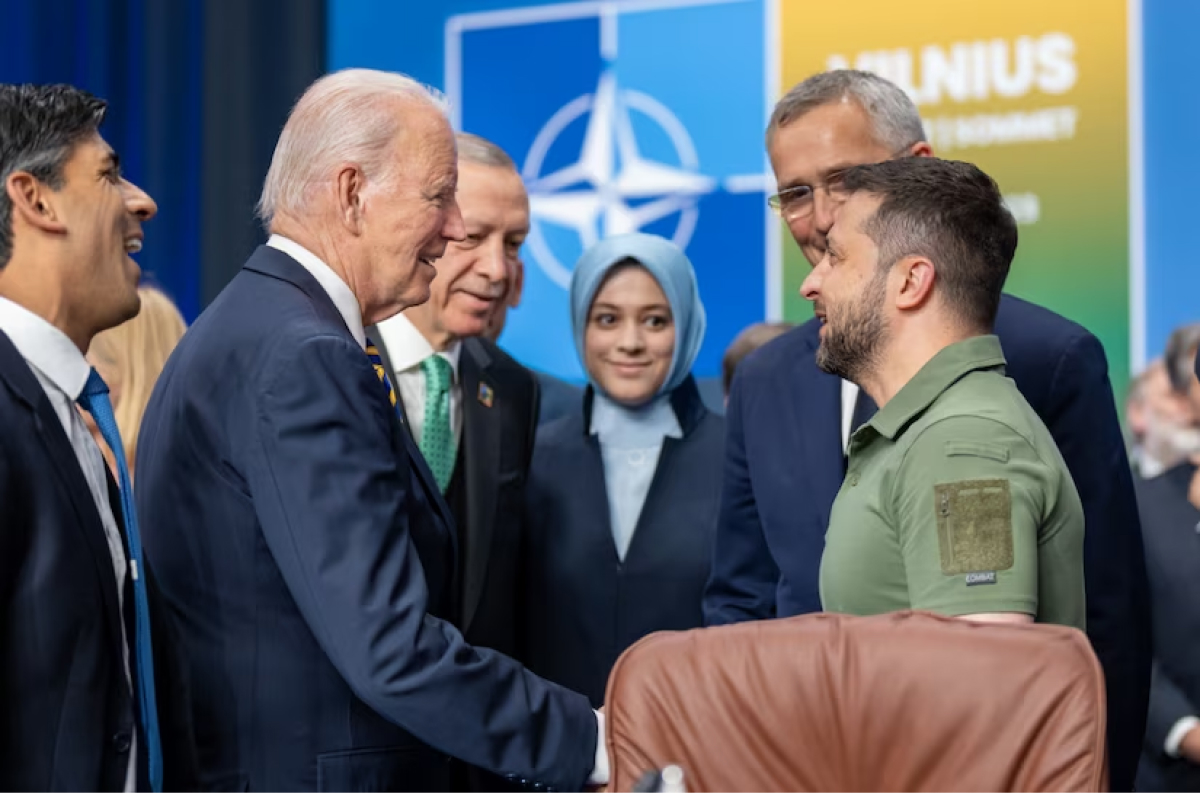
We found the opinion of The Economist interesting, which talks about how NATO will react in case of another aggression by Russia.
“The G7 members did not go so far as to offer Ukraine formal security guarantees along the lines of NATO’s Article #5 mutual-defence clause, according to which an attack on one is an attack on all. But they said that if, after this war, Russia attacked Ukraine again, allies would “immediately consult with Ukraine” and offer “swift and sustained security assistance” including “modern military equipment across land, sea and air domains”. It is now up to individual allies to flesh out these pledges. “You could expect more British troops in Ukraine after this conflict than you did before,” suggested Mr. Wallace. The devil will be in the detail of these bilateral security promises, with America’s naturally being the most important”.
That is, NATO will urgently consult with Ukraine in critical situations that may happen someday. We hope that in reality, if necessary, the Alliance will not only be “worried” in words, but will also take quick and decisive actions. However, it is very difficult to predict the development of events now, so we believe that our international cooperation will be productive.
Also, the same publication revealed a little about Russia’s reaction to the results of the summit. In fact, this is the only publication that wrote about it, but it probably happened because the world has long ignored the opinion of the occupier.
“That may have cheered Vladimir Putin, who is always on the lookout for signs of Western disunity in the face of his gory invasion of his neighbour. The reality, however, is different. Though the summit could have done more, and avoided the impression of differences with Ukraine, it inflicted several reverses on Russia’s president, with the promise of many more to come”.
The journalist also expressed an interesting opinion about the fact that Russia can continue the war in Ukraine as long as possible, so that it cannot join the Alliance before its end.
“Even that is somewhat beside the point. For now, genuine peace talks are unlikely. Indeed, the fact that Russia knows that NATO will not admit Ukraine as long as war rages gives it an incentive to keep fighting. What counts is less the conditions for some hypothetical NATO membership in the future, so much as a concrete and lasting programme to defend Ukraine right now. That is where the summit made real progress”.
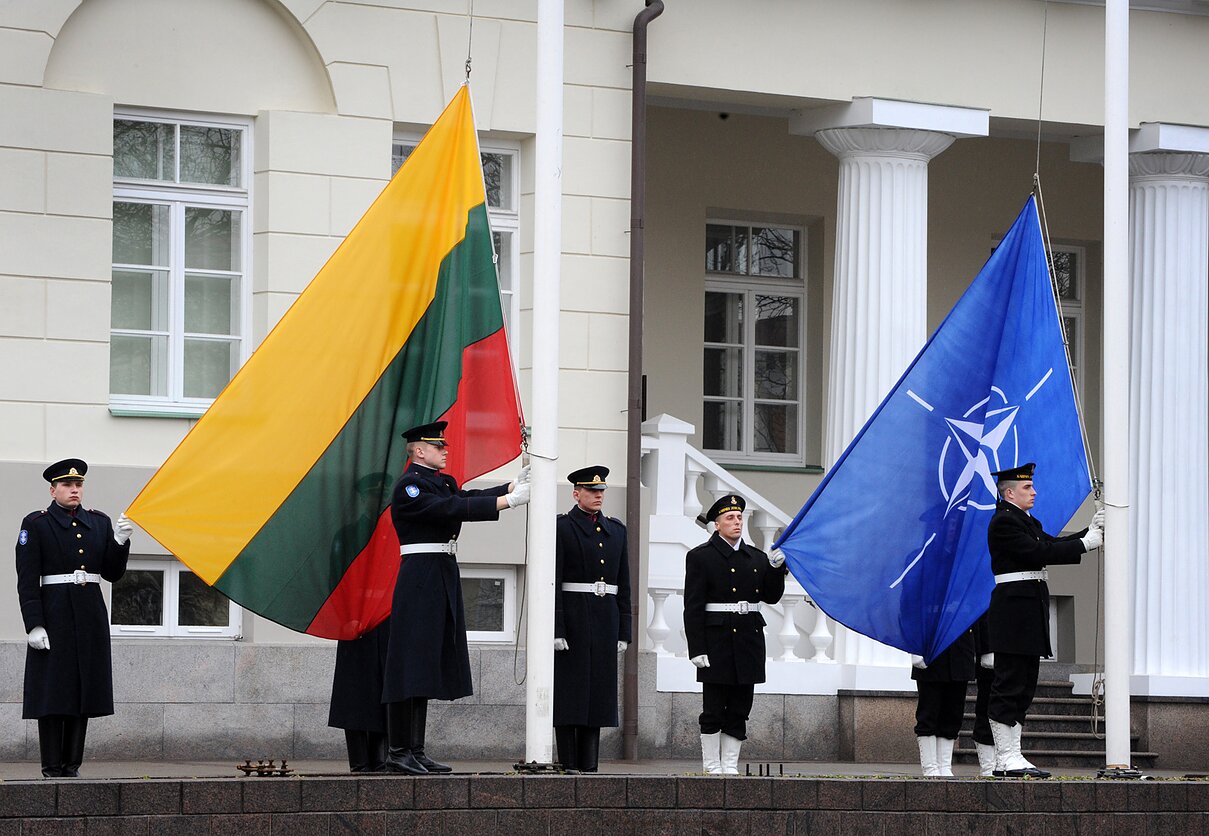
However, the media are inclined to believe that this meeting was successful for Ukraine, although not ideal. For example, the BBC writes the following:
“UK’s Prime Minister Rishi Sunak said the country belonged in the alliance. NATO Secretary-General Jens Stoltenberg said they met as equals on Wednesday, but would do so as allies in the future. And President Joe Biden – who had done so much to limit what NATO said officially about potential membership – told Mr Zelensky that it was going to happen. Ukraine, he said, was moving in the right direction.
UK Defence Secretary Ben Wallace said the summit showed there was now a cultural acceptance that Ukraine belonged in NATO. He said that there were no longer any countries asking “if” Ukraine should join, only “when”.
And the Financial Times also expressed pleasant expectations:
“Ukrainian president Volodymyr Zelenskyy celebrated what he called a “good result” from the NATO summit, striking an appreciative tone after blasting the alliance days earlier for its “absurd” lack of a clear timeline for Ukraine’s admittance to the bloc”.
The NATO summit turned out to be an emotional event in a certain way, to which different media reacted in different ways. Someone described the situation objectively, and someone added a little humor, and that’s fine. One of the main results of the NATO Summit was that Western countries are not “tired” of Zelenskyy and the war, but are ready to continue to support Ukraine in its struggle to return the territories illegally occupied by Russia.
Tetiana Stelmakh