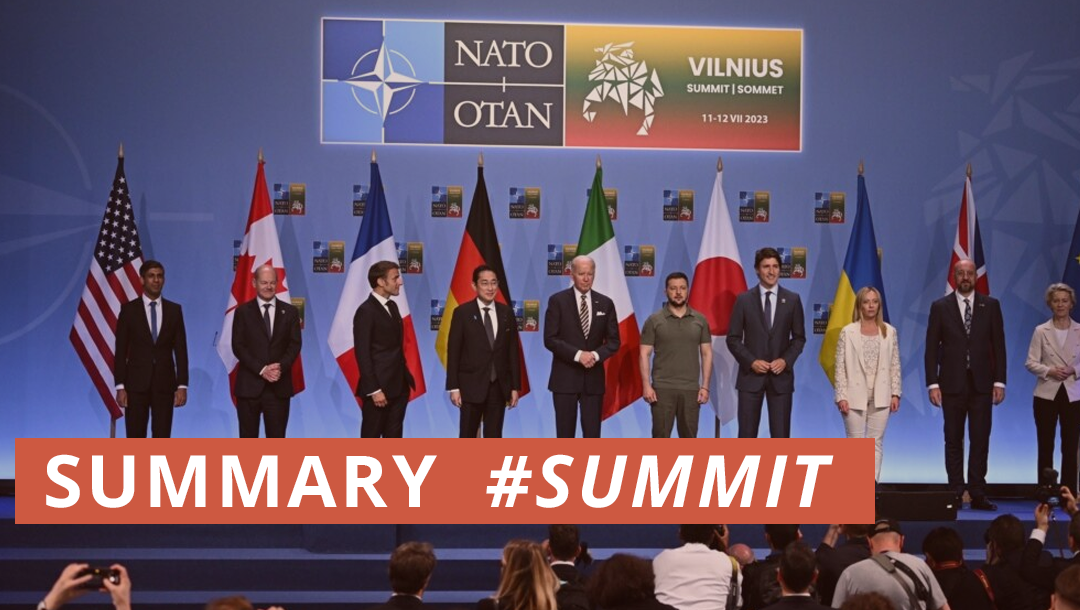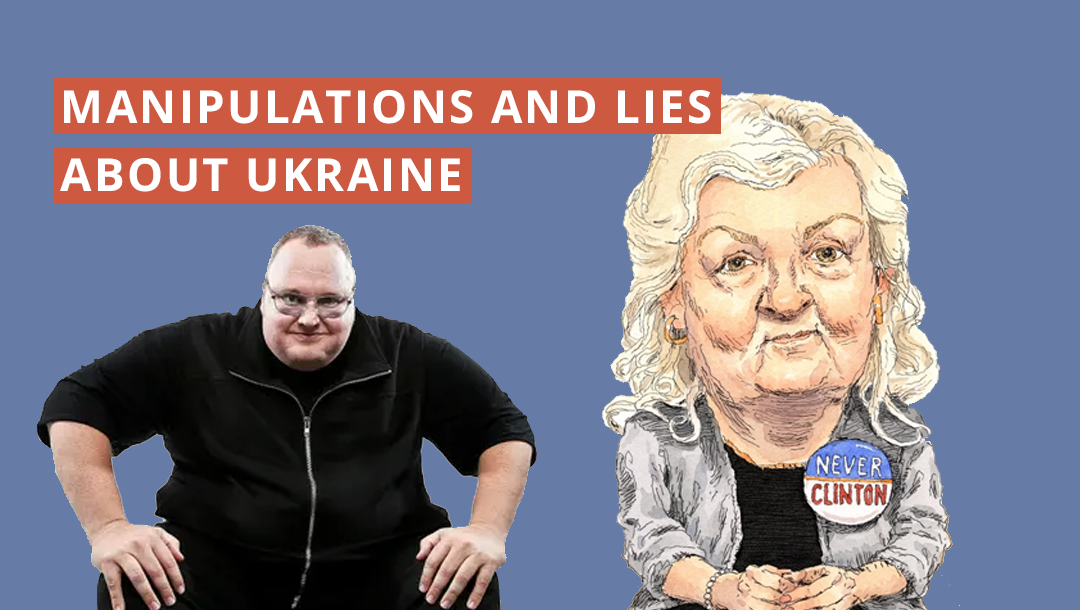


Against the background of the constant support of Ukraine from Western partners, some politicians and media personalities continue to make incomprehensible statements, and sometimes simply anti-Ukrainian ones. Accordingly, in order to appear consistent, they try to slow down the help provided by partners to fight the aggressor. Where in civilized societies do thoughts about the ambiguity of what is happening in Ukraine come from? Why are brutal aggression, terrorism, and war still not known by everyone in the West? The answer is simple — journalists, public figures, and various opinion leaders who pretend to be moral authorities, but in fact, are motivated or due to lack of information, play on the side of the Russian Federation.
Juanita Broaddrick: from sex scandal to anti-Ukrainian Sentiments
Juanita Broaddrick — Journalist, an ardent supporter of Trump and anti-vaccinator, an opponent of providing any aid to Ukraine, a sharp critic of President Zelenskyy.
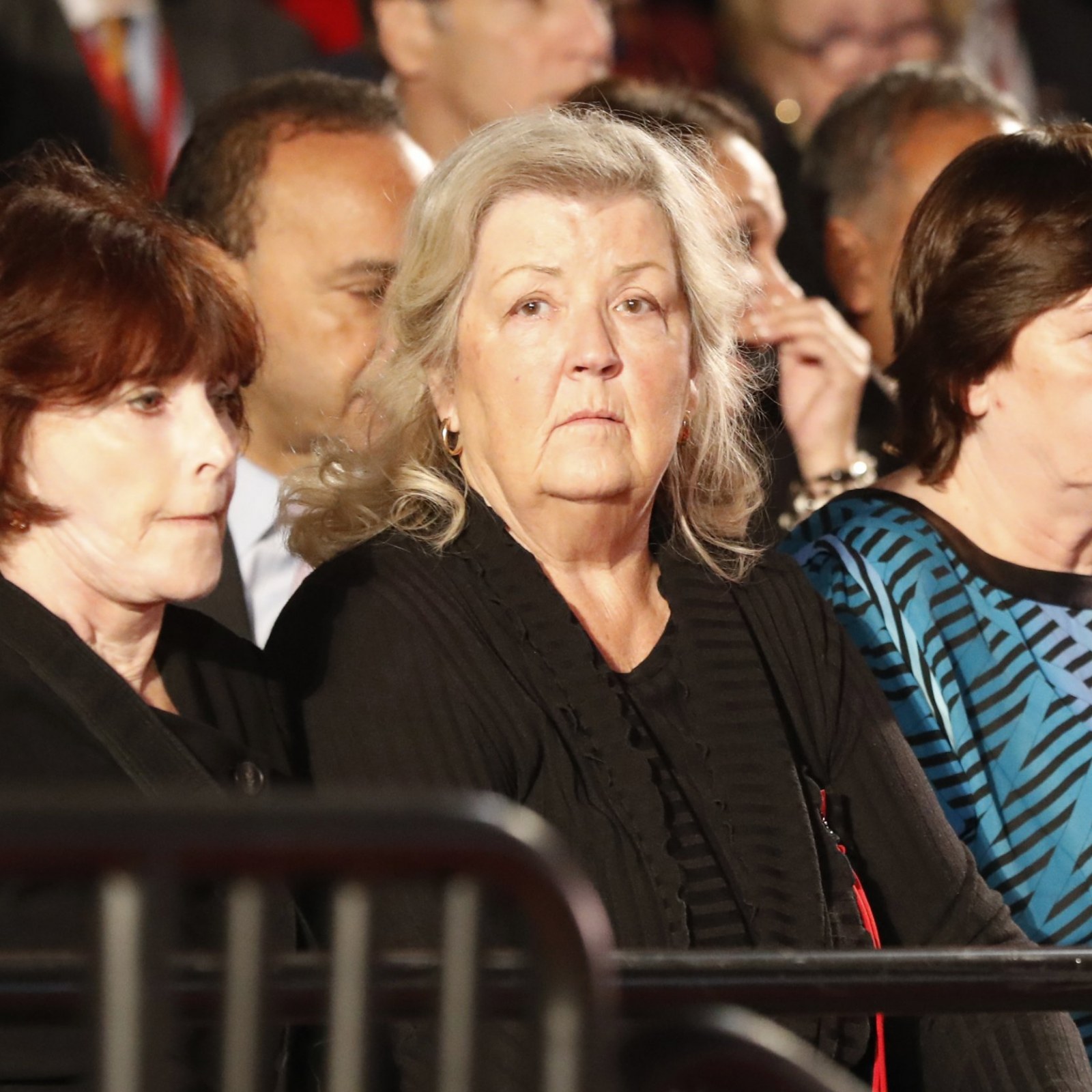
She became famous mainly because of the sexual scandal in which the 42nd president of the United States, William Jefferson Clinton, was involved. She changed her testimony several times when the then 32-year-old Arkansas State Attorney Clinton pressed her for it in 1978. The story received wide publicity in the mass media.
Broaddrick uses his media presence to spread, including pro-Russian propaganda in the United States. The woman’s Twitter page, which has almost 830,000 followers, is full of theses that are heard every day on the federal channels of the Russian Federation.
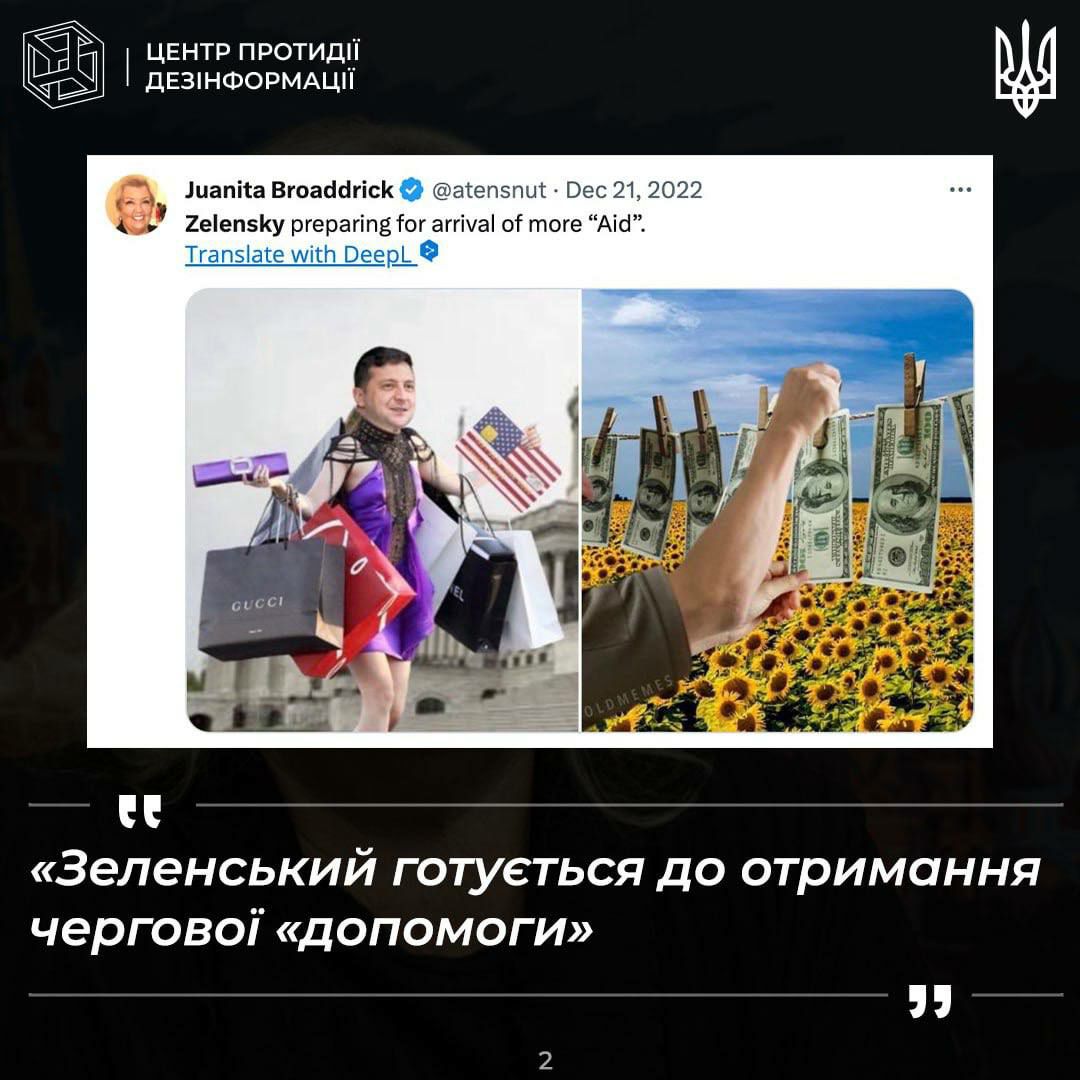
Here are just some of them:
“I am very angry about the approval of billions for Ukraine”.
“Oho! Why does the swindler Zelenskyy have such great influence? Ukraine is a hotbed of corruption.”
[On Biden’s visit to Ukraine]: “Of course, it was staged. No sirens for five days until Joe was caught on camera”
“Zelenskyy is a fraud”.
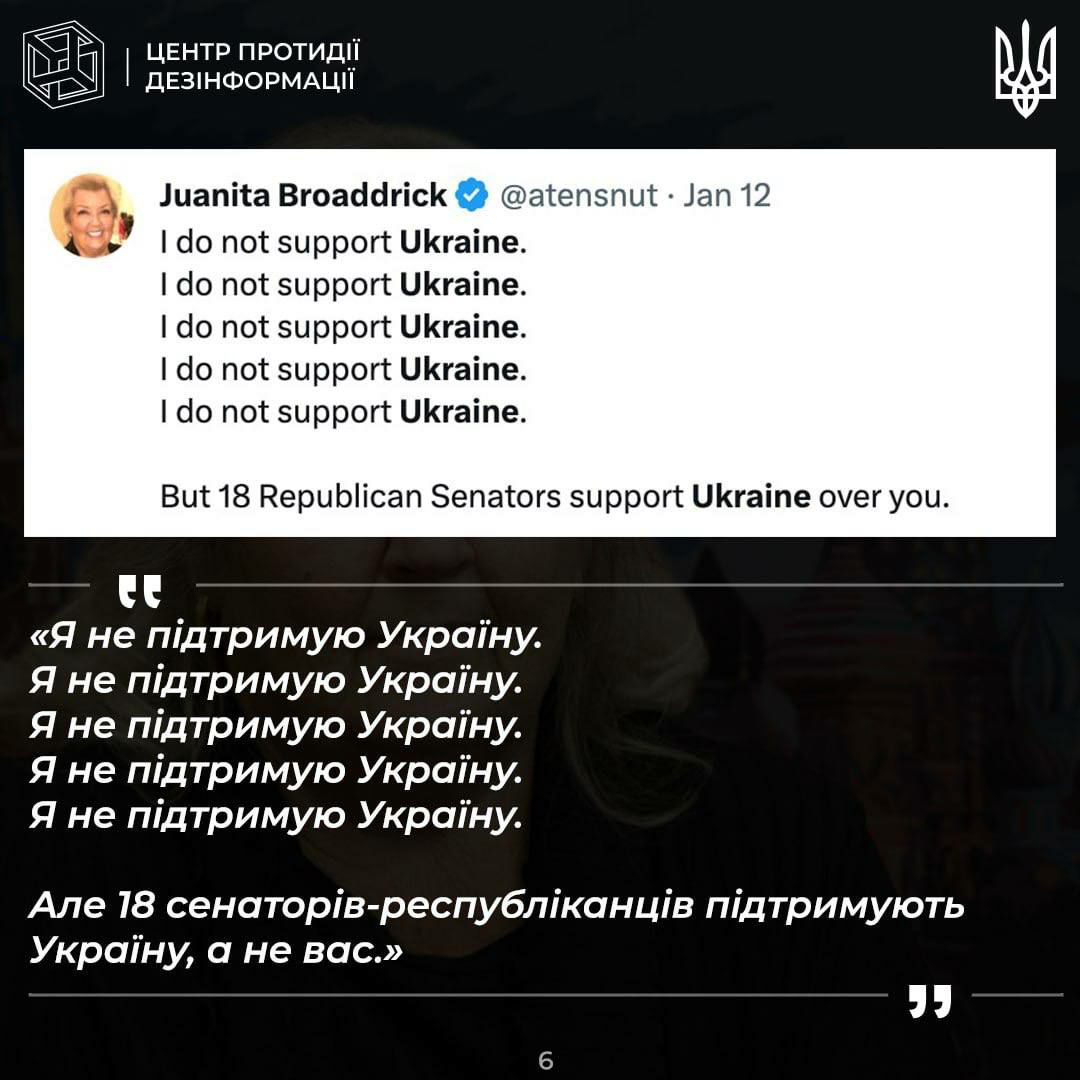
Now some of them are no longer available on Twitter, but thanks to our colleagues at the Countering Disinformation Center, Broadrick’s tantrums will remain in history.
Kim Dotcom: from a gamer to a military analyst in an hour
It is characteristic that every propagandist of anti-Ukrainian sentiments usually chooses a certain thematic niche so that his pro-Russianness is not too conspicuous. If Juanita Broaddrick works more with the topic of “corrupt schemes” when providing aid to Ukraine, this guy with 1.4 million followers on Twitter mainly focuses on the topics of “war crimes” [on the part of Ukraine, of course — ed.], nuclear war and global catastrophes. as a potential blow-up of Zaporizhzhya NPP. Meet Kim Dotcom — an entrepreneur, innovator, gamer, artist, and fighter for freedom on the Internet, as he describes himself. Who is this thought leader really?
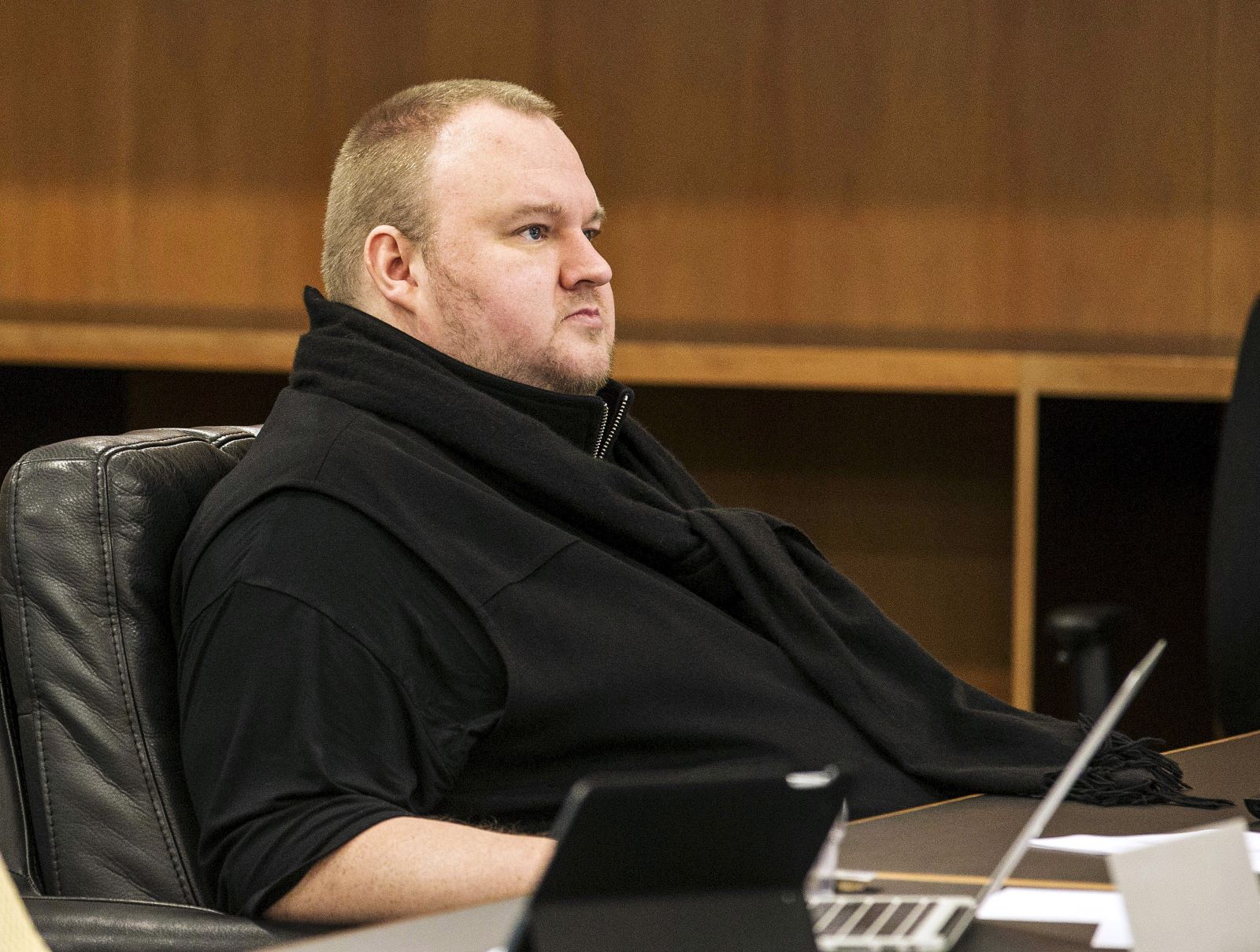
Kim Dotcom is a German-Finnish entrepreneur, engaged in the IT business. In 2012, he was arrested in New Zealand at the request of the FBI, but on February 22, 2012, he was released on bail. US authorities charged him with money laundering, fraud, and massive copyright infringement, seeking his extradition to the US. In 2017, the New Zealand Supreme Court authorized Dotcom’s extradition, which he is currently appealing. We provide some biographical data so that readers can understand the level of “moral authorities” who for some reason began to consider themselves experts in geopolitics and military affairs, and spread fakes and manipulations about Ukraine.
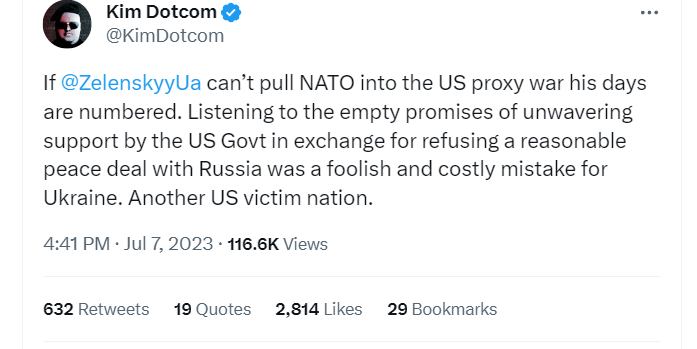
“Zelenskyy’s days are numbered” — a serious analysis. Like a quote from Russian television.
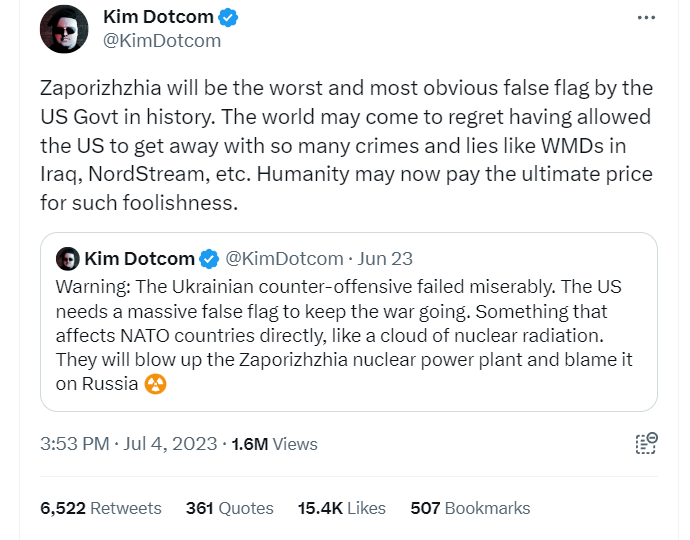
And read the military-political analysis: the USA is preparing to blow up the ZNPP due to the failure of the Ukrainian counter-offensive… Which, in fact, continues at the stage of forming operations without the involvement of the main forces and reserves, as well as in anticipation of an increase in the supply of weapons for the Armed Forces. That is, currently the defense forces of Ukraine are only looking for weak points of the enemy. But it is probably more obvious to Kim than to Commander-in-Chief Valerii Zaluzhnyi.
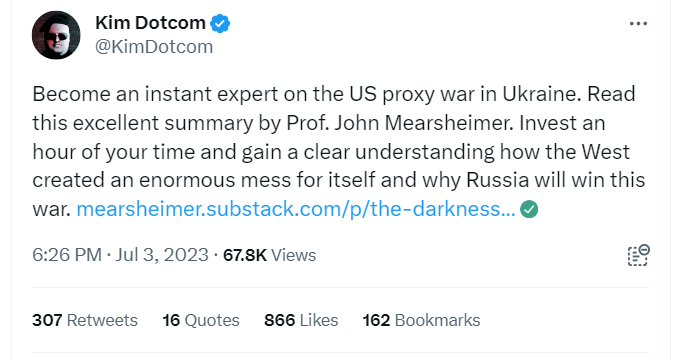
And here Dotcom explains how he became an expert on the war in Ukraine in one hour.
We would like to note that Dotcom is a regular player in Call of Duty — a video game in the shooter genre. Before his arrest, he was even number one in the world ranking in one of the Call of Duty series. Presumably, this combat experience is also part of his analytical military skills.
How to deal with fakes of popular Western bloggers
The Ukrainian Review spoke with media experts about how to counter fakes not only in Western media but also spread on social networks.
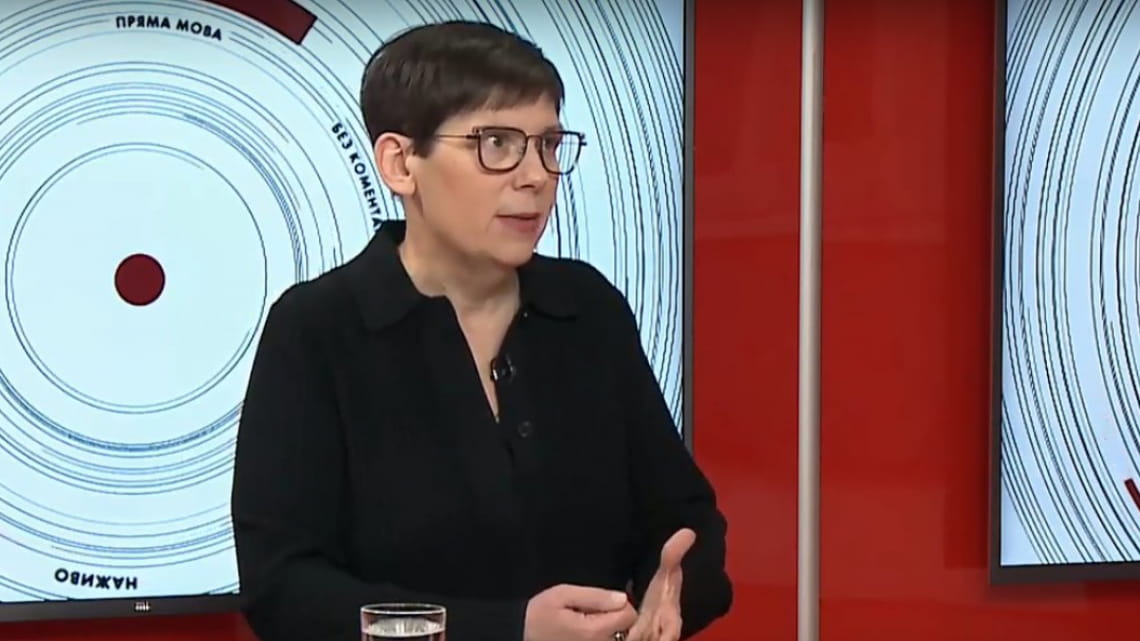
Natalia Ligachova, media expert, head of the NGO Detector-media:
“Sometimes there is an opinion that debunking fakes promotes them even more, as if fakes spread faster than their refutation. Even the latest research says it is. At the same time, the debunking of fakes shows that not every piece of information can be trusted. Every effort to disprove misinformation has an effect on critical thinking in the audience. In addition, if we are talking about popular people in the event with a large number of followers, you need to do a dossier, a background, and who these people are. And, of course, it is necessary to promote the refutation of fakes in social networks. After all, this is exactly what they invest in. And the last thing — you need to practice your own cautionary narrative.”
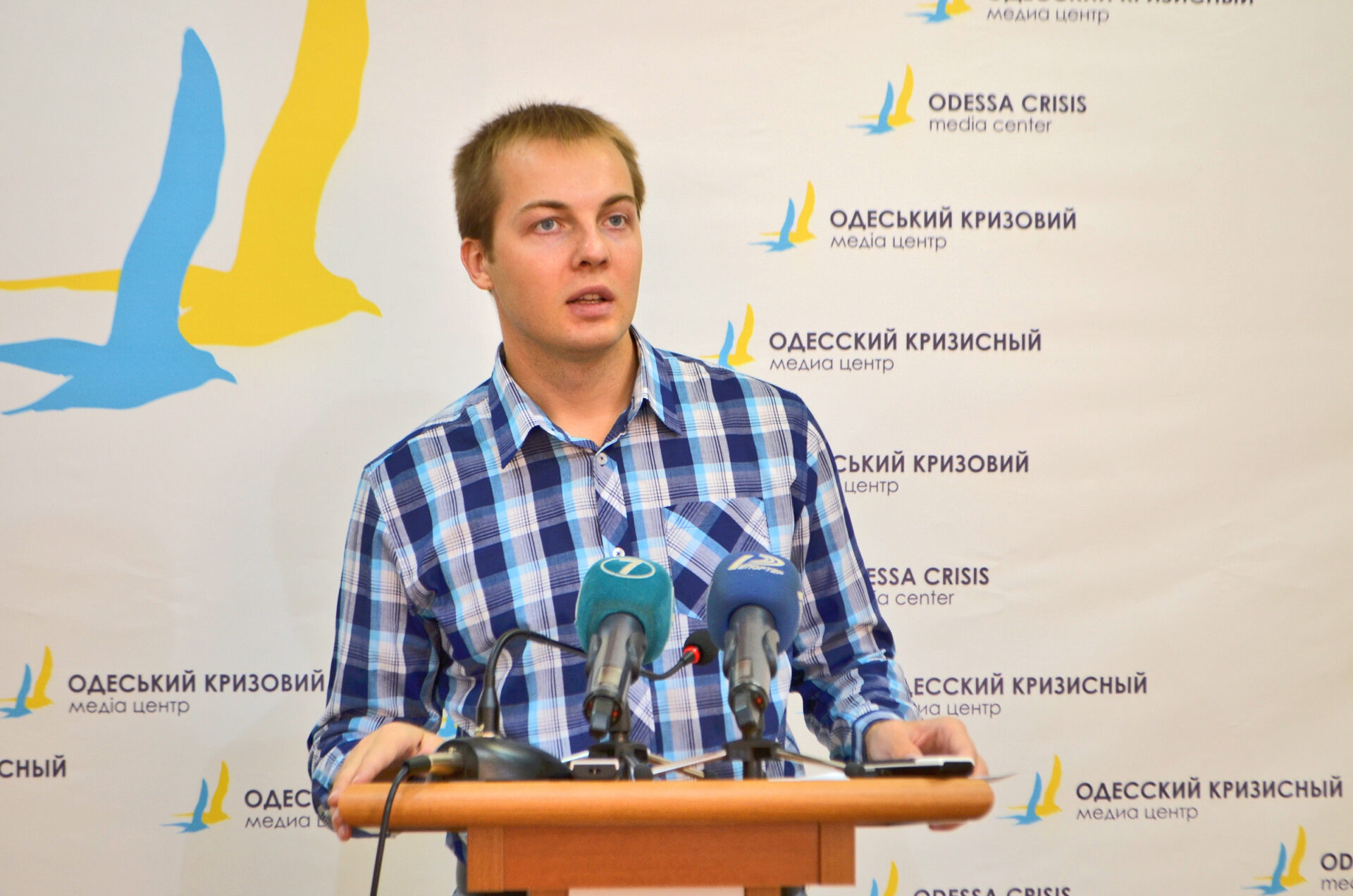
Pavlo Kolotvin, regional representative of the Institute of Mass Information in Odesa region, PhD in political science:
“What catches your eye? The Russians prepare fakes and disinformation for each country separately. For example, for Hungary, it is “Ukraine receives money that we did not receive”. For Germany, the sore point is that “our military equipment is again in Eastern Europe.” For France, this is nonsense, as if small arms transferred to Ukraine are used in actions of civil disobedience in the middle of the country. This is happening in every country, and not only in Europe. The problem is that we do not actually use the Arabic-language resources that the Russians work with. We work poorly with French-language sources, this is a large part of Africa. We are fine with English, but we need to work with other languages. By coverage — primarily in Spanish and Arabic. We are also working with French, but we also need to increase coverage.”
Conclusions
When it comes to hundreds of thousands of dead, millions of destitute, completely destroyed infrastructure, minefields on agricultural land, and ecological disasters, every word count. Especially if you have an audience of millions. Therefore, some bloggers and public figures should understand that this is not a game or a sports competition. And that this “somewhere far away” can very quickly become close. And while Ukraine is fighting for the entire civilized world, the topic of war should not be used to accuse the American government and NATO as a whole of colluding with the party situation or for its own hype.
Kostyantyn Grechany