

The question of the reasons for Russia’s invasion of Ukraine, which began in February 2022, is one of the most discussed topics in the world. We will try to understand in detail why Russia invaded Ukraine and what key factors led to this aggression.
Historical context
Historical relations between Russia and Ukraine, especially after the collapse of the Soviet Union, play a significant role in understanding the origins of the conflict. After declaring independence in 1991, Ukraine gradually began to move toward integration with the European Union and NATO. This strategic choice was a serious challenge for Russia, which saw Ukraine as an integral part of its geopolitical sphere. The key moment was in 2014, when Ukraine signed the Association Agreement with the EU, which led to Russia’s annexation and occupation of Crimea and support for pro-Russian forces in Donbas.
This was the beginning of a military conflict that continues to this day.
Geopolitical interests
Ukraine occupies a strategic position on the map of Europe, which makes it an important element in international geopolitics. Control over Ukraine provides access to the Black Sea and allows it to influence Europe’s energy security, as the main routes for Russian gas supplies pass through Ukraine. Thus, for Russia, the loss of Ukraine would mean a significant weakening of its position on the world stage.
Russia’s political ambitions
The role of Vladimir Putin’s political ambitions in the outbreak of this war cannot be overlooked.
According to the BBC, Putin’s goal on February 24, 2022, was to “demilitarize and denazify” Ukraine, not to occupy it by force, just days after Russia recognized the “independence” of the self-proclaimed “DPR” and “LPR”.
He promised to protect the people from eight years of Ukrainian “abuse and genocide”, a Russian propaganda claim that has no basis in fact. He talked about preventing NATO from gaining a foothold in Ukraine, and then added another goal: ensuring Ukraine’s neutral status.
President Putin never said it out loud, but the overthrow of the government of the elected president of Ukraine was on the agenda.
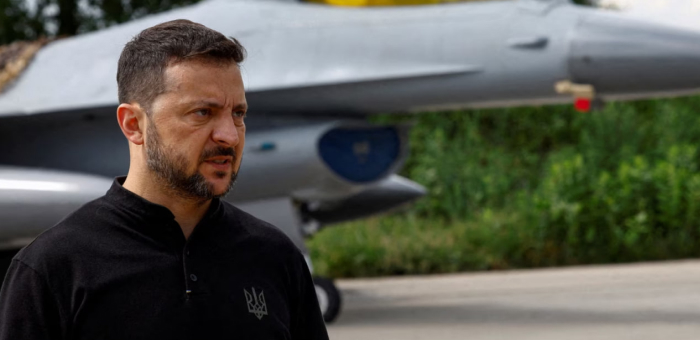
The enemy has made me the number one target, my family the number two target, – Volodymyr Zelenskyy said.
According to his adviser, Russian troops twice tried to storm the president’s residence.
Russian claims that Ukrainian “Nazis” committed genocide have never been true.
For years, the Russian president has denied Ukraine’s own statehood, writing in a lengthy 2021 essay that “Russians and Ukrainians have been one people” since the late 9th century.
It can also be added that Putin sees NATO expansion as a threat to Russia’s national security and uses the Ukrainian issue to strengthen nationalist sentiment at home.
Propaganda and information pressure
A separate component of Russia’s strategy is a large-scale propaganda campaign that tries to justify the aggression to its own population and the international community. The Russian authorities create the illusion of “protecting” Russian-speaking citizens of Ukraine by using old narratives about the “Nazi” threat. Despite numerous refutations of such claims, this rhetoric has become the main tool to justify the invasion in the eyes of the Russian public.
Conclusion
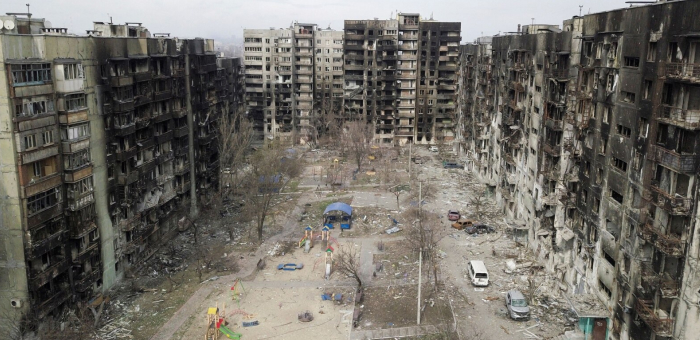
So, why did Russia invade Ukraine? The answer lies in a combination of historical, geopolitical, and domestic factors. Russia’s aggression is a direct result of the Kremlin’s ambitions to restore its influence in the post-Soviet space and block Ukraine’s integration into NATO and the European Union. Russia’s full-scale invasion of Ukraine, which began in 2022, has caused numerous tragedies. And the consequences will be felt for a long time both in Ukraine and abroad.