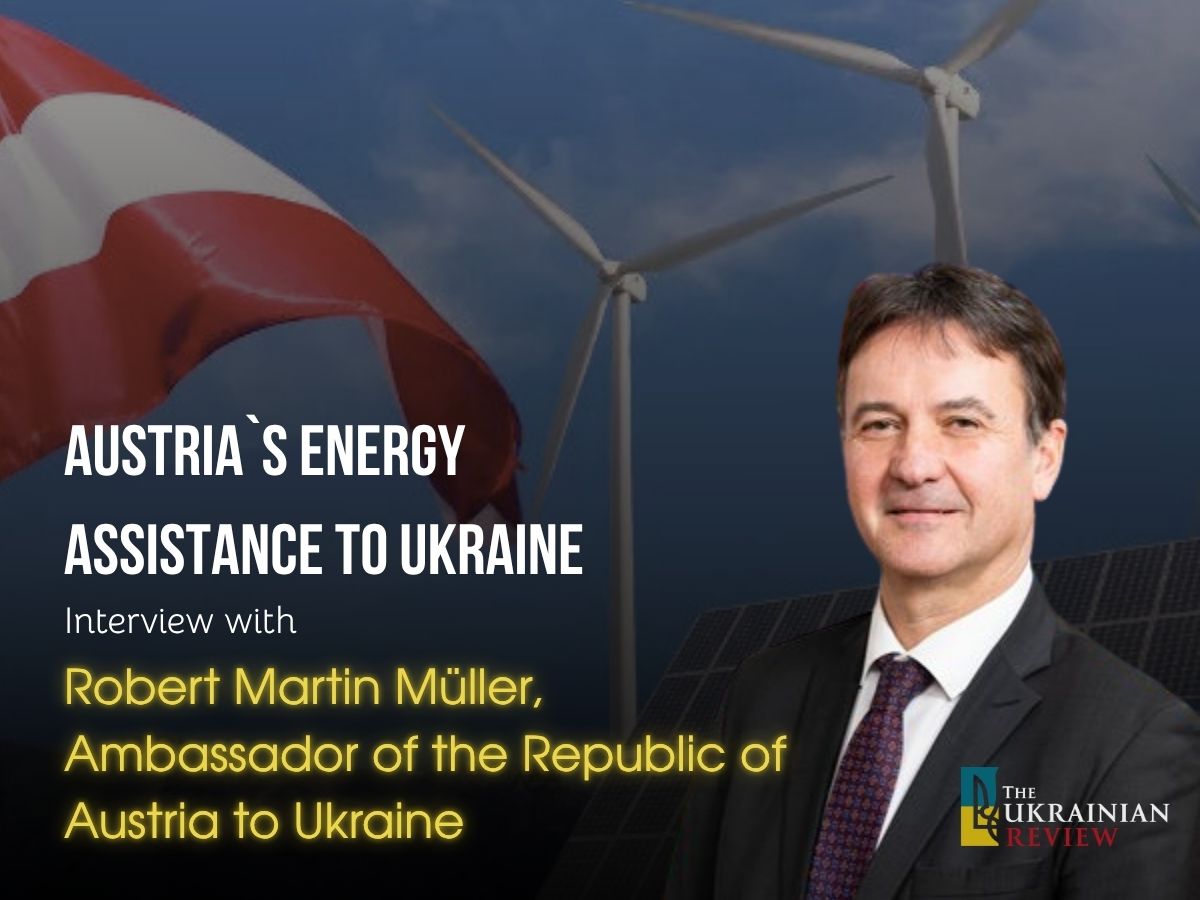


Austria has contributed to Ukraine’s energy resilience through various mechanisms and plans to broaden this cooperation by supplying necessary equipment and sharing expertise. By the end of 2025, it had pledged an additional EUR 0.5 million to the Energy Support Fund, bringing its total contribution to EUR 15.5 million. In an interview with The Ukrainian Review, Dr Robert Martin Müller, Extraordinary and Plenipotentiary Ambassador of the Republic of Austria to Ukraine, explained how Austria assesses its role in supporting Ukraine’s energy sustainability, what contributions it has already made, and how Austrian expertise and businesses could be involved in rebuilding a secure energy system in Ukraine.
Ways of Assistance
Vienna has been committed to supporting Ukraine`s energy sector since the beginning of the Russian attacks on it. In December 2022, Austria officially announced a contribution of €5 million to the Ukraine Energy Support Fund.
Moreover, Austria is committed to helping with the rebuilding of Ukraine. Within its 2025–2029 government programme (Ukraine Wiederaufbau), the Austrian Federal Government has reaffirmed its commitment to continued support for Ukraine, placing particular emphasis on humanitarian assistance and long-term reconstruction. Among the initiatives are additional steps to improve the framework conditions for businesses engaging in Ukraine.
Energy Aid
Austria has long been an important partner for Ukraine within the European economic and energy landscape. In the context of Russia’s attacks on Ukraine’s energy infrastructure, how does Austria assess the strategic importance of supporting Ukraine’s energy resilience today, and what role can Austrian expertise and companies play in this effort?
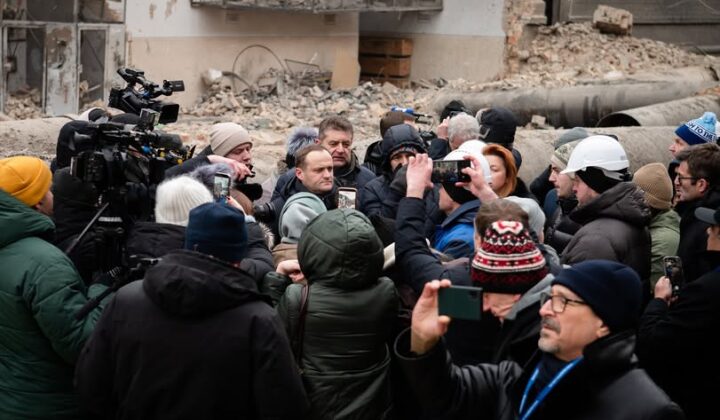
Throughout the (full-scale) war, and increasingly throughout the recent, very difficult winter, we have seen that heinous Russian attacks on energy infrastructure have had a major impact on the entire population and the economy as a whole. Everyone in Ukraine, regardless of location, has been severely affected by these attacks in their daily lives. Austria has therefore, e.g. supported Ukraine through the Civil Protection Mechanism of the European Union, the Energy Support Fund of the Energy Community, as well as via the World Bank Trust Fund for Relief, Recovery, Reconstruction and Reform of Ukraine — where we are the eighth-biggest donor globally. In addition, we provided emergency winter assistance and supplied generators and other energy-related equipment in addition to our ongoing humanitarian assistance in all areas. Apart from state institutions, our provinces, municipalities, civil society and businesses also contributed to assist Ukraine.
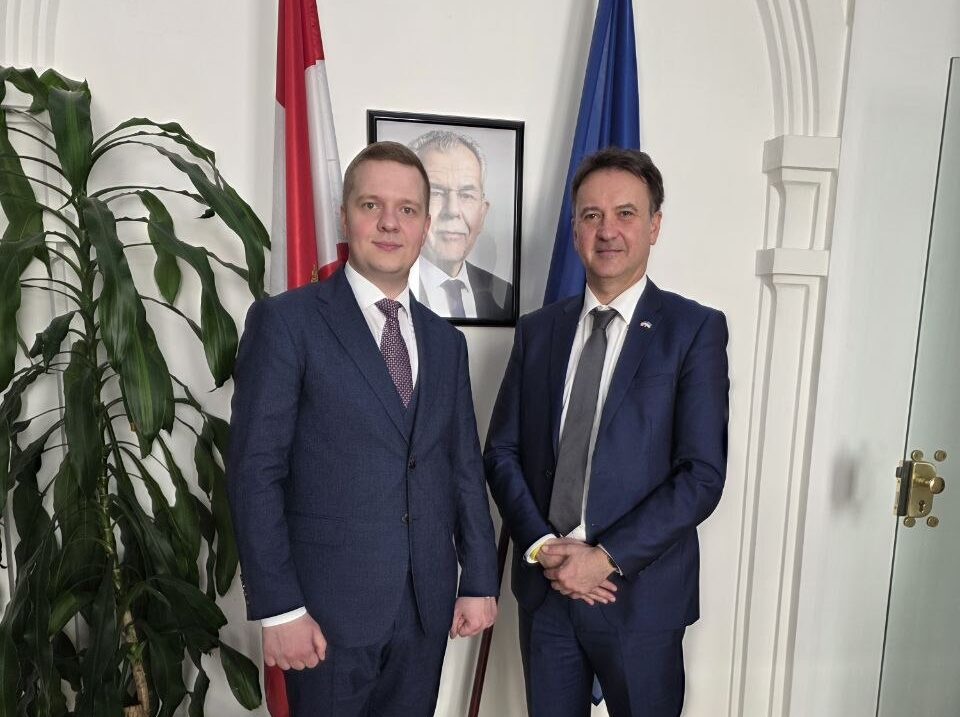
Some Austrian companies produce exactly the equipment needed in this situation. For example, a company from Tyrol manufactures containerized generators — essentially small, mobile power plants that can be quickly deployed and relocated as needed. We invited representatives of Ukrainian energy-related enterprises and representatives of communities to Austria to establish closer links with relevant Austrian companies and to assess the possibilities of using decommissioned Austrian energy installations and equipment for Ukraine.
Lessons for Partners from Ukraine
Ukraine is currently not only defending its sovereignty but also protecting the energy stability of the wider European region. From Austria’s perspective, how can the experience of Ukraine during the war contribute to shaping a more resilient and decentralized European energy system in the future?
Firstly, the Russian war of aggression has shown how important it is to ensure a diversified energy supply and to produce as much energy as possible within our own borders. As Austria has very limited oil and gas resources, we need to expand renewable energy sources such as wind, solar, and geothermal power.
Secondly, we have seen how crucial it is to build redundancy into energy networks in order to ensure supply even when parts of the system are damaged or disrupted. This applies not only in times of war. We must also be prepared for damage caused by natural disasters, terrorist attacks, or cyberattacks. Decentralisation of energy production and building up stocks of energy equipment across Europe are also important elements in making a country less vulnerable to outside attacks.
Austria`s role in Ukraine`s Energy Renovation
Reconstruction of Ukraine’s energy infrastructure will require significant investments and innovative approaches. What models of cooperation between Ukraine, Austria, and European institutions could be most effective in rebuilding Ukraine’s energy sector in a sustainable and modern way?
Reconstruction provides an opportunity to rebuild the energy system in a way that more closely integrates Ukraine with the European market. Before the war, Ukraine was an exporter of electricity, and it has the potential to become one again.
All European countries are seeking ways to make their energy supply more reliable and sustainable. Reconstruction offers many opportunities to ensure that both Ukraine and its partner countries benefit from new generation capacity. For example, there are already plans to produce green hydrogen in Ukraine — part of which could be transported to the Austrian market using existing gas pipelines.
Ukraine and Austria signed a memorandum of cooperation on renewable hydrogen on March 6, 2026. It envisages the expansion of production, the development of infrastructure for the storage and transport of hydrogen, and the attraction of investment in this sector.
Business and Energy Collaboration
Austrian companies have strong expertise in renewable energy, energy efficiency, and modern infrastructure technologies. Do you see opportunities for deeper Austrian involvement in Ukraine’s post-war energy modernization, and what conditions would most encourage Austrian investment and technological partnerships in this sector?
We are already seeing strong interest from Austrian companies in participating in post-war reconstruction, as well as clear demand from Ukrainian energy providers for their products. I am very confident that Austrian companies will play a significant role in building a sustainable, decentralized energy system in Ukraine. In particular, in the field of hydropower, Austrian companies are among the global market leaders.
Unfortunately, brutal Russian attacks on Ukrainian energy infrastructure continue on a daily basis. Under these circumstances, large-scale investments remain too risky for most companies. Therefore, the current focus is on repairing existing infrastructure and planning for the post-war period.