

Tallinn
An explosive Western strategy paper is circulating, just as Nato’s begins its biggest military exercise for years, involving 300,000 troops in America and Europe. Both the paper and the four-month-long maneuver, called Steadfast Defender, aims at making clear to Vladimir Putin in the Kremlin – and everybody else, who may be in doubt – that the Russians cannot and will not be allowed to wipe out Ukraine, the front-line state of the Euro-Atlantic civilization and the alliance’s privileged partner on its way to Nato and EU-membership
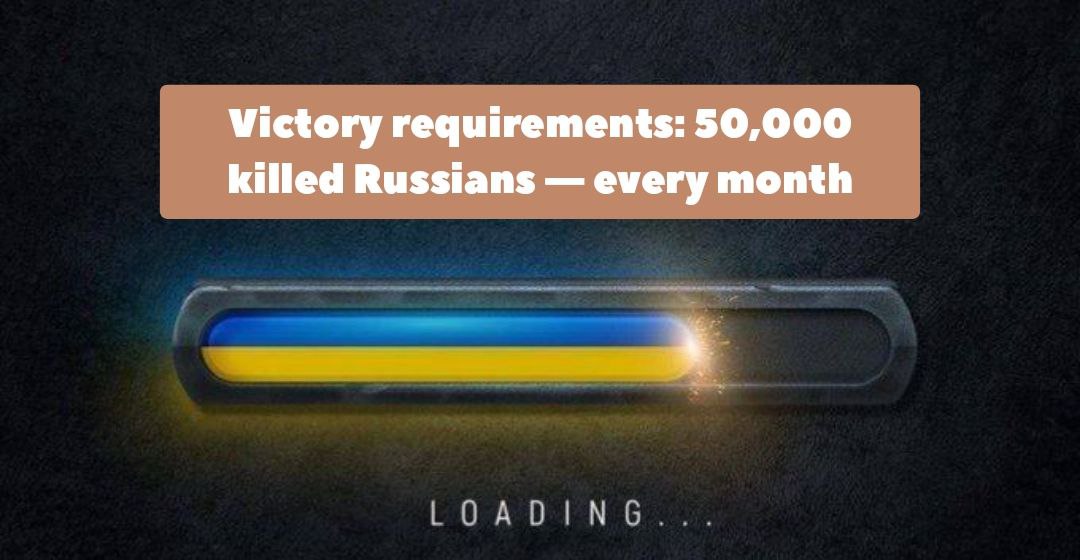
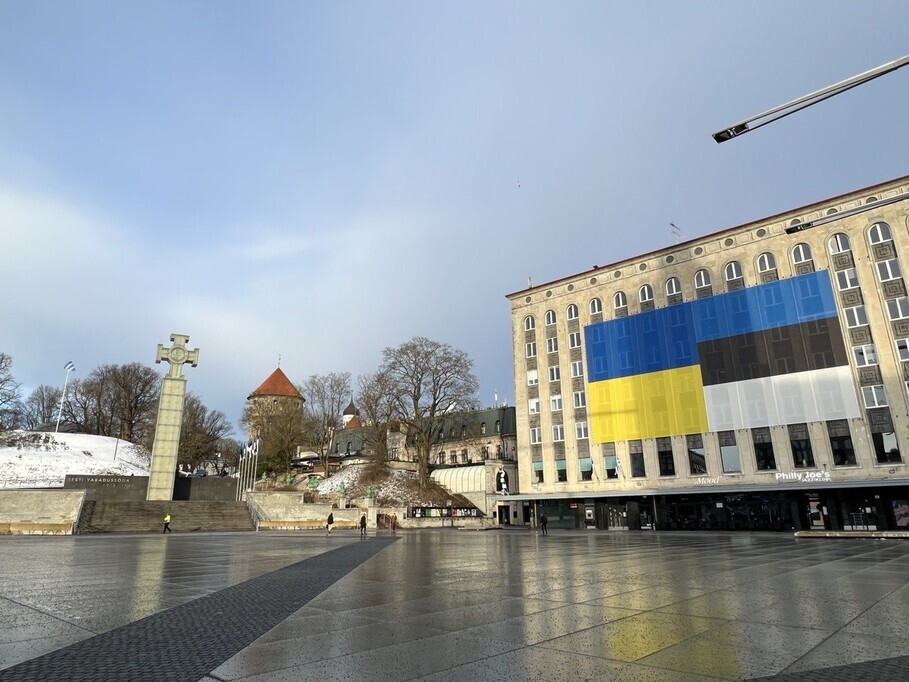
A first prerequisite for Ukraine’s victory is, according to the paper, that the West equip the Kyiv government’s armed forces to the point, where they can kill or maim up to 50,000 Russian soldiers — a month, mind you. Technically it is doable, the political will is lacking. Experts in Tallinn, Estonia’s highly attentive capital, only five hours´ drive from St. Petersburg, point out that Putin has begun talking about the need to wipe out Nazis and neo-Nazis in Russia’s neighborhood, repeating the ridiculous, but threatening claims he made prior the assault on Ukraine in 2022. This time, they say, the Russian Führer could be aiming at the Baltic states, Georgia and possibly Northern Norway, but probably not highly armed Finland.
“I do not rule out anything within the next five years,” says a wise, old diplomat in Tallinn. “You, in the West, consider a major European war unthinkable. You should realize that the Russians think differently from you, they are another mentality.”
The strategy paper demonstrates that the Ramstein group, supporting Ukraine, possesses a crushing economic and military superiority over Russia. If all relevant parameters are translated into the systematic military and financial rearmament of Ukraine, Russia, with a large, but qualitatively poor army in the field, with a shrinking population base and a creaking economy, can be weakened to the point, where the Kremlin government must end its war. The built-up of Ukraine could take place in 2024 and 2025. Crunch time would be 2026.
The Ukrainians are currently killing about 15,000 Russian soldiers a month. It weakens the Kremlin, but the loss is remedied with rotations of personnel and with increased conscriptions. The Russian armies kill or maim per month an estimated up to 15,000 Ukrainians, to a large extent women and children, a loss which Ukraine with 40 million inhabitants and a total military establishment of around 700,000 men has so far borne with extreme courage. The Ramstein group, the US and Europe in particular can reduce this loss dramatically by supplying the Ukrainians with the weapons required for a victory on the battlefield – not to be confused with a compromise at the negotiating table.
If the Russian genocide in Ukraine and the Russian empire’s appetite for its other surroundings are to be brought to a halt, the war, argues the paper, must be made so costly for the Kremlin that it cannot replace its human losses. Anything beyond 150,000 dead per annual quarter (the time it normally takes to call up, train, and arm a military unit) will drain Russia of indispensable forces, shorten the war, and save the West billions.
The paper has been prepared by the Estonian Ministry of Defense to indicate a strategically viable path to Ukraine’s and thus the West’s victory over the Russian aggressor state. I read it on a quiet evening in my hotel in Tallinn as a sober and knowledgeable contribution (25 densely argued A-4 sheets) to a discussion that Kremlin propaganda is trying to derail and has been trying to derail since at least 2014. The paper corresponds well with the thinking in most of Central Europe, whose knowledge of Russian warfare, Russian imperialism, and Russian terror has more to do with reality than the often Russophile and dreamy peace notions of a Western political-intellectual elite.
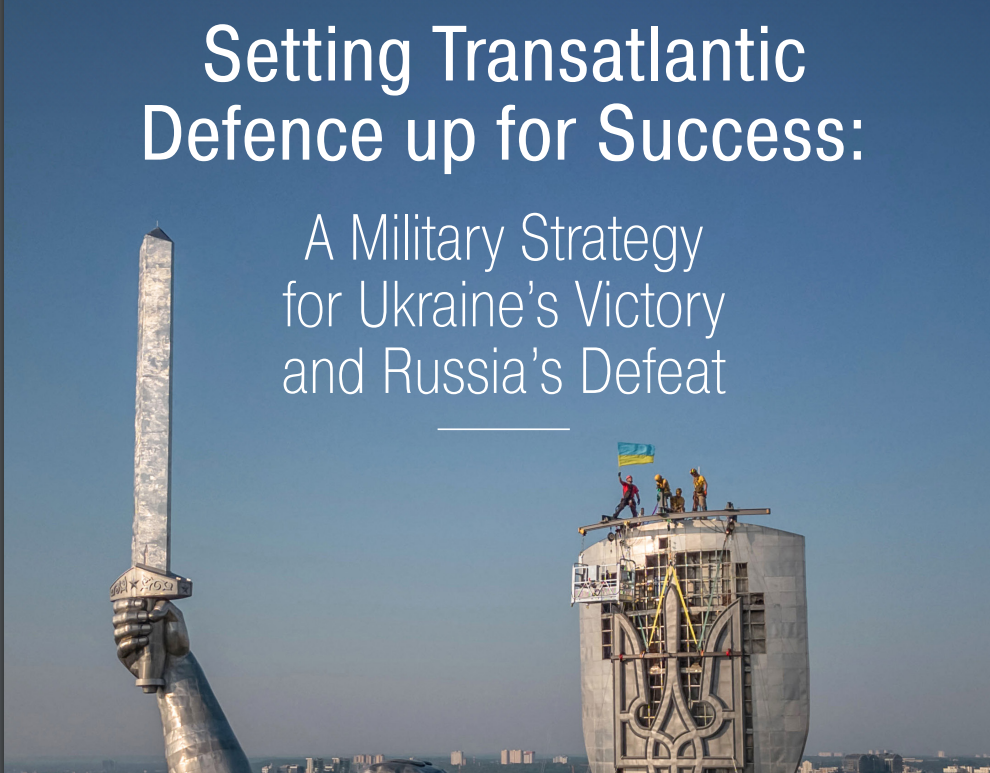
The Estonian paper (completed last December under the title Setting Transatlantic Defense up for Success) notes a Western economic and military superiority that the West – bordering on the criminal, which is my contention — hesitates to use for fear that the psychopath and warmonger Putin might drum up a major conflict (which, after Finland’s recent and Sweden’s imminent entry into Nato, is more unlikely than ever). The paper shows that the Ramstein group, consisting of half a hundred states, among them all NATO countries, but otherwise extending from Japan, South Korea, Australia, and New Zealand to Pakistan and Kenya, has a combined annual gross domestic product (GDP) of just under 50 trillion euros, of which a paltry 95 billion euros or 0.2 percent is available to Ukraine. Russia’s GDP appears ridiculous in relation to this mass of Western wealth, just surpassing that of Italy.
The total defense budget of the Ramstein countries is 13 times larger than Russia’s, and where Russia invests up to 30 percent of its modest GDP in military measures, Ramstein makes do with two or three percent. The war in Ukraine is believed to be costing Russia around € 10 billion a month. The drain on Russia’s underfunded, poorly run civil sector, everything from schools, hospitals, pensions, and public transport to peaceful, future-oriented research, is colossal. If it continues unabated, it is expected to plunge the empire into a life-threatening crisis within the next half dozen years.
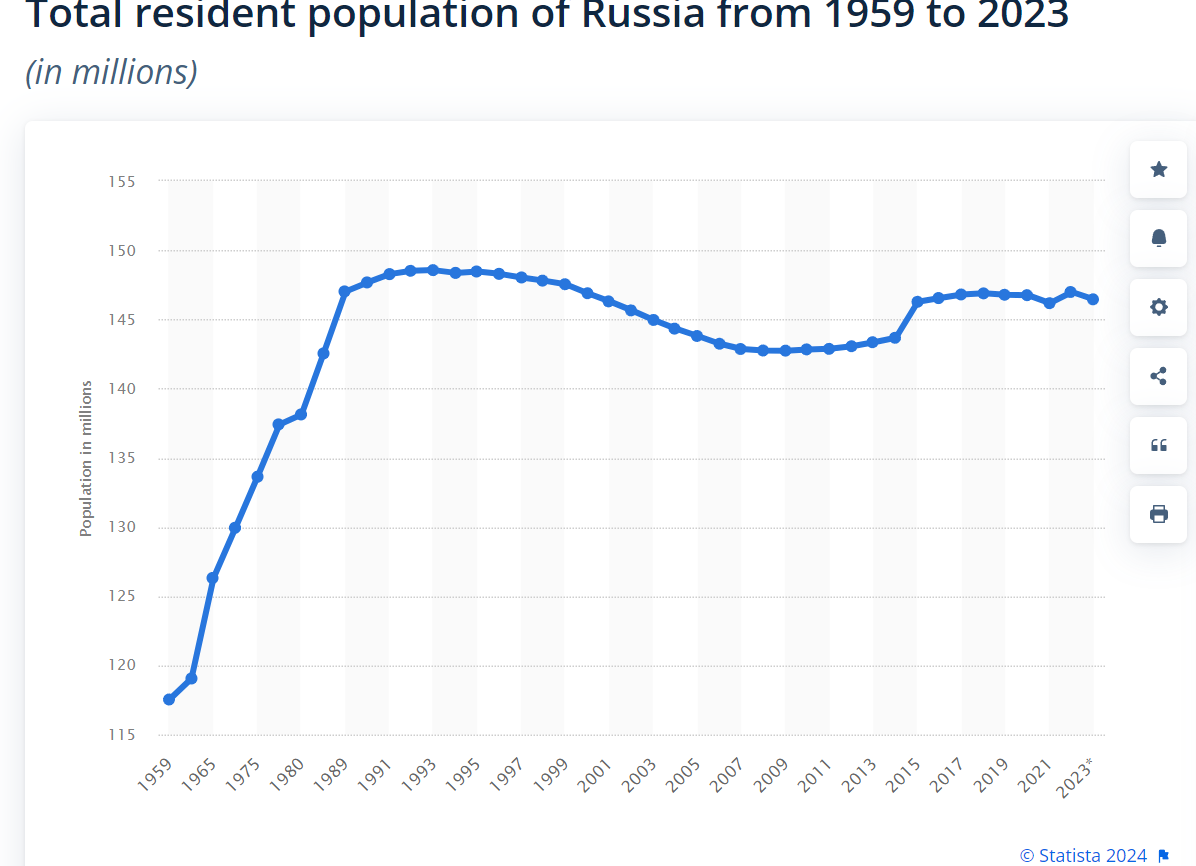
The mega figures are, if possible, even more depressing from a Russian point of view. Putin’s Russia has an aging, poorly educated, and shrinking population, currently 143 million (148 million in 1991). Ukraine and the NATO countries have close to 900 million conscious, often politically active citizens, Ukraine and Euro-Nato alone more than half a billion. Russia’s GDP per capita stands at € 15,000, mainly based on a primitive, commodity-based economy. In the NATO-bloc as a whole, GDP per capita is € 45,000 (US: $75,000), produced by a highly developed, globalized economy. The United States invests between four and five percent of its GDP ($24 trillion) in military preparedness, a figure nobody in Russia can even dream of. Euro-Nato invests around two percent, but is approaching three, in a few cases four percent, spurred by the Russian attack on Ukraine, but leaving plenty of scope for a normal, civilian life. The average Russian currently lives for 72 years, the average American for 77 years and the average European for 80 years.
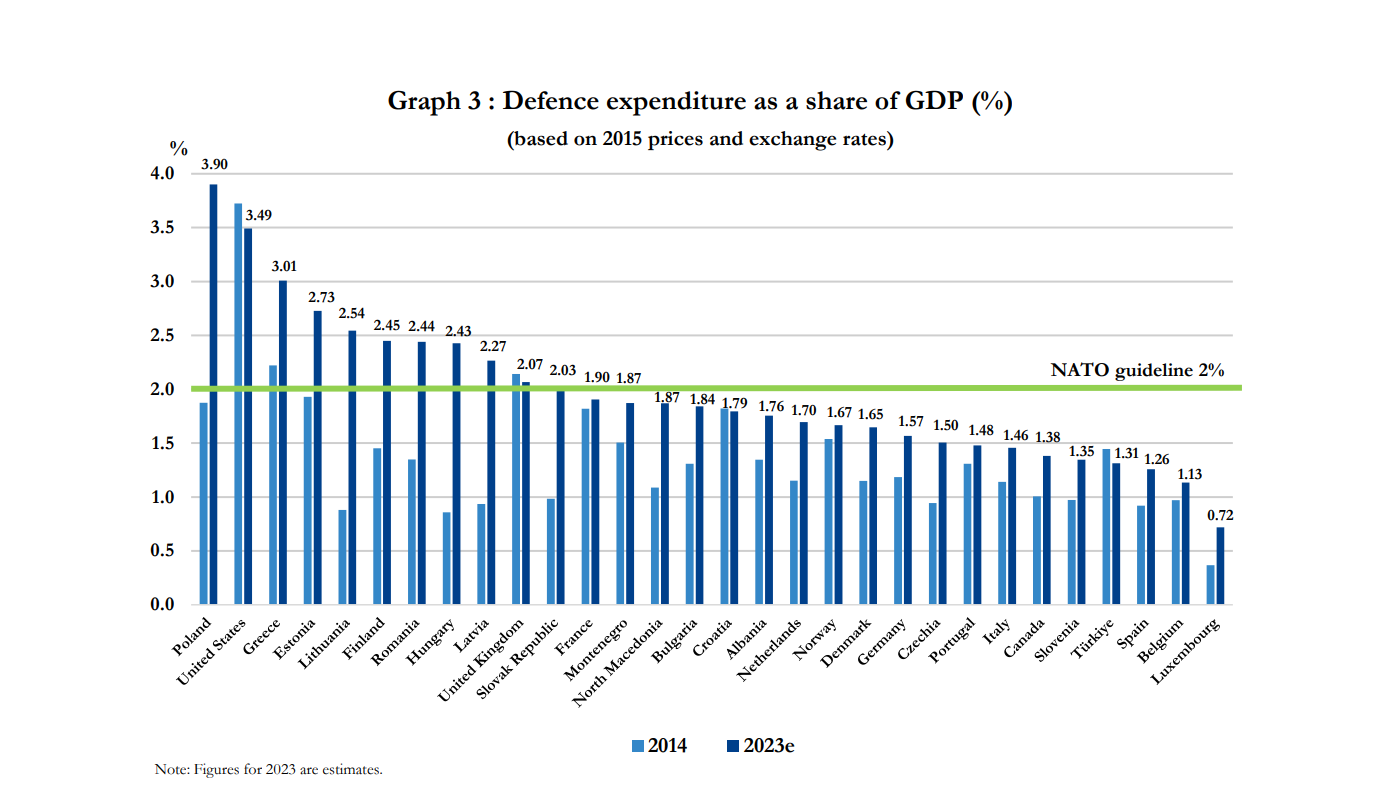
The balance of power between Russia and the West, and even between Russia and Europe, should the autumn presidential election in the USA lead to the victory of the isolationist and Putin clone Donald Trump, followed by a highly unlikely USA’s withdrawal from Europe and from NATO, is and will remain unequivocally in the West’s favor. What is lacking is the political will to rearm Ukraine to the extent that Ukraine can defeat Putin’s gangster state, whose long-term goal is the annihilation of democratic, rules-based Europe, Ukraine included.
If we hesitate to pay the price of victory here and now, a far greater expense threatens later
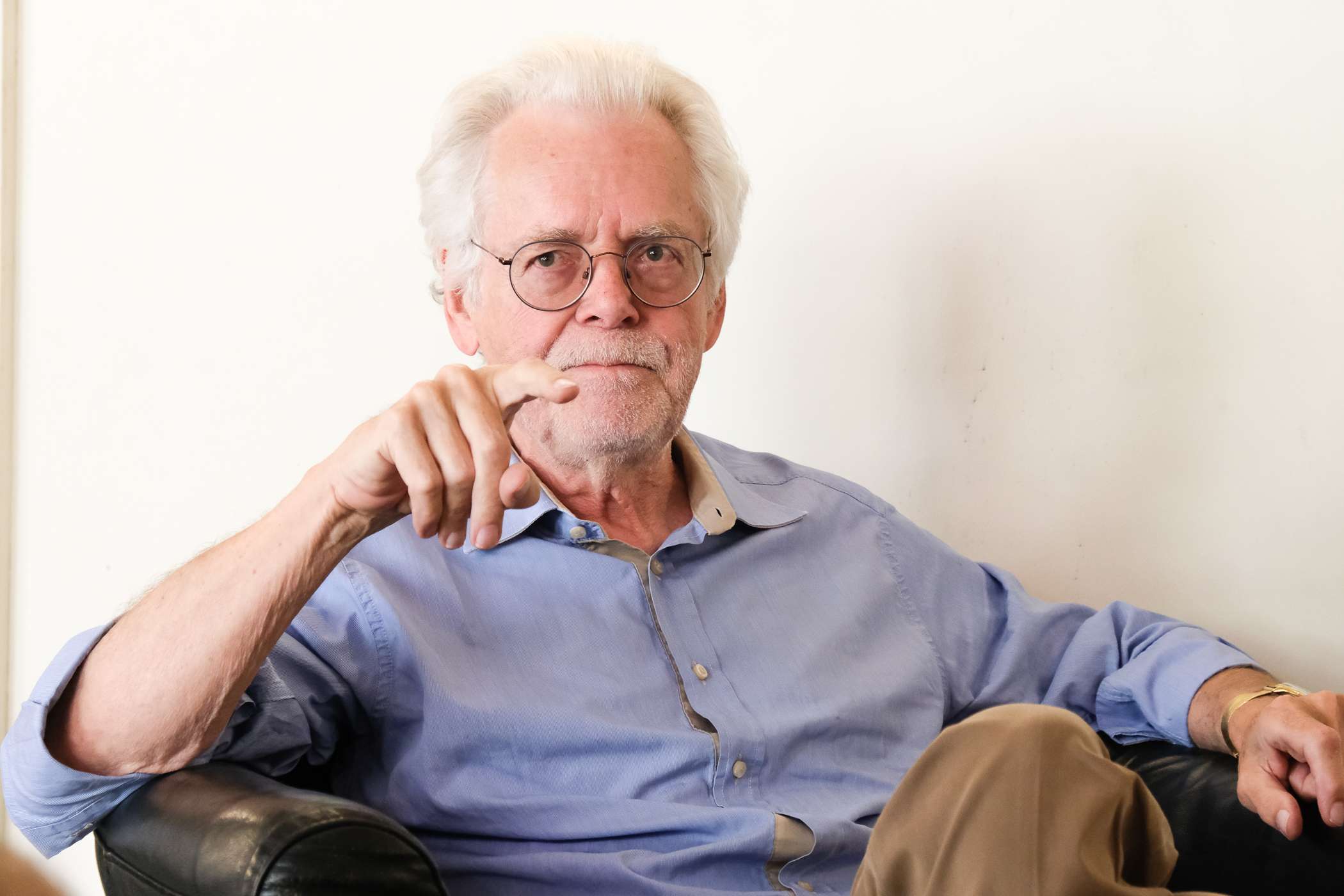
Author: Per Nyholm
Danish journalist since 1960, based in Austria, columnist and foreign correspondent at the liberal Danish daily newspaper Jyllands-Posten. This text was translated and adapted for The Ukrainian Review by Stanislav Kinka.